For the uninitiated, the Sultanate of Oman is one of the oldest inhabited, safe, independent states with 5 UNESCO World Heritage sites. Contrary to popular belief, Oman is not all sandy desert. The landscape includes valleys, deserts, mountains and the sea.
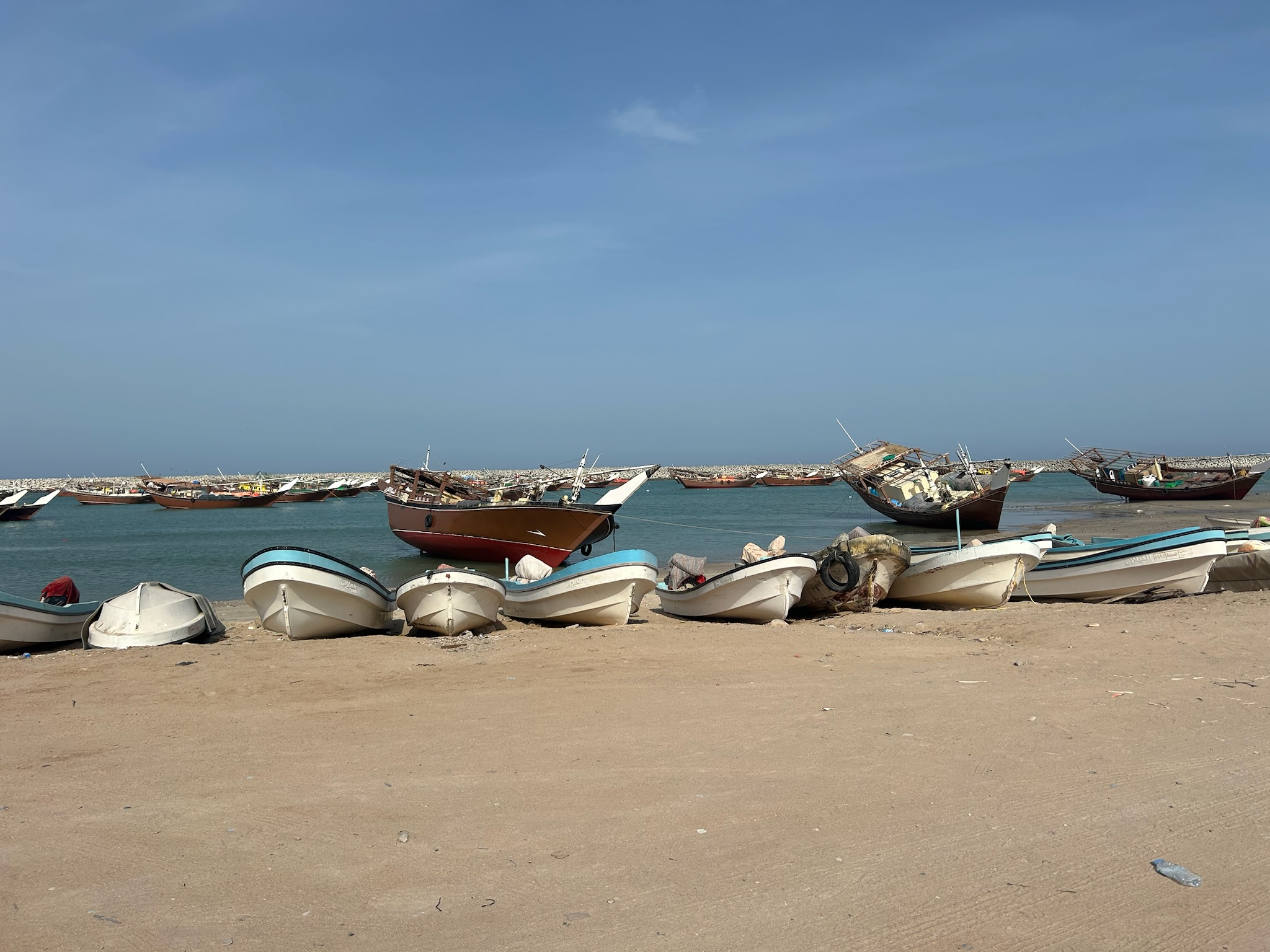
A brief history: Rich in minerals, archaeological evidence points to good trade relations with Mesopotamia and the Harappan civilisations, including the supply of copper to Lothal. The British and Portuguese recognised Oman’s importance in securing their trading routes to the East. Over time, the various tribes got together to form the current Sultanate.
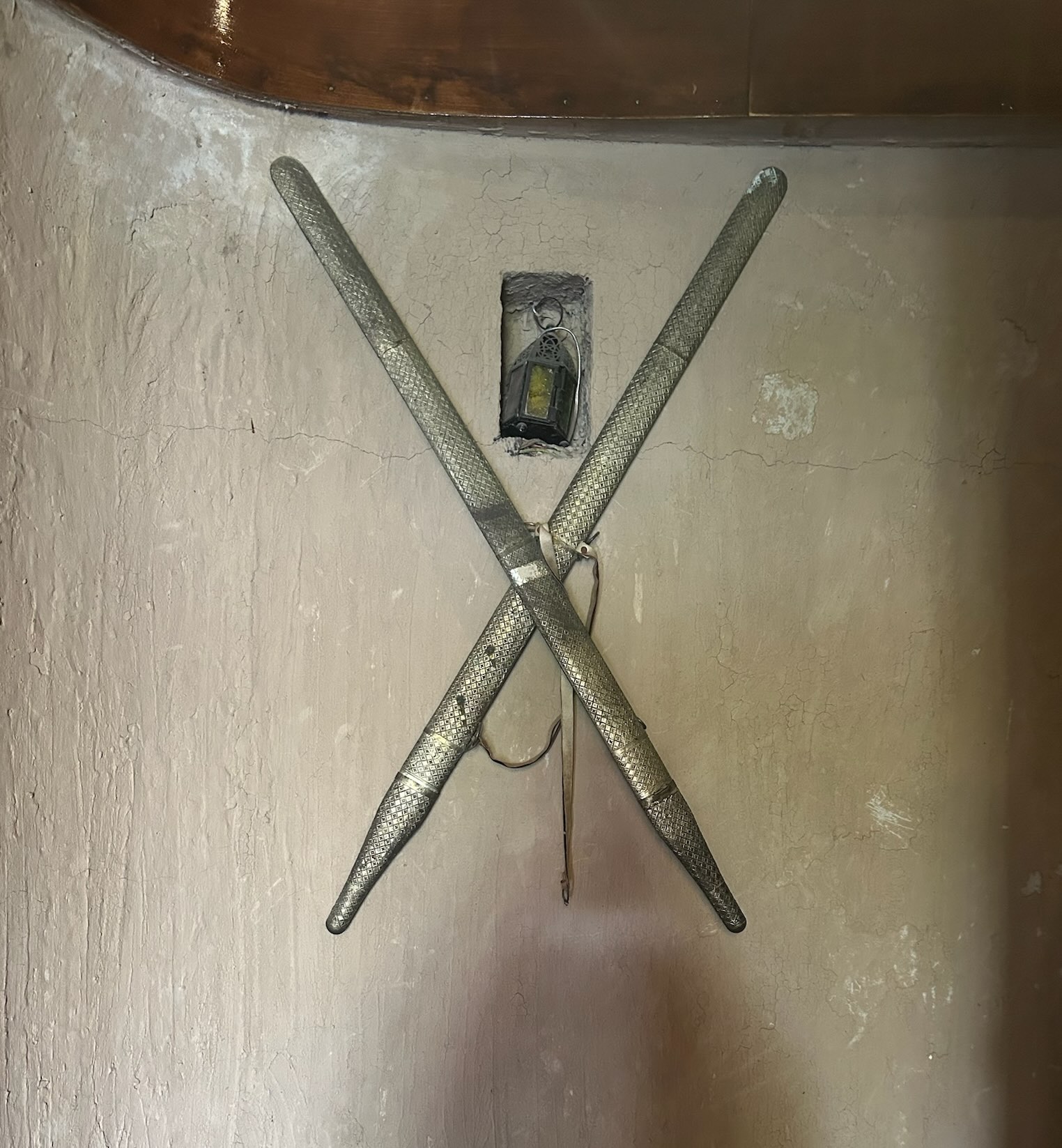
Driving along Oman’s Coastal Route was something my better half and I wanted to do; but it ended up as a family trip, adding to the laughter, fun, and memories we made together.
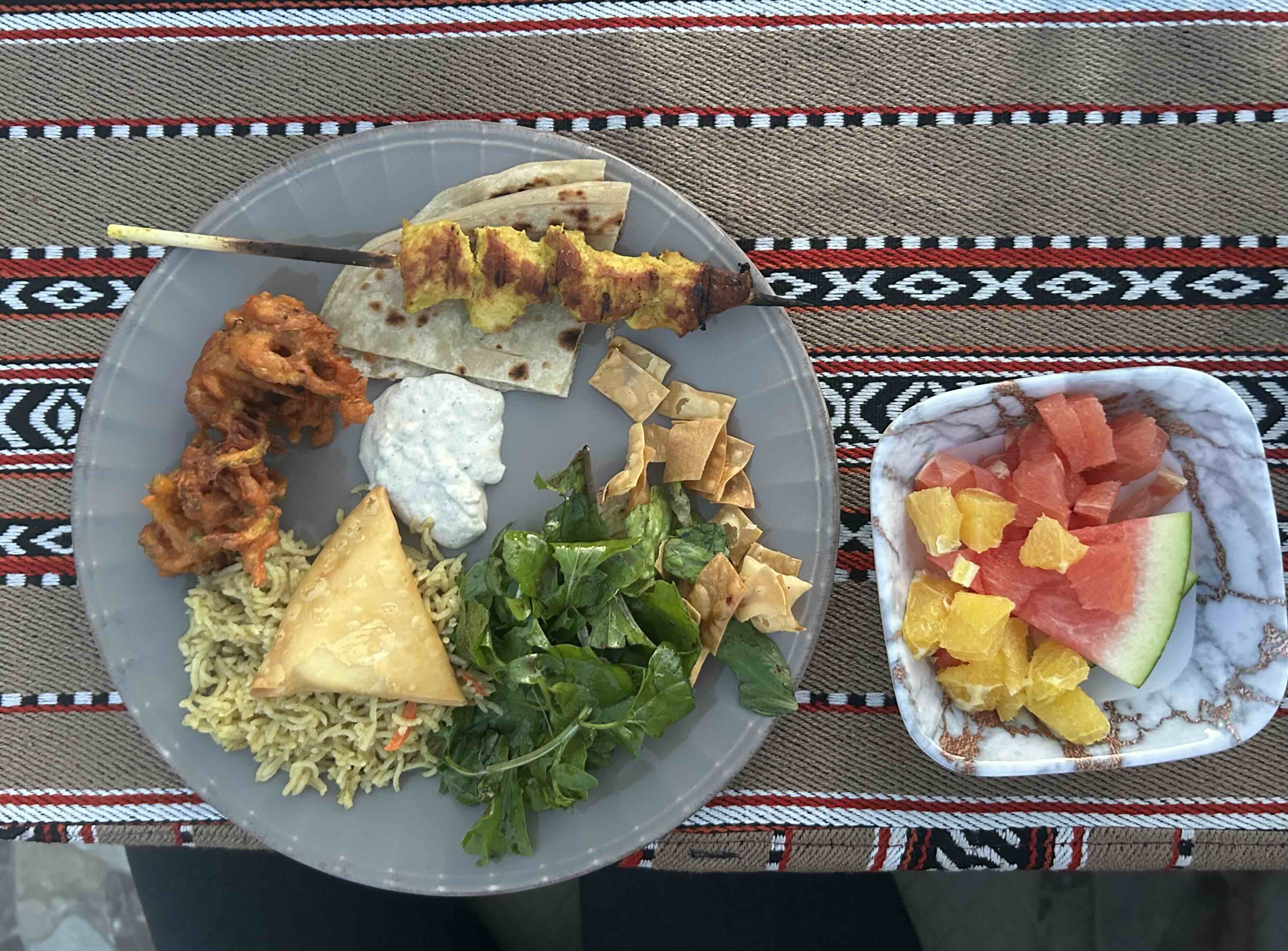
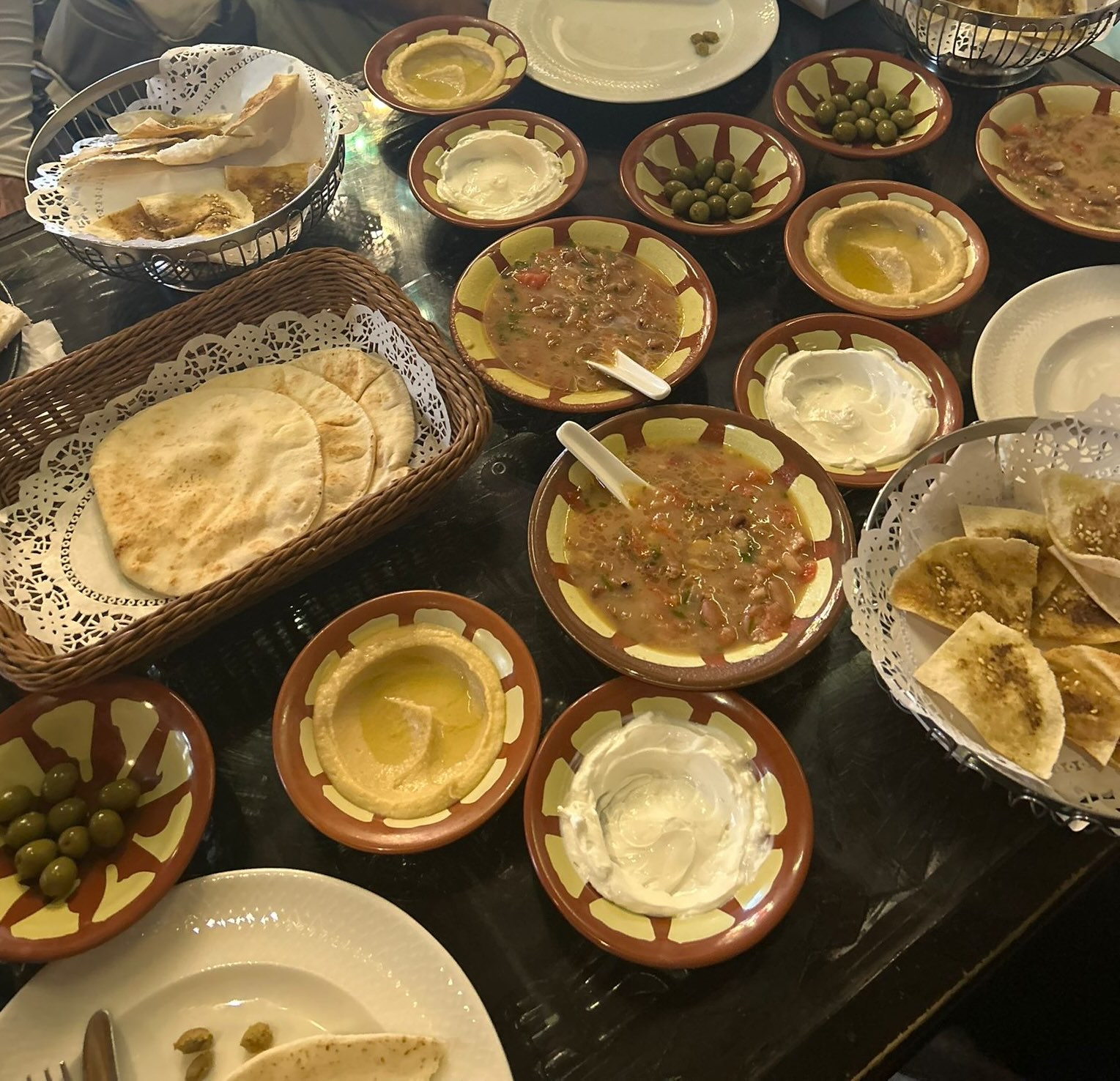
The trip was fixed for a week in April 2024. I missed to look at Ramadan dates while planning the trip. Oman is much more particular about eating and drinking in public places during Ramadan than, for example, Dubai. We had to be careful until Eid. Kuboos (Arabic flat bread), buns, cheese, yoghurt, fruits, peanut butter, energy bars, and bottles of water bought at supermarkets and fuel stations kept us going. We enjoyed iftar dinners at some of the towns/villages where we stopped for the night.
Typically, people doing this trip, drive along the coastal road from Muscat and return to Muscat on the boring but fast Route 31. We were arriving in Muscat from different parts of the world, and we did not want jet lag to hinder the trip, so we decided to take the boring but fast Route 31 to Salalah and drive back to Muscat along the coastal route.

Day 1: Muscat to Nizwa (stay overnight).
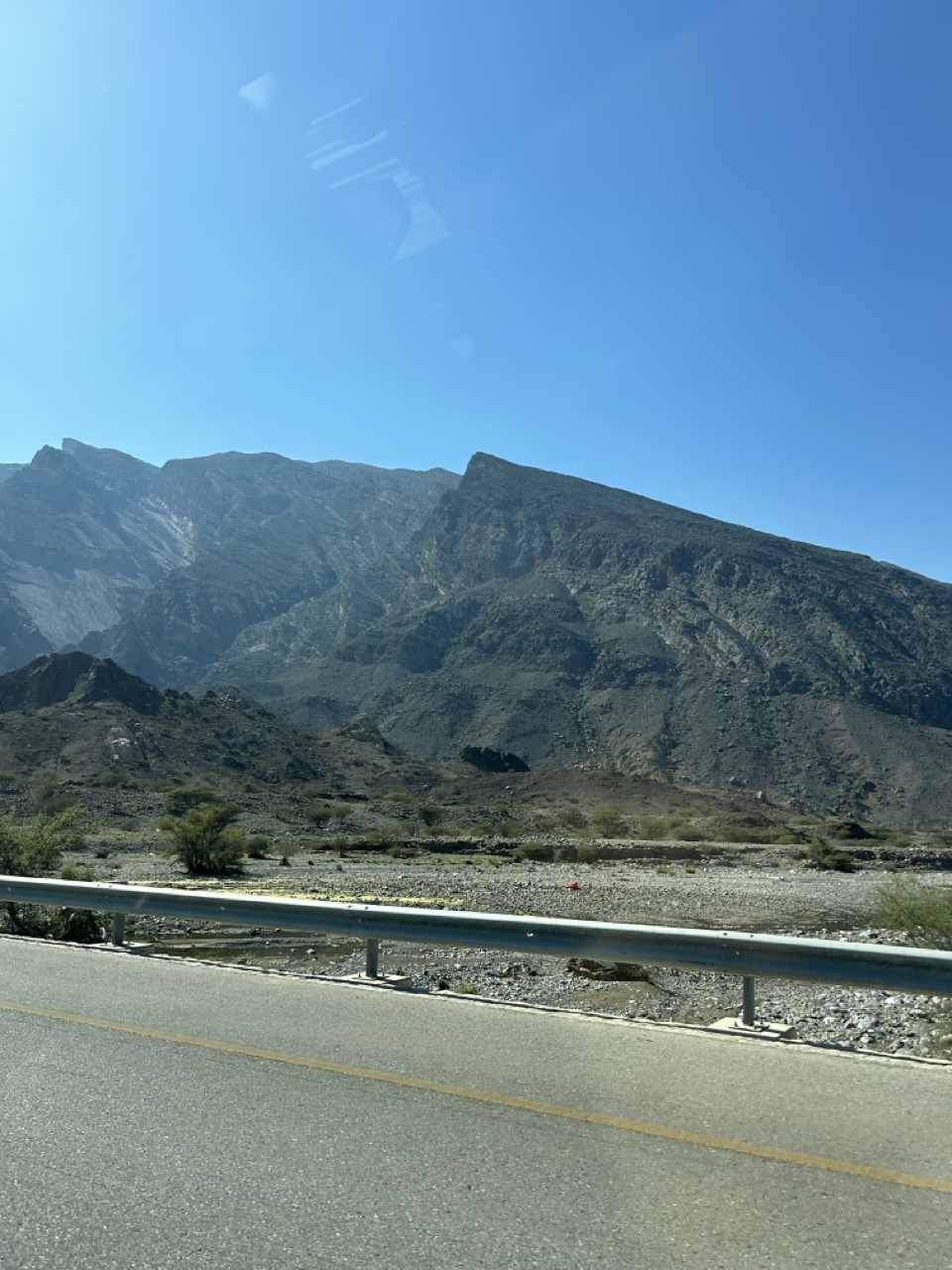
After an initial anxiety (and therefore a delay) caused by the car rental company about mandatory requirement for an IDP, we made our way out of Muscat. The drive to Nizwa was short, along a monotonous, straight, flat road that cuts through the Al Hajar mountains.
Once we got to Nizwa, we freshened up and hurried to the fort hoping to visit the same evening. Unfortunately, due to Ramadan timings (Open: 8 am to 6 pm Otherwise, 8 am to 8 pm) the fort was just about closing. Taking advantage of the cool evening breeze we walked around the alleys of the old historic town that transported us back a few hundred years (maybe close to a thousand!).

The old houses are lived in. It took a lot of self-control on my part not to take pics of the houses or their gorgeous main doors! There were posters requesting travellers to respect the privacy of the people who live there; there were ‘Free Palestine’ posters stuck on the walls along the narrow lanes. We saw water channels designed using the traditional falaj water system. There are lovely inns and riads, cafes and bakeries and a souq. While retaining its old-world charm, there were signs pointing to massive developments to make Nizwa a serious tourist destination.
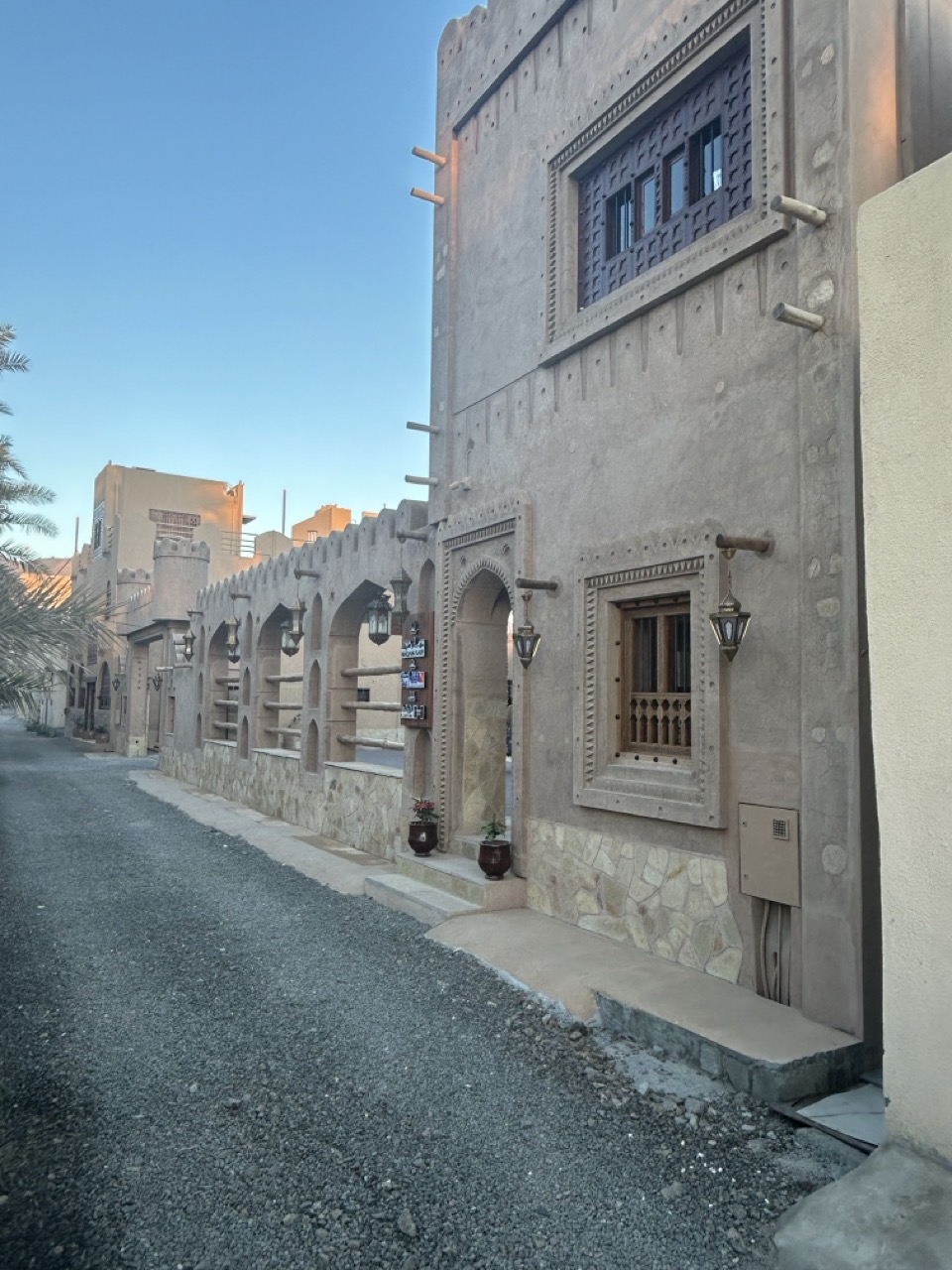
While strolling around, we discovered Al Aqur restaurant, which was ready to serve Iftar snacks and Iftar dinner. It was only then that we realised we had not eaten a proper meal since landing in Muscat and making our way to Nizwa!
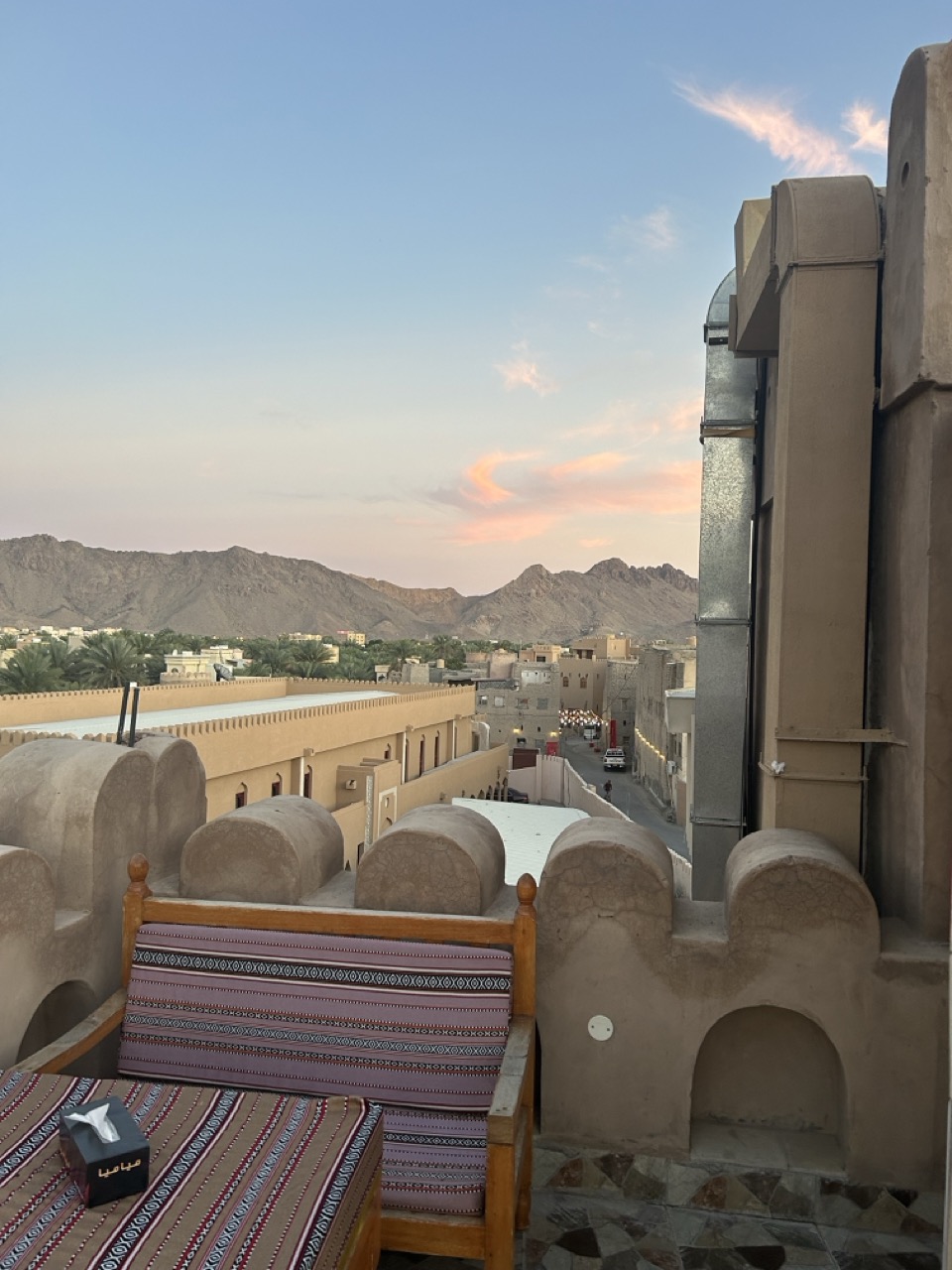
We had our buffet dinner on the restaurant’s terrace, a restored old house. The surrounding hills, with a crest of blue/orange skies, the call to prayers before iftar – it was magical! Post dinner, we ‘foraged’ around the souq to find food for the road, and then we called it a night.

Day 2: Nizwa to Salalah (stay overnight).
After a good night’s rest and a spartan breakfast, we made our way to the Nizwa Fort which is one of the most visited forts in Oman, The fort has interesting defence mechanisms – trap doors that plummeted the enemy to their deaths and ‘murder holes’ – boiling date juice would be poured through these holes on advancing enemies! The ramparts of the fort give an excellent view of Nizwa.

It was now time to leave for Salalah, our longest non-stop drive of the trip at close to 900km. Route 31 is in excellent condition. The only other important town along this route (other than Muscat, Nizwa and Salalah) is Haima. Approximately 50km outside of Salalah, we started our descent to Salalah along winding roads through the Al Dhofar mountain range. We craned our necks, looking out for the sea, and let out a happy laugh on spotting it far, far away! We were famished and a little tired to go looking for a good iftar dinner and made good at a small nothing-to-talk-home about restaurant that was located close to our hotel and restocked ourselves with food for breakfast and for the road the next day.
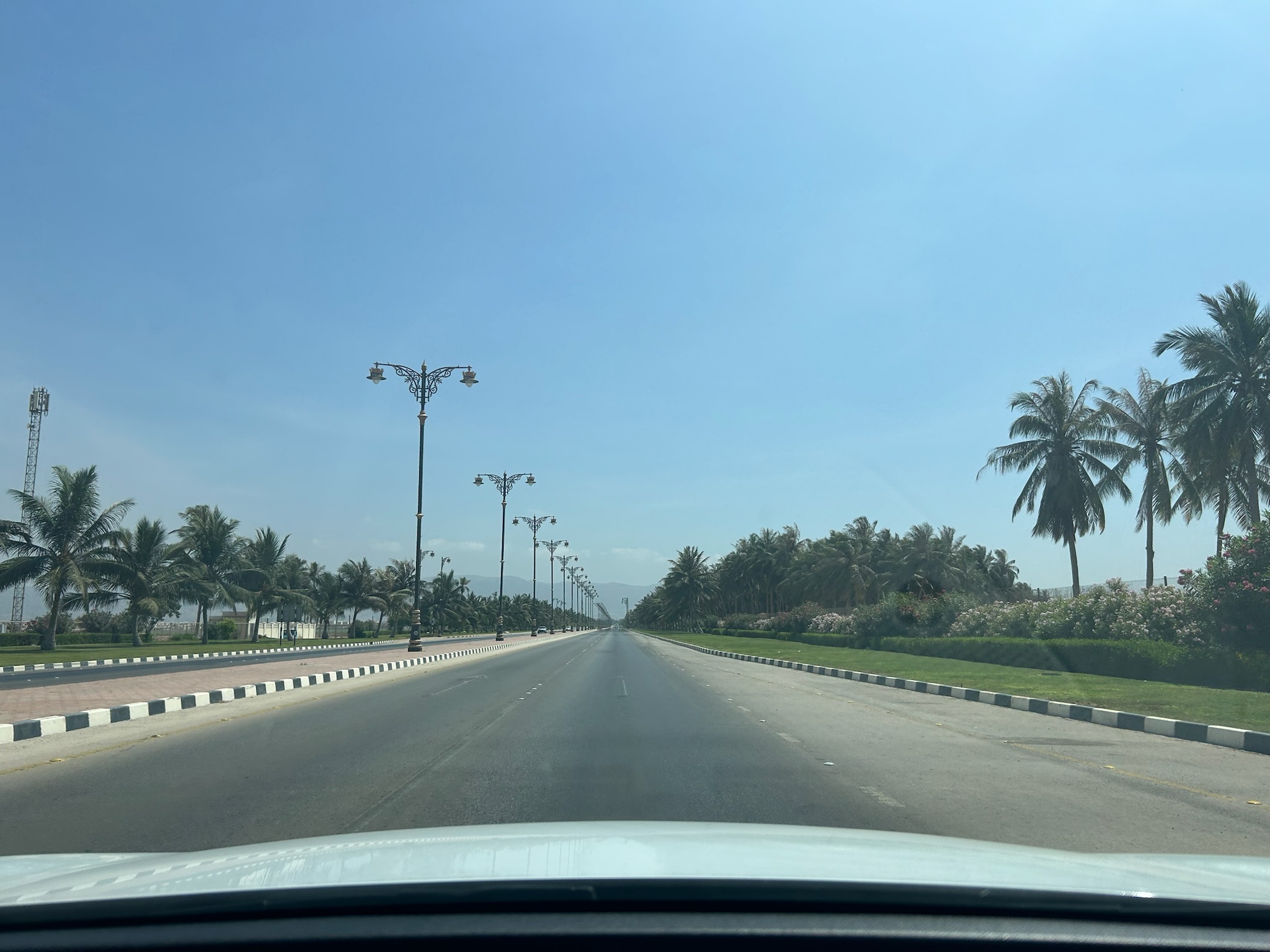
Day 3: Salalah to Ash Shuwaymiyyah
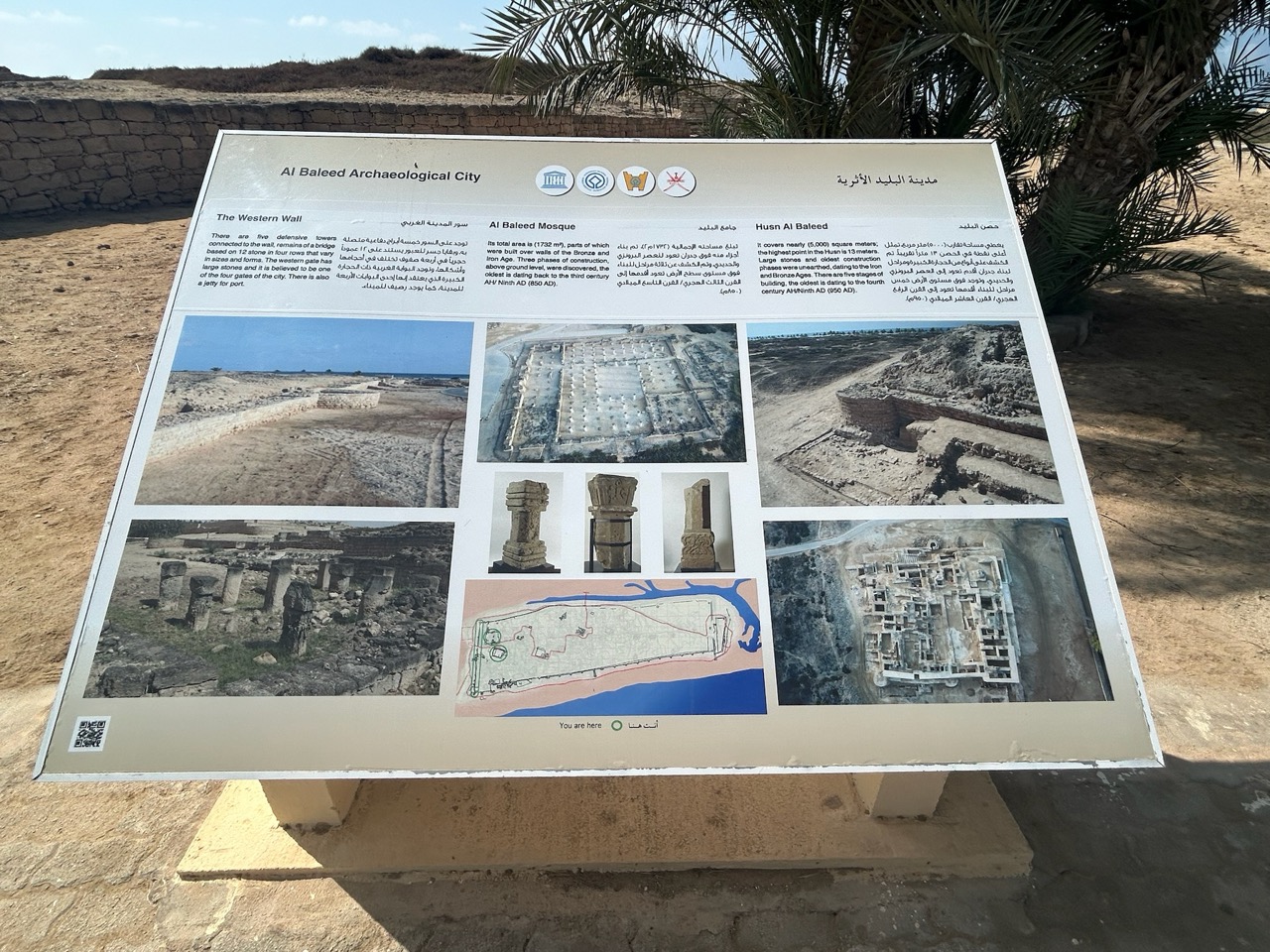
This is the actual start day of our coastal trip, but we had one place to visit before hitting the highway: Al Baleed Archaeological Site and Museum, a UNESCO World Heritage Site. (There has been no change in opening time for Ramadan: The Site opens at 8 am, and the Museum opens at 9 am)
Having grown up in Mangalore, which has a deep connection with the Middle East, I have heard my neighbour talk about Salalah, where she and her doctor husband moved after his major career stint in KMC, Mangalore. Aunty would always talk about how green Salalah is and how it is not like a desert! As soon as we set foot into Salalah, I was looking out for greenery 😉 But we had to wait until on our way to Al Baleed to see what she meant – papaya, coconut, and banana plantations were suddenly everywhere!
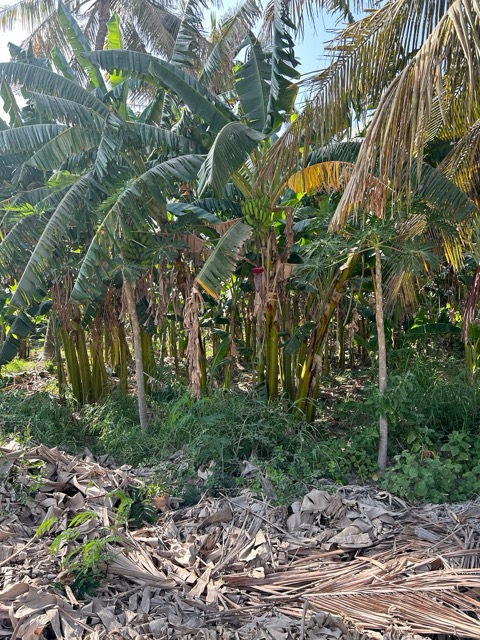
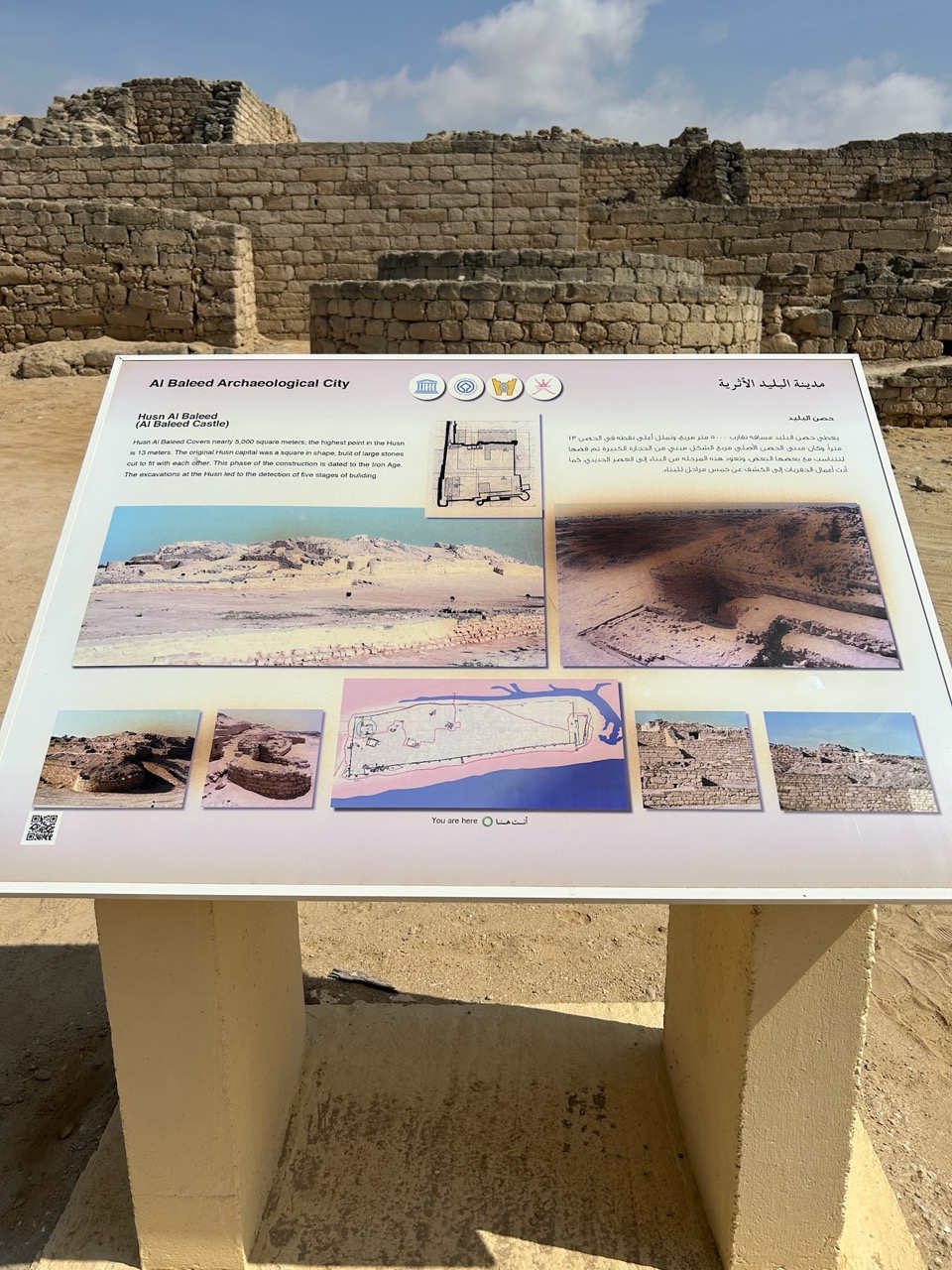
Al Baleed is the ruins of a city called Zafar, which existed since 2000 BC and experienced its peak during the Bronze Age. Frankincense was traded extensively from the port of Zafar. Spread out over several acres, it was good to have a golf buggy to drive around as the heat was getting to us. The city’s remains include mosques, living quarters, and a cemetery.
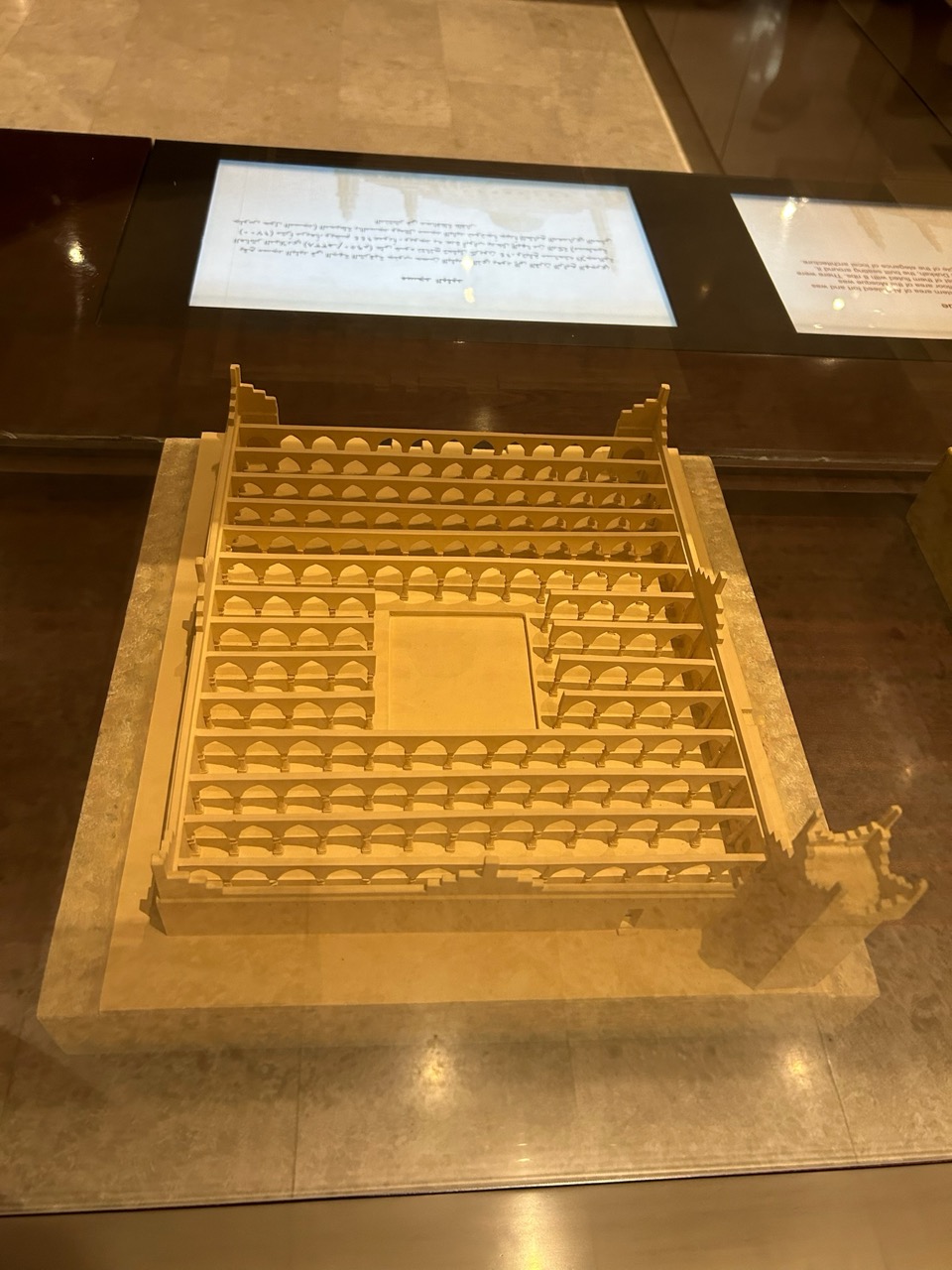
The Museum has two halls – one dedicated to maritime and the other to history. The central courtyard has a lovely, fully grown Frankincense tree. I have always loved the aroma of loban (frankincense), so seeing the source of the gum was very exciting for me.
And we set off.
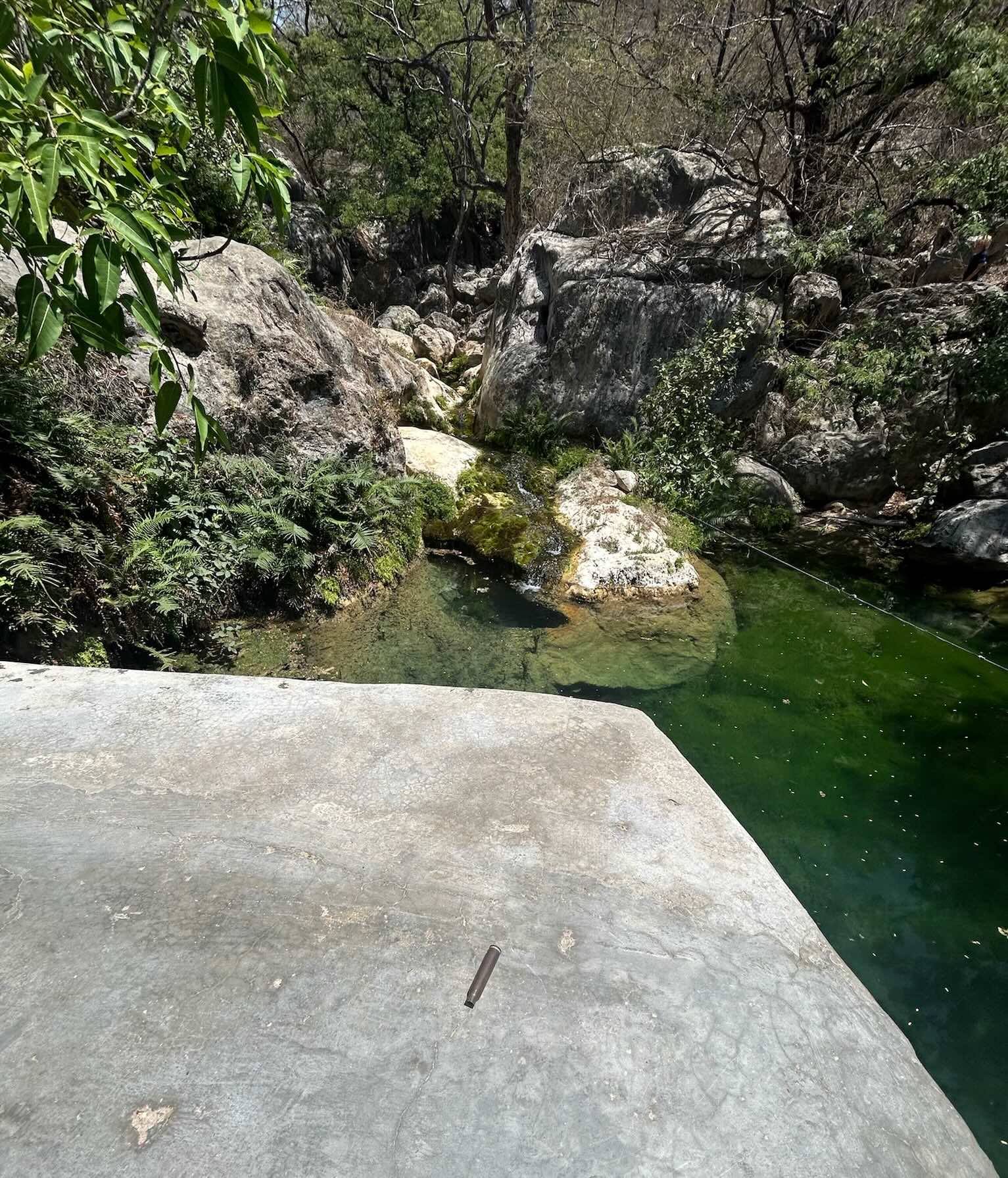
Our first stop was a recommendation from an ex-colleague who grew up in Oman – the Anti-Gravity Hill at Mirbat. After several trials to understand why the water bottle rolled on its own or the car drove in neutral, we made our way further up the hill just out of curiosity. It felt like climbing Chamundi Hills in Mysore; the difference being we could see the Arabian Sea in the distance instead of the city view that Chamundi Hill offers. Curiosity doesn’t always kill, we were rewarded with a very zen-like emerald green pool of water (with no name) and many a baobab trees! It felt like the Far East met Africa at this location momentarily! I even found a shell casing just lying about at the pool. Sshh.
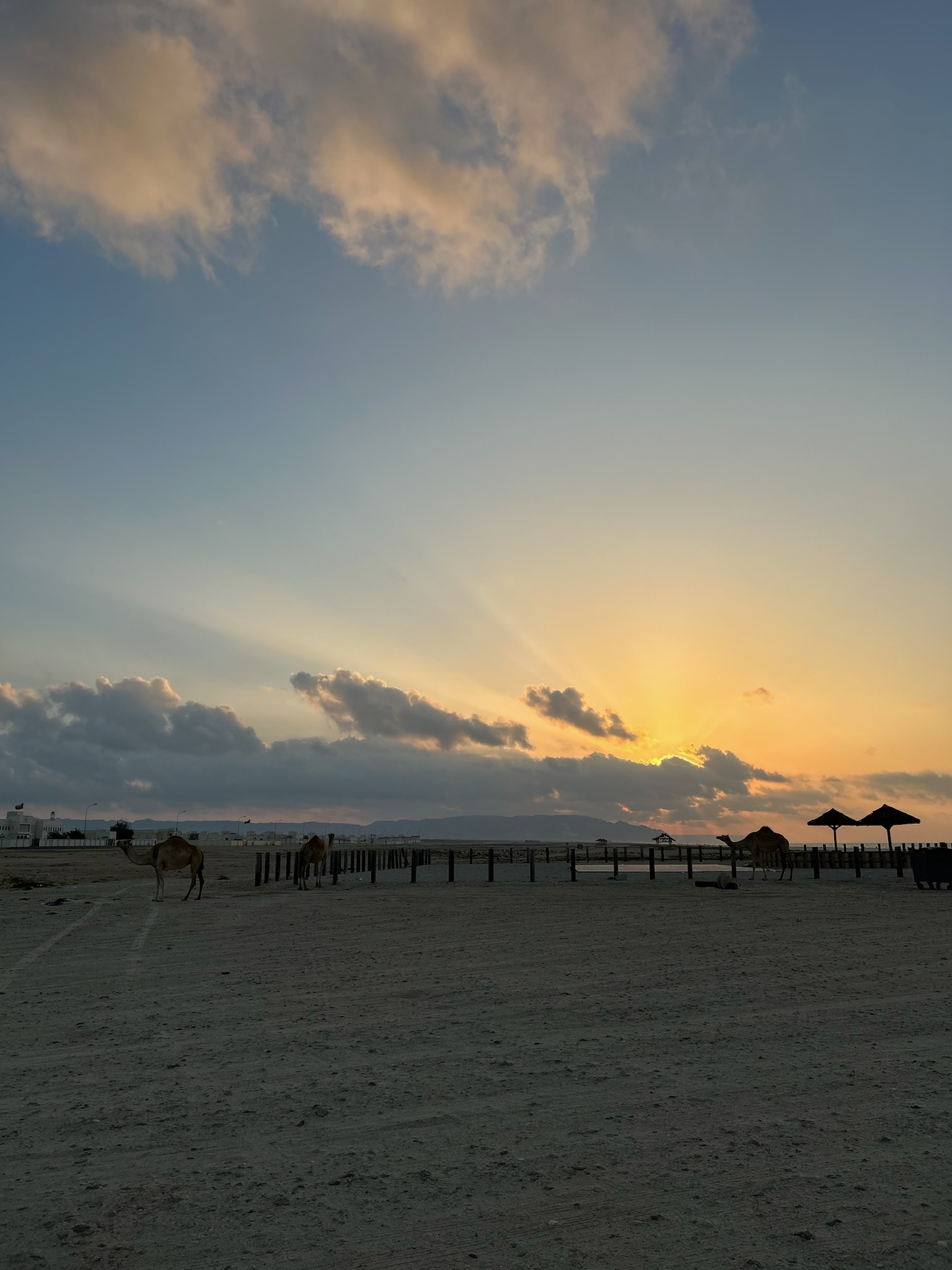
We made our way down the ghat-like roads and found more people trying to fathom the gravity hill, but we had to reach the day’s destination and so we sped off. The road plays hide & seek with the sea and moves away from the coast through hills where we gather elevation only to plunge to sea level again. It was a sight to behold! Camel encounters, changing geography and a wadi later, we were again away from the sea and in the hills. There are only three marked viewpoints, but trust me when I tell you that every turn and bend in the road holds a charm that makes you want to stop and take in the scenery.

Despite being only 275km long, this stretch of the Coastal Route is the most picturesque! After giving up on the first accommodation, a far cry from the video shared by the owner at the time of booking, we found ourselves in okayish rooms with clean sheets that were tolerable for a night’s stay. I will say no more! The dinner more than made up for the unpleasantness of the accommodation – we experienced great Kerala food, and the owner (from Waynad) went out of his way to make us comfortable. He laid out a table for us outside the restaurant and served hot parottas straight from the pan to the plate! We shall always remember this dinner. And the sea, oh! What can I say? The most beautiful waters and our first dip in the ocean on the trip!
Day 4: Ash Shuwaymiyyah to Duqm
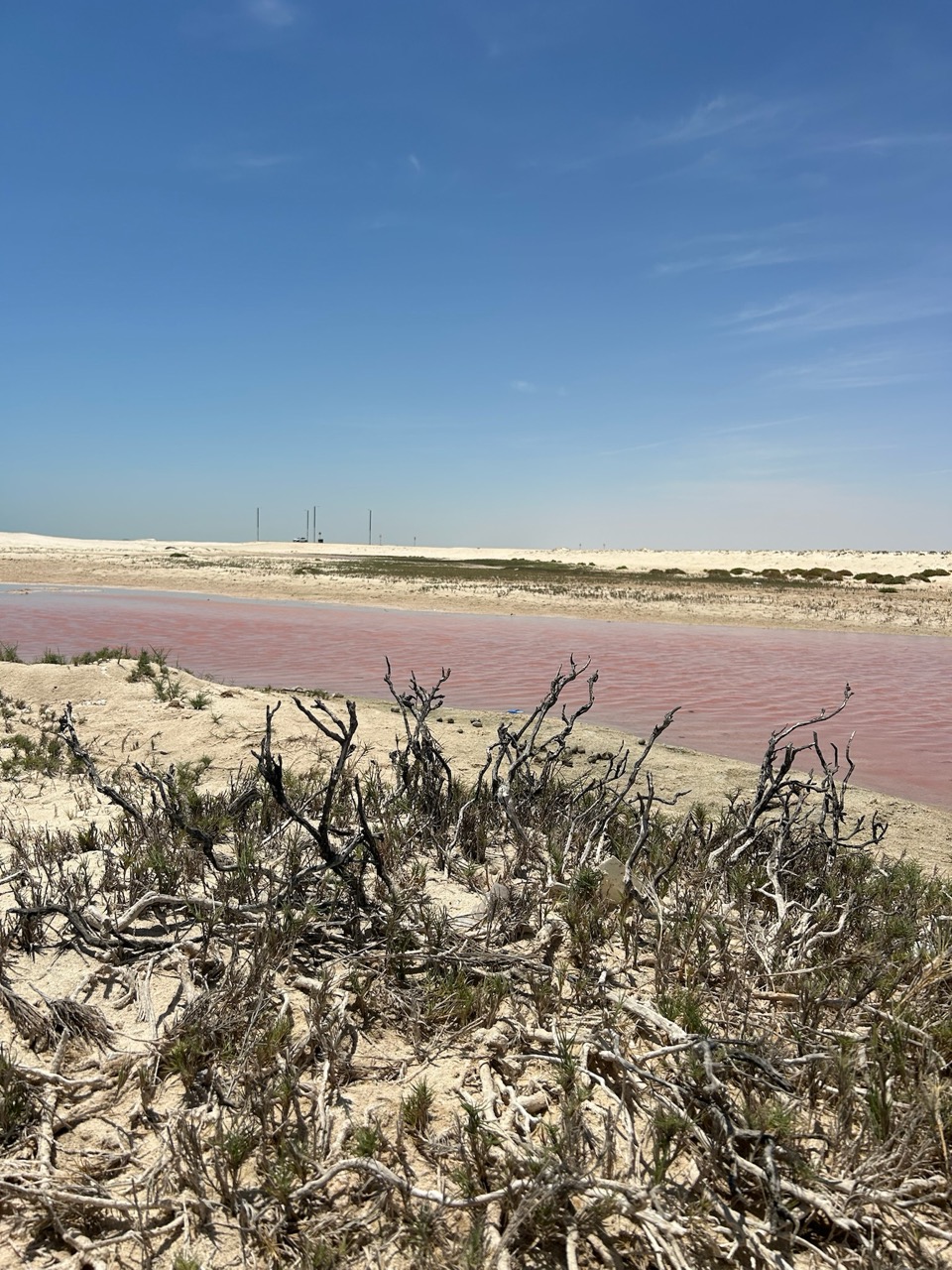
Once we left the little town behind, we drove through hills with Grand Canyonesque vibes. Duqm, on its own, is just a port town with massive developments to keep pace with the port expansion – new roads, new localities, new buildings were everywhere. It does not have anything to offer a tourist, but it was a good place to break the journey as we wanted to avoid driving a long stretch on any given day. The road to Duqm is mostly flat; we saw several mirages and lots of camels; fuel stations far between. En route, we visited the pink lagoon – a pink pool of seawater just off the sea! The water salinity is very high, and it is advised not to touch it as it may cause itchy skin. The sand bordering the pool is so dry, white and salty that it crunches when you walk on it!
Once we got to Duqm, we decided to look up the marked hiking route just outside the city, and a couple of viewpoints that were on GoogleMaps; it ended up being a wild goose chase. This night, the moon was sighted, and it was Eid! So we were now free to eat and drink as and when we pleased.
Day 5: Duqm to Ras Al Hadd
Before hitting the road, we decided to visit the ‘Rock Garden‘ in Duqm. Grotesque limestone boulders shaped by time, weather, and the sea, these beasts are beautiful to look at. A vast open museum, we would have enjoyed it more when the sun was not beating down on us like it did.

Having ticked it off the checklist, we were on the road to Ras Al Hadd. This stretch was probably the dullest part of the coastal drive. We left the hills and mountains behind and traversed through sandy deserts, checking GoogleMaps occasionally to see when we would drive again along the sea. The better half has a particular affinity for the desert. During a quick break we received a lesson on shifting sands and patterns formed by the winds in the desert 😉

Located physically just off the highway along the road to our next destination, we stopped at a pink lake. It is a few hectares in size and was dull pink when we visited. Imagine what it may look like at the right time of the year! We walked around a bit at the water’s edge. A light wind formed beautiful tiny waves on the water with a gentle whisper. The journey’s last hour was through tiny, rustic fishing villages. The locals were dressed in their best Eid attire, either going to the mosque or on a family outing. Given the stringent requirement to pass a driving test in Oman, my daughter, who was behind the wheel on this stretch, wondered how these folks passed their driver’s license tests. It felt like we were driving in India; or worse!

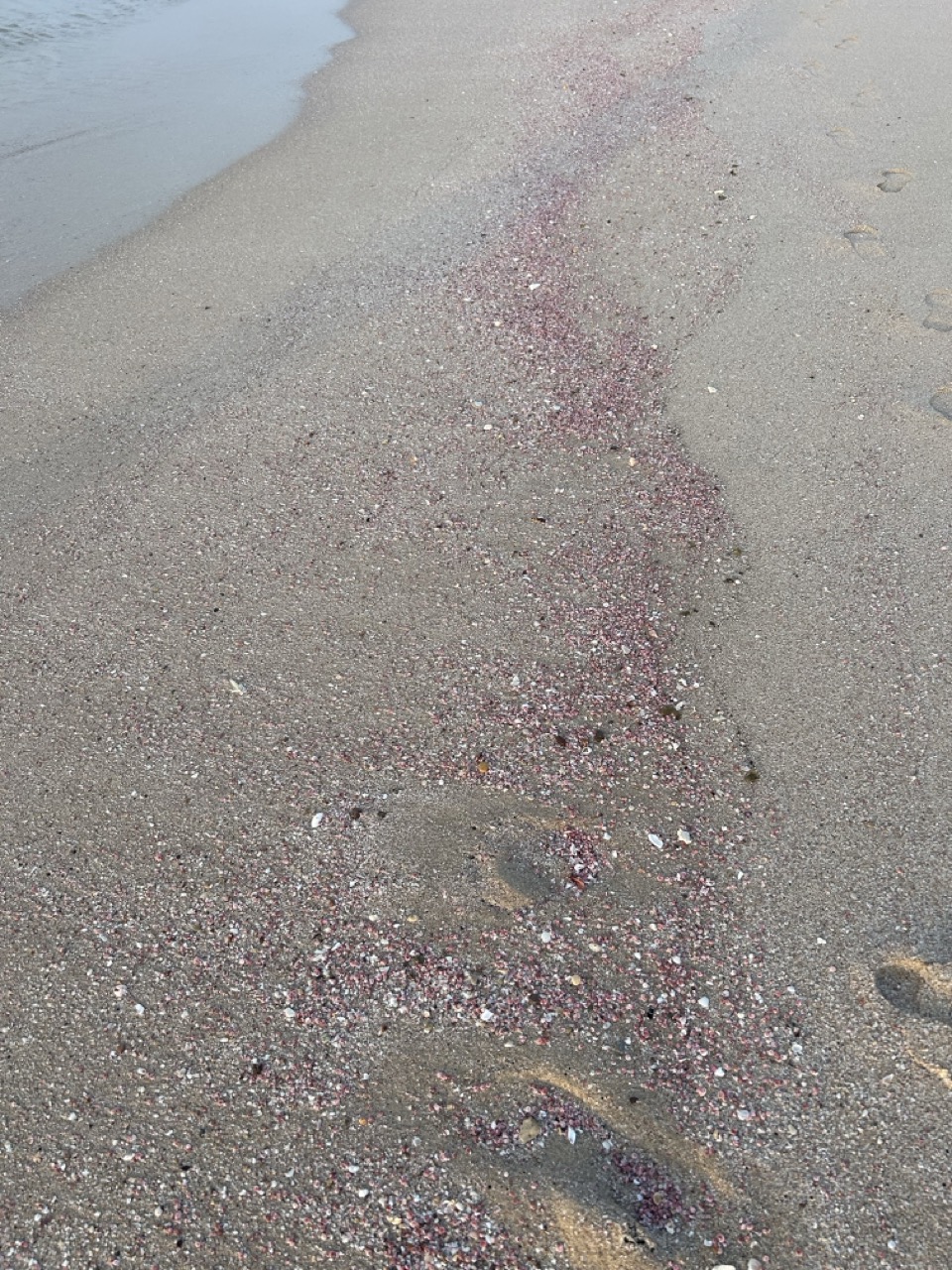
We stayed at a guesthouse located on an old abandoned WWII runway and close to the beach. Ras Al Hadd’s Pink Shell beach has tiny pink shells strewn along it, making it such a pretty sight! But the sea is deep here, and turtles visit at night. So the beach ‘closes’ at 5 pm.
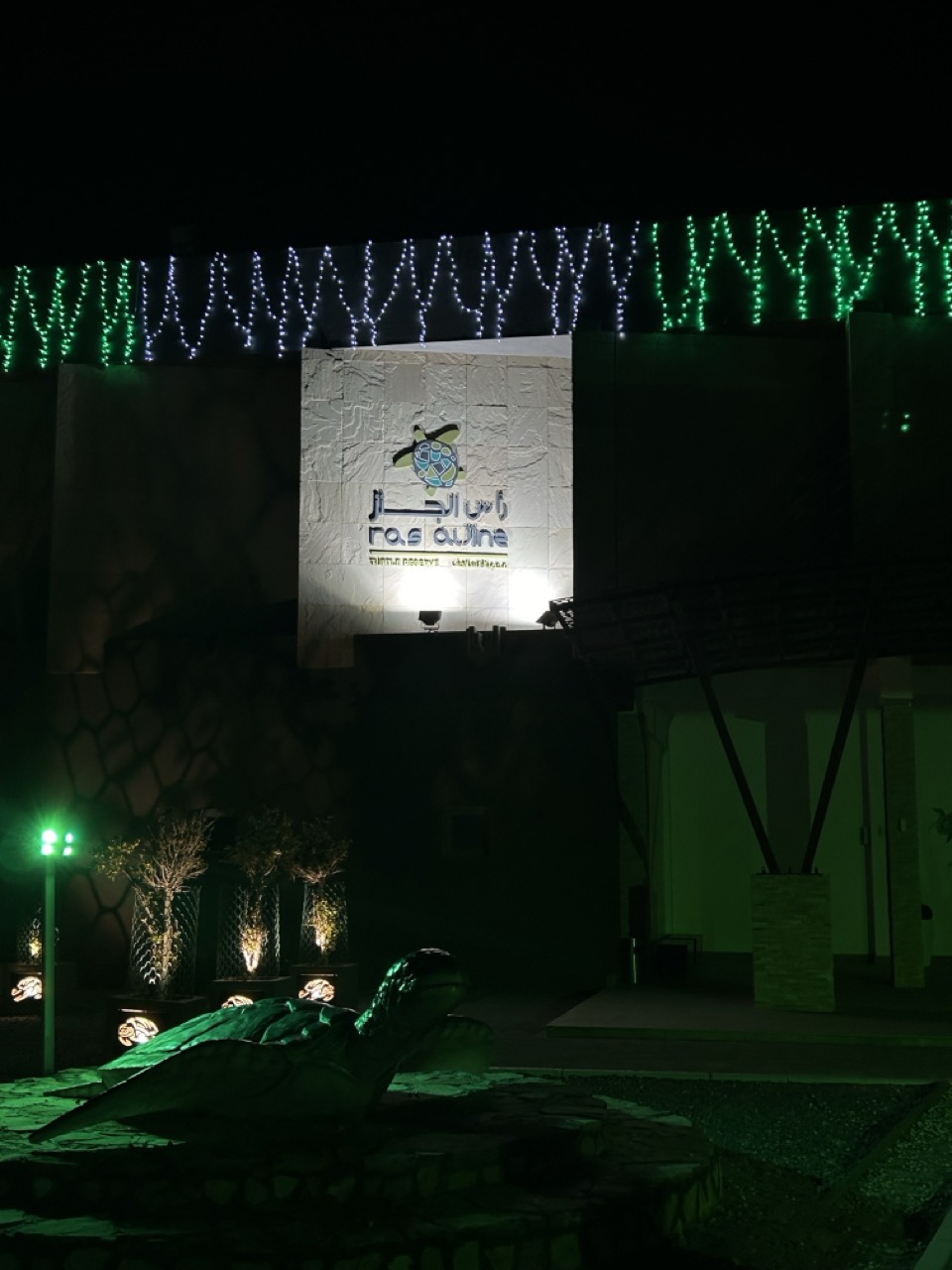
On our itinerary for that evening was a visit to the Turtle Reserve at Ras Al Jinz for a night walk. However, the caretaker of our guesthouse dissuaded us from visiting the reserves. There will be large crowds and you wont be allowed in, he said. Rightfully so, we heard the next day that parking was impossible and there were far more people than the Reserve could handle! I must pause my story here to mention Ektheir, the caretaker of the guesthouse. He is such a fine host; very knowledgeable about the area, and unbelievably sweet and caring! He gave us leads for boat rides and restaurants, and he was always spot on!
Day 6: In Al Hadd
We stayed an extra day in Ras Al Hadd, unlike until now, when we stopped only one night in each place. Day 6 saw us wake up at 3 am to get to the Turtle Reserve for the morning walk to spot turtles. While spotting them is a chance, we were not there at the right season, so our chances were really meagre. Turtle tracks, a gorgeous sunrise, canyon-esque rocks and being at the easternmost point in the Arabian Peninsula made up for not spotting any turtles.
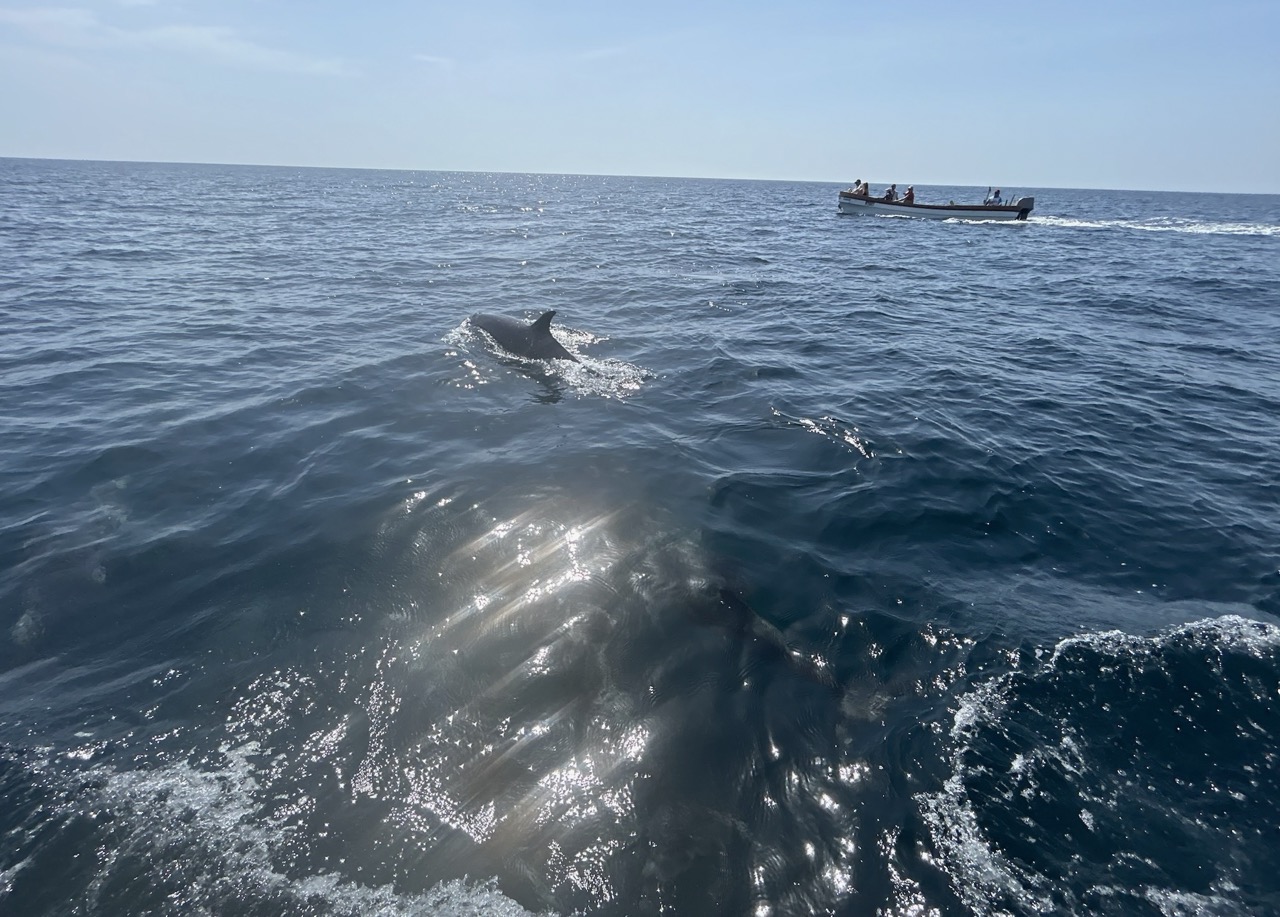
After breakfast, we went on a boat ride – something that will stay with us long! We sped off into the sea and suddenly spotted more dolphins than we had eyes to see! Our boatman kept saying “look, look” and pointing here and there! We could not keep pace! We turned from the blue ocean toward the green Gulf of Oman and were lucky to spot a pair of mating turtles! These shy things disappeared just as soon as they appeared. After all that time on the boat, we learnt to keep pace with the “look, look” commands 😉 After some snorkelling in the sea and the gulf, we rode further into Ras Hadd Lake, which is nothing but a cove for more snorkelling to look at “little little fish”.
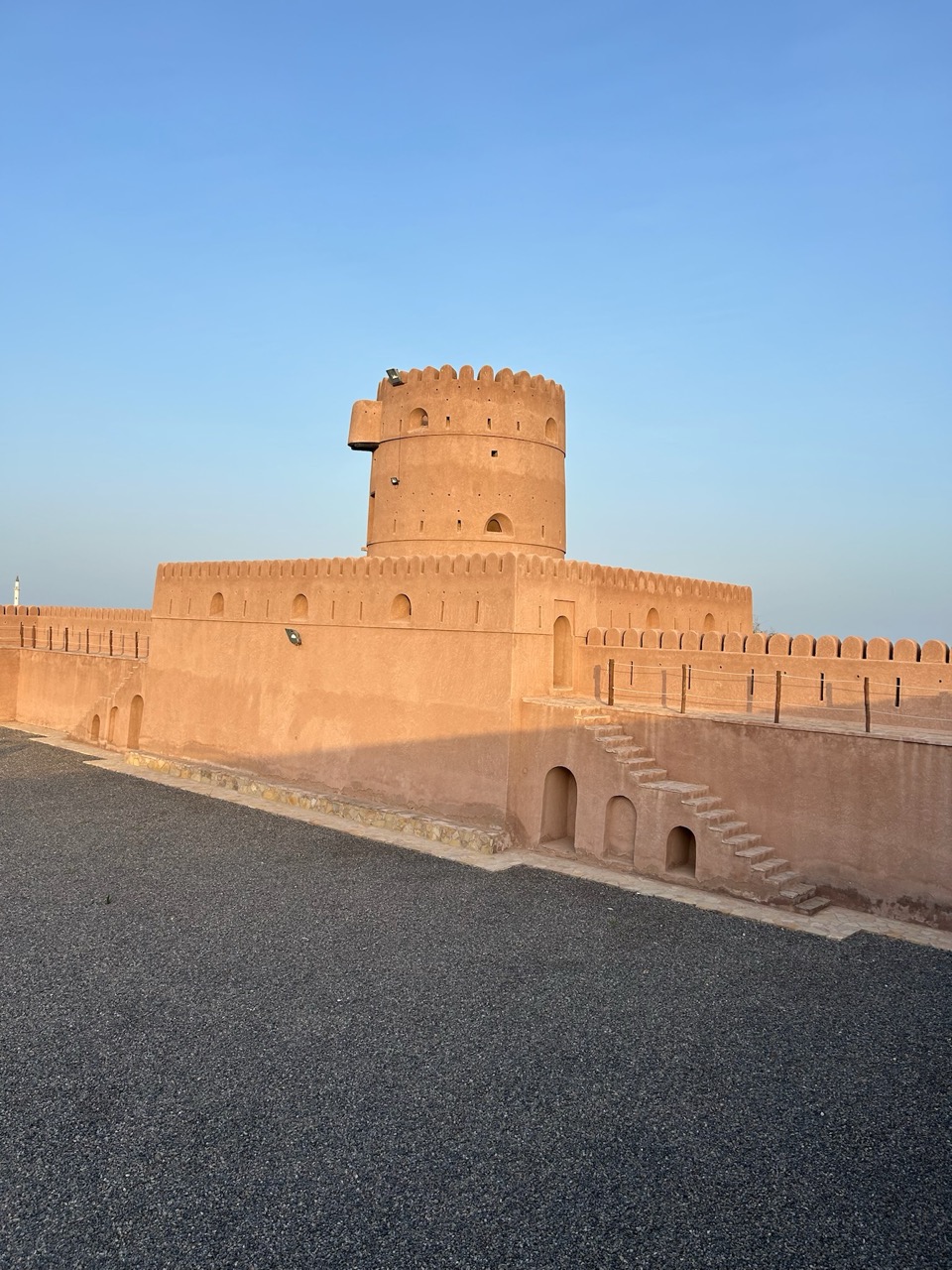
After a hearty lunch and a siesta, we visited the Ras Al Hadd Castle, which is more fort than castle if you ask me. The sun was at the right angle, and we got some pics that make the castle look very photogenic 😉 Post-dinner, we had a rather engaging conversation with two other guests, UNESCO employees working in Jordan and Egypt.
Day 7: Al Hadd to Wadi Shab to Tiwi
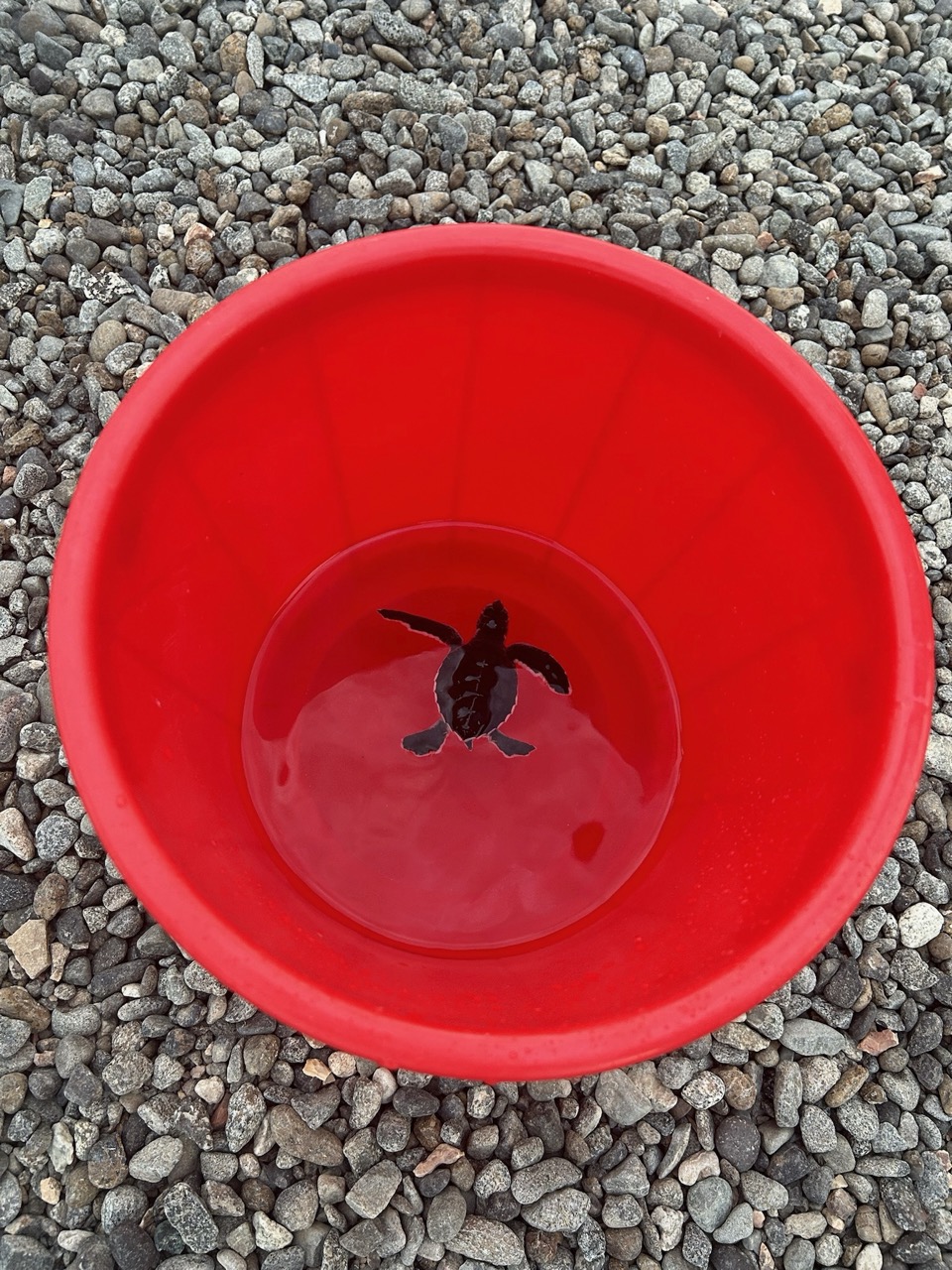
The compound of the guesthouse is very pebbly. We were lugging our suitcases to the car, and suddenly, I saw something jump close to my daughter’s foot. It was a baby turtle, good heavens!! I wanted to drop everything to drive to the beach and help the little one find its way onward. Ektheir told us that daytime was not a good time to drop these off to the sea as predator birds will be lurking around to make a meal of these babies. So he put the baby turtle in a bucket of water and sent me a video of releasing it into the sea in the evening. Ektheir told us it was common for the baby turtles to lose their way. However, it was rare to see one so far away from the beach this time of the year. During the egg hatching season, hundreds and hundreds of them come as far as the guesthouse! The locals pick them up, keep them safe in large tubs of water and release them at night. He showed me some videos from the last couple of seasons.
On that note, we left for Wadi Shab.
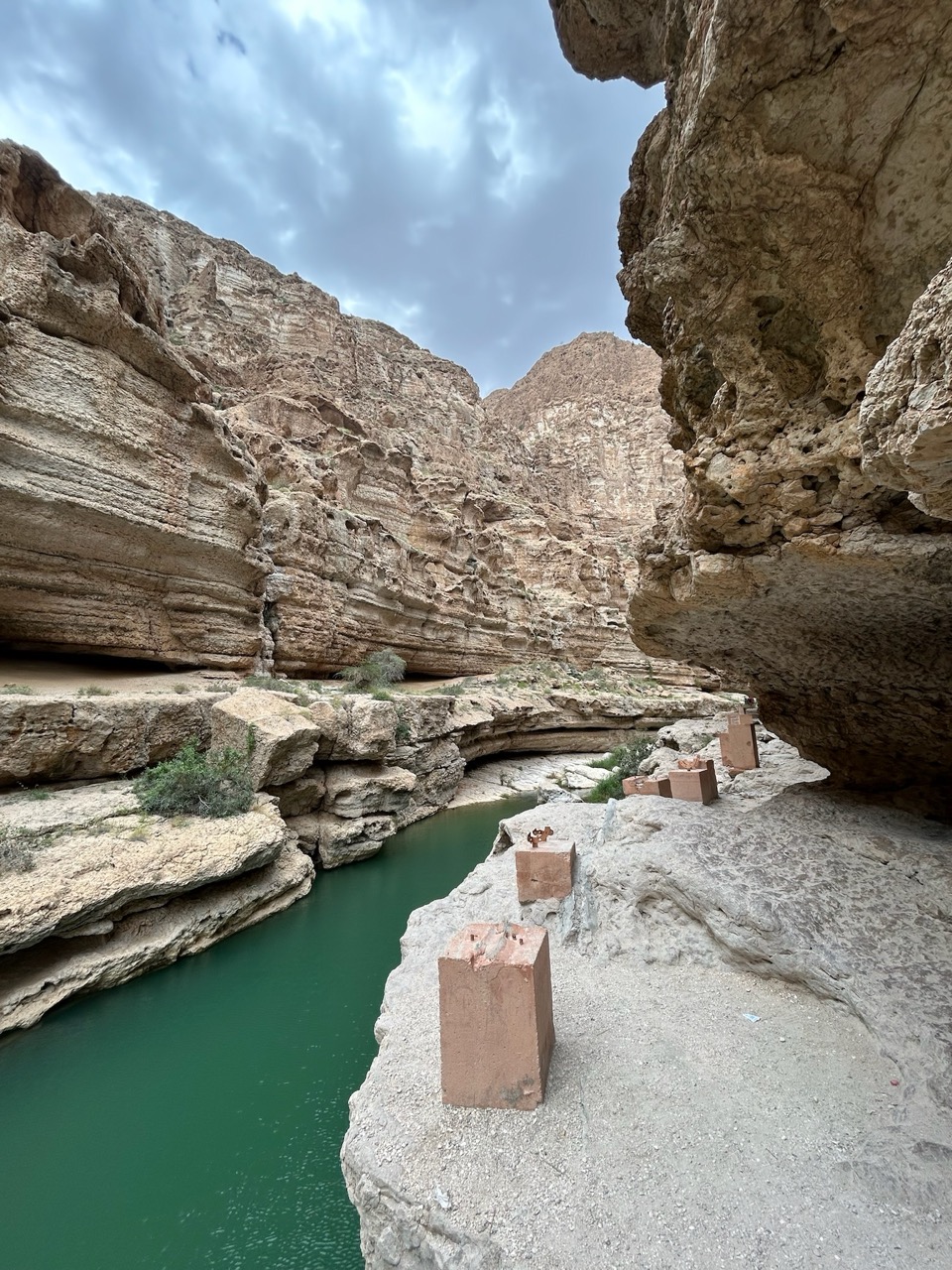
Google Maps can get disoriented at the point where you exit the highway. It may lead you toward an underpass and, subsequently, a dead end. Do not turn left toward the underpass; instead, make the acute right turn (there is a brown tourism board) and head down the very slopey road to reach the parking lot.
We get to the trek start point after the shortest boat ride ever from one bank of the river to the other. We first pass through a farm that receives water via the traditional falaj water system. It is not a marked path, but the trail is well-trodden. It helps to be sure-footed, as some spots need good balance and the ability to land steadily after a small jump (unless you are wearing waterproof shoes). It is a 45-minute easy trek to the first water pool. You can end your trek here and return or swim to the next pool and then swim to the final pool between a very narrow gap.
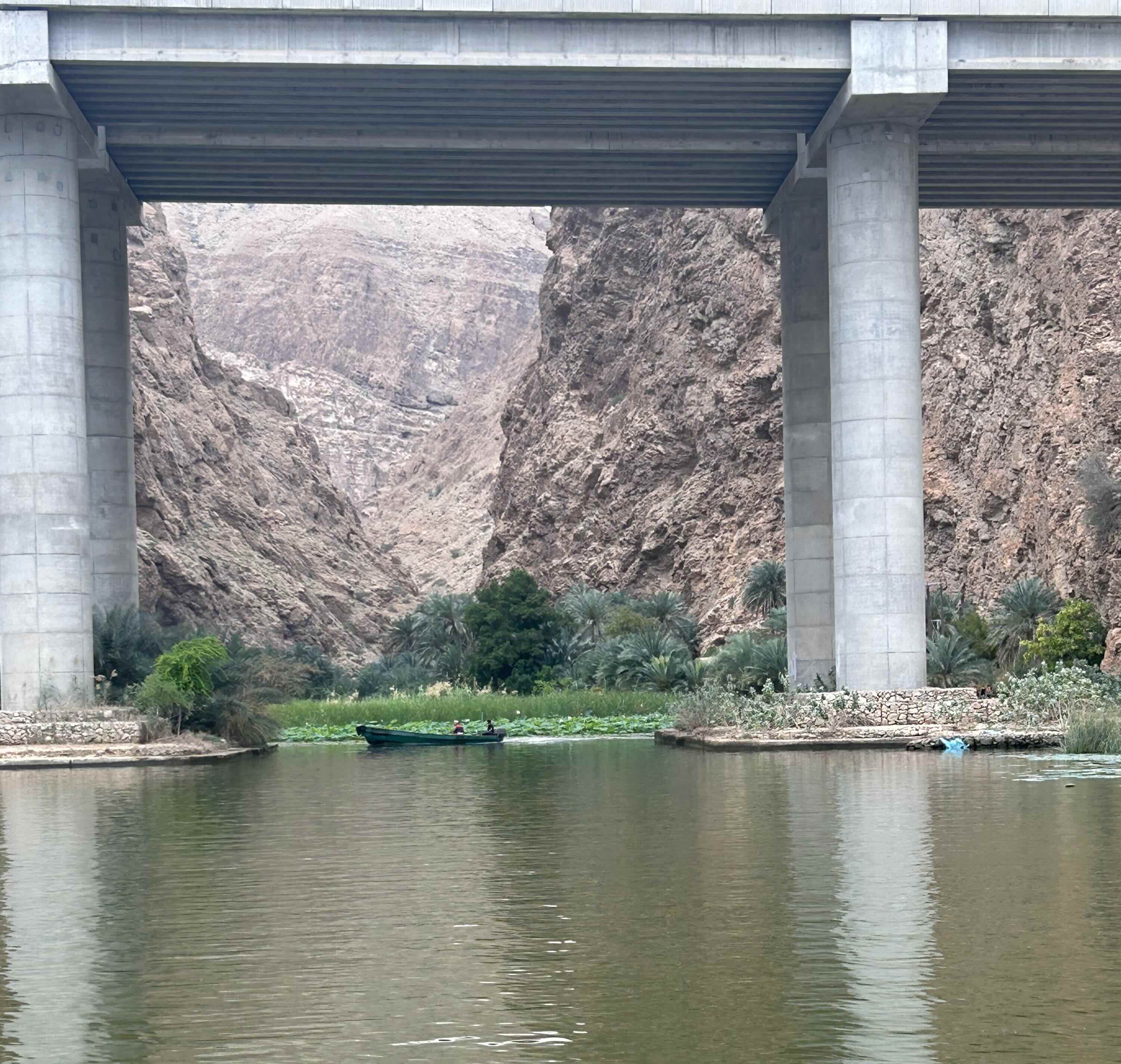
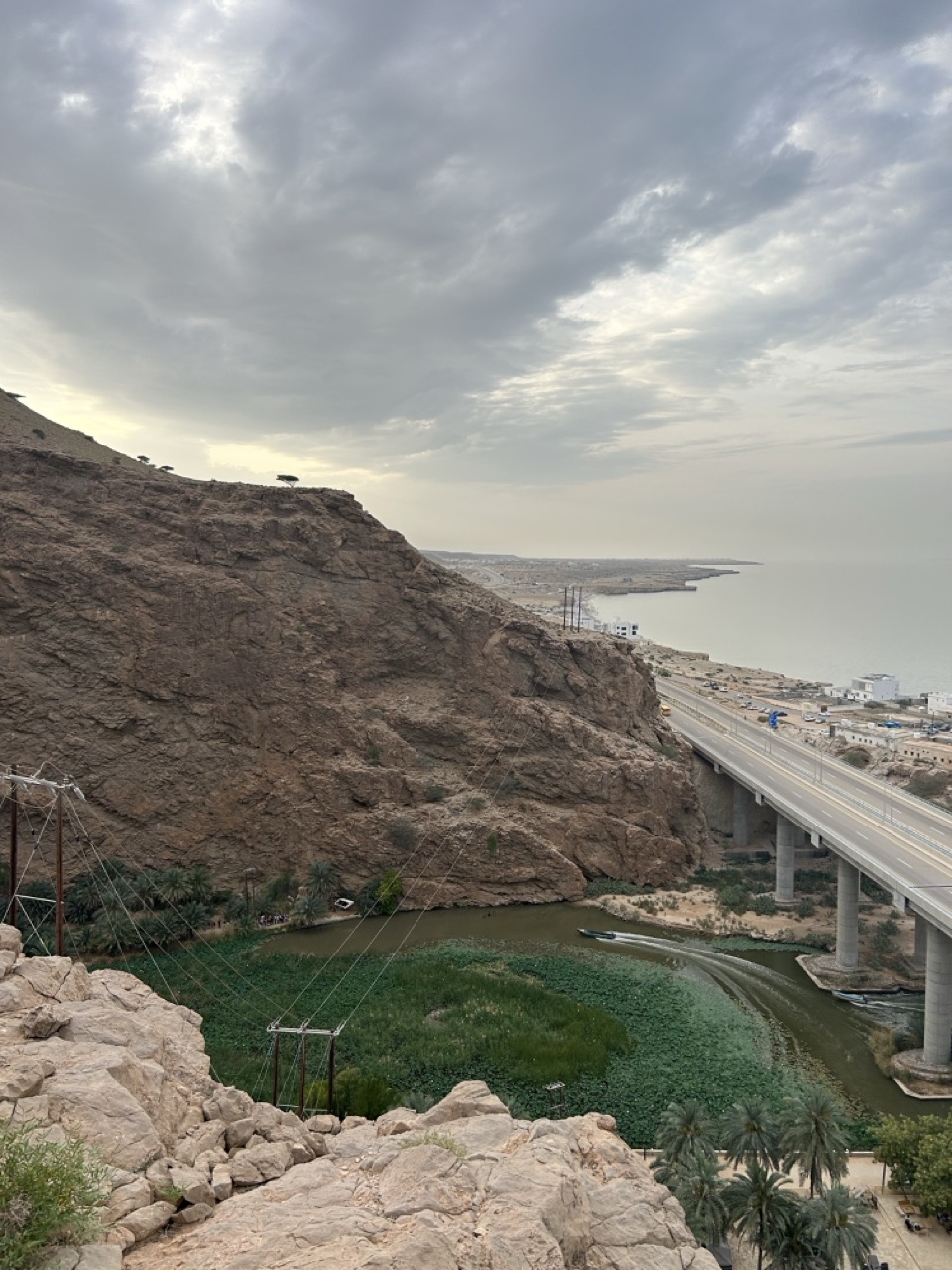
We were famished when we got back to the parking lot. We ate a good bite at the café and went to our accommodation. In the evening, we revisited the dead end that we encountered in the morning, where the boys decided to hike up the boulder face of the hill. My daughter and I strolled around to the end of the road for a top view of the highway and the Wadi Shab start point. There was an unmarked road further up, which we realised was a path to the line of transformers on the hill. We drove around a bit, caught the sunset at Tiwi’s beach pavilion, and watched on as fishermen were prepping for the next day and tiny turtles were bobbing along in the small stretch of water between the town and the beach pavilion sand bar. Dinner at Mubarak Juma Mubarak Al Araimi (long name, small place!) in the small town of Tiwi was good, and we ate greedily 😉
Day 8: Tiwi to Bimmah Sink Hole to Muscat
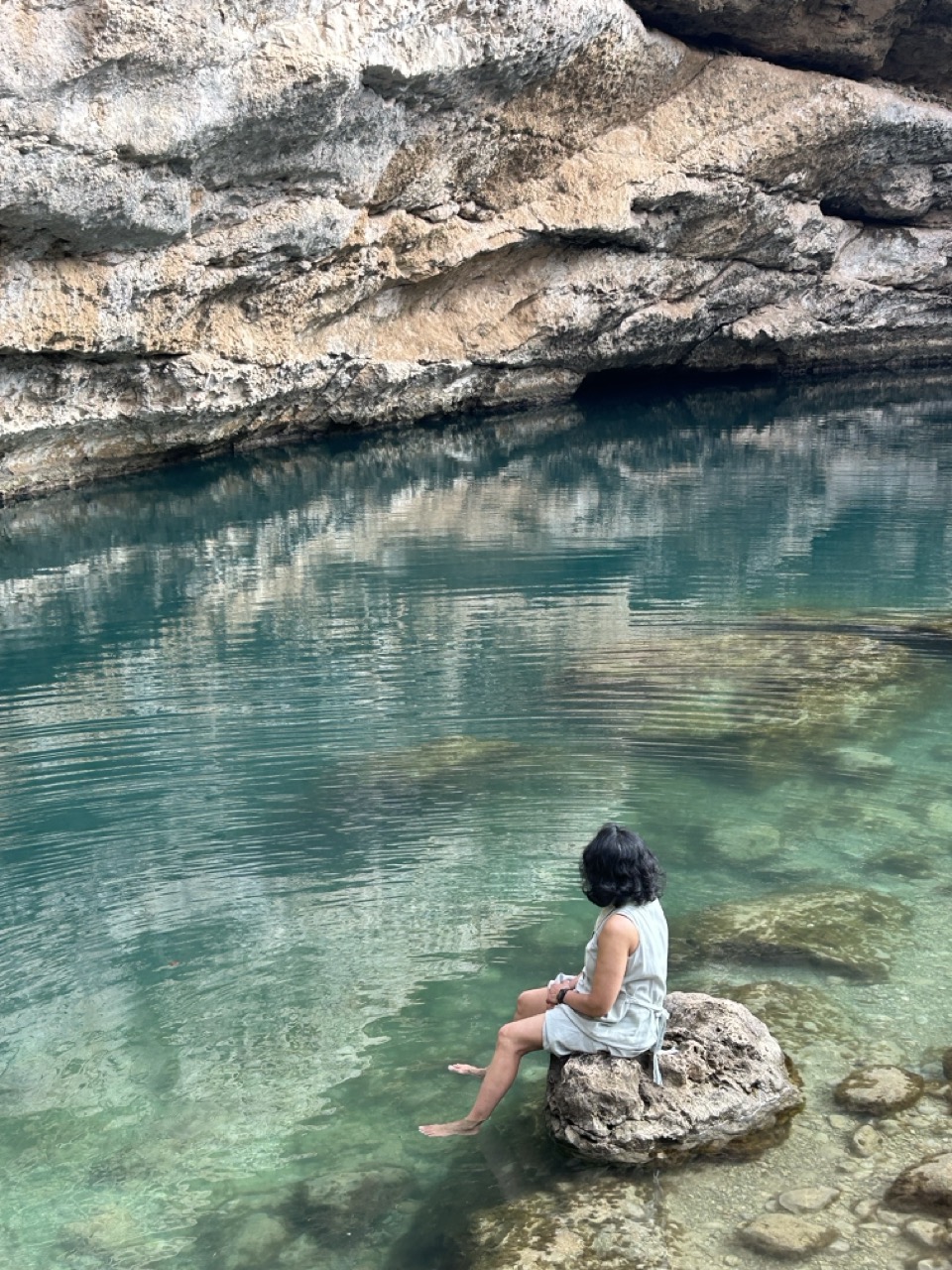
Day 8 was our last day in Oman. Our trip had gone well, and we were on a happy high. We visited the Bimmah Sink Hole as soon as the gates opened, so we had the place to ourselves for the first 15 minutes. The sinkhole is located inside a park, and a few hundred steps lead down to it. It is so calm and perfect in the morning, with the happy chirping of tiny birds as they fly about along the walls of the sinkhole. And the best free fish spa ever!
We were back on the road to Muscat where we spent a few hours in Muttrah Souk after a delicious Arabic breakfast at the Royal House a restaurant close to the souq and done up rather nicely.
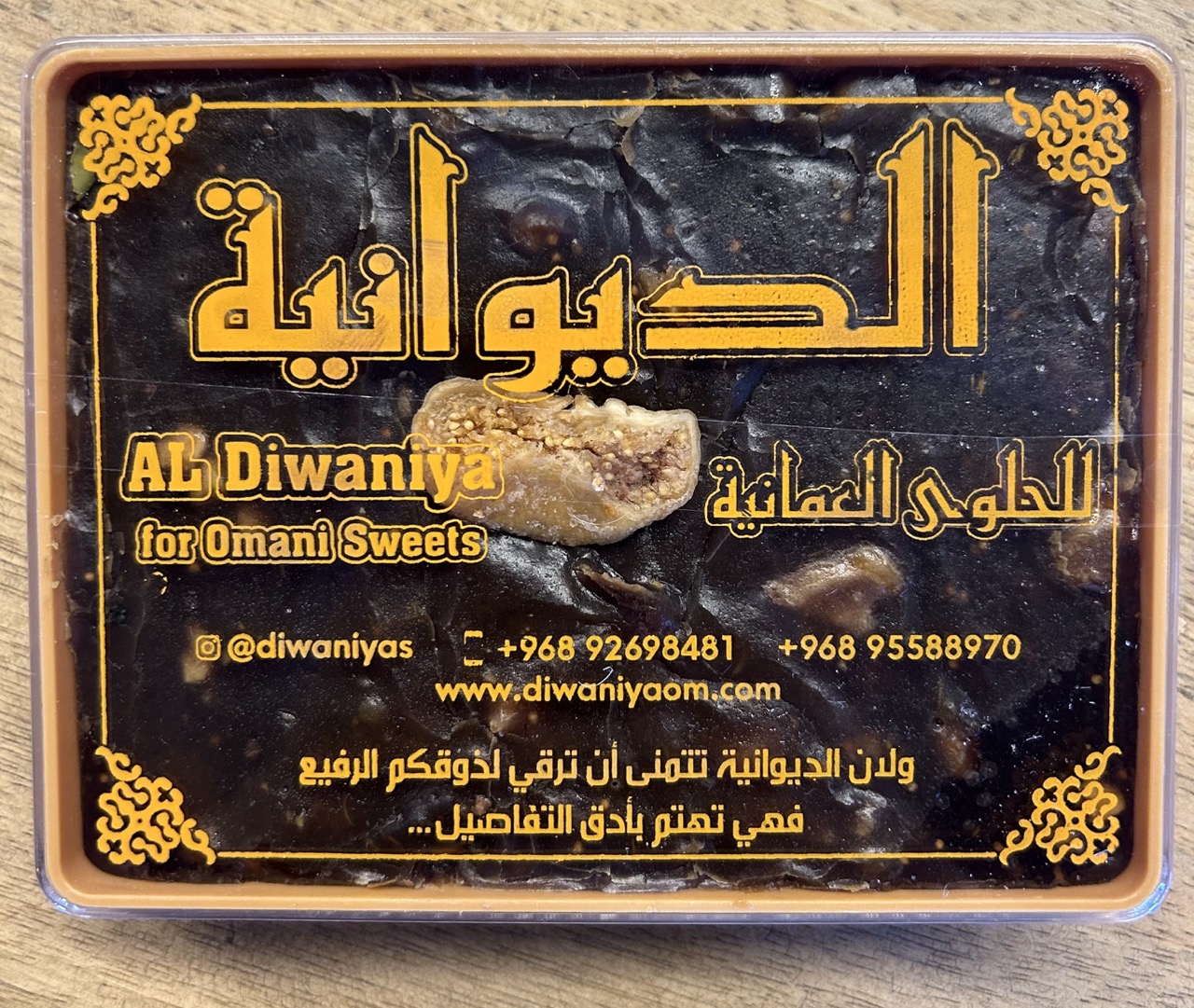
Souqs do not fascinate me, but this was a good place to pick up a few souvenirs and frankincense. I also bought the famous Omani halwa from Al Diwaniya Sweets. The kids picked up Oud for their friends from Ajmals (Oud seems to be the latest perfume on the block – it is everywhere!!).
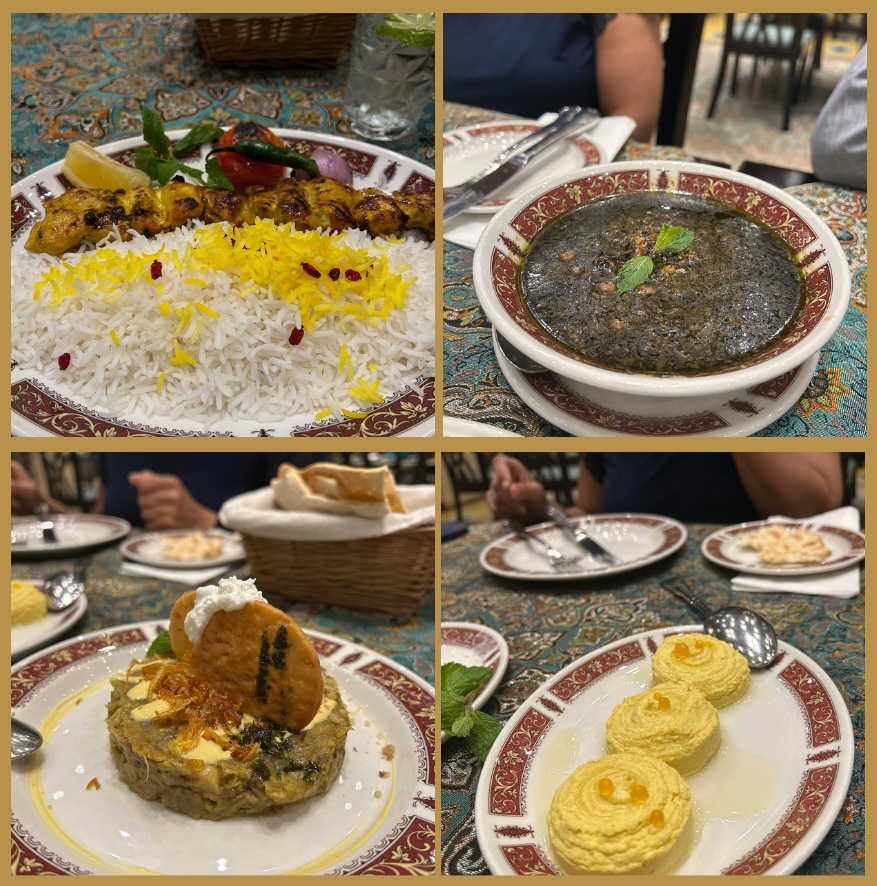
A trip as good as this deserved a good ending. Dinner at Ferdowsi Persian Restaurant was finger-licking delicious!
And it’s a wrap, but not before a delayed flight scare because Iran decided to send drone missiles to Israel, forcing Turkey, Saudi and a few other countries of the region to close their airspace. We made it back safely, while my daughter was delayed (in the process, she got to see Istanbul!) but made it back safely; while her luggage made it back a few days later 😉
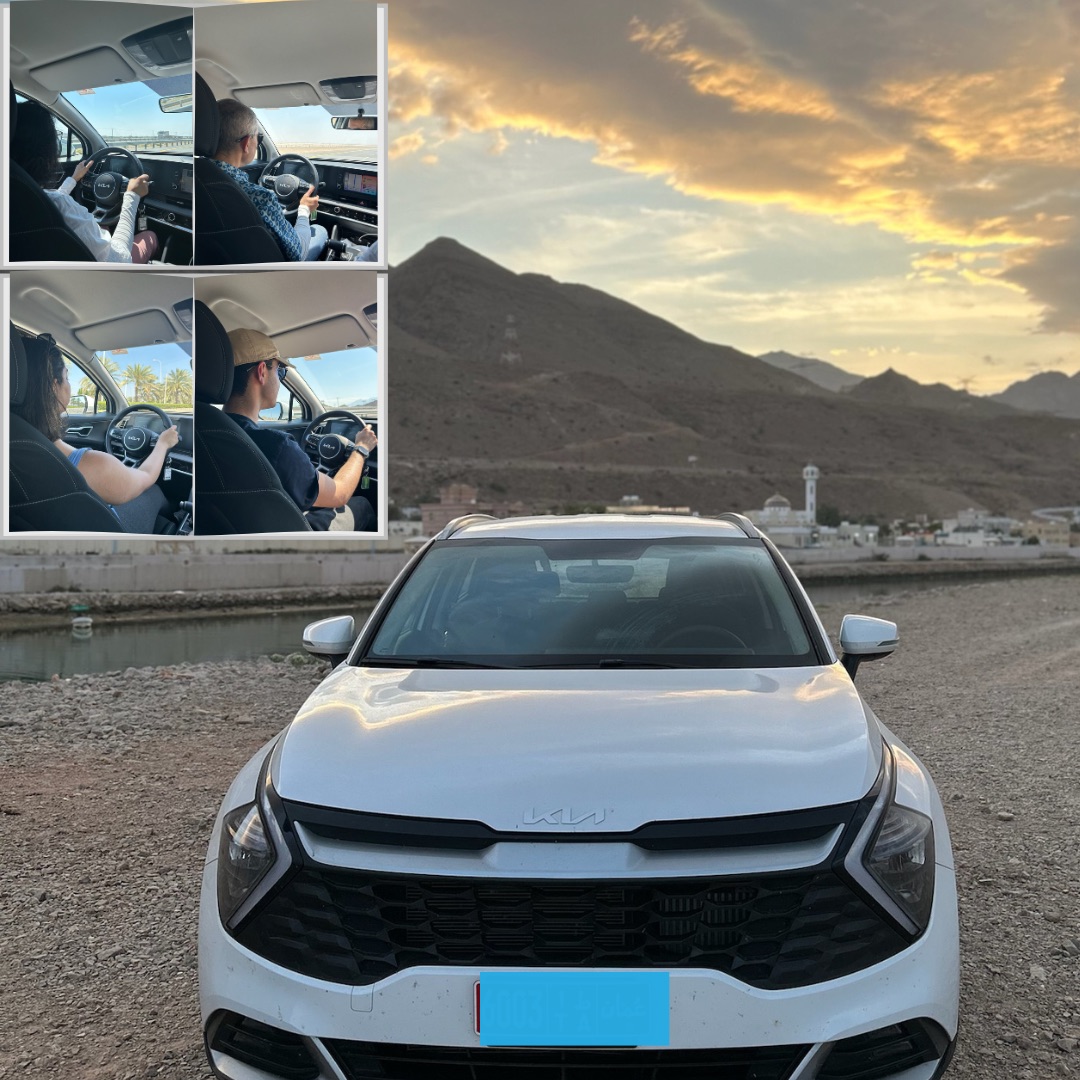
So there we were – one car, four drivers, eight days, 2700km. Phew! Smitten by Oman, the better half wants to go again. Will we? Only time will tell.
Some points to bear in mind:
1) Fill fuel well BEFORE the ‘Low Fuel’ Warning light comes on because fuel stations are far between.
2) Stock up on water for the same reason as in Point 1.
3) Be prepared not to have loo breaks or be brave enough to answer the call of nature…in natural surroundings, for the same reason as in Point 1.
4) IDP (International Drivers Permit) is not needed. But some car rentals will make a fuss and you will lose time convincing them. Err on the side of caution, get yourself one and be on your way!
5) Oman is rich in natural beauty. Our trip hardly scratched the surface. There are several more things to see and do.
6) Omanis are friendly. They all seem to have a connection with India – for medical care, education, etc.
7) Mobile signals could be better and more available on the highways.
8) Wadi al shab:
Go early to be among the first to head out on the trek; it is much more relaxed.
As the day progresses, the parking lot fills up, crowds increase, and the pools will have more people than you want to swim with.
Wear anti-skid, water-resistant shoes so as not to slip on mossy pebbles under your feet in the pools.
The pools are deep. You must be a good swimmer with regular swimming habits. Otherwise, be responsible and rent a life jacket*.
The gap to reach the last pool is very very narrow; only some will fit through. Please exercise caution.
The parking lot has free and paid restrooms, a cafe, waterproof bags for sale, and life jackets for rent.
 Kirana Bhat
Oman is so wonderful. I have been a handful of times for very short trips. Your adventure looks amazing. That narrow passage at Wadi Shab is a bit unnerving 😂
LikeLiked by 1 person
We want to go back some day….to cover other parts of that beautiful country!
LikeLiked by 1 person