Sometime in the ’80s, India’s remote sensing satellites saw nearly 30 structures submerged under the sand on the banks of the River Kaveri near a tiny village between T. Narasipura and Shivanasamudra. Archaeologists get into action and dig out several temples from under 20-30 feet of sand. The unearthed trove of epigraphical evidence supported the existence of a town called Talakadu somewhere between the 6th and 17th centuries.
The “Talakadu” that we visit today is, in fact, the ‘new’ Talakadu. How did it happen?
Several stories abound about how the village got its name and why the temples are famous. The ruinous condition of the unearthed structures suggests several possible causes of destruction, including earthquakes, changes in the river’s course, and inter-kingdom/religious wars. The riverine sand gave credibility to the legend of a royal curse that you will read about everywhere if you google ‘Talakadu’.
The temples belong to a period when this land was ruled by the Western Gangas, the Cholas, the Hoysalas and the Mysore Wodeyars; historians and archaeologists alike were smitten by their exquisite beauty.
Mostly intact, these temples are now worshipped at and regularly visited by devotees and curious cats like me (makes me a ‘Late Lateefa’, too – I visited only now!!). Three Shiva temples and two others located in slightly outlying areas are together now the ‘Panchalingeshwara’ temples where the Panchalinga Darshana festival takes place every 7-13 years, drawing a lot of devotees.
We left early in the morning from Bangalore towards Mysore and exited the highway at Maddur. The drive is through farms and sugarcane fields – green, green and greener as far as the eye can see! Suddenly, River Kaveri comes into view as it flows gently and majestically.
Just off the riverbank on a hillock is the Sri Mudukuthore Mallikarjuna Swamy Temple.
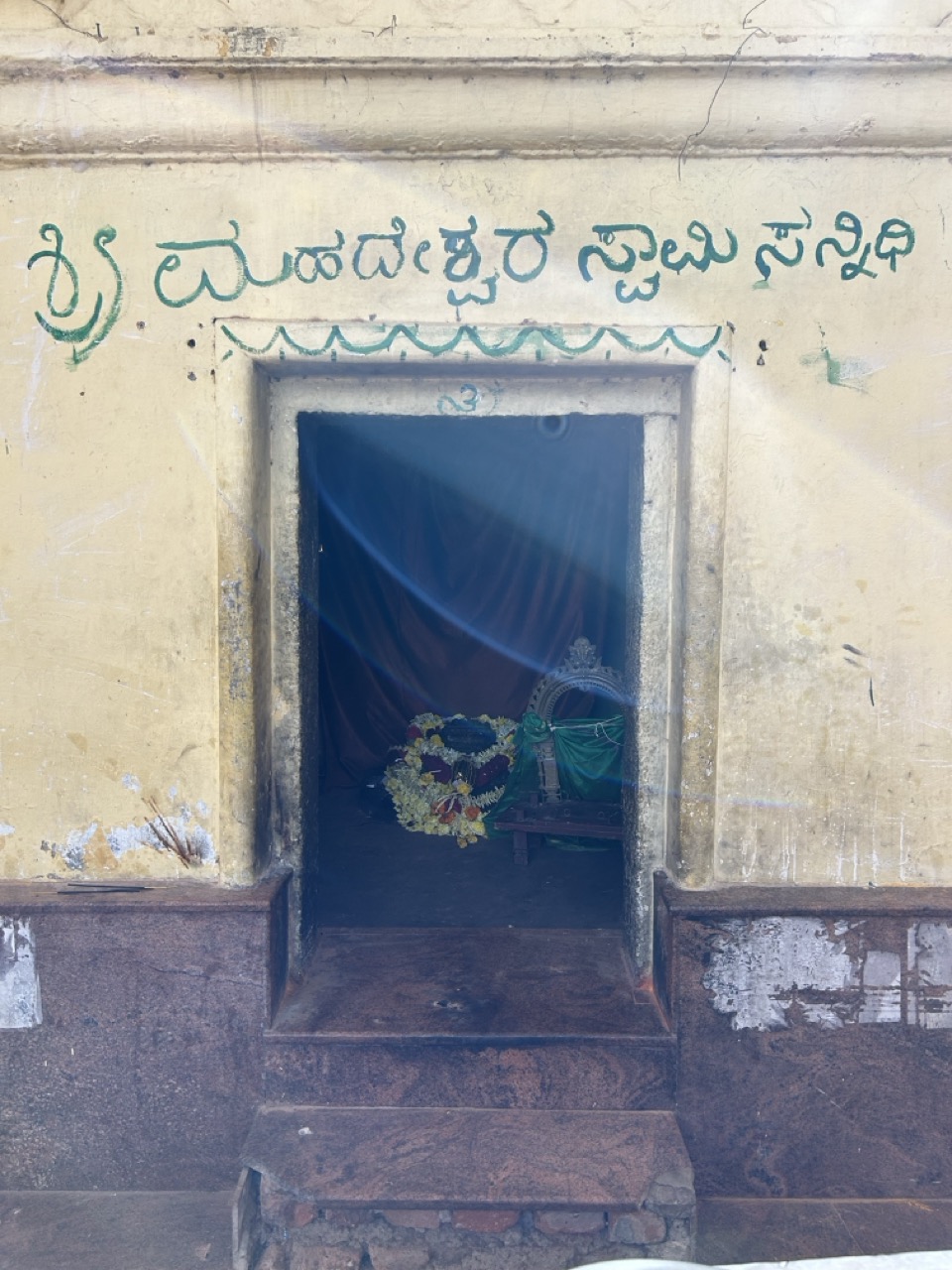
Midway along the climb to the top is a small shrine to Sri Bhuvaneshwari Amma. The temple is enclosed within a fort-like wall. You get a great view of the River Kaveri from here. The temple is undergoing renovations. You must make your way along a temporary pathway. The Pujari tells me that the previous state government sanctioned money for the upgrades, but a change in government means the renovations are stalled. The same Pujari also tells me that Arjuna of the Pancha Pandavas stopped here during his exile.
Back on the road, down from the hillock, we took some time strolling along the riverbank, which has many small stone structures from ancient times! These were perhaps rest houses or dharamshalas.
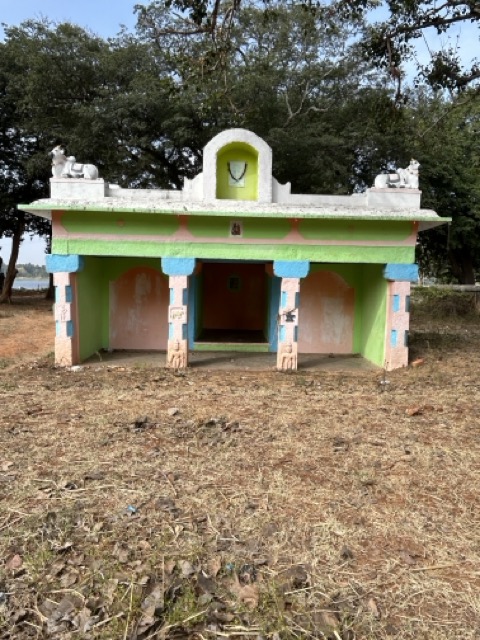
Back in the car, we went to Kaveri Beach, a popular picnic spot. People were standing along the riverbank admiring the river, drying themselves up after a swim, or waiting their turn for a coracle ride. Small shops selling trinkets and food abound.
Our walk to visit the temples started here. The sandy path through the wooded area led us first to the Pataleshwara Temple. Retaining walls hold back the sand from submerging the temple again. Keeping the sand blowing over and inside the temple on windy days must be challenging.
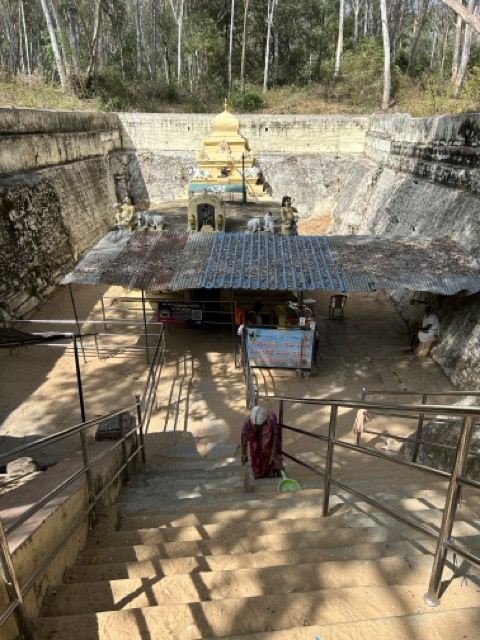
Steps lead down to the tiny temple, which is a simple, low-ceiling structure. Lord Shiva is worshipped here as Vasukishwara. The gopura atop the sanctum sanctorum looks new, the original was probably demolished or destroyed. Artefacts like Shiva Lingas, gods and goddesses, column bases, and relief sculptures, probably found on-site, are placed neatly both inside and outside the temple.
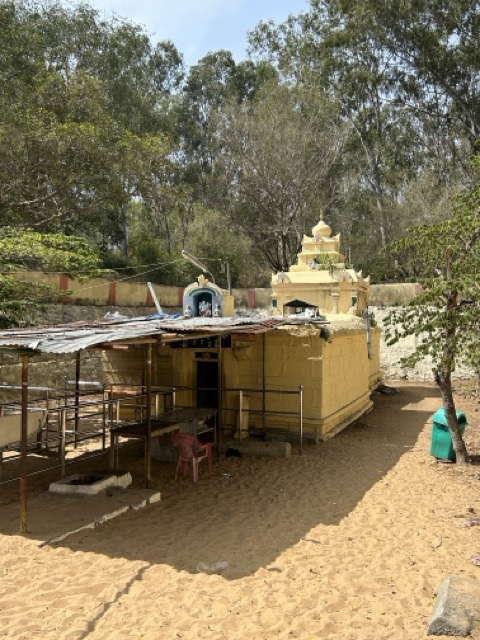
The next stop was Maraleshwara Temple, which is very similar in shape and size to the Pataleshwara Temple in terms of location, temple architecture, and artefacts.
The next stop is the Keertinarayana temple, which is gorgeous!
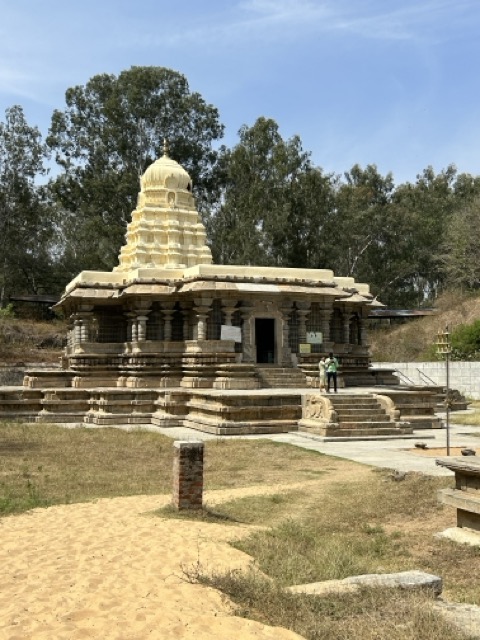
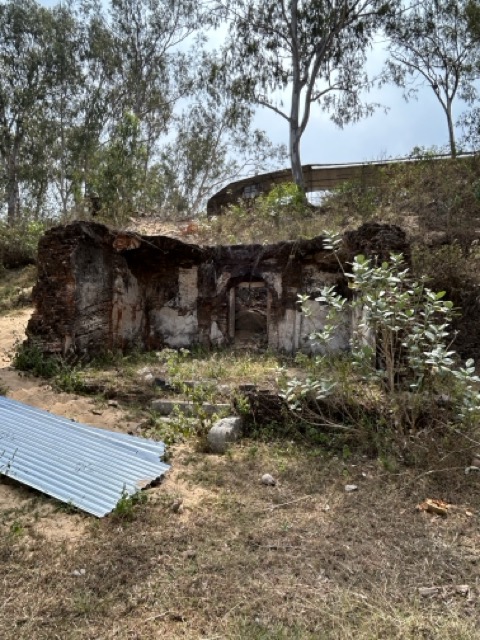
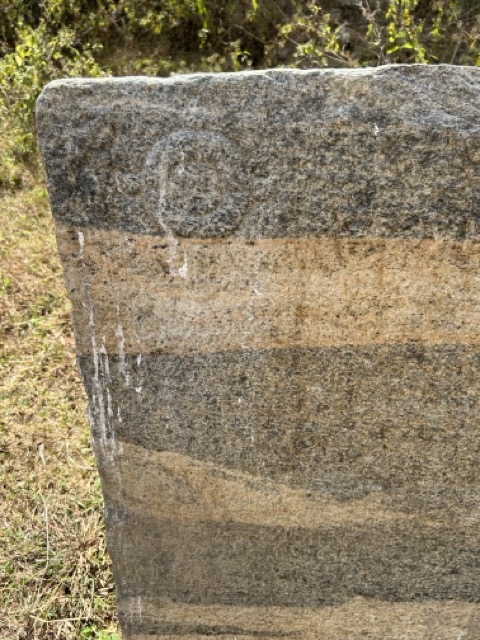
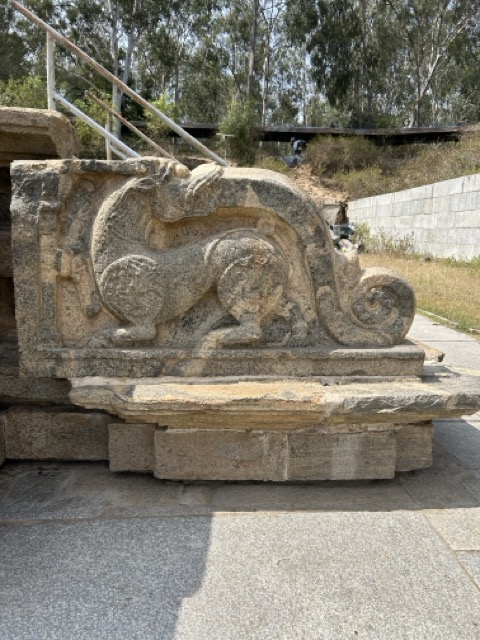
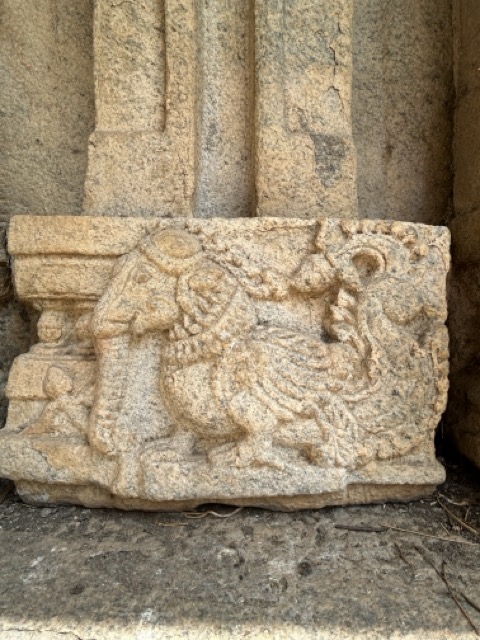
The heaps of sand around the temple give a good idea of how deep the temple has lain submerged under the sand! Walking towards the temple, you will see large pieces of granite elements lying around – remnants of the temple. The ASI has done a fabulous job of restoring this temple. Architecturally, it has all indications of belonging to the Hoysala era. On one edge of the compound are remnants of an arched door made of bricks and a stone edict, the writings mostly worn away by time and weather. There are several inscriptions around the temple’s base. The lathe-turned pillars, ceiling architecture, the Hoysala lions, the chajjas – all exquisite!
After spending a fair amount of time admiring the Keertinarayana temple we walked past the Gokarneshwara Pushkarni towards the largest temple in the Talkadu complex – the Vaidyanatheshwara temple with a legend associated with the diety’s ability to heal; therefore ‘Vaidya’, Sanskrit for ‘doctor’.
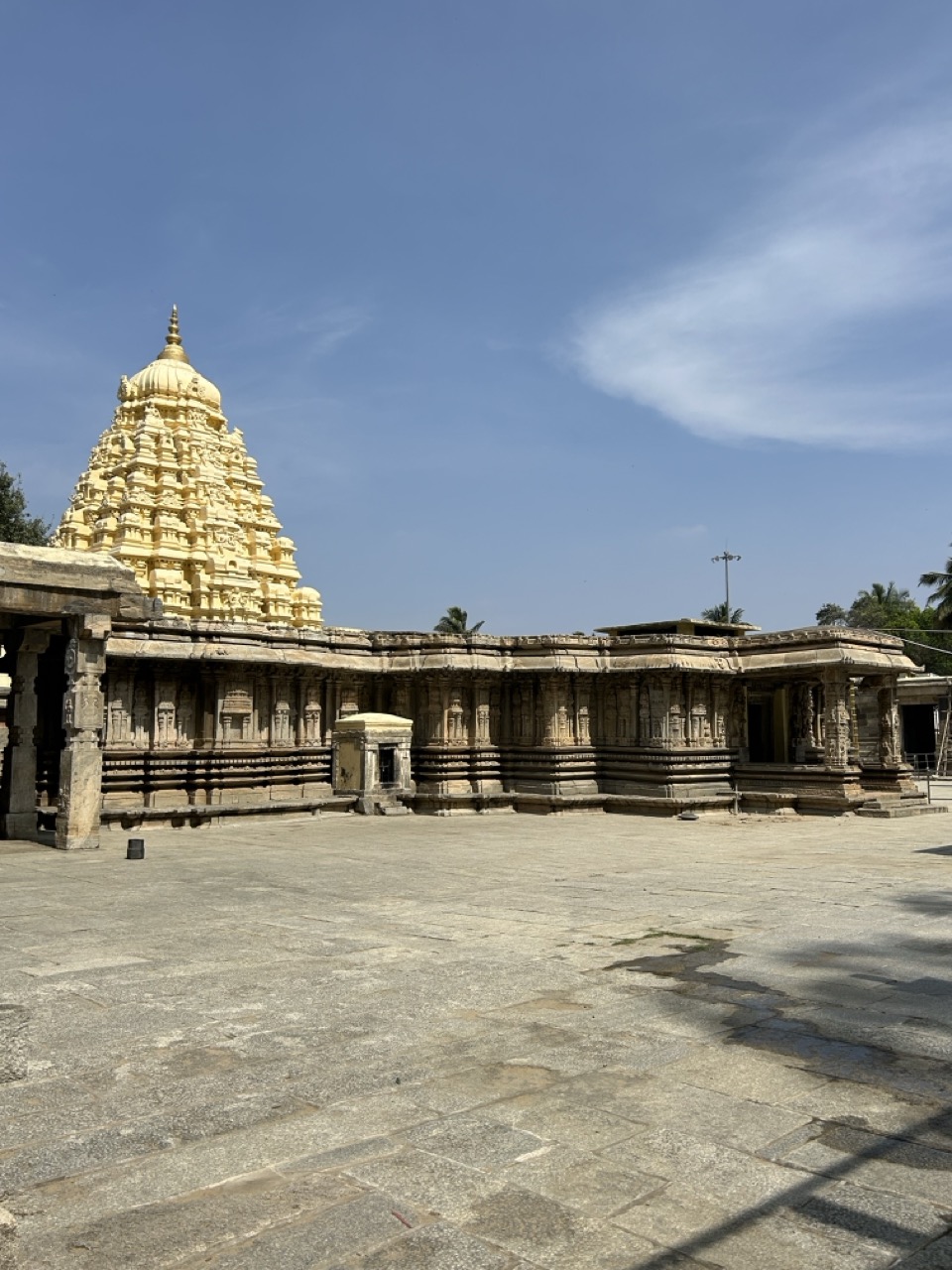
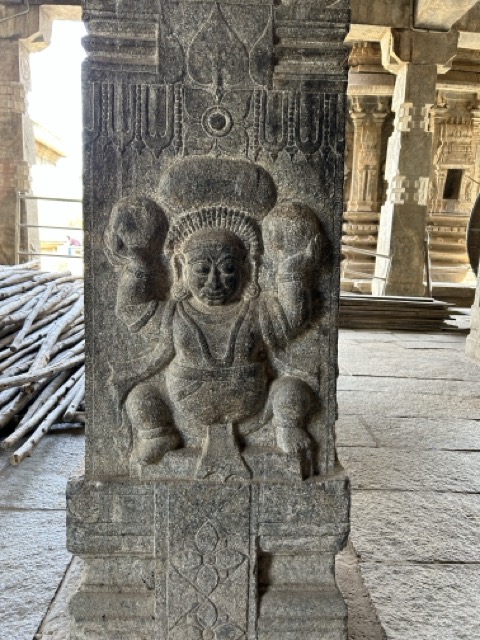
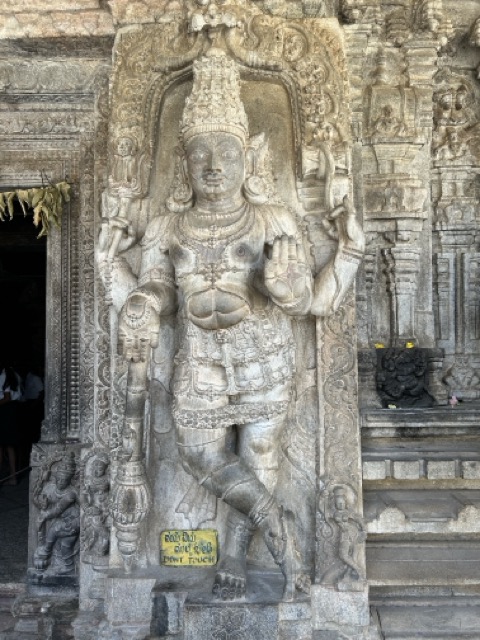
This temple has a gopura, grand dwarapalakas, mini temples within the compound, and beautiful architecture on the pillars.
We visited the Arakeshwara Temple, the 5th of the Pancha Lingeshwara temples, to complete the circuit.

We were told it would be closed, and it truly was. Call the pandit, he will come and open the door, said our ‘quick-on-the-spot-guide’ at Vaidyanatheshwara Temple. At noon, we did not have the heart to ask someone to come and open the temple for us! We walked around the quaint, tiny temple and made our way onward to Mysore for the evening. We climbed Chamundi Hill just for ‘time pass’. We returned home the following day, and greedy me started ‘stalking’ Kaveri on Google Maps from its birthplace till it crossed into Tamil Nadu. There appear to be several small temples on its banks. And I dream of, hoping to visit at least some of them in this lifetime!
 Kirana Bhat