I was in Ahmedabad to visit my sister, who moved to this city only recently (pre-COVID). On previous occasions, I visited her for no more than a day or two. She has been telling me to spend more time with her, and I finally did that about three months back. My ask was we pretend that I was a traveller and she would show me her new city.
On visiting Ahmedabad, the most common questions one gets are ‘Did you visit the Sabarmati Ashram?’ and/or ‘Did you eat at the House of MG?’. Sadly, not many talk about the Pols.
In the early 1400s, the second Muzaffarid king of the Gujarat Sultanate, Ahmad Shah I, moved his capital to the Chalukyan city of Karnavati and renamed it Ahmadabad. The new town had neighbourhoods called ‘paras’ overseen by the Sultan’s commanders. Smaller units inside these neighbourhoods were called pols. Back then (and to some extent even now), fathers passed down professions to sons, and professions stayed within a community. Pols also carried the same structure. People of one caste and conducting one type of business/trade dominated a pol. So there were pols inhabited by goldsmiths, one by handloom merchants, and a third would be traders in grains, and another by potters and so on. These settlements saw architecture from their original villages in North Gujarat. Pols would have a common water source, places of worship and a ‘chabutaro’, a bird-feeding structure.
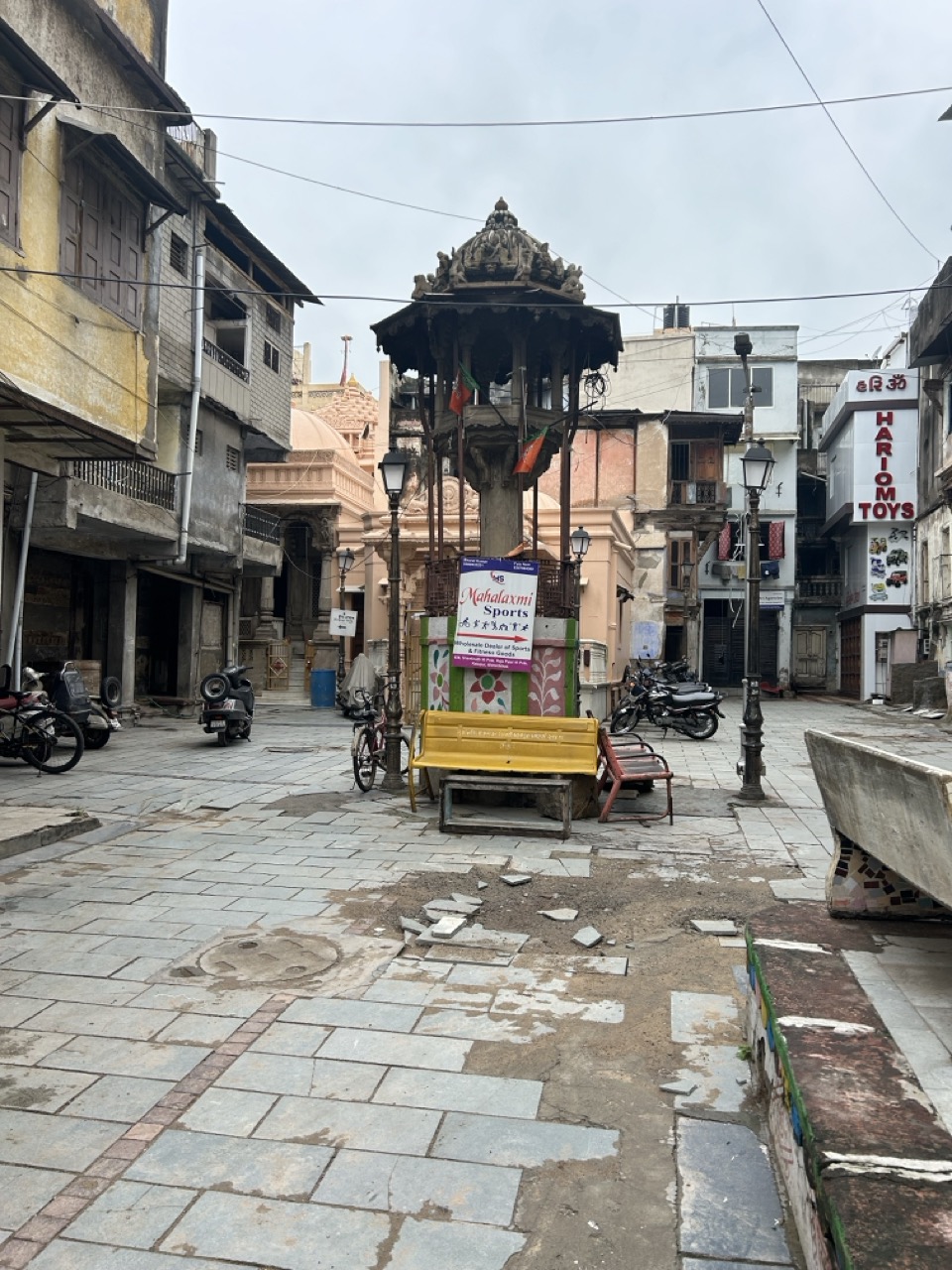
The houses in the pol are mostly built of wood, bricks and lime mortar and share common walls. The façade of the houses are grand masterpieces of very intricate woodwork. The columns and beams are made of wood as well. The houses are narrow, go deep inside and are typically two storeys tall with a central courtyard.
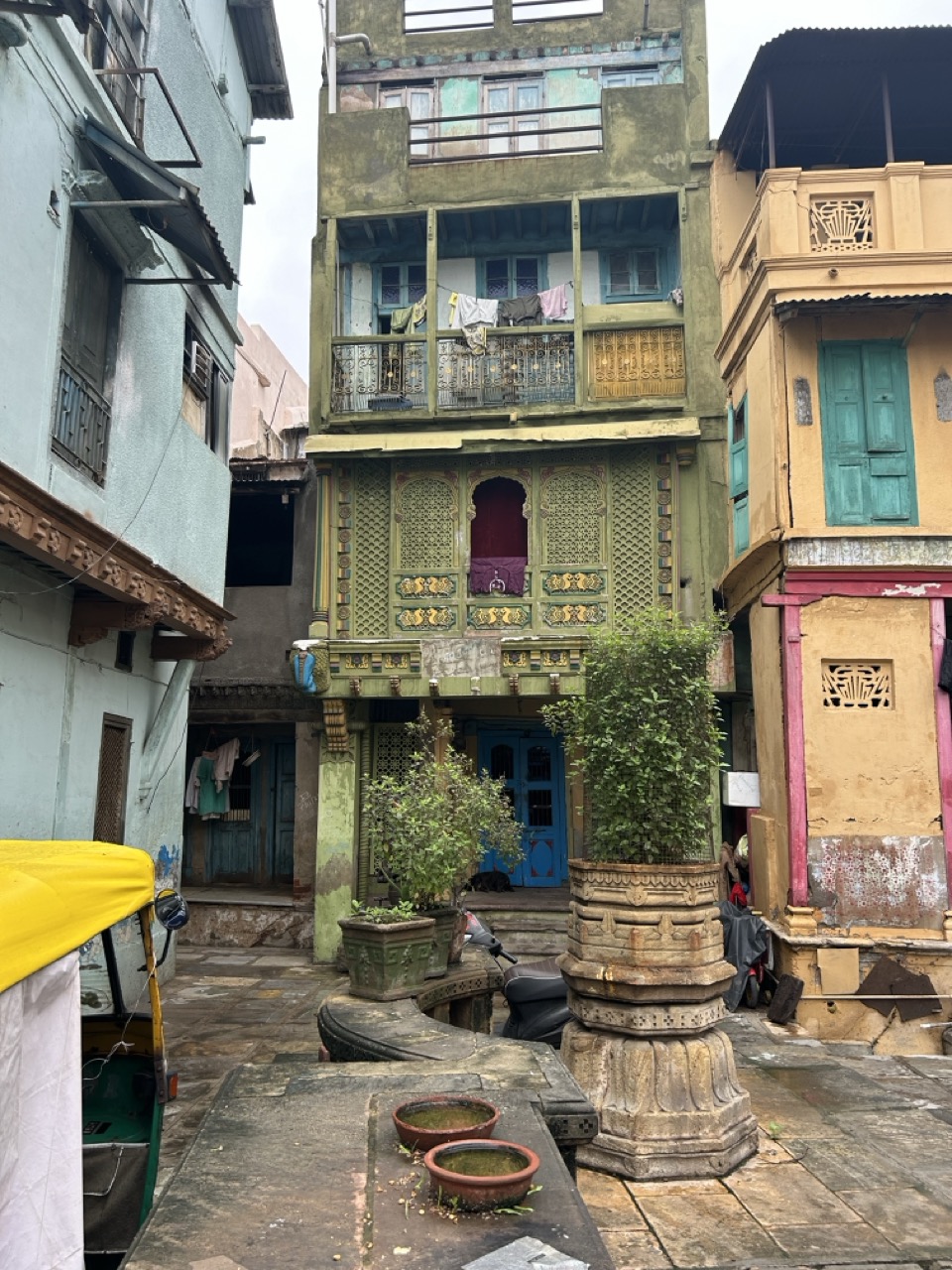
Originally, pols were only residential. Over time, they became a mix of commercial and residential. These pols were called ‘ols’. The business was conducted in the front room of the house, and the inner rooms were used for daily household chores. Some wealthy merchants who dealt with, say, gold and textiles would have their offices on the first floor for safety from gawking passersby. Access to the first floor was via a steep ladder.

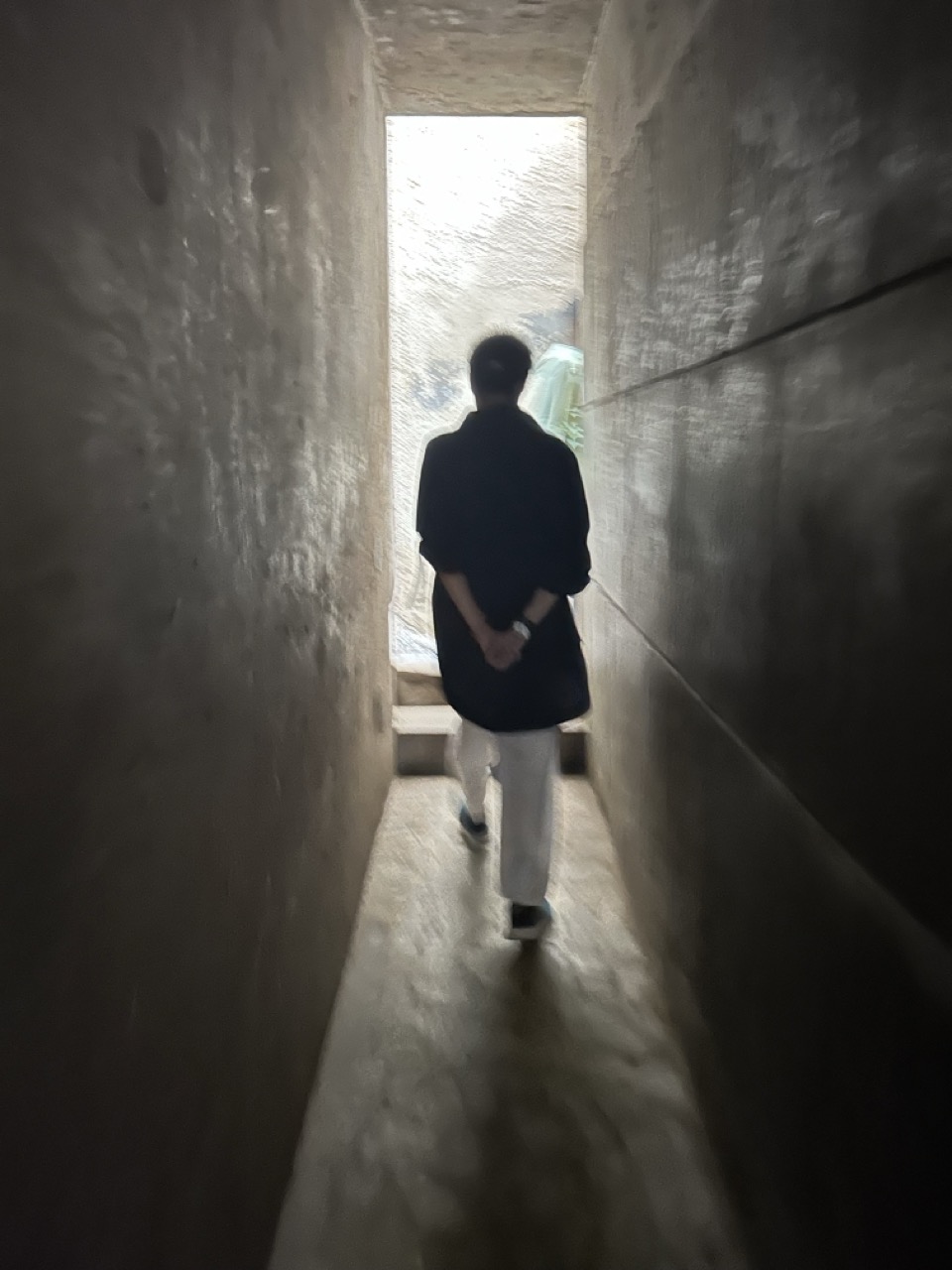
Narrow, nameless lanes are the only thoroughfare within the pols. There are passages between houses that lead from one pol to another and fake walls and doors to make it appear that there are more homes than exist! The pol is a maze that is difficult for an outsider to navigate. The narrow alleys are not mapped; trying to navigate with Google Maps is utterly useless!
The first pol ever to come up was called ‘Mahurat Pol’ (Mahurat or Muhurat, an auspicious time). Mandvi Pol is the largest pol. The Ahemdabad Stock Exchange, the second oldest Stock Exchange in India was located right opposite the entrance to Mahurat Pol in a gorgeous heritage building, until the building was sold.

These pols are true gated communities of the past.
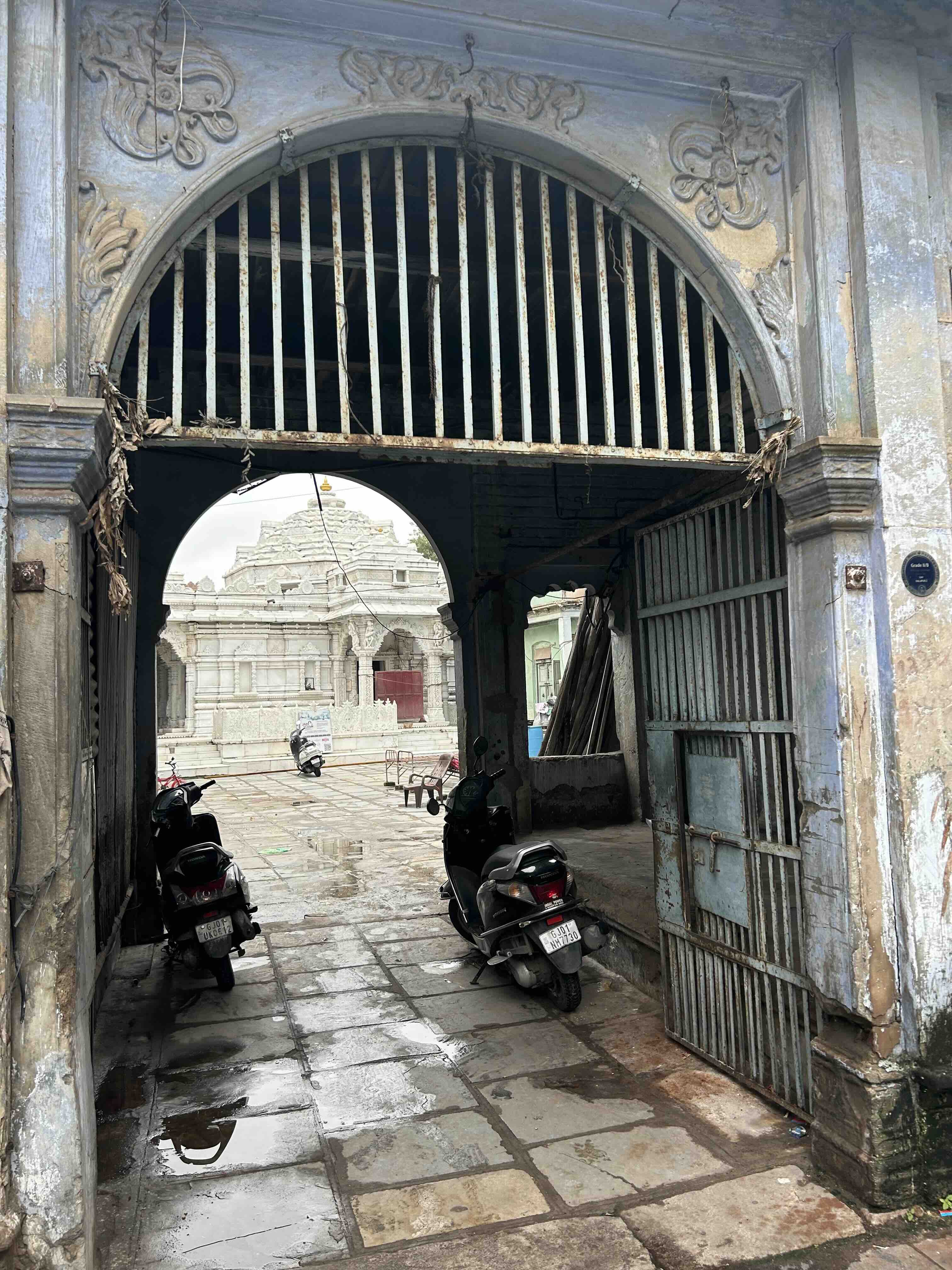
They had security; the watchman was called ‘polio’. He and his family lived above the main gate of the pol.
A managing committee called the ‘panch’ with sub-committees took care of festivals, maintenance, marriages and deaths.
There was a ‘maintenance fee’ to pay for the upkeep of the pol.
The first preference for buying a house on sale within a pol was given to the pol resident. The house could only be sold to an ‘outsider’ if there were no takers inside the pol.
Tenants did not have voting rights.
Kids of the pol played together.
There were common areas with a notice board and seating for women to sit around and gossip while keeping an eye on the kids.
They took rainwater harvesting seriously, much more seriously than the present day. Rainwater was channelled into underground tanks in the central open courtyard of the house.
Even today, the temperature in the pol is cooler by 5-6 deg C than the rest of Ahmedabad.
The nearly 150 year old sewage system did not clog or overflow. You can still see the sewage exhausts hoisted on tall poles above the houses with an arrow pointing the direction of the sewage line!
The drainage system is so good that the rest of Ahmedabad floods, but not the pols – even today!
Time and again, the magnificient houses have withstood earthquakes.

There is a living museum dedicated to Gujarat’s well known, social reformer-poet Kavi Dalpatram (1820-1898) at the location where he lived.

Today there are about 300+ pols in Ahmedabad. Some continue to live in the pols, while others, especially where houses with the extra 3rd and 4th level cannot accommodate the growing family, have moved out. Some have sold, while others have rented out the space. The old continue to live, and the young come home to visit during festivals. Some houses have been restored, others are marked for restoration, and some others are in a sad state of neglect. Some have used their business acumen and converted their homes into airbnbs. Who wouldn’t want to spend a few days in a pol? Well, I would like to be there forever, given how the amenities are all so reliable even after hundreds of years 😉 Not to mention, the money I would make by renting out the terrace during kite flying season – a whopping Rs. 75,000/- for one evening!
 Kirana Bhat