In my earlier post on the Pols of Ahmedabad, I mentioned that despite visiting my sister and her family, I wanted to treat the trip like a tourist on a sightseeing mission. Sarkhej Roza was on my list, much to the horror of my sister’s MIL. Don’t go there beta, she said, its not safe. Aunty has lived in Ahmedabad all her adult life and knows the ins and outs of not only Ahmedabad but the entire western region like the back of her hand. So two good girls nodded in unison and, unknown to aunty, quietly drove to Sarkhej Roza. Much to our surprise, (and aunty’s too when we told her later), the place is very welcoming to visitors and safe, unlike the old days when it lay neglected and abandoned, thus, making it a safe haven for illegal activities.
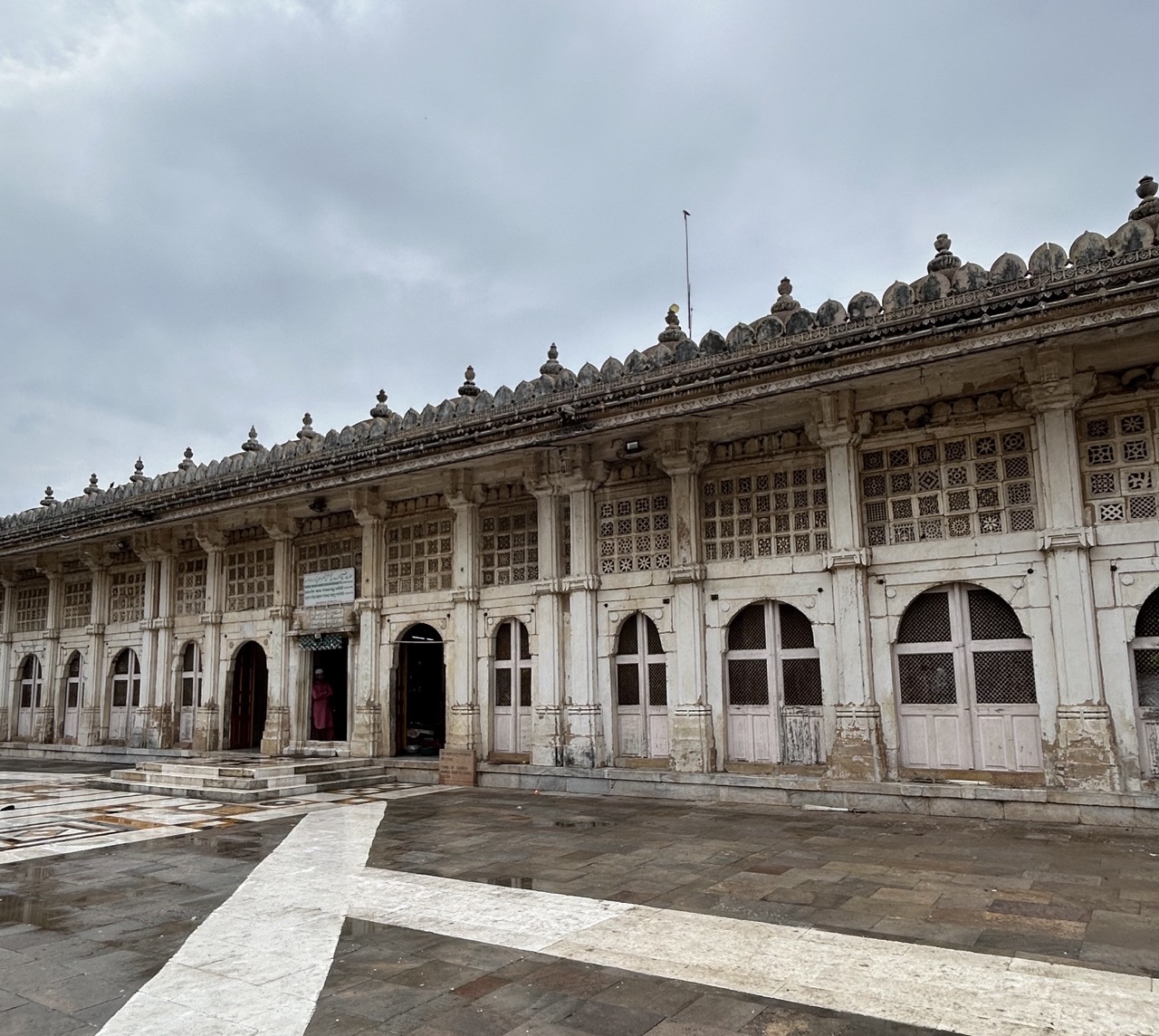
A Sufi saint, Ahmad Khattu Ganj Baksh, was a friend-philosopher-guide to Ahmedabad’s founder Ahmad Shah I. On the saint’s advice, Ahmad Shah I moved the capital from Patan to Karnavati and renamed it Ahmedabad. Soon enough, the king invited the saint to move close to his capital and gave him the area around Sarkhej to call his home. Sarkhej used to be a village of weavers and indigo dyers. The multi-lingual saint would preach in Hindi, Gujari and Persian and wrote/recited verses in Gujari and Persian.
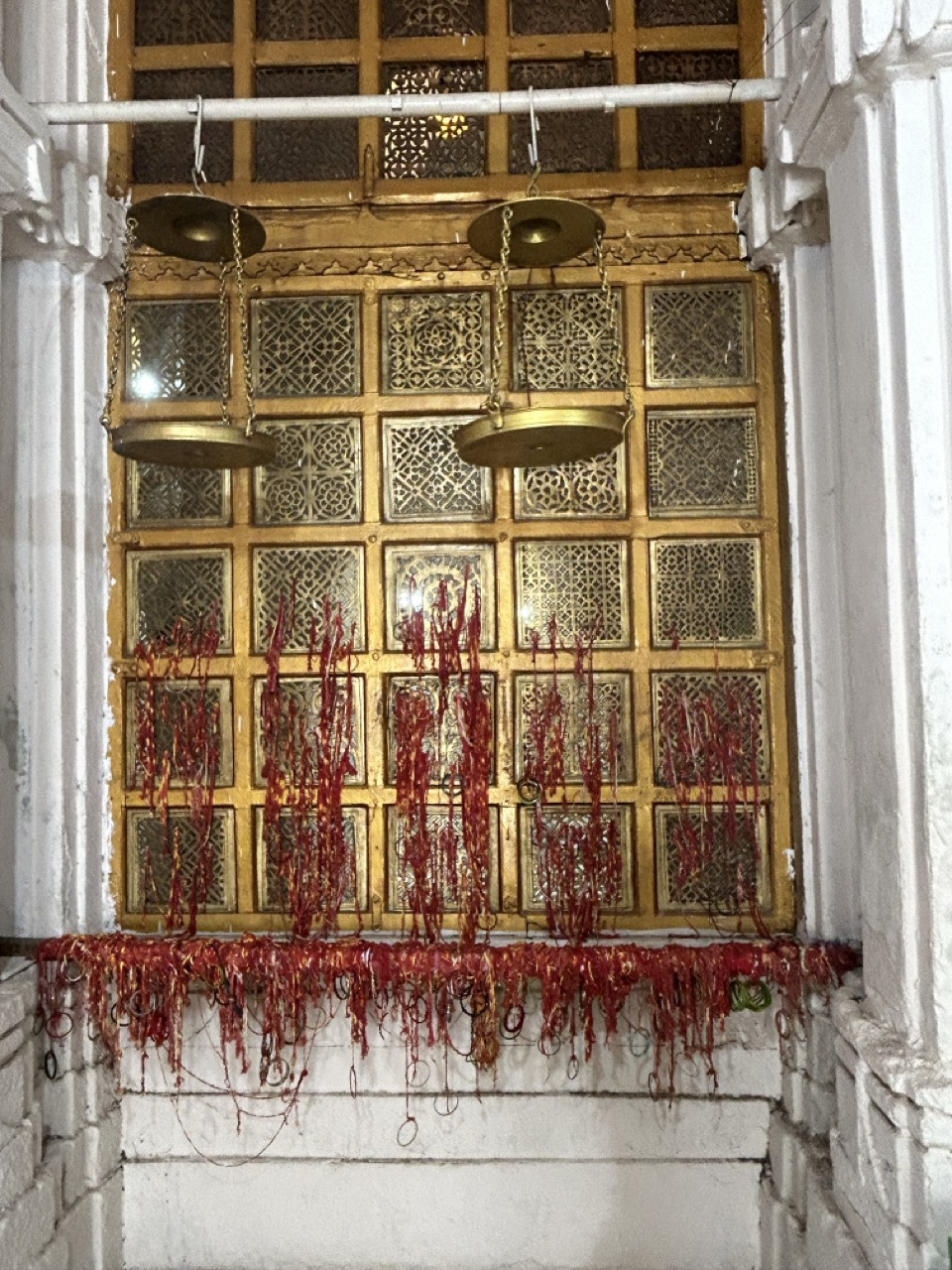
The saint is believed to have lived to the ripe age of 111. Upon the saint’s death, Sultan Muhammad Shah II built a mausoleum (Roza) in his honour and added a mosque too. Many years later, Sultan Muhammad Begada added a large lake to the complex that received water from the adjacent Markaba Lake, which exists even today. Pavilions and palaces for the king and queen mushroomed later. Muhammad Begada is buried in the complex opposite Ahmad Khattu Ganj Baksh’s Roza, as are two of his successors. An adjacent section has tombs of queens.
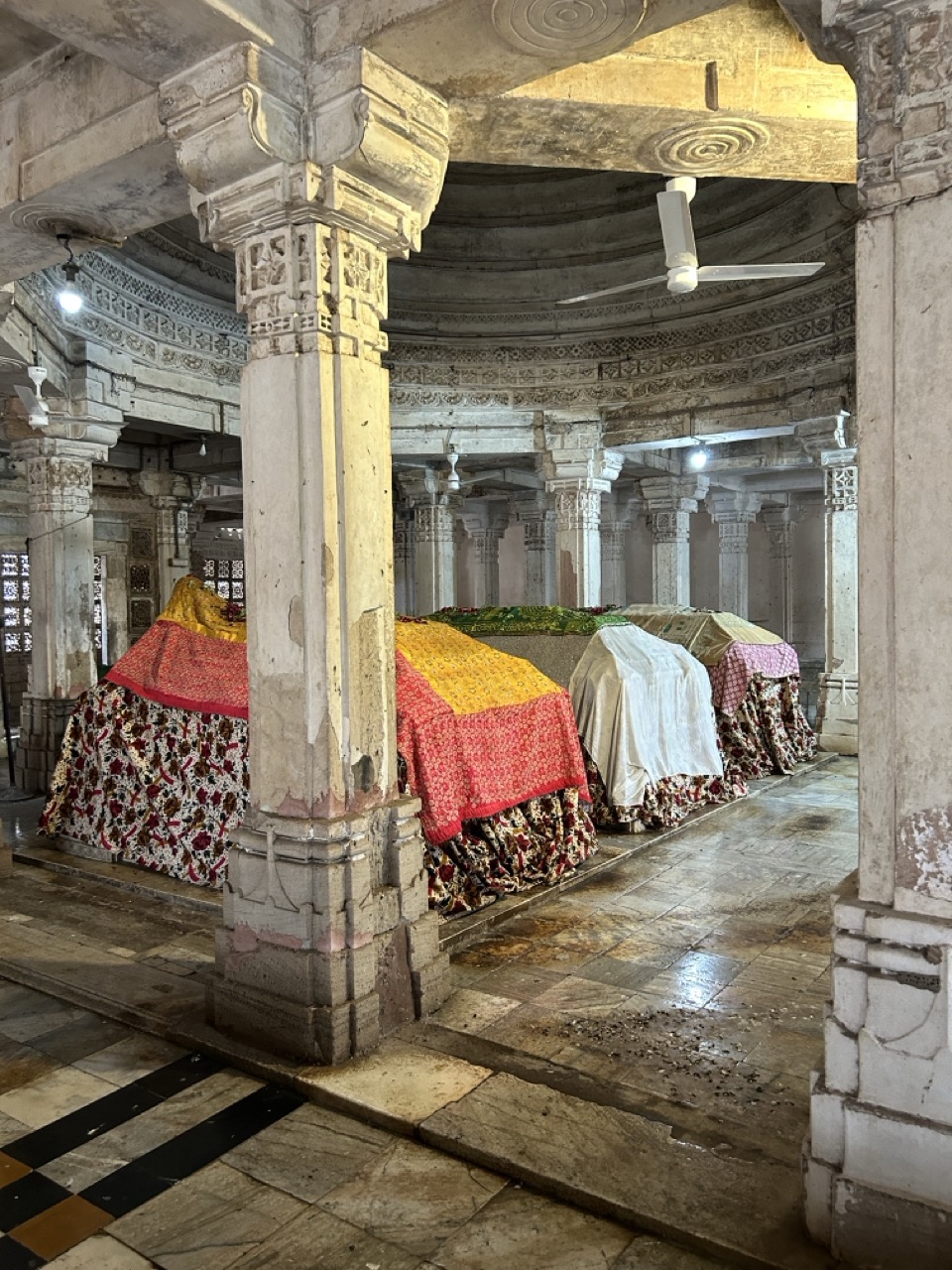
Sarkhej Roza complex spreads over 32 acres.
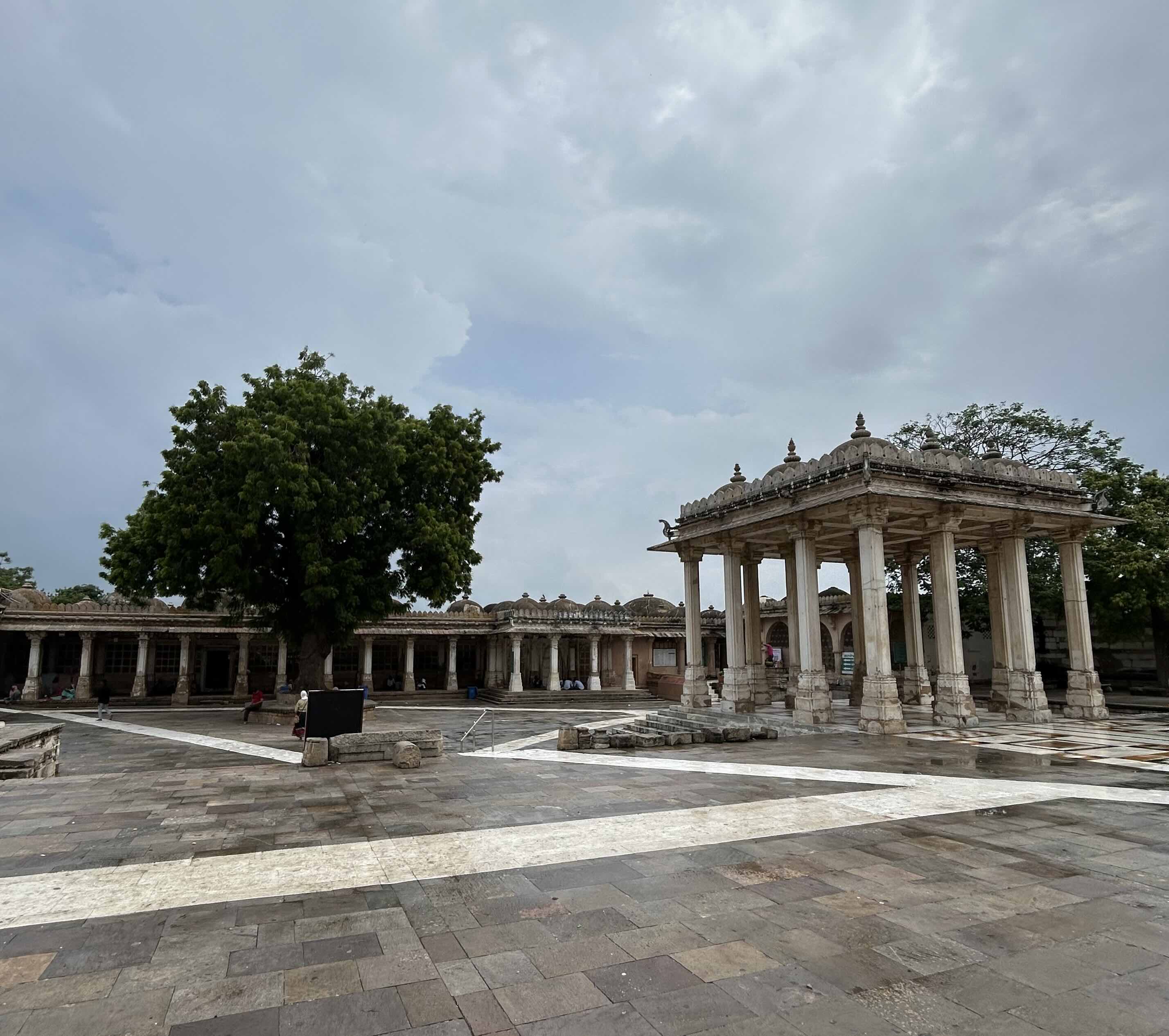
Today, we enter the complex through large, tall doors and are greeted by a centrally located, well-grown neem tree whose leaves fan the area as they dance in tune with the gentle breeze.
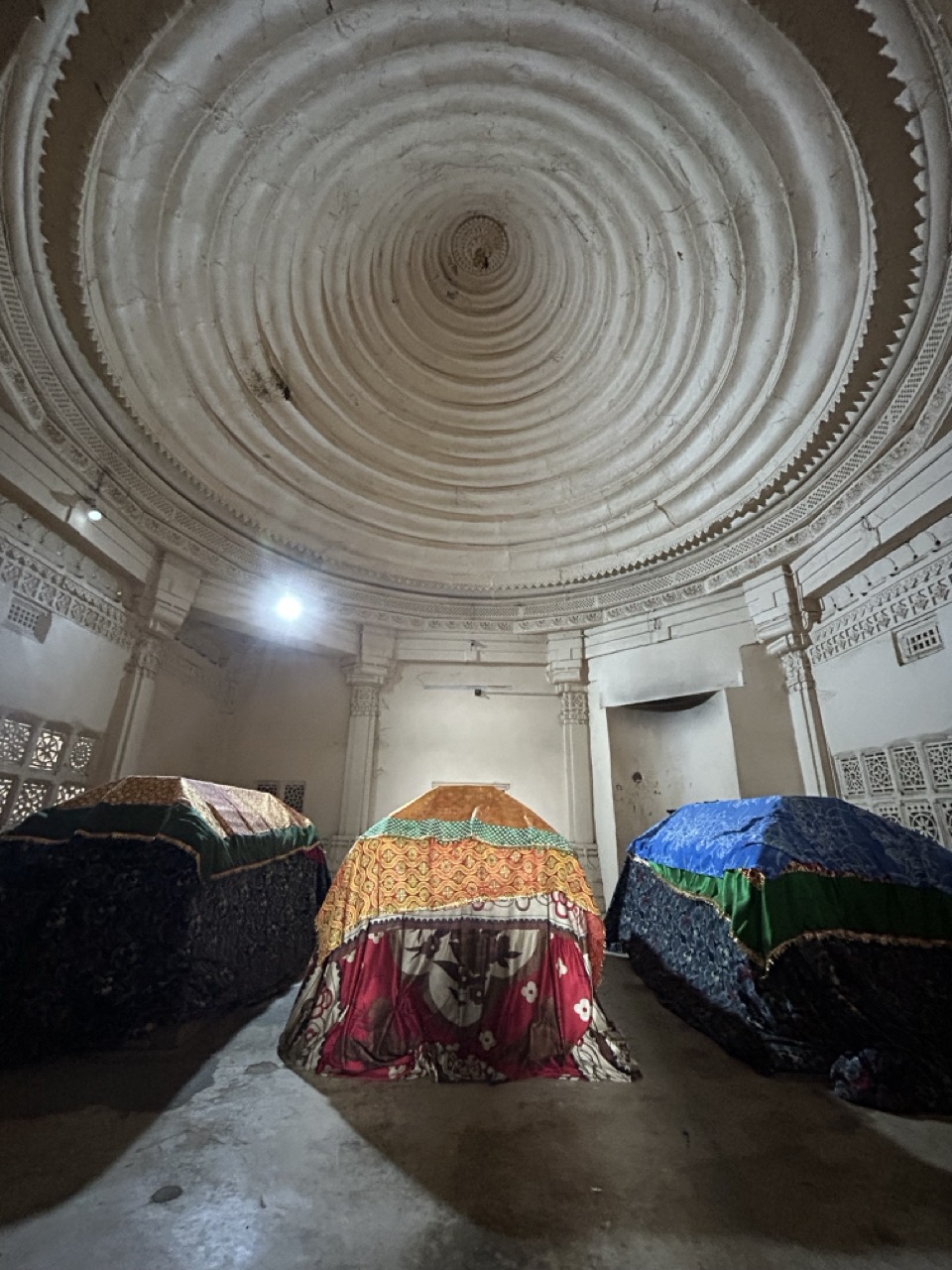
On one side of the tree are the tombs of the kings (Muhammad Begada, Muzaffar II and Muhammad III) and the queens, notably Rajabai, the wife of Muzaffar II. From here, you can see the ruins of the palaces across the lake (which I did not visit due to paucity of time).
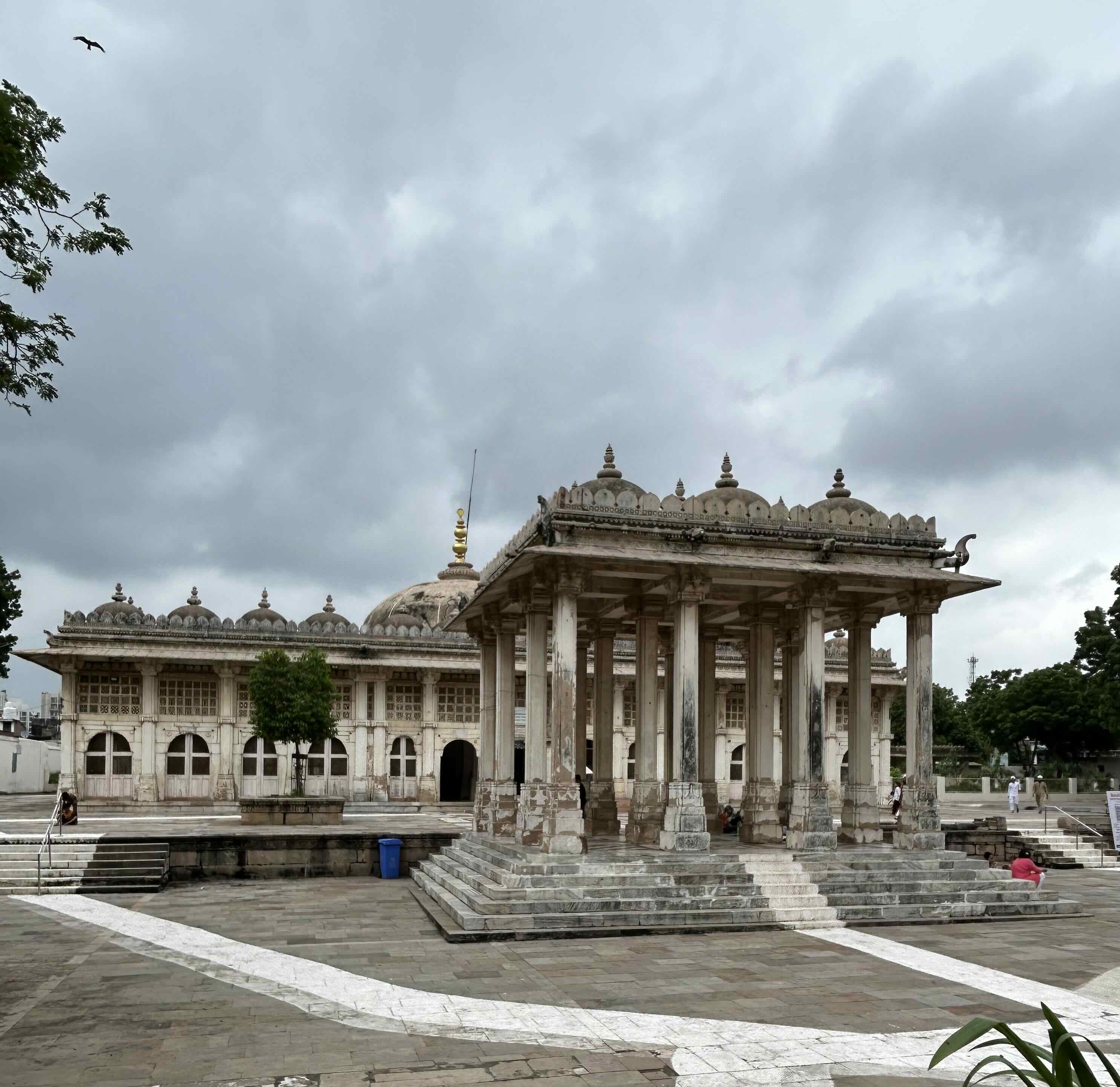
An open pavilion called Baradari (barah dari, i.e. 12 doors, not brotherhood!) with sixteen pillars and nine domes stands on the other side of the neem tree.
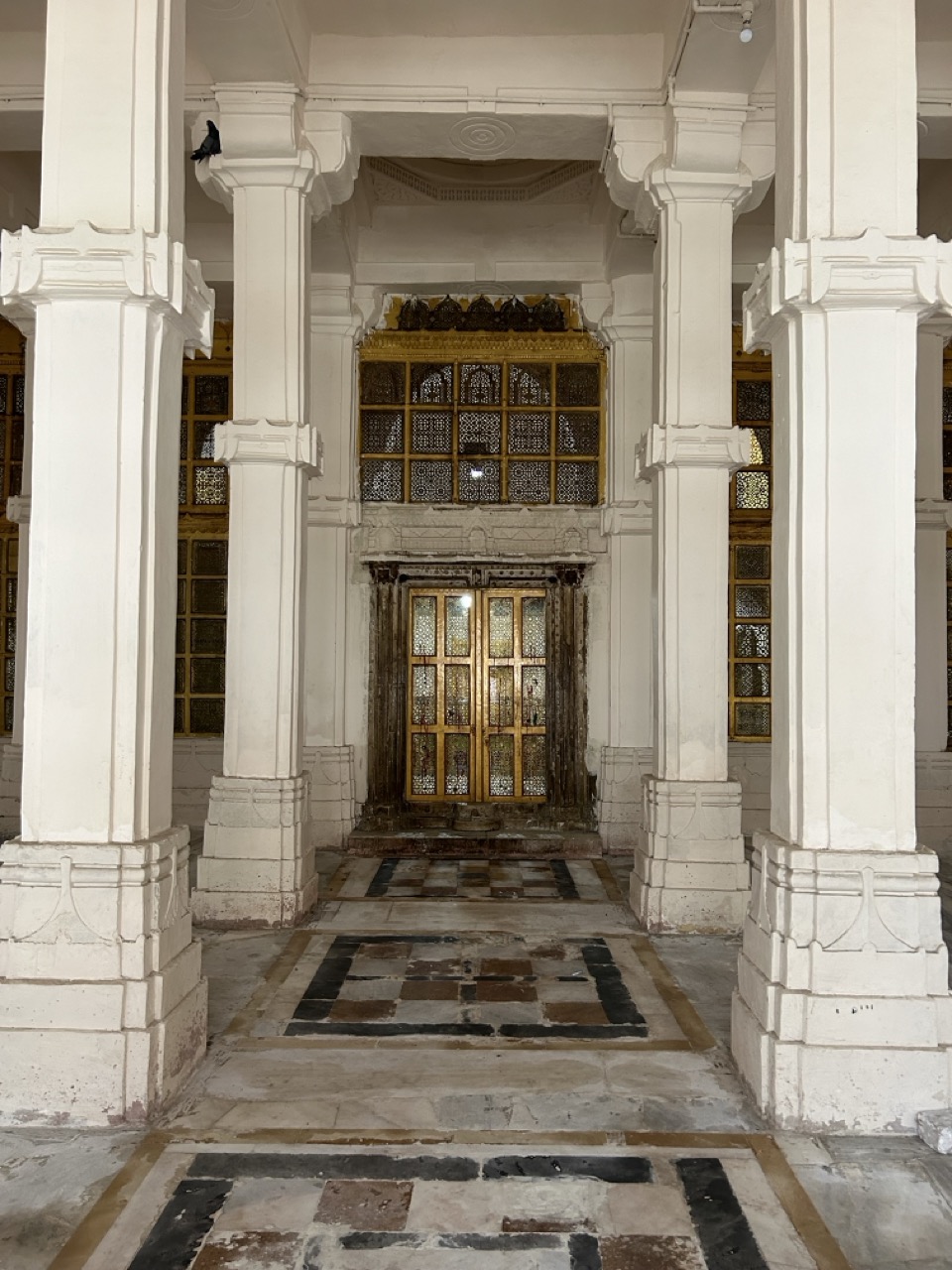
Behind the Baradari is Ahmad Khattu Ganj Baksh’s Roza, dominated by pillars, domes, and exquisite lattice (jali) work. Even today, Thursdays and Sundays see a crowd at his Roza. Both Hindus and Muslims pray here and also live around the complex.
The mosque is massive and abets the lake filled with water (and, sadly, a lot of muck).
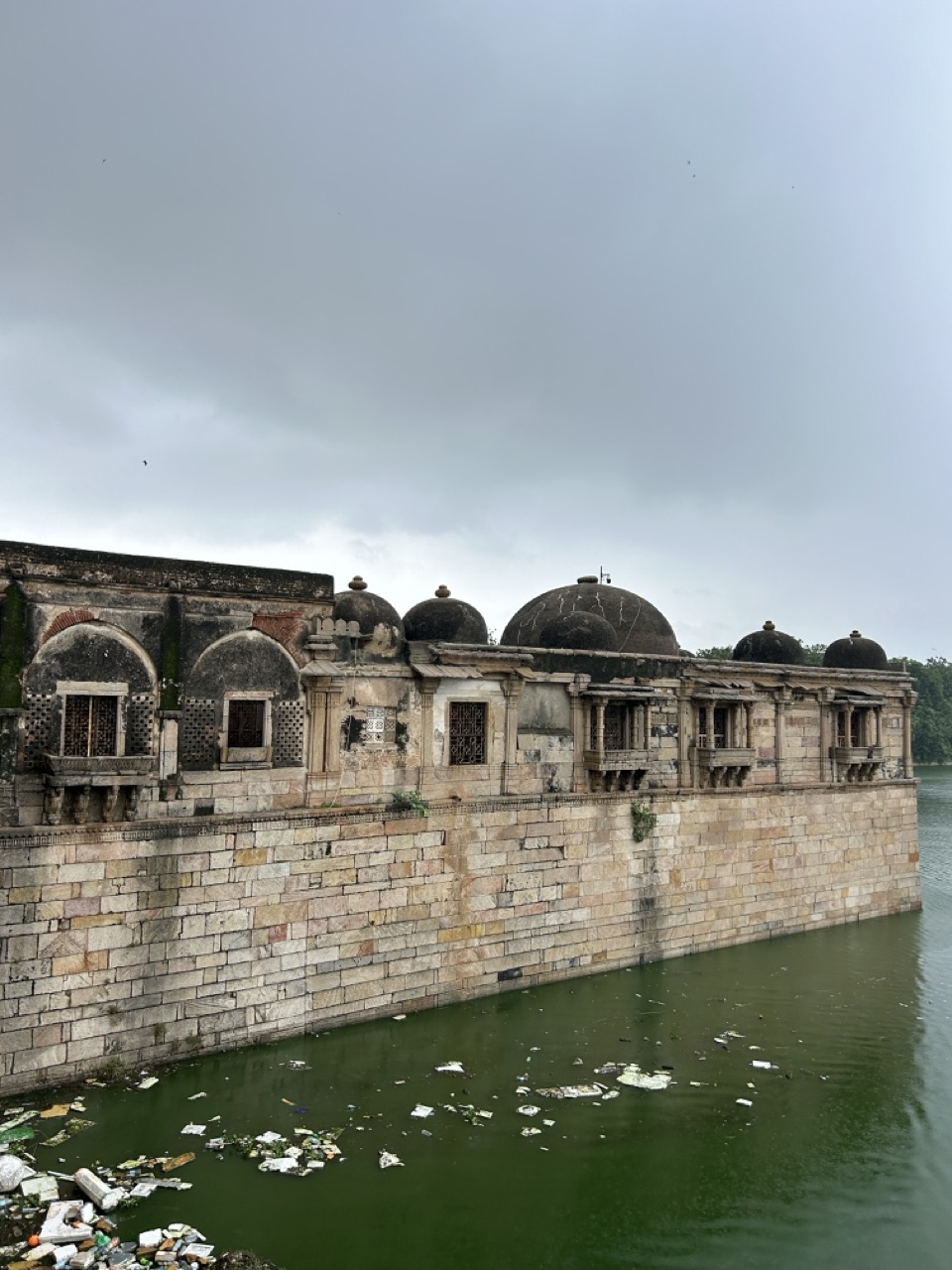
The mosque is missing the arches and minarets that are otherwise typical of Islamic architecture.

One hundred twenty pillars support the roof of the mosque. Covered corridors on three sides connect to the main Prayer Hall, which has a simple mihrab. A loft-like area on one side of the mihrab is for women attending prayers.

A committee under the aegis of state authorities whose offices are in what used to be the section of the Queens Tombs maintain the upkeep of the complex. Looking closely reveals what is called the Indo-Sarcenic style of architecture, a mix of Hindu, Jain and Islamic styles which they claim is a percusor to what would evolve into Mughal Architecture.
Tip: Footwear is not allowed in the complex. Wear socks if you are not used to walking barefoot.
 Kirana Bhat