Don’t have time for Hampi? Then, you can get a sneak peek of its grandeur on a quick visit to Lepakshi. 140km from Bangalore, the Veerabhadra Temple in Lepakshi is an excellent example of the architectural style of the great Vijayanagara Kings. Visit Lepakshi and then imagine that on a scale of 25 sq km, that’s Hampi for you!
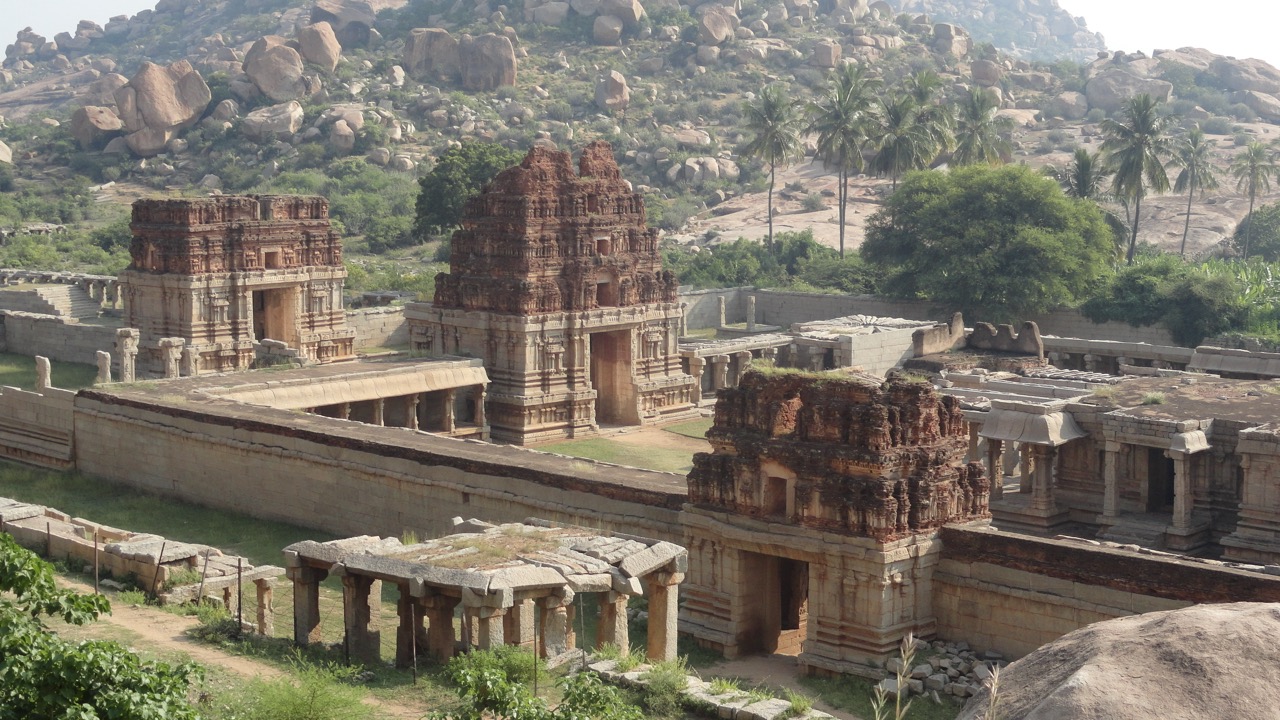
Lepakshi lies close to the Cheluvindala village, and an inscription on the temple premises mentions the village. Cheluvindala is itself close to Penukonda, which used to be a seat of governance for the Vijayanagara Kings.

In times of peace between waging wars, the Vijayanagara Kings carried out improvement works, which included giving out religious grants to build temples. It was during one such instance that a man named Virupanna had made a request to King Achyutaraya (r. 1529 – 1542) and was ‘gifted the village of Cheluvindala for the service of the gods Virabhadra, Raghunatha and Paapavinaasha of Lepakshi’. I think it simply meant that Virupanna would expand the temple because according to legend, there was always a temple here when the area was under the Hoysalas, Chalukyas, Nolambas and many other dynasties before them. There is even a connection with Ramayana – when Ravana abducted Sita, Jatayu, who tried to fight Ravana, was injured and fell to the earth here.
So, besides the main temple and the Nandi bull, Jatayu has its own place of honour in Lepakshi – a larger-than-life statue on a huge boulder is the first thing you will see as you approach Lepakshi. You can visit Jatayu and see him up close for a small entry fee.

A secure fort-like granite wall encloses the temple, and the inner side forms a long continuous corridor, which is typical of Hoysala temples in Belur or Somanathapura and for that matter Hampi too. A second wall surrounds the main temple itself. A tall granite flagpole covered in a brass sheath is at the entrance.

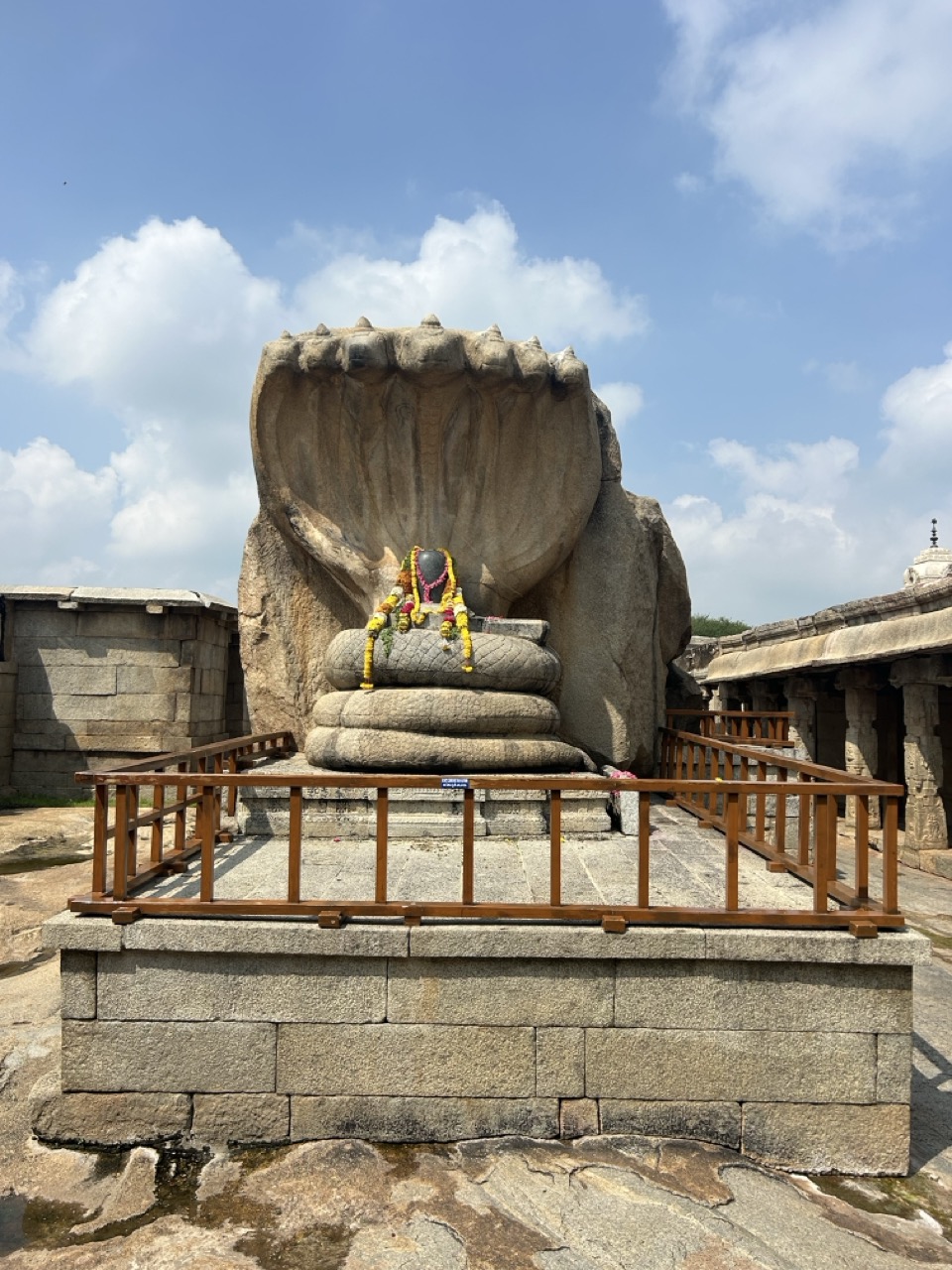
It’s best to walk along the path between the two walls and admire the columns and colonettes in the corridor, the beautiful sculptures on them, and spot several inscriptions. You also get to see Lord Ganesha sculpted on the face of a huge boulder (very similar to the one in Hampi) and the monolith hooded serpent, both quite grand in their aspect. You will also see faded frescoes in the corridors opposite the Ganesha sculpture.


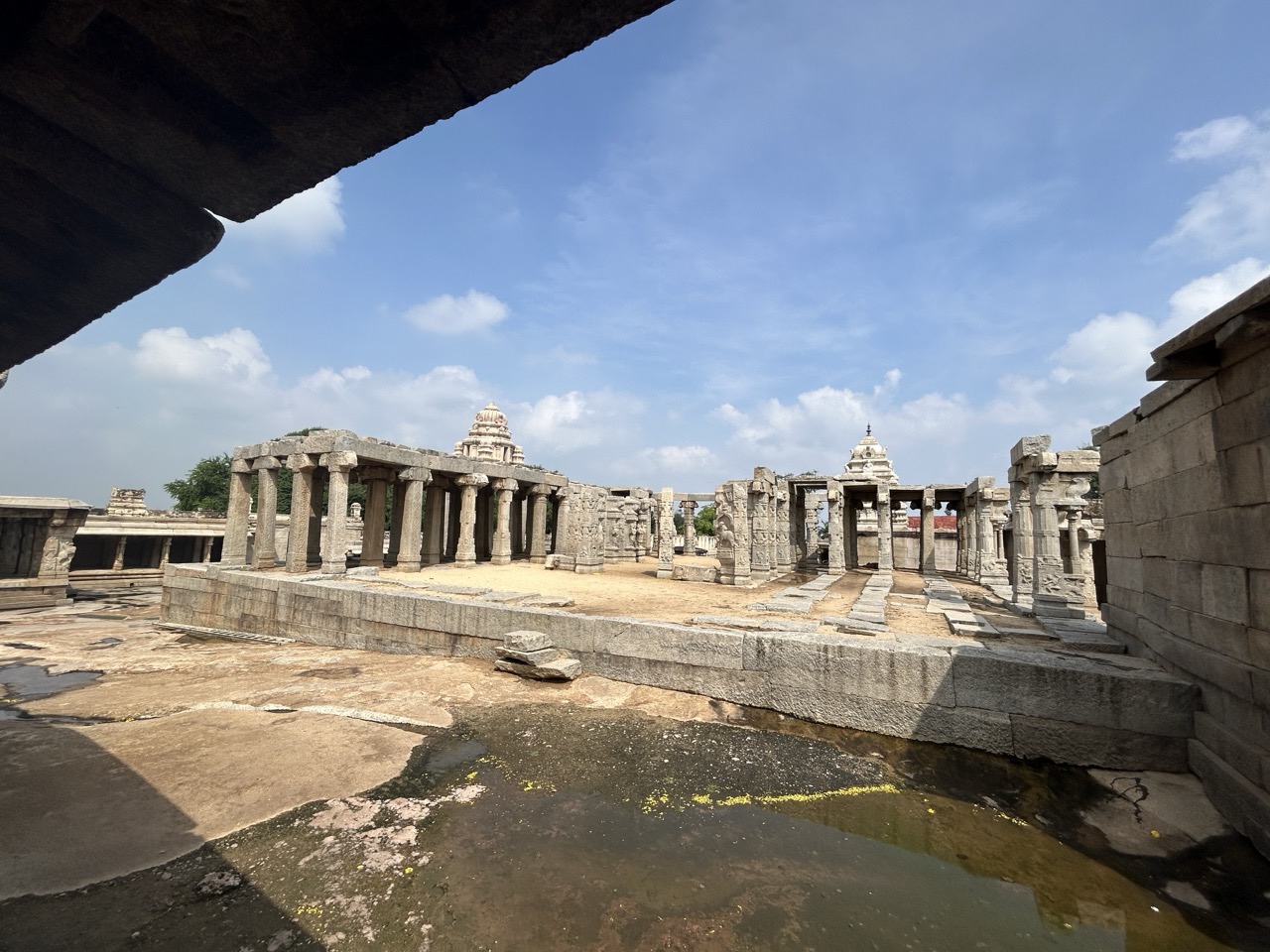
Next, visit the site people believe to be the unfinished Kalyana Mantapa. Why unfinished? One reason might lie in a story where authorities denied Virupanna further funds due to misappropriation. In addition to that, they gouged his eyes out and threw it on the wall in the temple premises! Whatever the case may be, the Kalyana Mantapa is gorgeous. In its unfinished state, it looks like the sculptors ran trials on possible designs, sizes of granite pillars and how to shape them. I say ‘shape the pillars’ because they are odd in that the pillars are untypically wide with a gentle curve and amazing frieze work. Close by, you will see a small open shrine to Hanuman and what is supposedly Sita’s footprint, where she paused for a bit before Ravana once again took off with her.


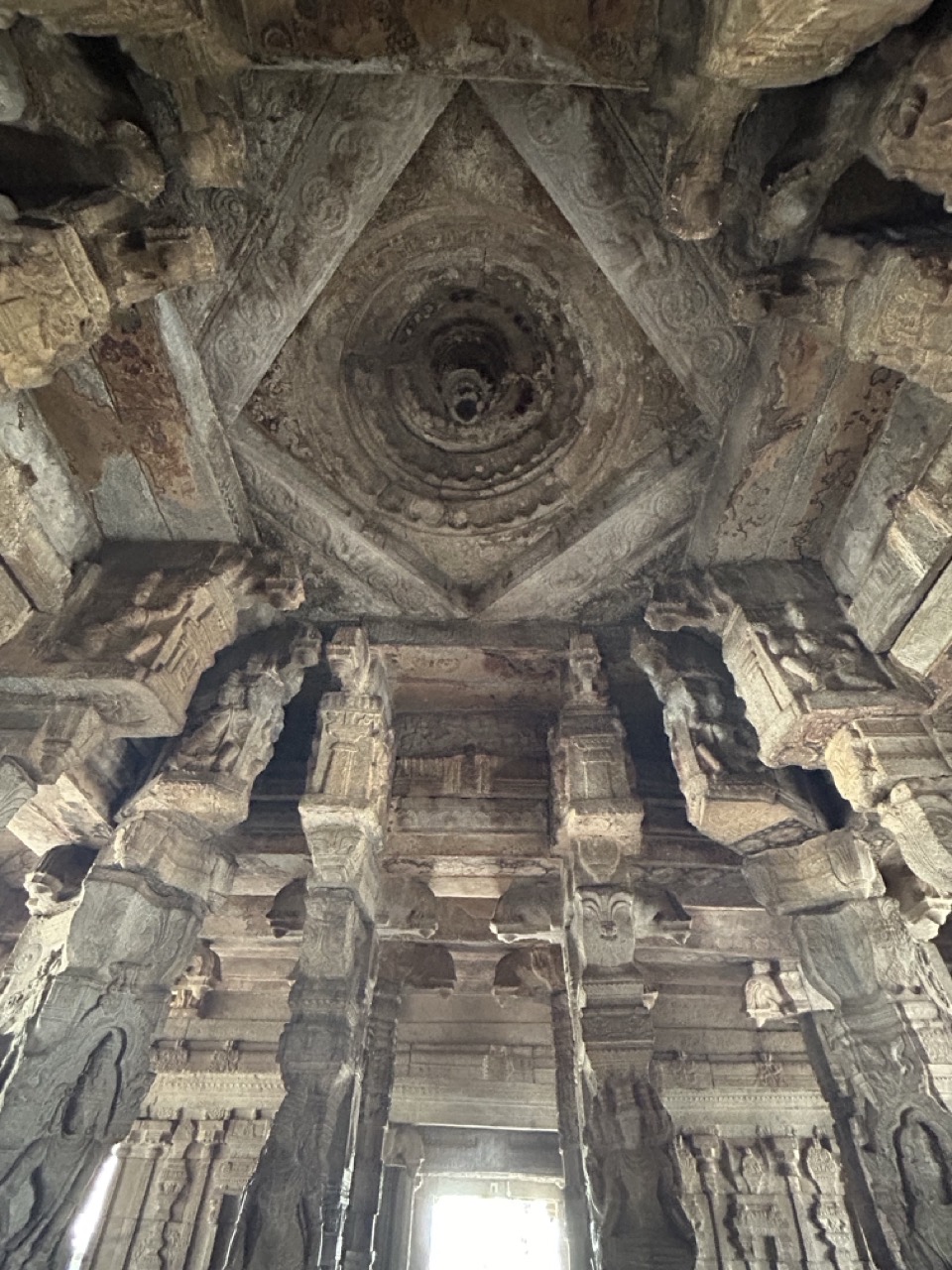
The ardha mantapa outside the sanctum sanctorum has nearly 70 pillars, including a hanging pillar, each exquisitely sculpted (remember, granite is hard and not easy to chisel at!) with gods, goddesses, and stories from Hindu mythology. Once you finish admiring the pillars, look up to see the central ceiling and notice how the oddly broad, gently angled pillars meet it. Look up and admire the frescoes that clearly (pun unintended) need lots of TLC. See them and admire them and the colours used therein – I thought these were just like the colours used in our South Indian cotton saris. The murals tell stories, but I could not decipher the blur it has become.

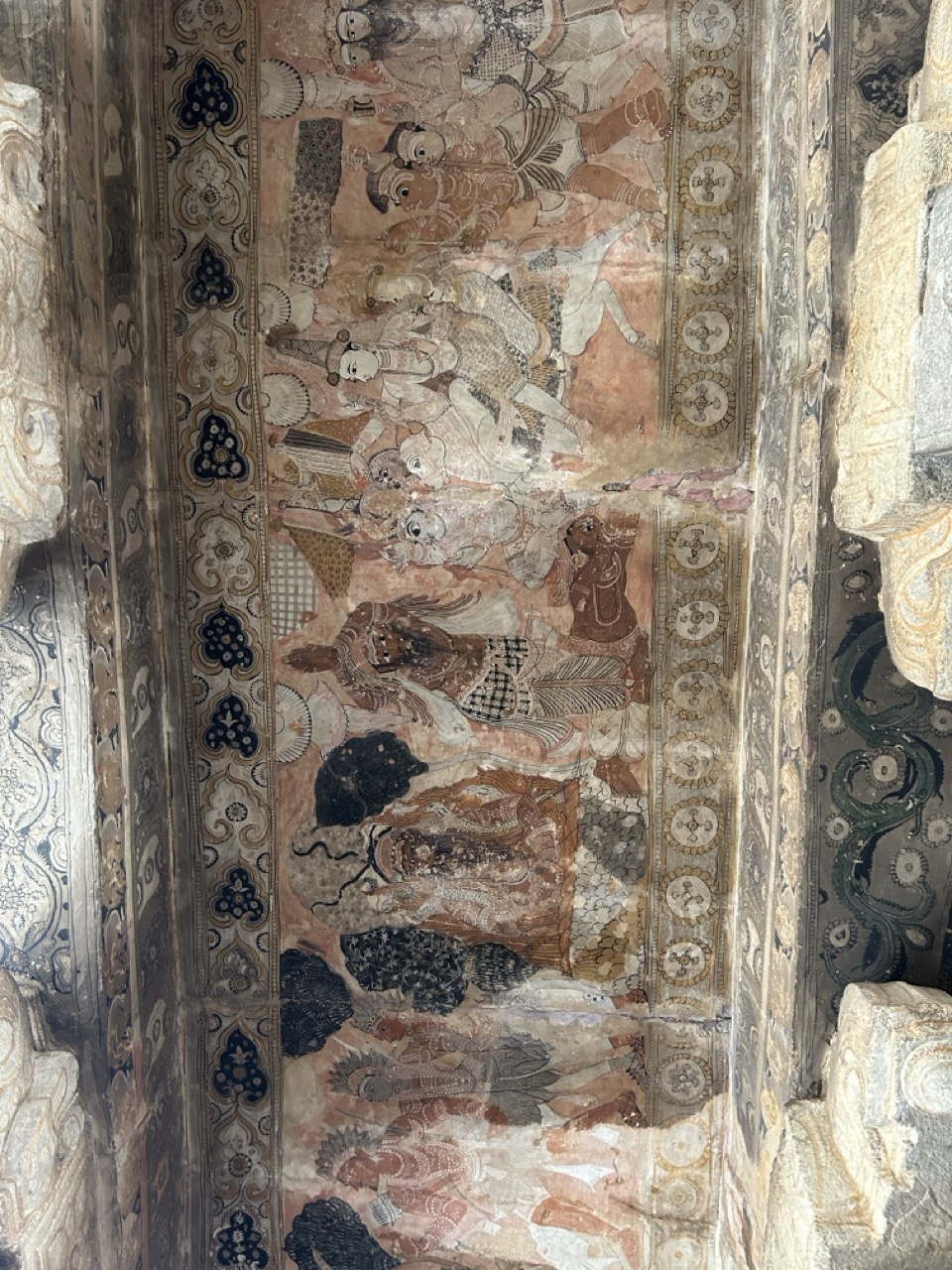

The sanctum sanctorum is for the three Gods Virabhadra, Raghunatha and Paapavinaasha (photograpghy not allowed). On a crowded day or at puja time (yes, it’s a functional temple), there won’t be sufficient time to admire or pray to the gods due to the human jam but do take a moment or two to look up at the most beautiful of all frescos of Lord Veerabhadra on the ceiling. The 24ftx14ft fresco is the largest in India of a single person.
Give yourself at least an hour and a half to look at every pillar and sculpture because it is fantastic! Even better if you can catch hold of a guide to point you to the most essential things to see. Once done, visit the bull to check it off the list of things to see. I think that the bulls in Halebid or Chamundi Hills are far more gorgeous.

And you are done!
We first visited Lepakshi 20 years back, before it was made ‘visitable’. We love what the AP government has done there now regarding parking, basic facilities and a facelift, especially around the temple. Small things to make the visit a little more comfortable than it used to be. But then the frescoes need care, they really do!
Lepakshi was our first stop on a road trip over a long weekend, and we combined it with long pending visits to Gandikota and Belum Caves, about which I will write in the weeks ahead.
Tips:
You will be walking on hard granite without footwear, so it is best to carry/keep your socks on.
Go early to beat the sun!
There are three parking lots – one near Jatayu, one near the Nandi Bull and another near the temple. The same ticket is valid in all three lots.
Food and toilets are basic; and the toilets may be locked, as is another typical feature of all the loos in places of interest in India 😦
 Kirana Bhat