A reasonably large country on the African continent, Morocco stands out for its beaches, mountains, deserts, indigenous people, and culture (historic and current). Many different political strifes (and some still ongoing) that took place over several centuries saw dynasties ruling/losing to each other or new rulers and colonisers. All of them have shaped the country in several different ways. The pagan-animistic Berber tribes embraced Islam and Judaism, and there is even a tiny population of Christians. Other than the Berber dialects, Arabic and French are spoken widely. Today, the Kingdom of Morocco is a very welcoming country.

Moroccans are generally very friendly (despite the language barrier for English speakers like me), except for the random touts who try to convince you to accept a trip you probably do not want. A polite no, thank you, usually works. If the persistence continues, ignore it, and the chap will lose interest.
Sometimes, they can also mislead you (despite not asking for help, we were pointed in the wrong direction to a synagogue we were visiting and told it was closed!).

Morocco is SAFE. No one is aggressive or trying to pick your pocket, snatch your phone, or be threatening.

Cash is King, unless you visit a fancy, high-end place.
Taxis, restaurants, shops, and museums accept cash only (except YSL, Jardin Majorelle, Pierre Berge Museum, and the cafes within).
Getting Moroccan Dirham (MAD) in India is difficult. Carry Euros, as they are easy to change and even widely accepted.
Change some money at the airport (we found the rates to be the second best in all of Marrakech) to pay for your cab. Hotel Ali on Rue Moulay Ismail offers the best rate and is open 24/7.

As an English-speaker, I found it challenging to communicate. Knowing Arabic or French would help immensely 😉 A ceramist I met in Fes told me that Morocco is seriously moving towards becoming Anglophone. He said that in addition to road names in Arabic, French, and Berber, there was also a move to display them in English.

Indian passport holders can get an e-visa without any hassle (it took me only 3 days to receive the confirmation). Apply online a week or 10 working days in advance.
What to see and do
Marrakesh
Marrakesh attracts tourists to its medina, a UNESCO World Heritage Site. Walking in the medina’s maze is an experience! Several dynasties ruled Morocco, and Marrakesh would, on and off, become the capital. Famous French, like Yves Saint Laurent called it home.
Saadian Tombs (The entry fee, besides MAD, can be paid in GBP).
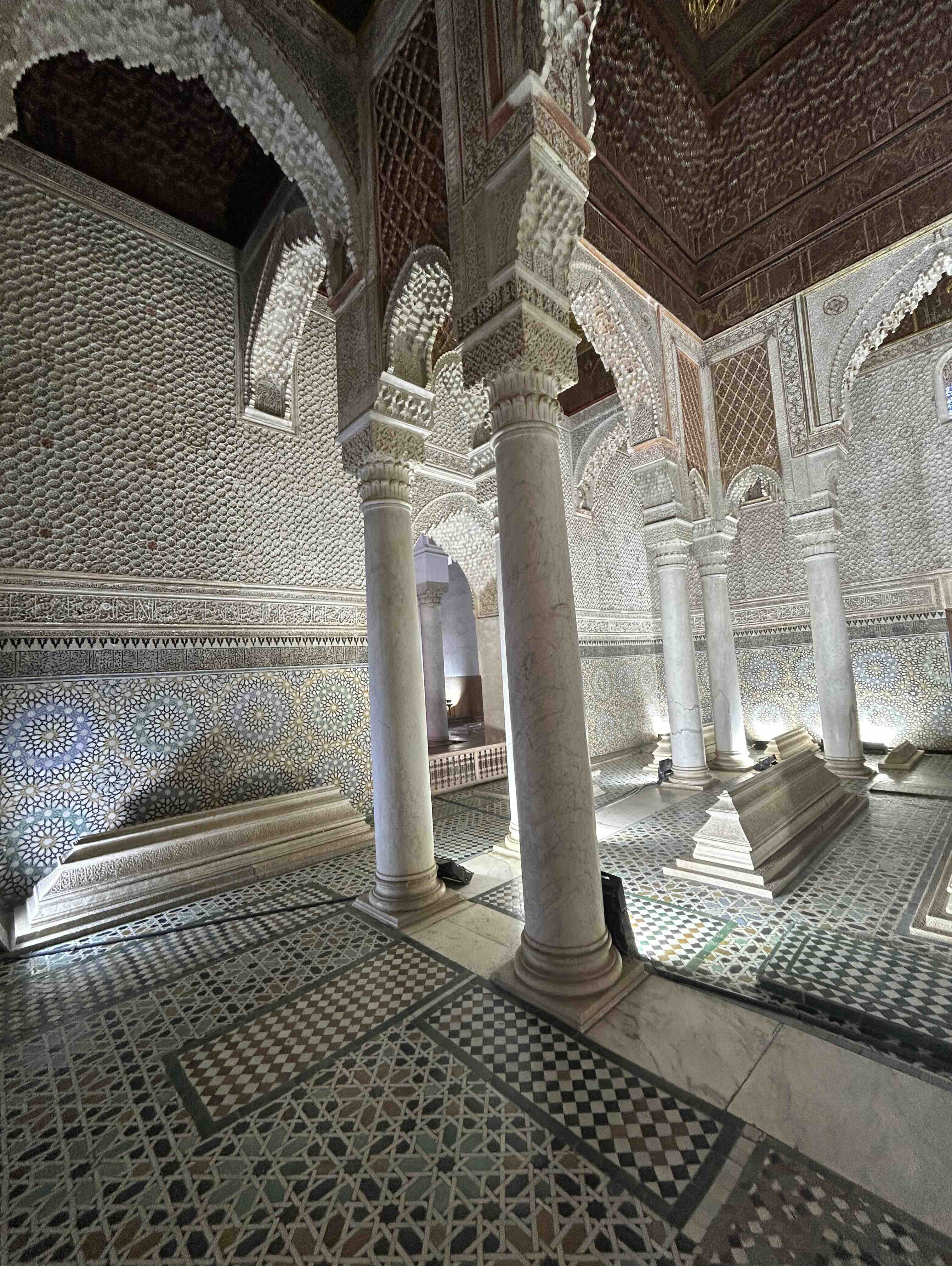
Sultan Ahmad al-Mansur, one of the dynasty’s powerful and successful rulers, built a mausoleum complex for the rulers of the 16th/17th-century Saadian dynasty. Many unnamed tombs with beautiful Zellige tilework (typical of the region) lie scattered about. The ‘Twelve Columns Chamber’, with its delicate columns, zellige tiles, and geometric patterns, is the most beautiful in this Moorish necropolis.
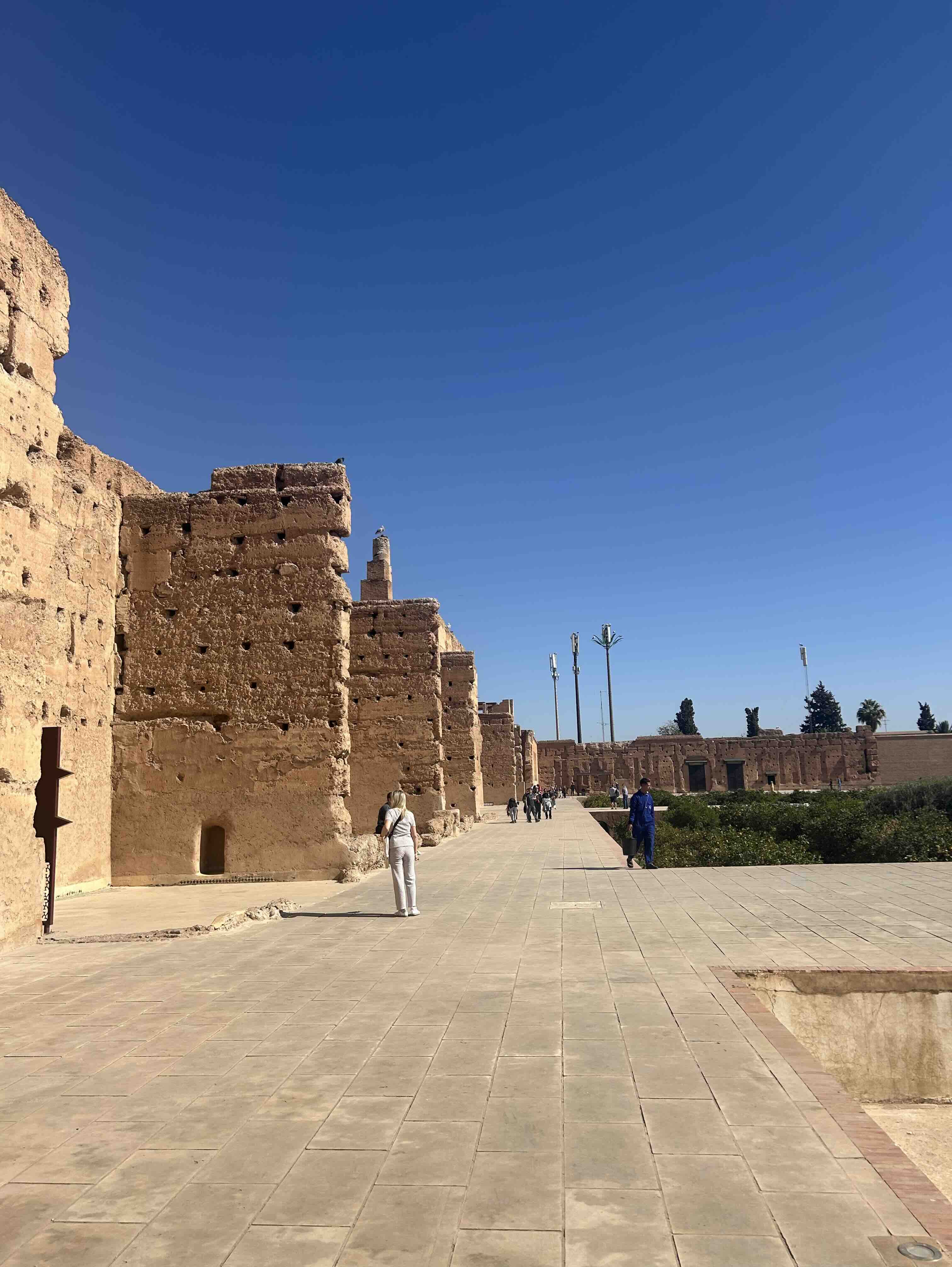

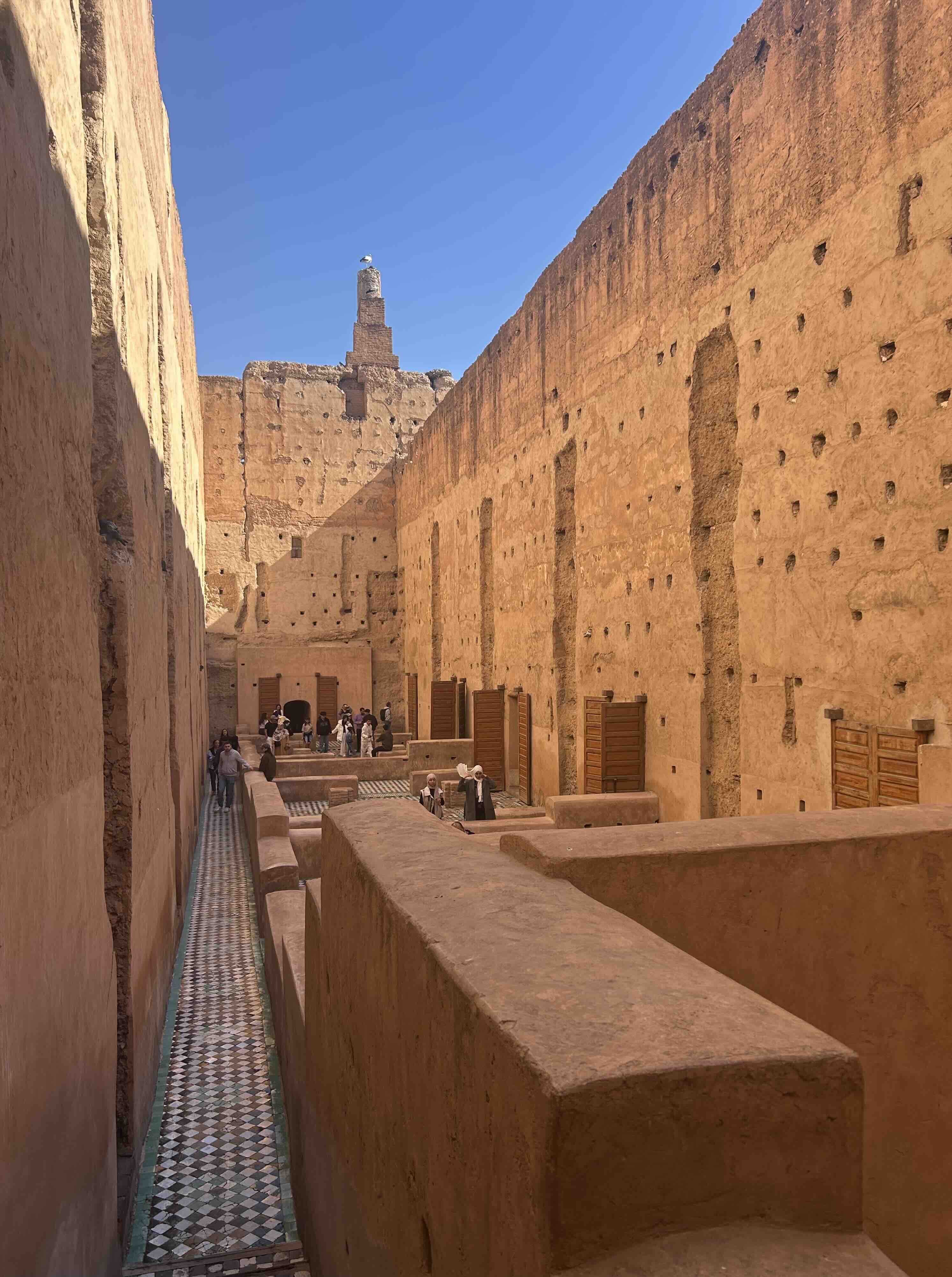
Sultan Ahmad al-Mansur, the mighty king of the Saadi dynasty, built it.
The palace had thick mud walls and was grand in its heydays, with ‘upstairs’ for the royalty and their guests, visitors, etc. and ‘downstairs’ for the enslaved people and helpers.
The many water pools and gardens must have kept the place cool even in the harsh summer. Exposed earth reveals centuries-old pipelines that carried water. The fall of the dynasty caused its destruction. The victorious Sultan Moulay Ismail of the Alwai dynasty enriched his royal palace in Meknes with wealth and wares from here. Sultan Moulay Ismail’s 55-year reign was one of the longest in Moroccan history!

Founded in 1492 by Rabbi Yitzhak Daloya, for the persecuted Jews fleeing Spain. Slat al Azaama means ‘Synagogue of Deportees’.
Located in the ‘Mellah’, aka the Jewish Quarter, this active synagogue with a museum chronicles the history of the Jews in Morocco from the time they fled the Romans in the mid-60s CE. They lived peacefully with the Berbers until the Arab invasion, followed by the Portuguese and French conquests. Most have left the country today.
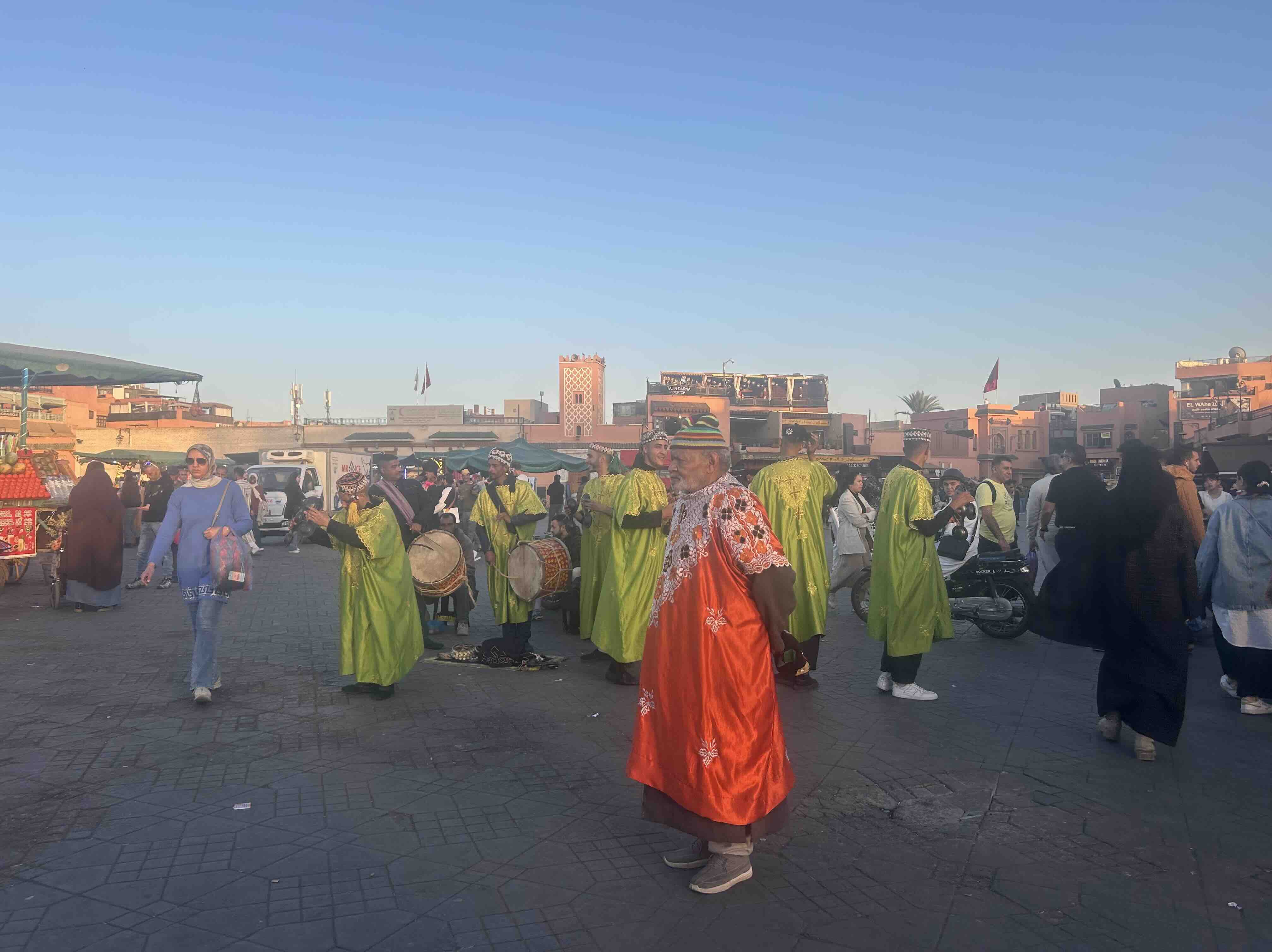
The Djemaa El Fna is a large square. Best to visit on a Saturday to experience all the hustle and bustle, watch buskers, snake charmers, traditional dancers and more!!!
The Medina is a MUST! The spice shops are the best, they remind me of male birds that decorate the nest to lure the female bird. Similarly, richly decorated metal drums pile up with spices that make you want to visit the shop! The Medina is also home to small shops selling spices, fruits and vegetables, riads, hammams, leather goods manufacturers, tanneries, tinsmiths, garages, tailors & clothing; you name it, they have it!
The Koutoubia Mosque, Marrakesh’s largest, is also in Medina.
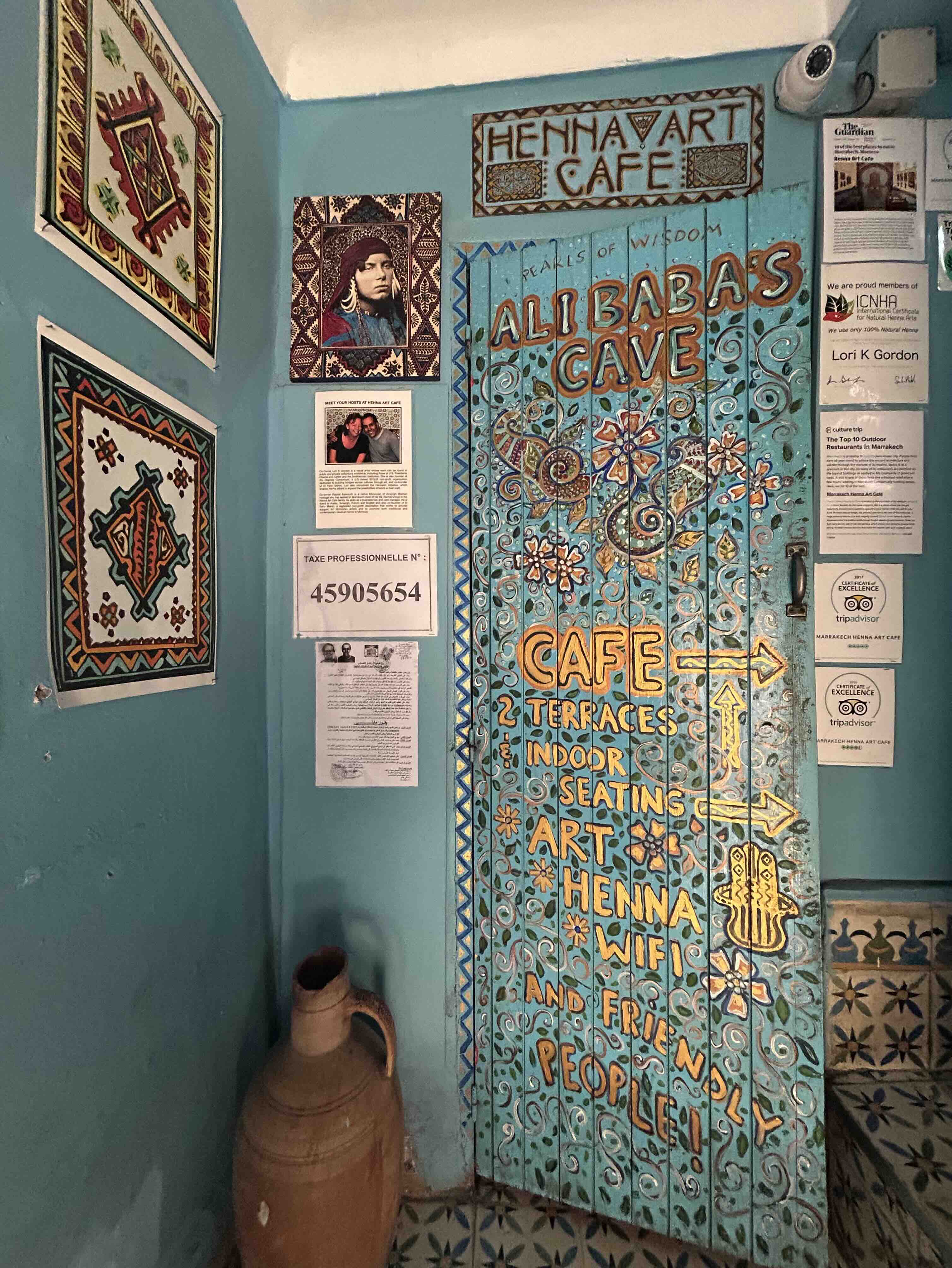
Henna Art Cafe is a cozy and warm place amid the flurry-burry of the Medina! Choose a henna pattern from their folders full of design ideas (or you can share your design) that they will lovingly paint for you. I was lucky to meet the co-owner, Rachid, who patiently chatted about the cafe, Berber art, and people. Have a quick bite (or more!) and some ‘Berber’ tea in the café while you wait for the henna to dry.
Jardin Majorelle, Pierre Berge Museum of Berber Art & the YSL Museum


I am putting the three together because the Jardin Majorelle & Pierre Berge Museum of Berber Art are in the same compound, and the YSL Museum sits next door.
The first owner of Jardin Majorelle was the French painter Jacques Majorelle. YSL & his partner, Pierre Berge, bought the place to save it from a real estate massacre.
Pre-buy your entry tickets for given time slots; do not put off buying tickets to the last minute, as entry slots may not be available. Tickets must be purchased online through their website ONLY. The cafes and shops do not accept cash. Everything here is entirely cashless. Only credit cards are accepted. The place can get crowded on weekends. Knowing French would help one read the display labels and understand and appreciate the artefacts much better!
Ben Youssef Medersa
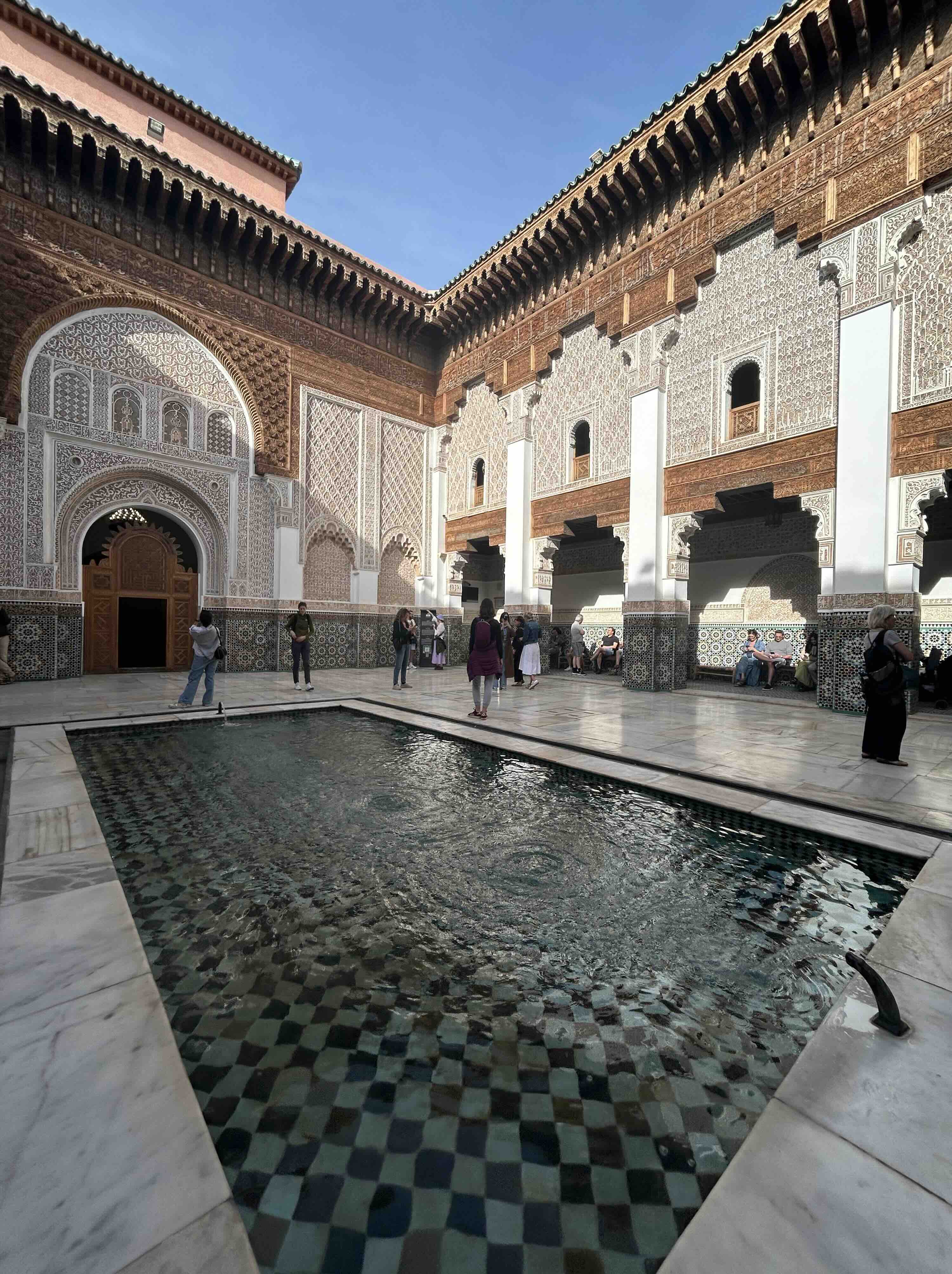
More a monument than a real school, for lack of a better word, it is GORGEOUS!!!! Once again, you see the traditional geometric woodwork, intricate frieze (jaali) work, calligraphy, zellige tilework, waterbodies, vestibules, and student rooms, all coming together so well that I would be mad if a student did not study well in such a beautiful setting 😉
Argan cooperative
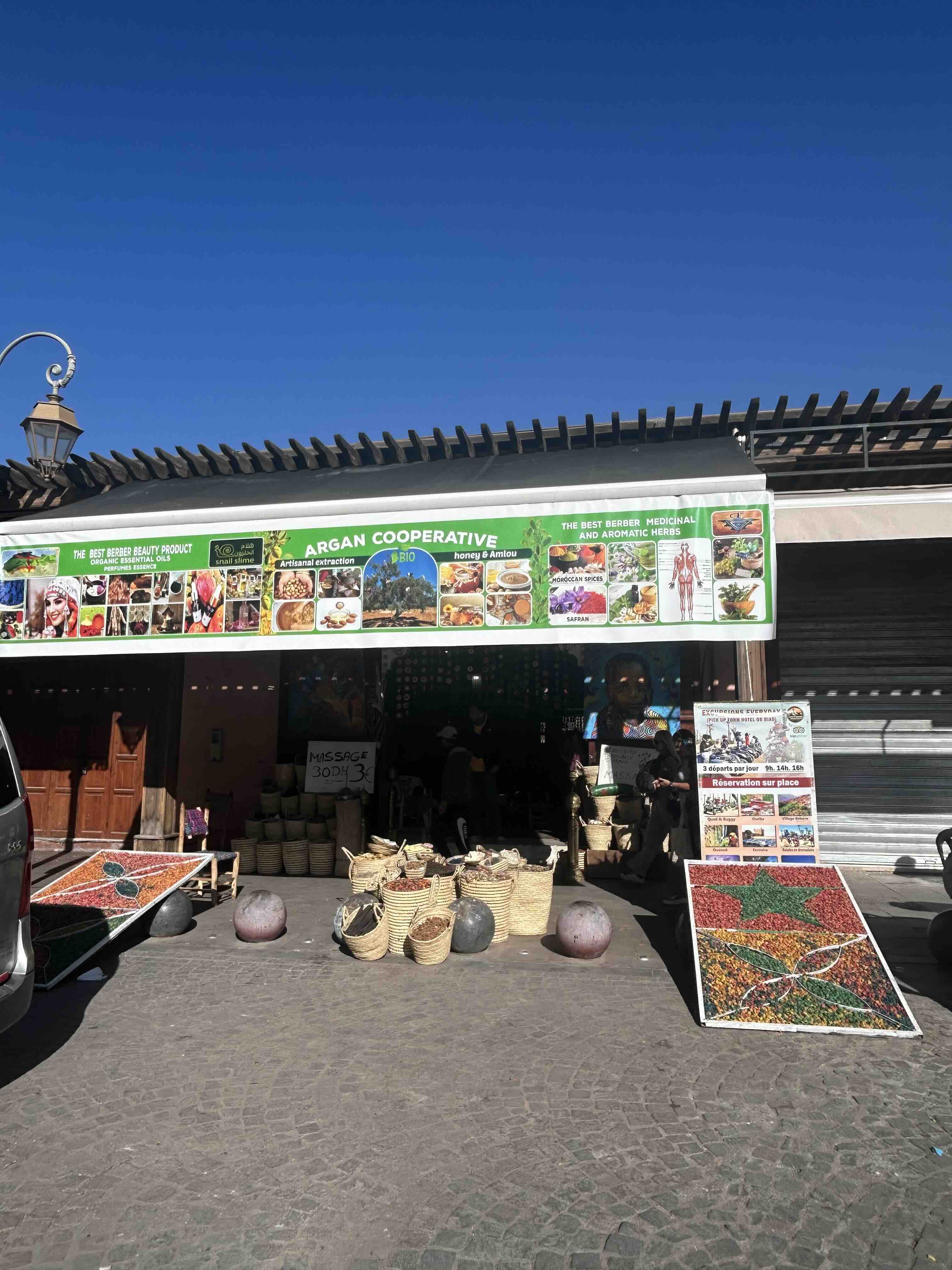
I recommend visiting one of these shops in the Medina to learn about local spices and their uses, although you may not want to for fear of being conned into buying something fake or overpriced.
Cooperatives are stores that sell products grown in specific regions of Morocco.
Most of these herboristes and cooperatives will have one person donning a white doctor’s coat to look like a pro with the right knowledge and know-how to ‘educate’ you on the natural products of Morocco.
Do not believe them if they tell you a piece of wood is sandalwood, as it is not indigenous to Morocco. It is most probably agarwood (Oud).
Do not believe them if they tell you that frankincense is available not only as tree gum but also as rocks.
Do not believe them if they tell you that Argan trees grow in the High Atlas mountains. What is true is that the seeds have health and cosmetic uses.

They grind argan seeds into a paste to extract the oil used for cosmetics.
Eating slightly sautéed seeds (it is very bitter) is supposedly good for diabetes, heart ailments, etc.
They use the oil from lightly sautéed and ground seeds in food and cooking. (Try the Berber jam called Amlou).
People use “Berber tea” as a touristy phrase for Maghrebi mint tea, which became popular when mint was added to the gunpowder tea the British introduced to Morocco. Today, variations of “Berber tea” include several other spices and dried flowers steeped in green tea.
Then what should you do in a co-op?
Listen to the spiel, sip some Berber tea, see and smell the spices, look at the traditional ‘Berber lipstick’, aka ‘aker fassi’, examine the argan seeds and the conventional grinding method, and take pictures. Say thank you and move on. That’s hard to do, so like me, buy some sandalwood, frankincense, and roasted Argan, and they will throw in one of those lipsticks for free!
Fes
Fes is considered the cultural capital of Morocco. It has two medinas, Fes el Bali and Fes el Jdid. The former is one of the world’s oldest continuously lived historic towns and is a UNESCO World Heritage Site.
Both have things to see and do, but we kept to Fes el Bali only and trust me when I say I want to go again and spend more time there! From what I have read, Fes el Bali is far more charming than Fes el Jdid, though the latter has several places of interest.
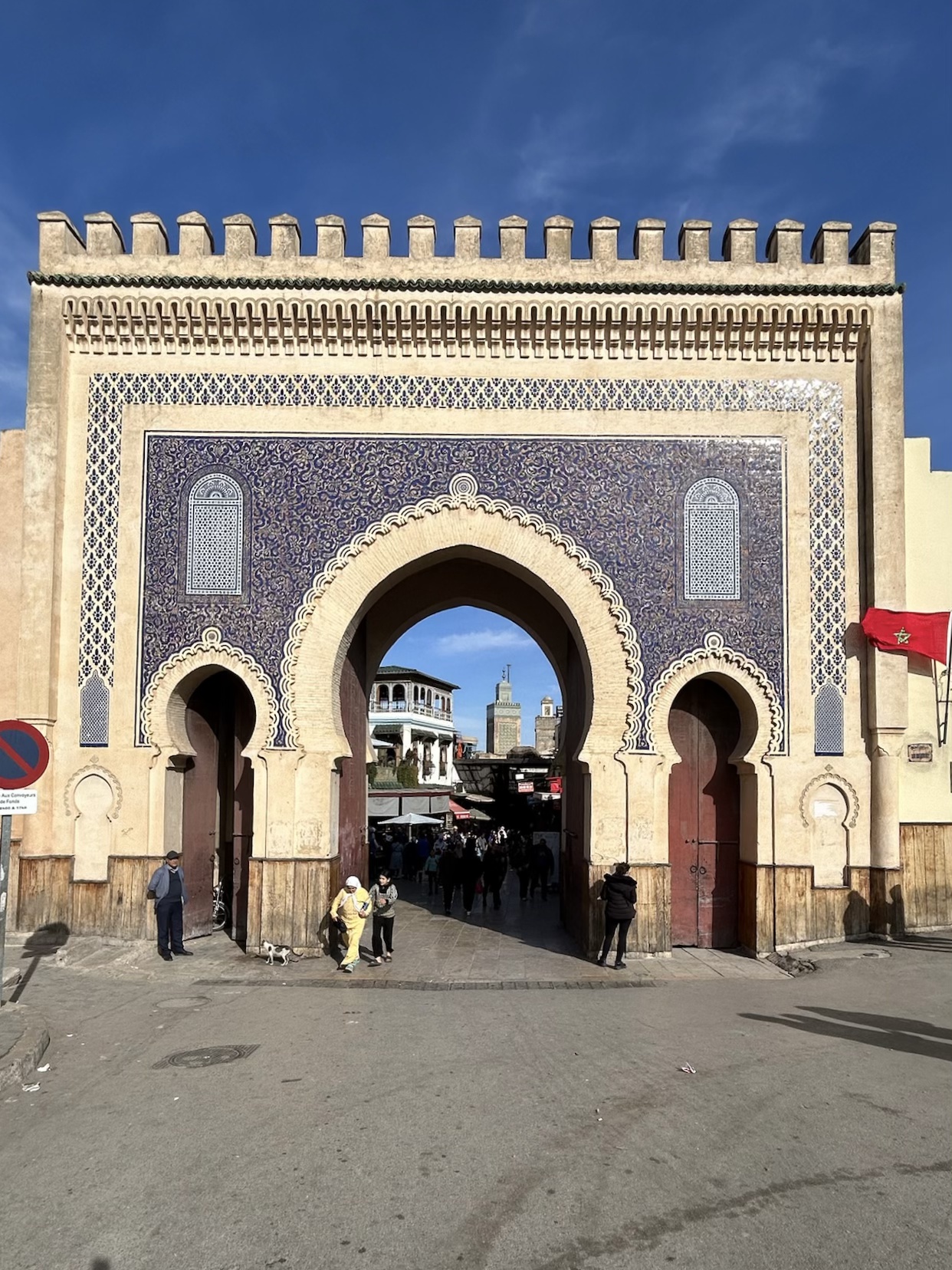
Fes el Bali
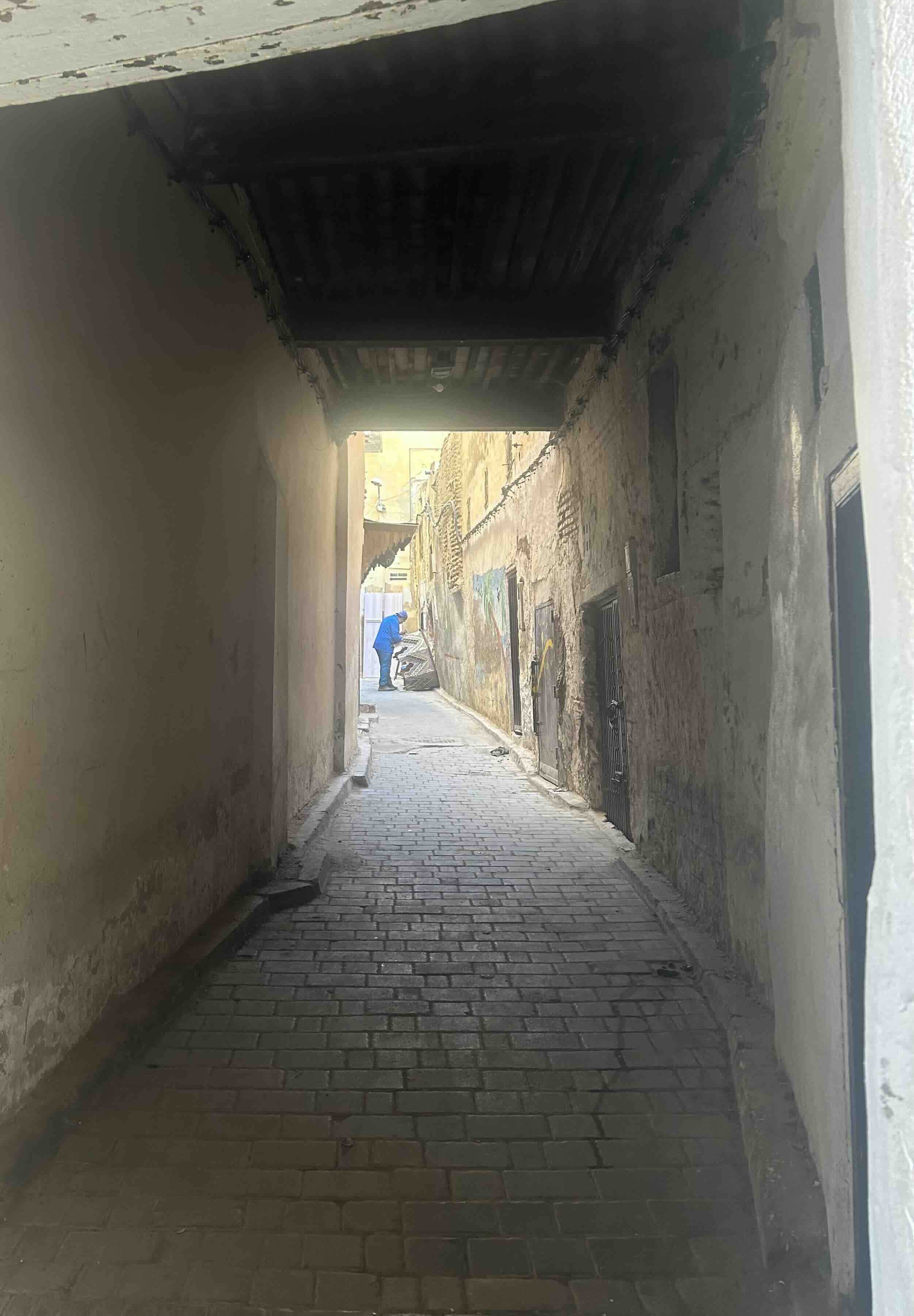
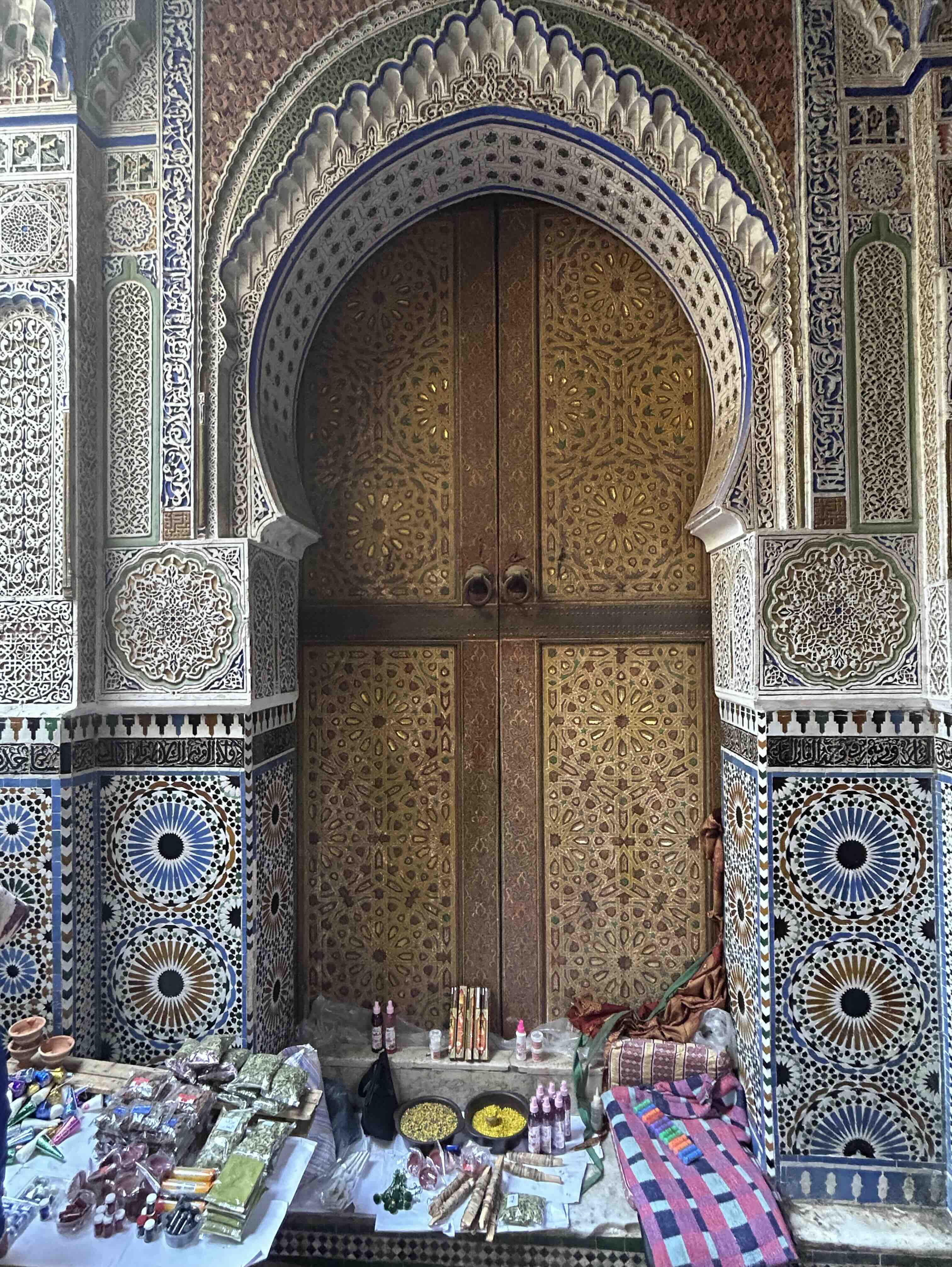

Fes el Bali has 9000 streets going downhill to the centre of the Medina and uphill, outward and away from the centre of the Medina. The completely pedestrianised pathways are so narrow that one has to stick to the wall to make way for a passing donkey or a loaded cart. The medina packed with people, its myriad shops that are quainter than quaint can be, artisans making leather goods, coppersmiths, tailors and boutiques, carpets and jewellers, antique shops, restaurants, riads, cafes, henna, spices, ceramics, hammams, the cacophony, the aromas, the exuberance, the chaos, the confusion, the joy, the curiosity, the awe, the element of surprise, there is nothing you cannot find here or feel here! Despite all this, it is safer than safe can be! You cannot but reel under its medieval charm.
Nejjarine museum

Located in front of what used to be the carpenter’s souk, it was a caravanserai, a ‘fondouk’ – for merchants and their goods. The museum houses wooden objects from the Arab world.
Mausoleum of Moulay Idriss II


People believe that Moulay Idriss II is the founder of Fes. His mausoleum is an important pilgrimage centre for Moroccans. Fes grew in size and importance over several centuries, depending on the ruling dynasty’s alignment with the type of Islam they followed. The architectural splendour of this mausoleum ranks high among all the ones I visited between Fes and Marrakesh. It features a very prominent minaret that is easily identifiable from around Fes.
Mosque & University of al-Qarawiyyin
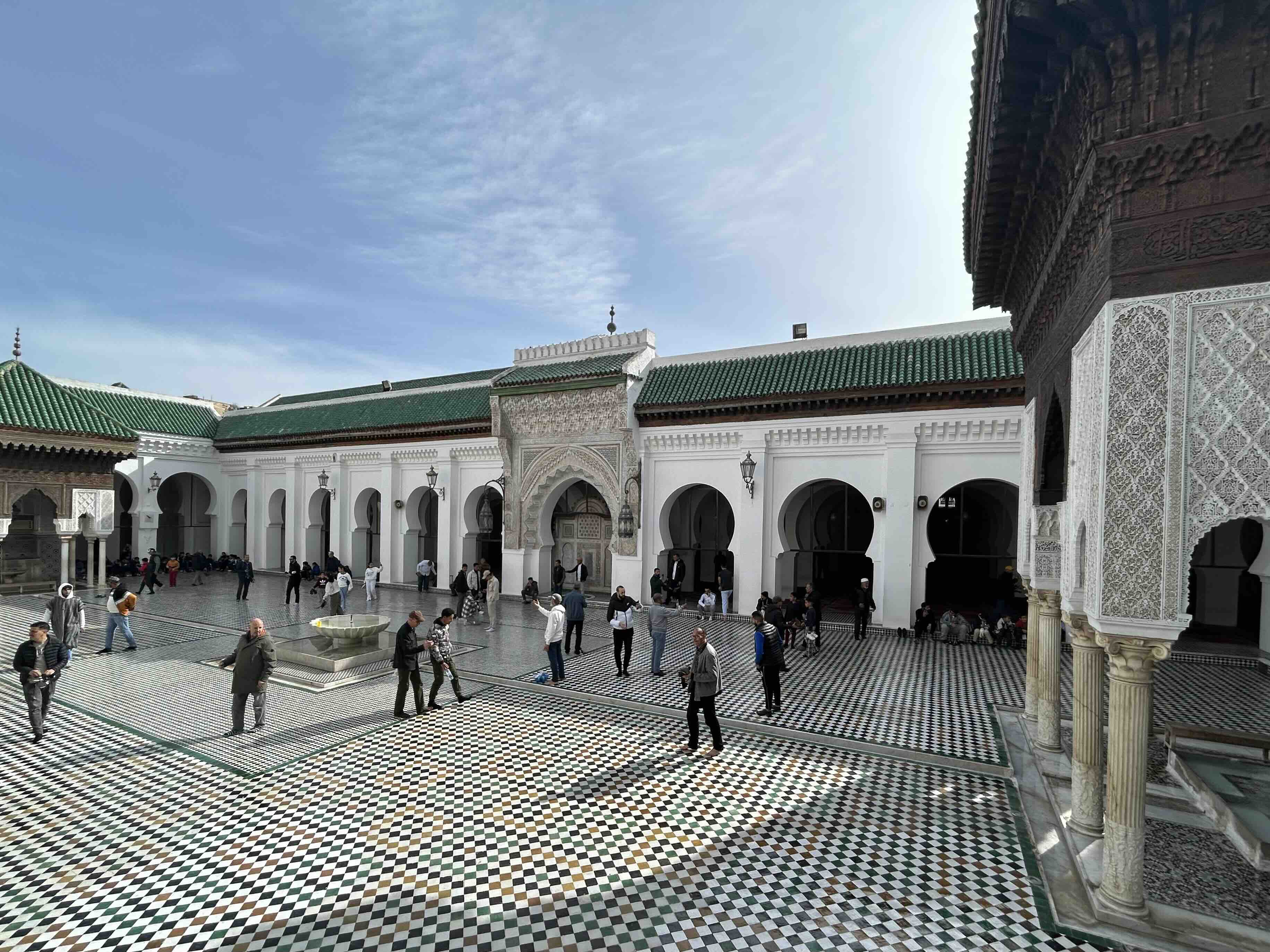
Fatima al-Fihri, the daughter of a wealthy merchant, is credited with founding this university between 857 and 859 CE during the rule of the Idrisid dynasty. Inscriptions discovered during restoration continue to have historians and scholars debating the origins of the university and its founder. The university is spread over a large area, far deeper than what we see from the north entrance (where Google Maps will take you, along with the hordes of travellers and their guides). Women must cover their heads with a scarf to be allowed entry. There are separate prayer halls for men and women.
Al Attarine Madarasa

The entrance can fool you into believing it to be a mediocre place. The mihrab is one of the prettiest I have seen. The Zellige work is exquisite, the calligraphy artistic, and the muqarnas intricate. A great coming together of wood, ceramics and marble.
Place Seffarine
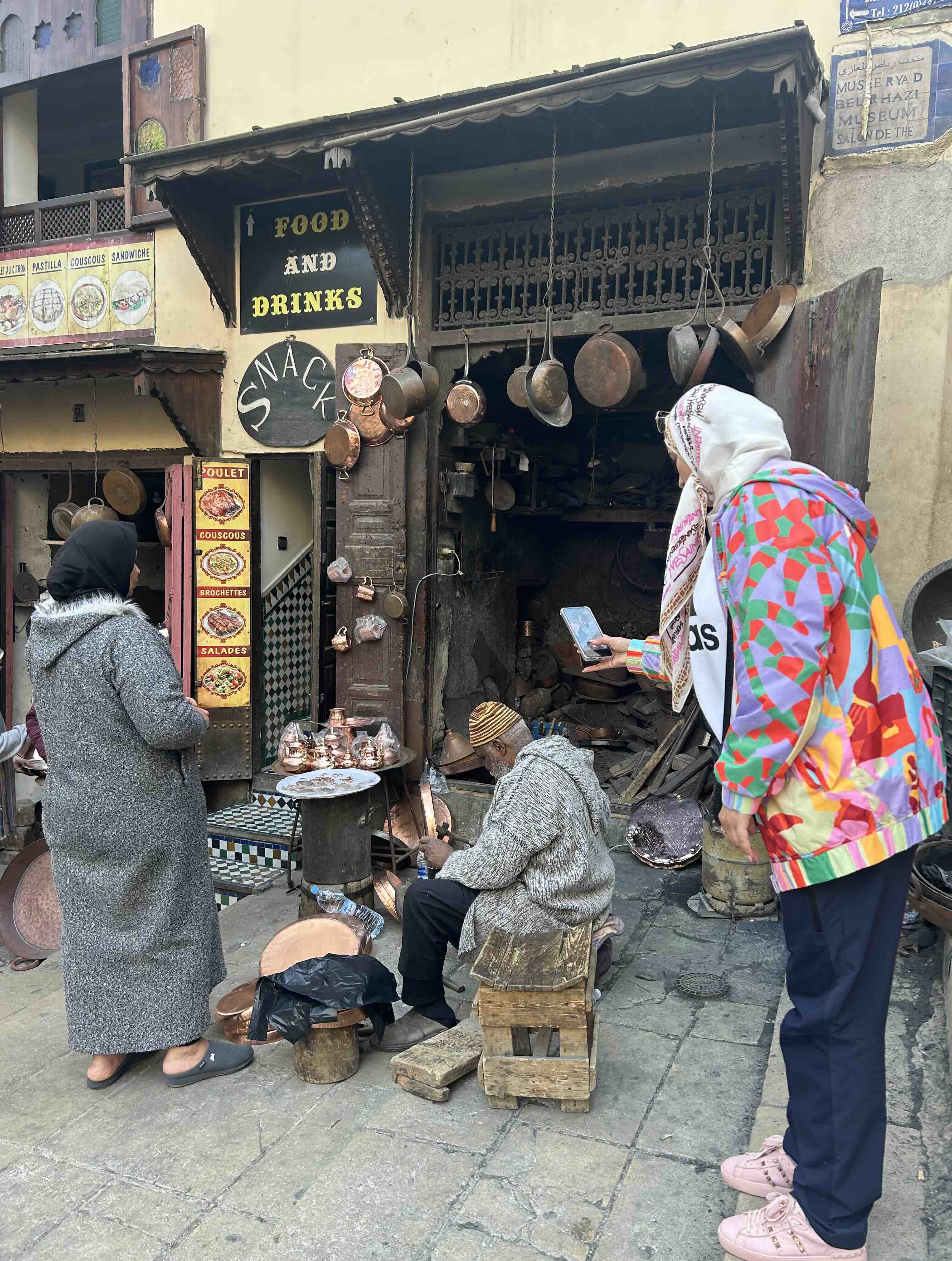
Place Seffarine is the coppersmiths’ nook in the medina. One can watch coppersmiths hammer away under a plane tree that forms the heart of the Place, demonstrating the art of making copper artefacts and daily-use objects.
The Asly Concept store in the Place is a lovely little shop for quality Moroccan products, even though some products, like the scented candles, seem overpriced.
Sabaghine

A dyers market with a few tanneries and shops. Oud Bou Khrareb, the main water canal of Fes, runs below an arched bridge.
Chouara tannery

It is the largest and oldest of the three tanneries in Fes. Shops around the main dyeing and drying area sell leather products and serve as viewpoints, offering a look down into the tannery. They even give you small bunches of mint sprigs to help ward off the strong, toxic, and putrid smell of the dyes, chlorine, leather, and other chemicals. I went as close to the dye vats as possible for a closer look, and I was greeted with big smiles and a few words (Hindi, Indi, Salman Khan, India).
Ourika Valley & Imli
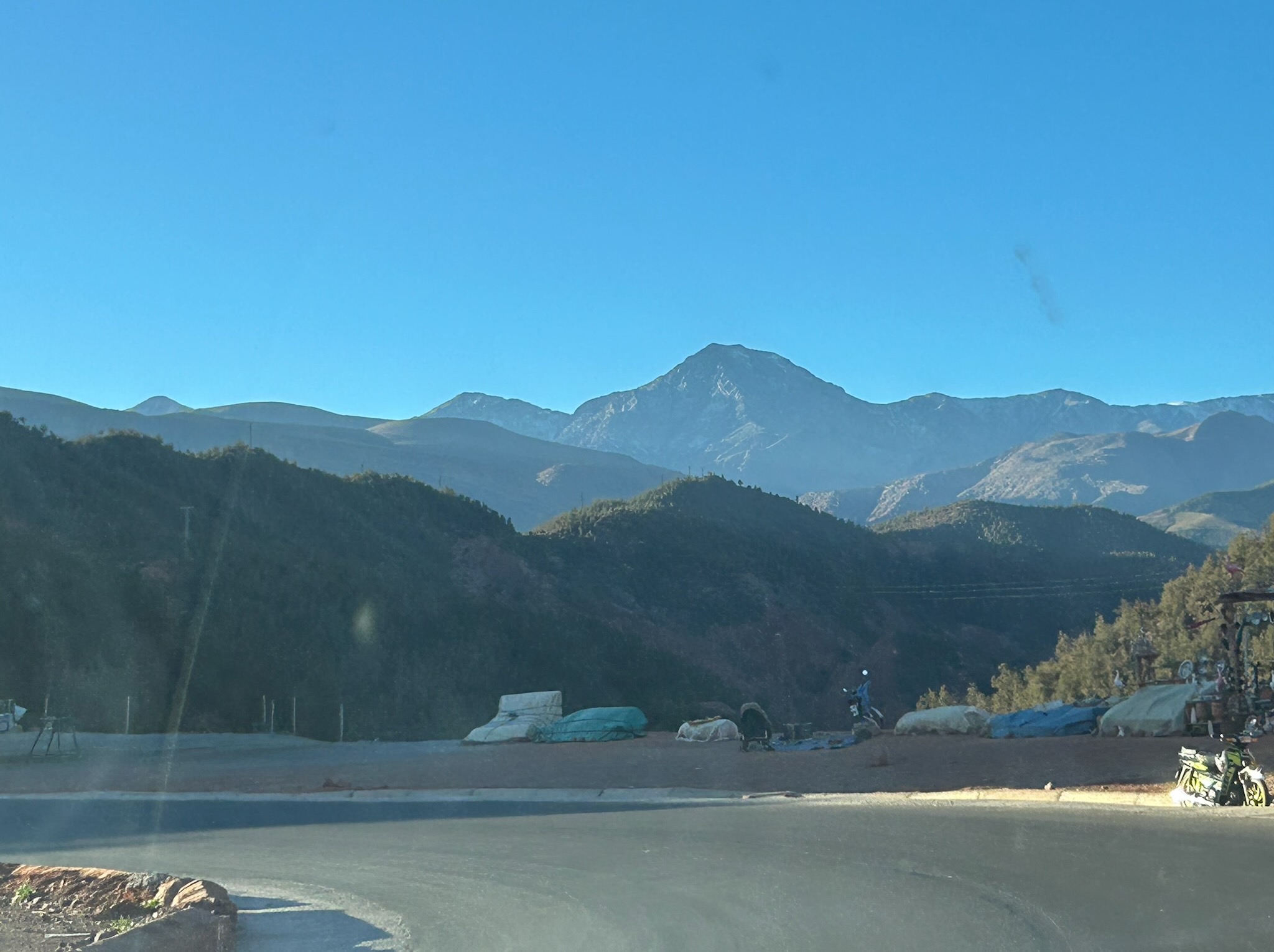
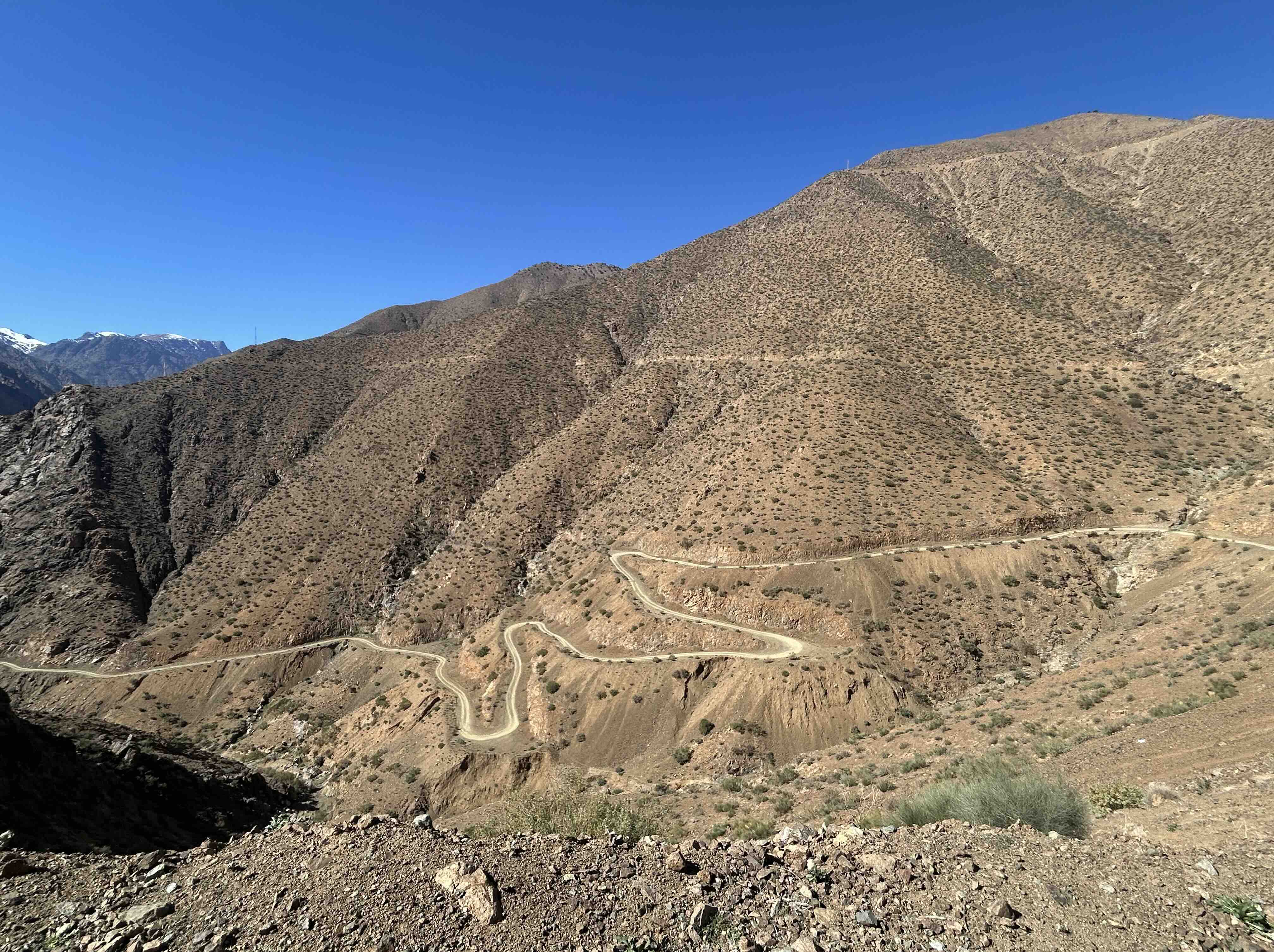
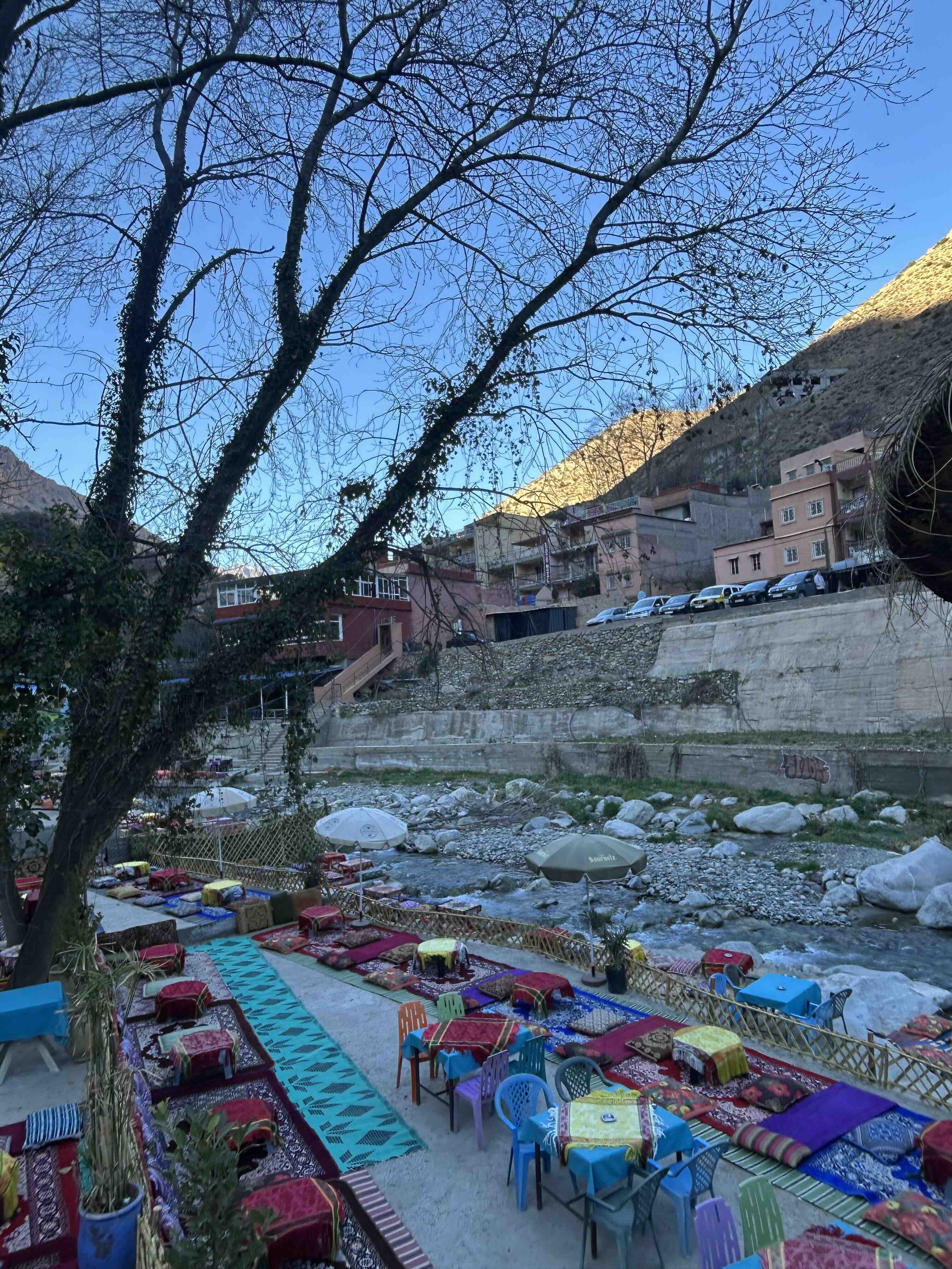
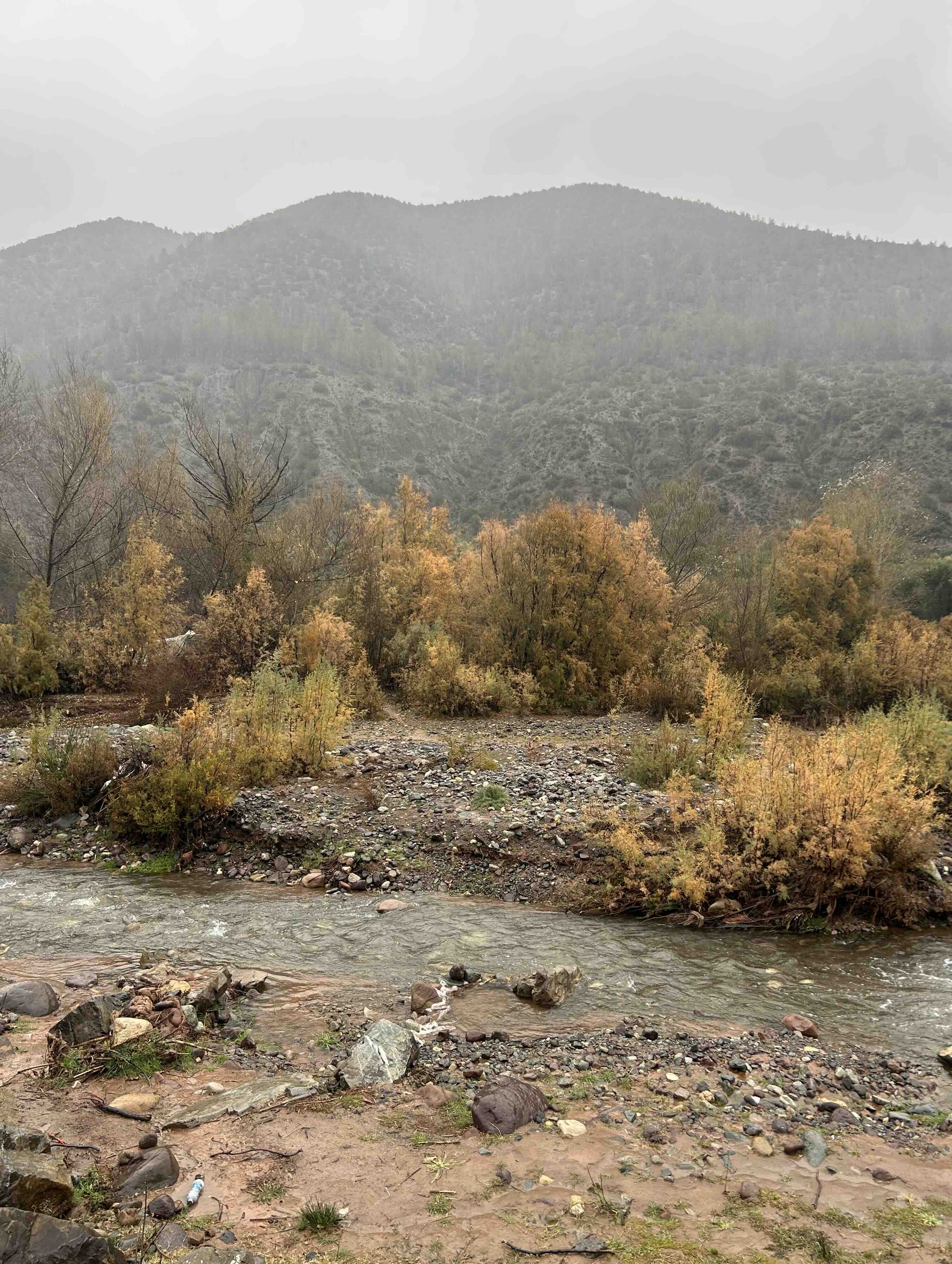
Day trips on two separate days to the foothills of the High Atlas Mountains.
The road meanders along a narrow river. Restaurants along the river with seating on the river try hard to lure tourists. The drive is pretty scenic. We hiked to a waterfall, walked along the river, saw walnut trees and small farms, and hiked up a hill to look down the river and the Berber village. It makes for many pretty pics for sure!
 Kirana Bhat