Kanchipuram / Kancheepuram / Kanchi / Conjeevaram / Kachi / Kachipedu – a town with as many names as there are temples! One of the world’s oldest continuously inhabited cities, Kanchipuram is a living museum of India’s spiritual and cultural legacy.

Saints like Adi Shankaracharya, Ramanujacharya, and several Alvar and Nayanar saints once walked its ancient streets. The famed poet Kalidasa called it “Nagareshu Kanchi” – the best among cities. Once the capital of the Pallava kings, Kanchi flourished under successive dynasties like the Cholas and the Vijayanagar rulers. World traveller Huien Tsang visited this bustling town. Legend has it that Kanchi gave the world the founder of Chinese Zen Buddhism.
No South Indian wedding feels complete without the luxurious sheen of a Kanjeevaram silk sari, woven by generations of master weavers residing in Kanchipuram. Mettu street, was once home to a prosperous silk weaving community that produced and exported the most gorgeous silk saris. Kanchipuram cotton too has its own rightful place in textile history.
And yet, for all its grandeur, Kanchipuram remains a town of simple rhythms, where the past and present mingle easily. Locals carry the city’s greatness on their shoulders with non chalance. On one side, pilgrims and devotees throng temples to seek blessings, while others, like me, come to admire the awe-inspiring architecture. Meanwhile, the wealthy descend on multi-storeyed silk shops on Gandhi Road to pick out saris worth lakhs of rupees.
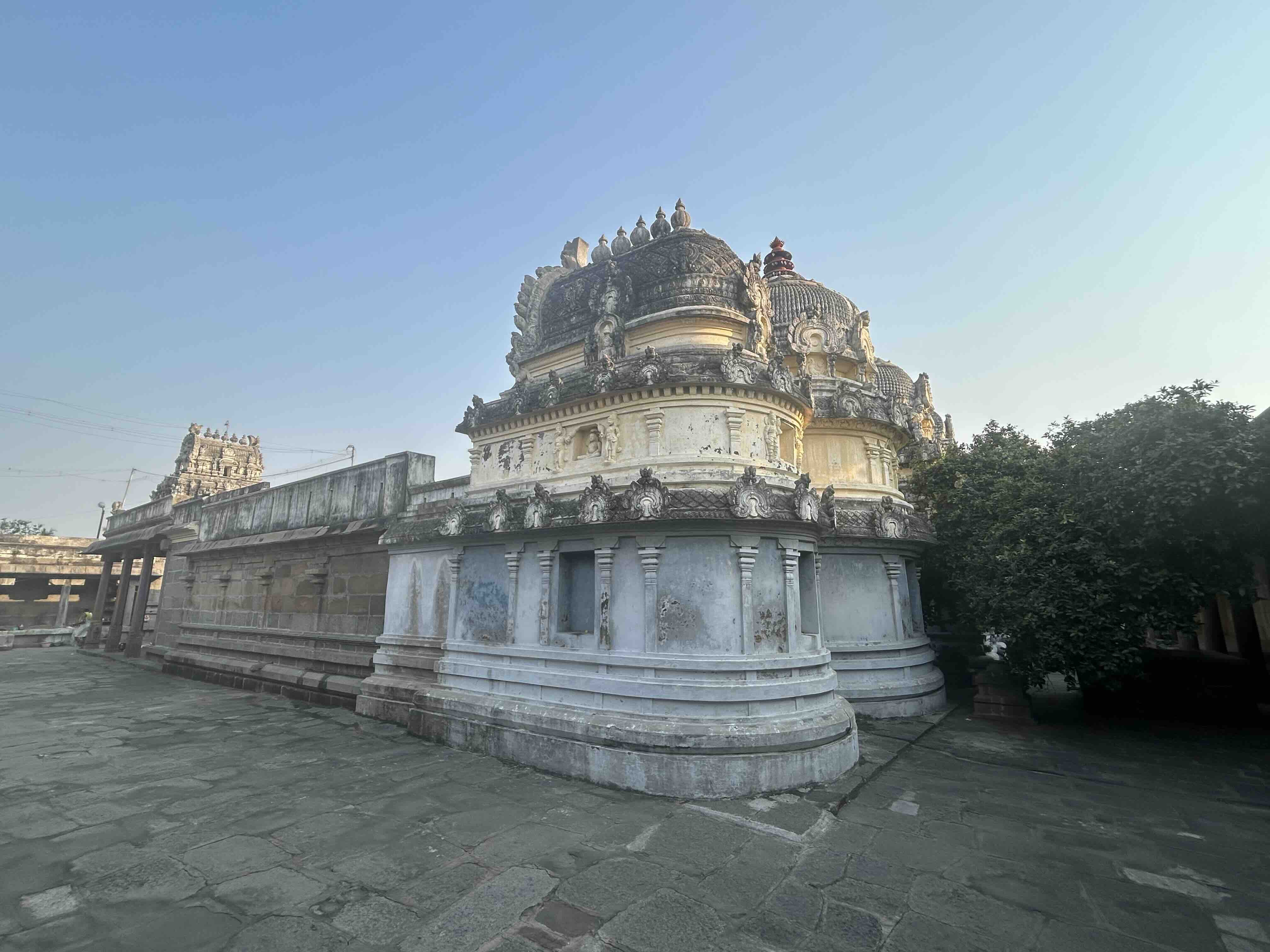
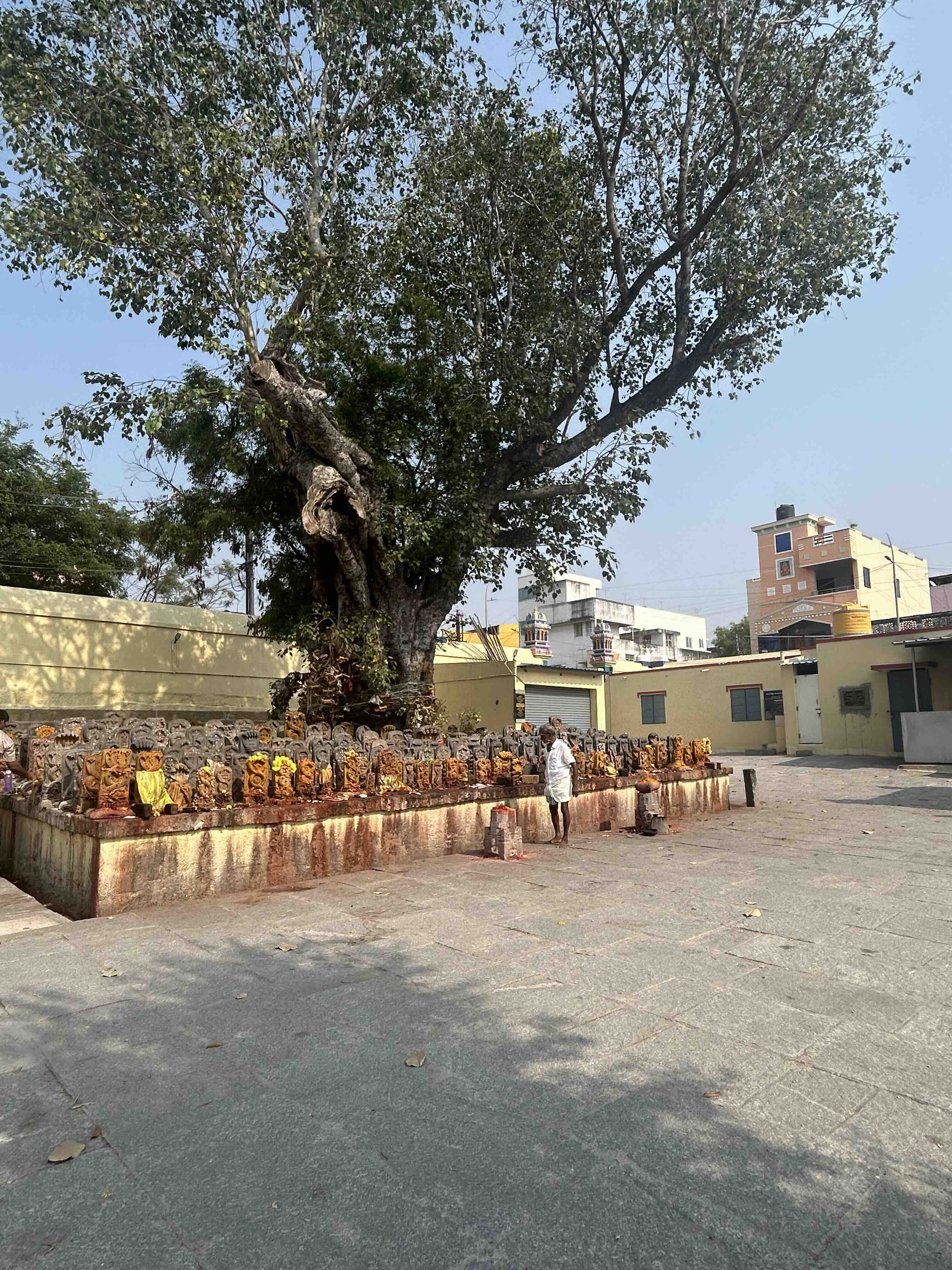
Kanchi truly is the town of a thousand temples. Toss a stone in any direction, and chances are you will hit an ancient, living temple, often several steps below today’s road level, revealing how the city has physically risen over centuries. These small shrines, many neglected, whisper the stories of a bygone era to those who stop to listen.
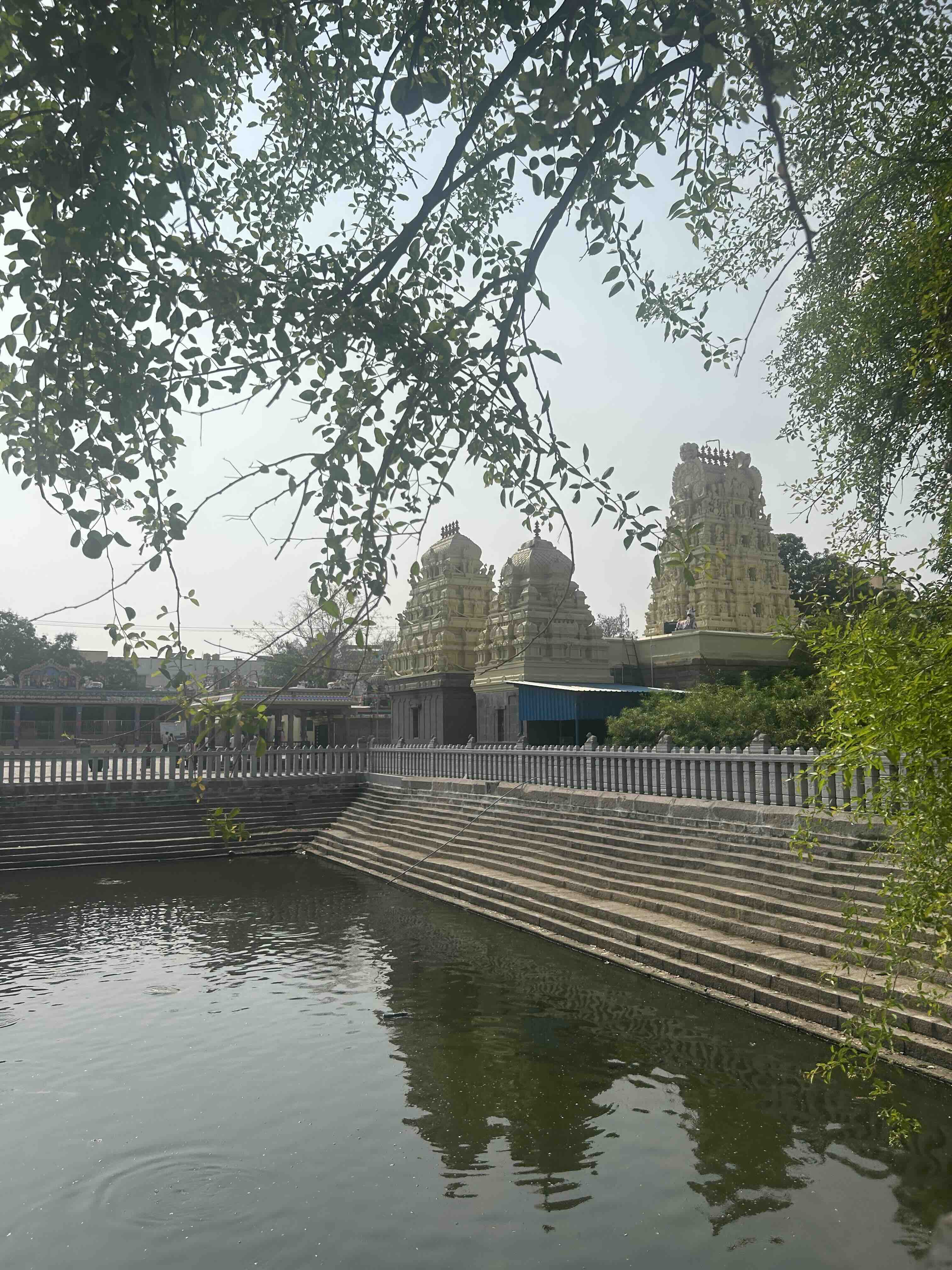
Did you know there are actually four Kanchis divided up on the basis of temples that exist in the area?
Shiva Kanchi (temples for Shiva)
Vishnu Kanchi (temples for Vishnu)
Jaina Kanchi (for Jain temples)
Buddha Kanchi (for Buddhist sites, now almost lost except for faint hints at the Ekambareshwar and Kachapeshwar temples).
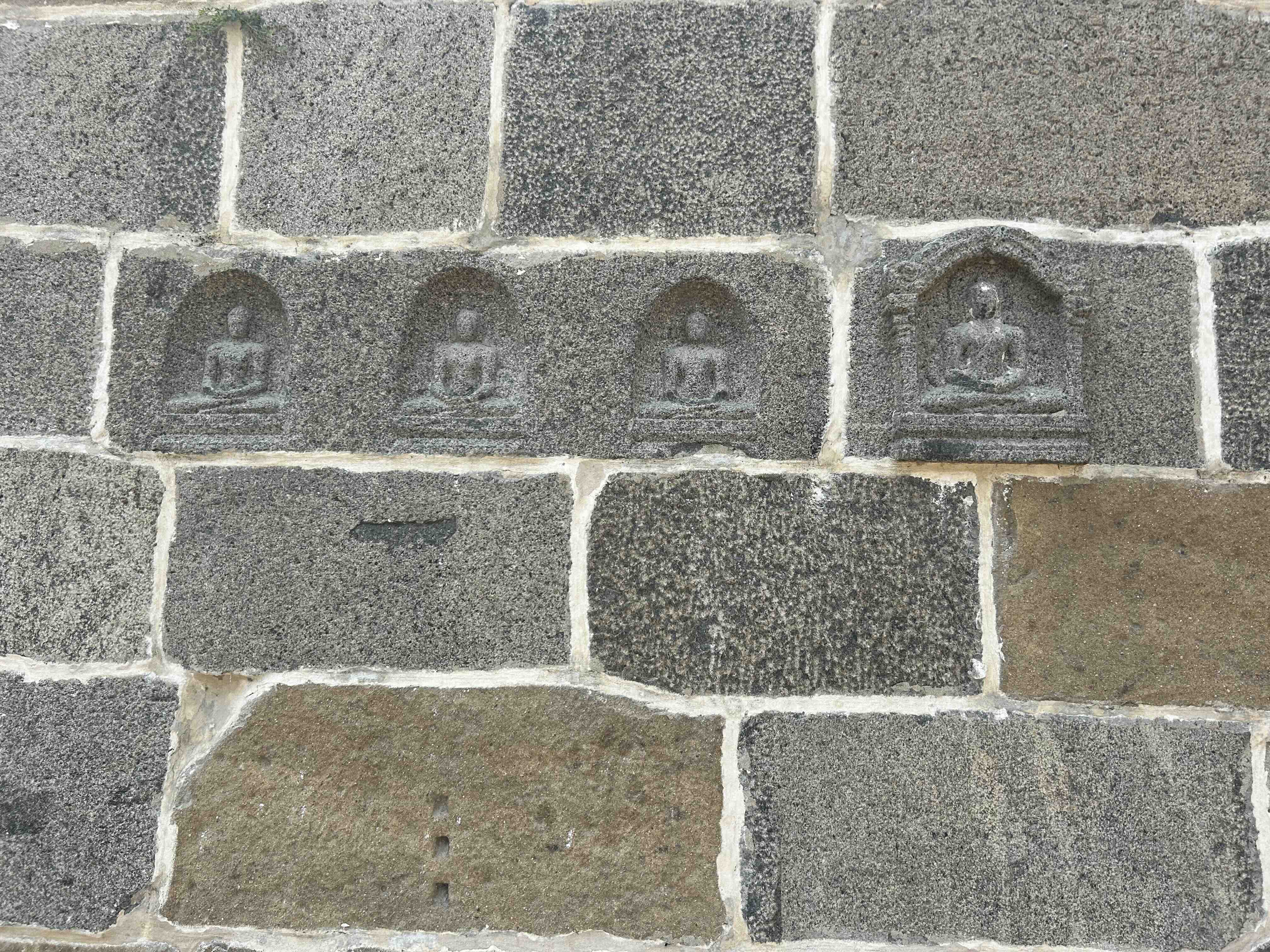
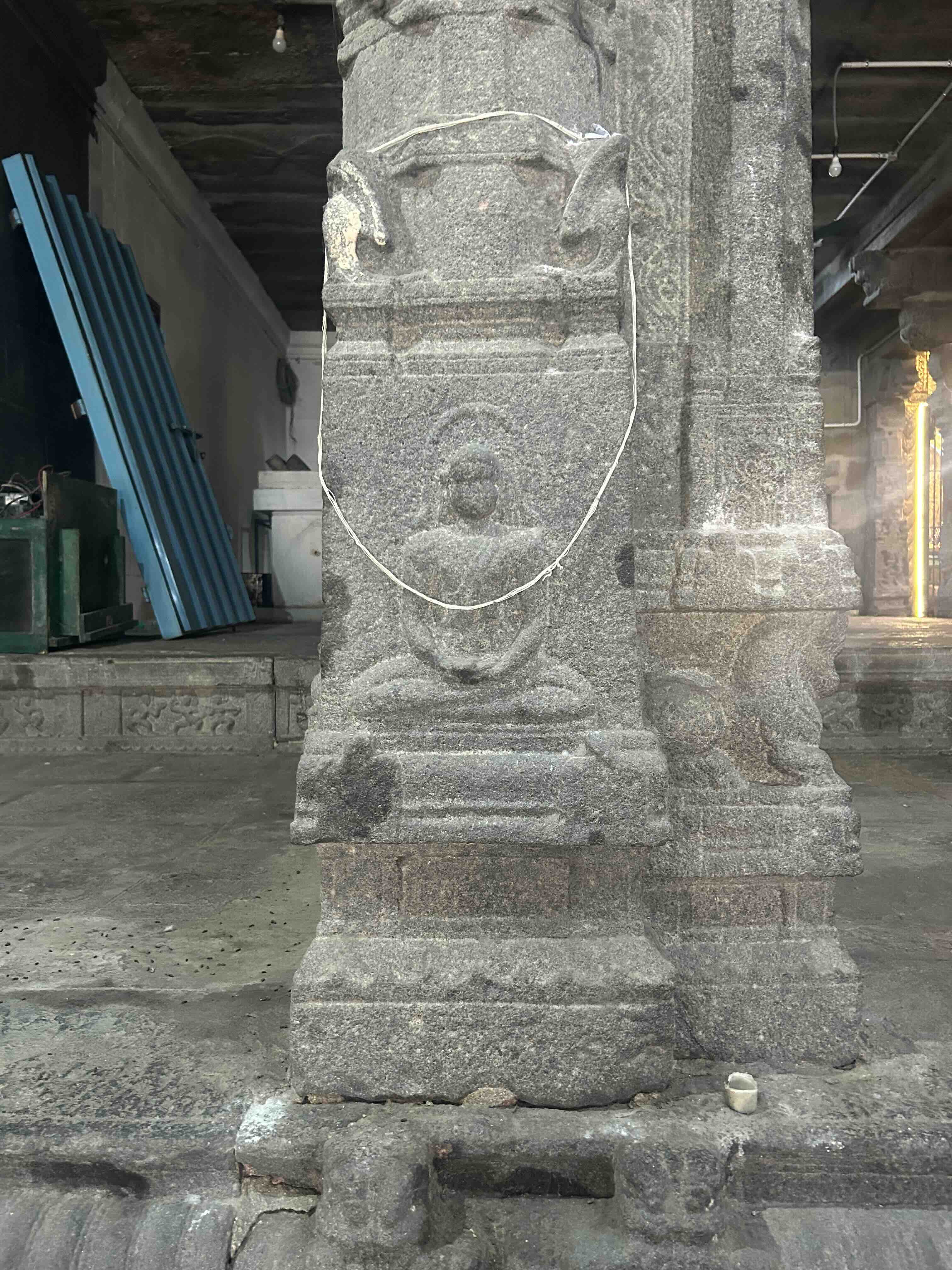

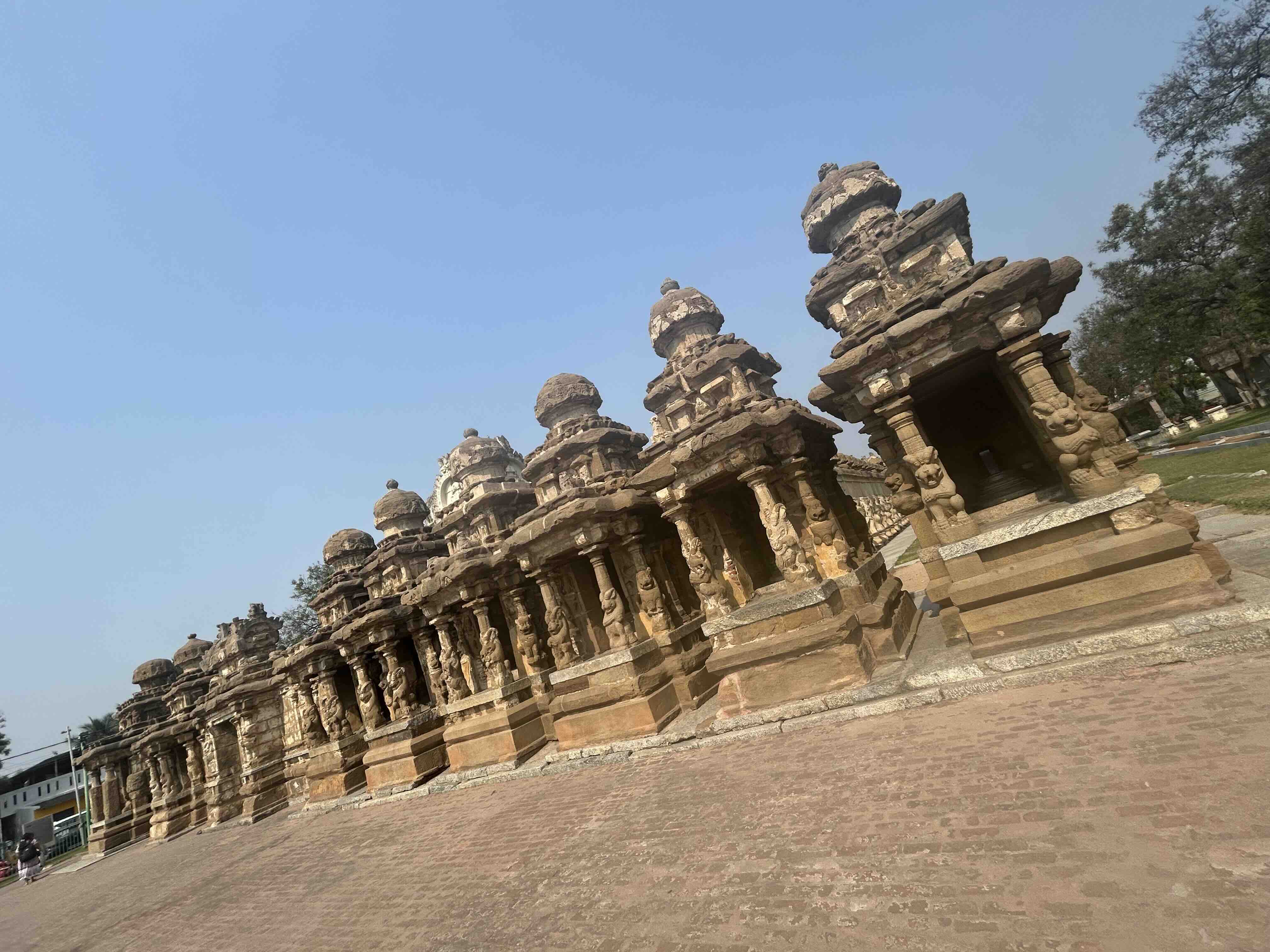
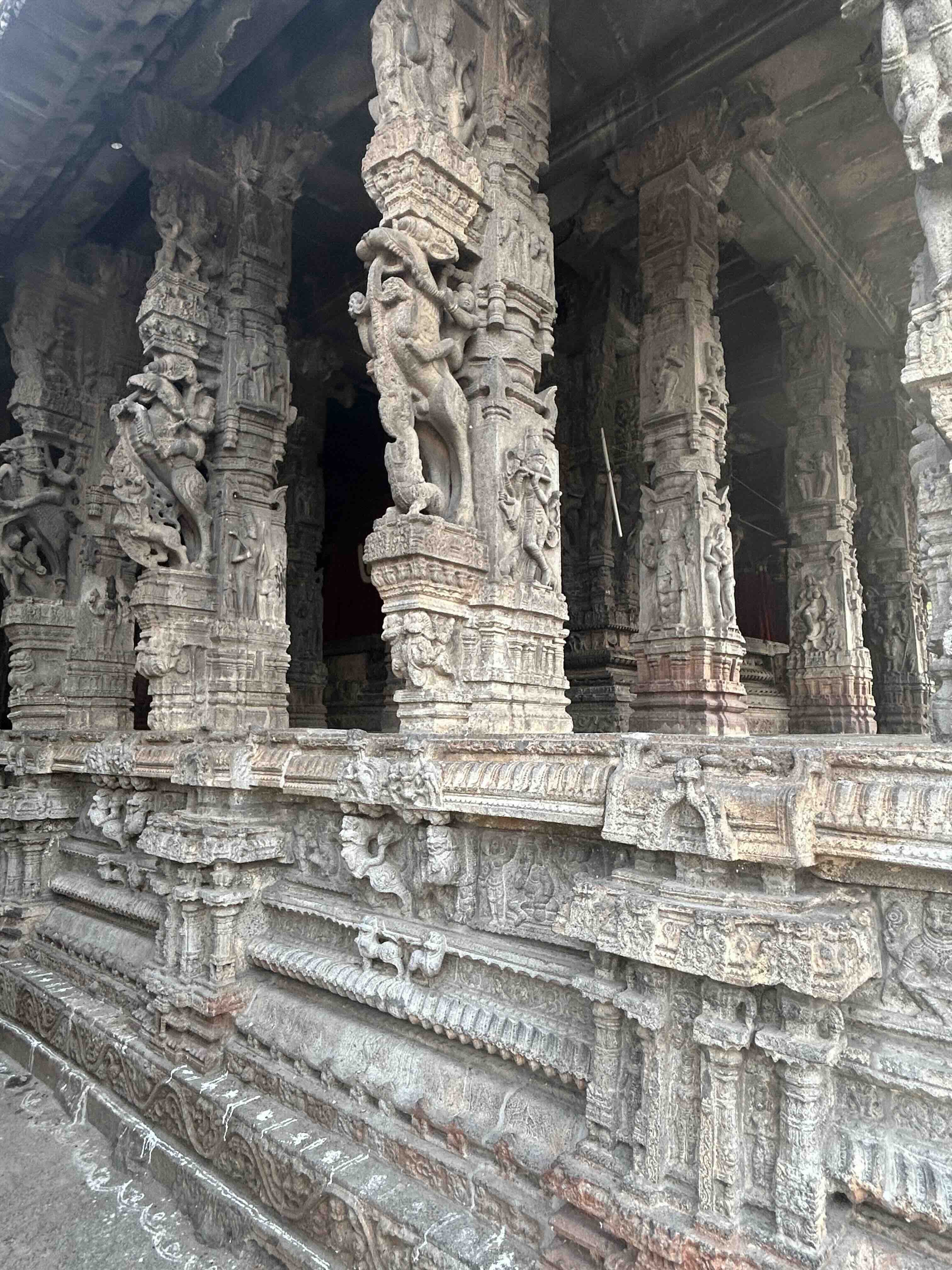
Out of the mythical “thousand” temples, around 21 major temples are considered especially important, based on their antiquity, grandeur, and the stunning visuals created from sandstone and later, granite; neither stone native to Kanchipuram!
My Visit – March 2025
When I visited in late March ’25, many temples were undergoing restoration. While this did not stop the faithful from offering prayers, if history and architecture are your main draws, the scaffolding covering many gopurams and out-of-bounds mantapas might feel a bit disappointing.
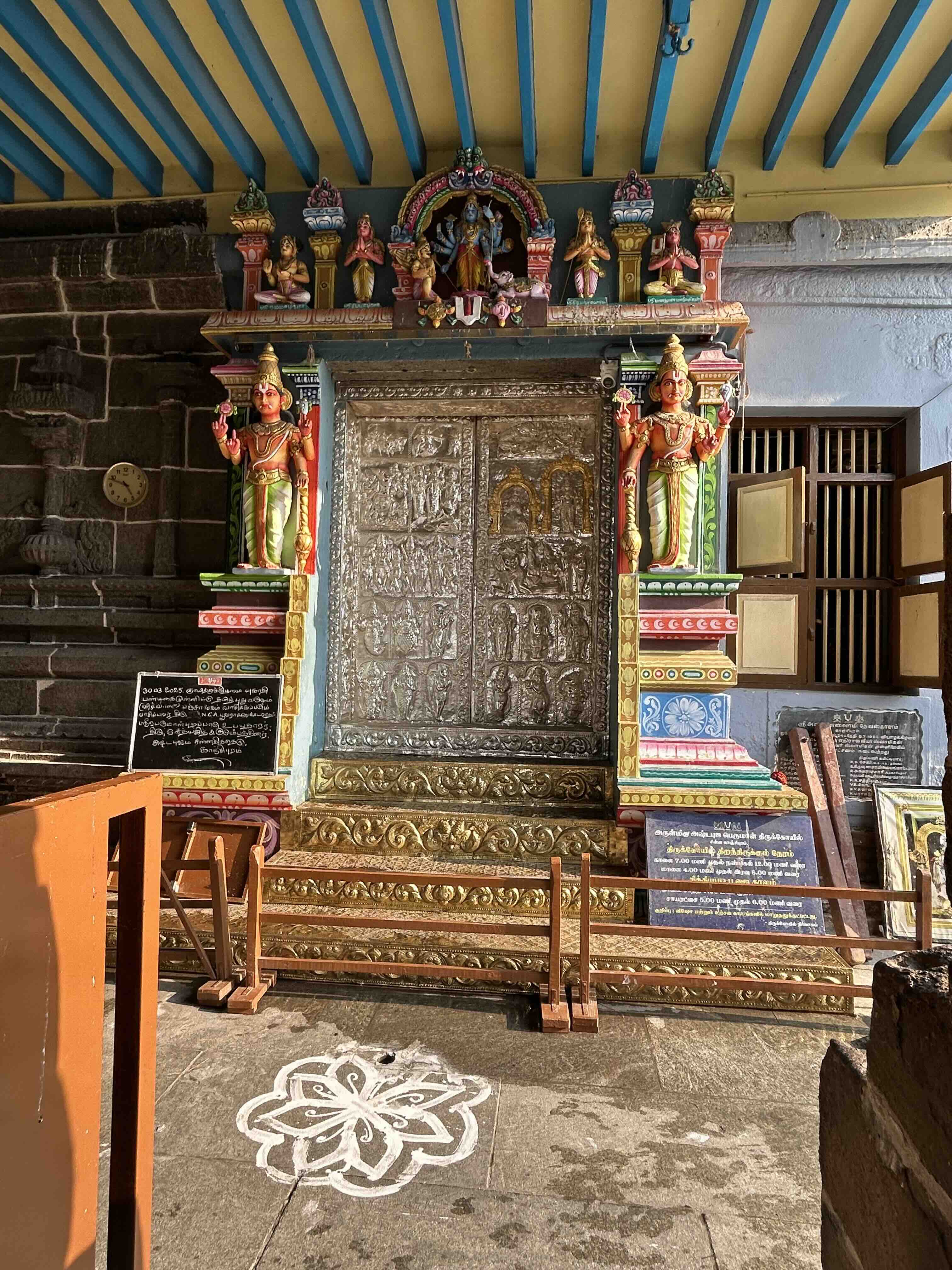
Important Tip: Temple opening/closing times are highly unpredictable!
While Google Maps was fairly reliable for timings, it is not foolproof. My personal rule? Aim to arrive about 30 minutes after the stated opening time and you will almost certainly find the gates open.
Here’s a quick temple timings guide based on my experience: (Click the links for temple info).
| Temple | Timings |
| Vaikunta Perumal Temple | 6:00 AM – 12:00 PM, 4:00 PM – 6:00 PM |
| Ulagalandha Perumal Temple | 6:00 AM – 12:00 PM, 5:00 PM – 8:00 PM |
| Kamakshi Amman Temple | 6:00 AM – 12:00 PM, 3:30 PM – 9:00 PM |
| Kumarakottam Temple | Timings unknown |
| Ekambareshwar Temple | 6:30 AM – 12:00 PM, 4:00 PM – 7:30 PM |
| Kailasanathar Temple | 9:00 AM – 12:30 PM, 4:00 PM – 6:30 PM |
| Kachapeshwarar Temple | 5:00 AM – 12:00 PM, 5:00 PM – 8:00 PM |
| Yathothkari Perumal Temple | 8:00 AM – 11:30 AM, 5:00 PM – 8:00 PM |
| Sri Ashtabuja Perumal Temple | 6:30 AM – 12:00 PM, 4:00 PM – 8:00 PM |
| Varadharaja Perumal Temple | 8:00 AM – 12:00 PM, 4:00 PM – 8:00 PM |
| Trilokanathyar Jain Temple | 7:30 AM – 11:30 AM, 4:30 PM – 6.30 PM |
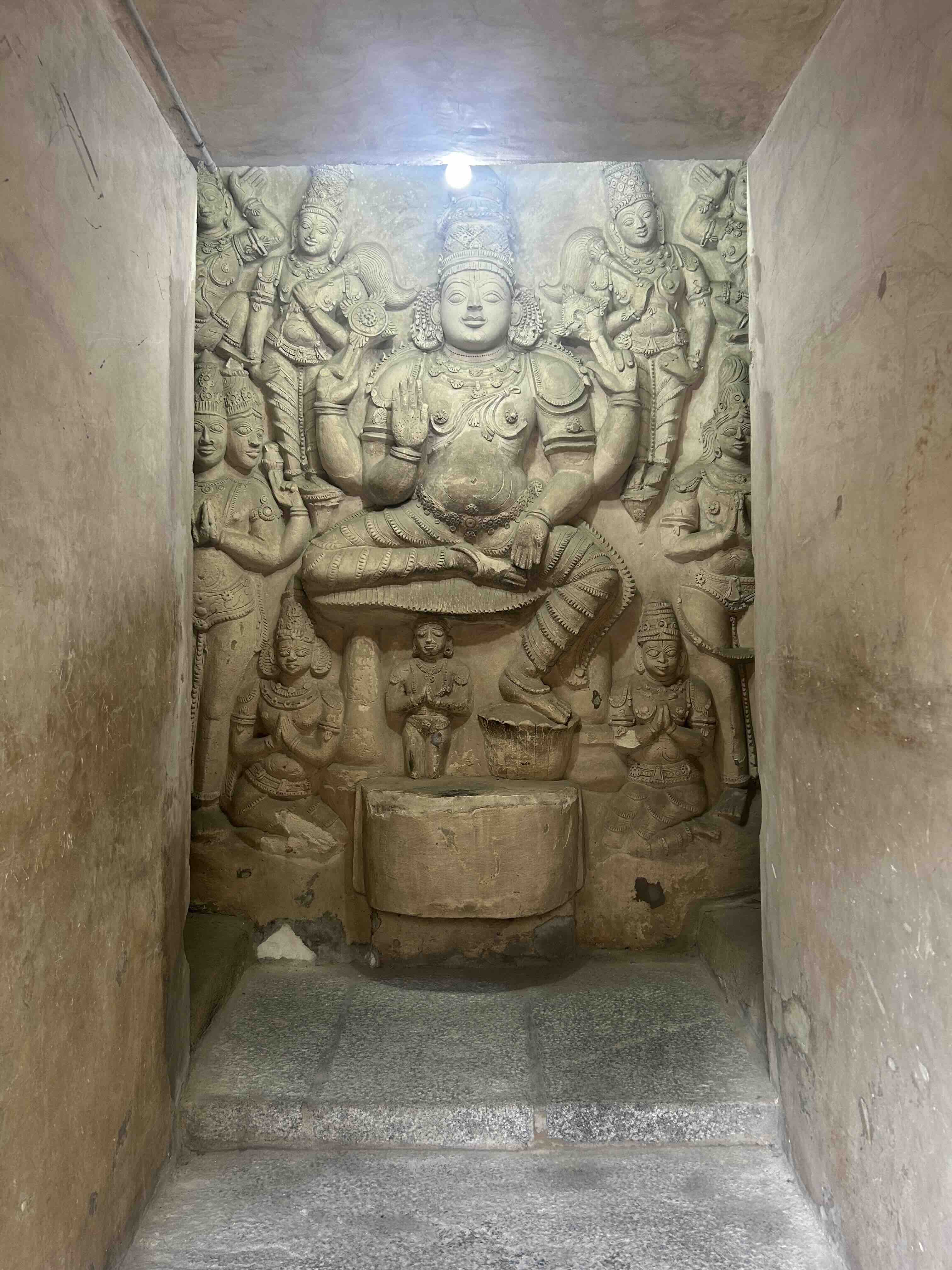
Don’t Miss:
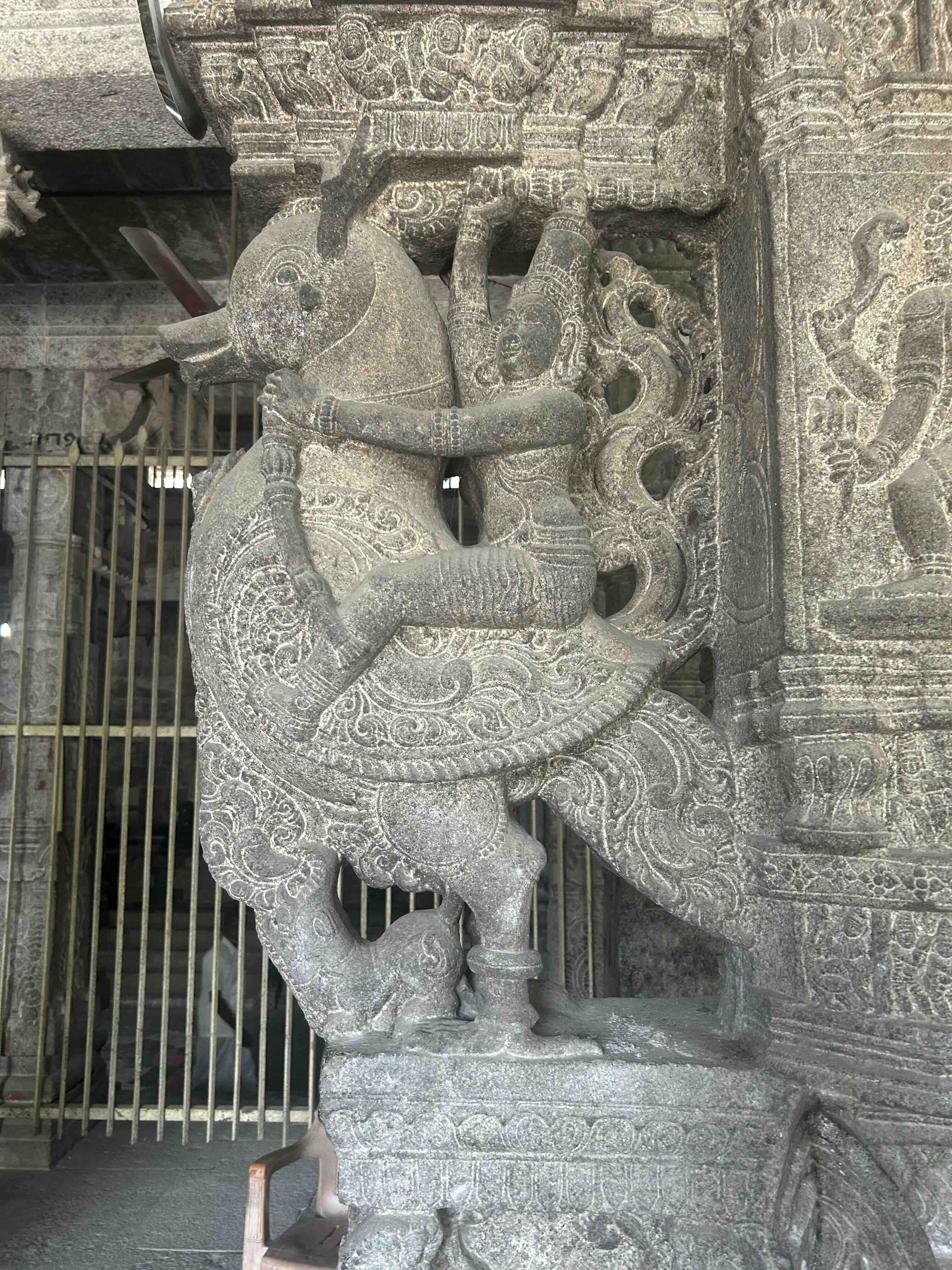
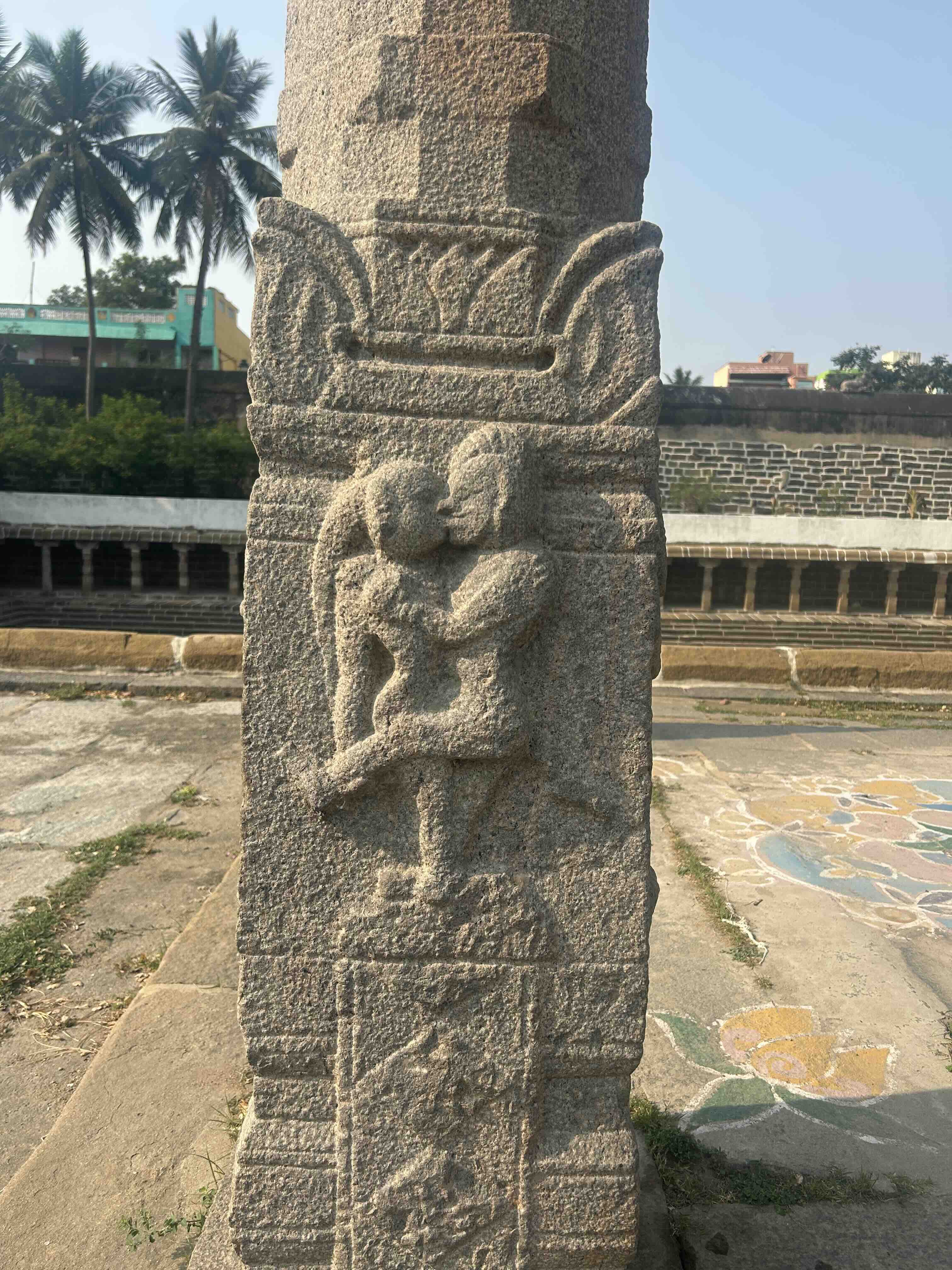
Sculpture and Paintings: The craftsmanship is breathtaking! Every pillar, every beam, every nook and corner is a piece of art. Look up at the ceilings where beautiful paintings hide in plain sight. Many believe that the motifs carved into pillars inspired the legendary designs of Kanjeevaram saris and standing there, I had no doubts about it.
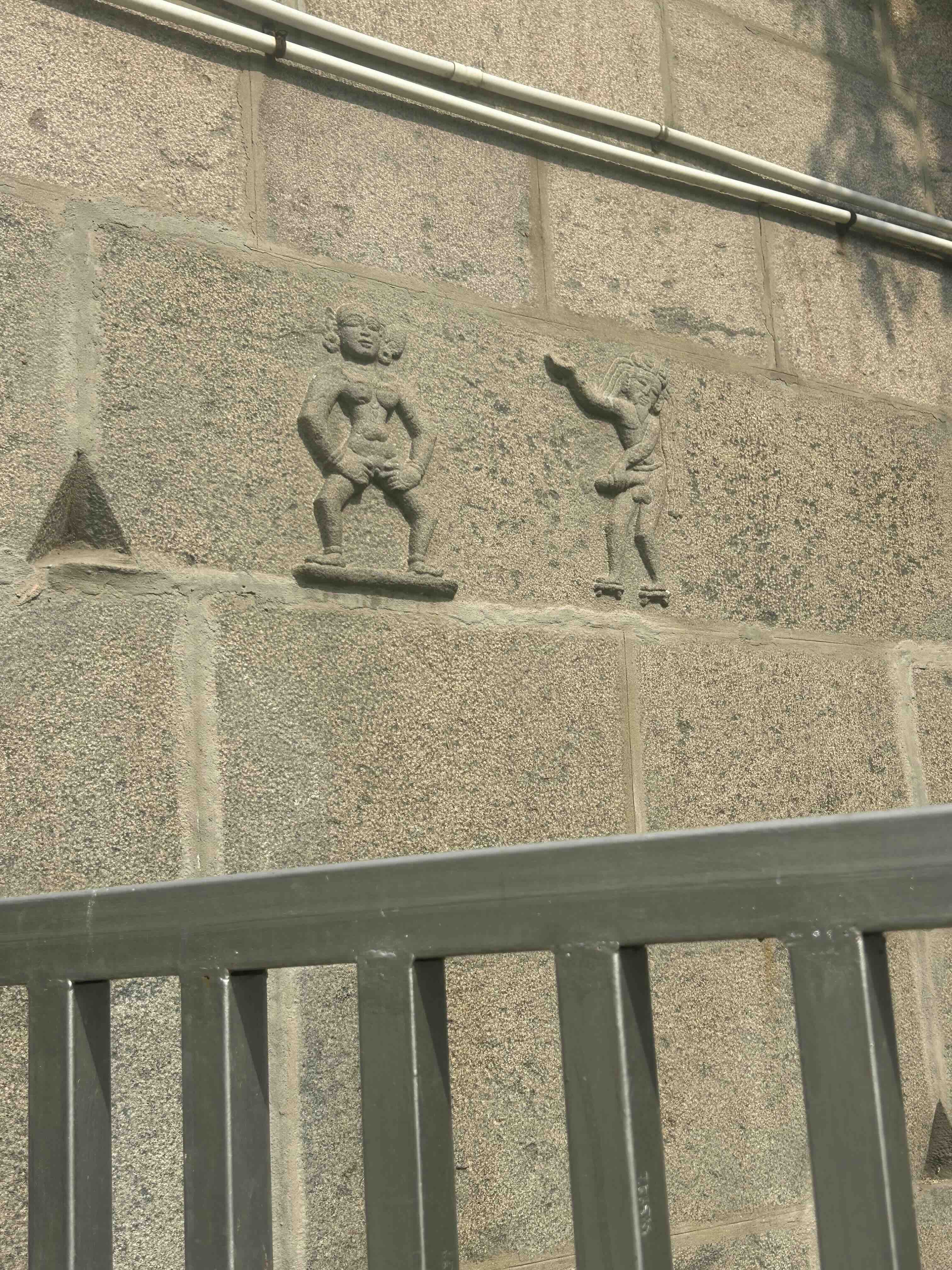
Playful Carvings: Keep an eye out for the occasional “naughty” sculptures tucked discreetly among the more divine imagery!
Birdwatching: The temple compounds are alive with birds, making it a quiet paradise for birders.
A Word of Warning: Recent efforts to repaint stone structures with bright, shiny colours and the rangoli patterns are sadly more garish than glorious.
Stay Recommendation:
I stayed at Regency Kanchipuram by GRT Hotels. Perfectly located for sari shopping and temple visits, the hotel is comfortable, and the staff truly go above and beyond! The in-house restaurant serves delicious local fare, and the complimentary breakfast buffet was a wonderful bonus.
Eateries You Must Try:
Vasantha Bhavan (VB World by Namma Veedu Vasanta Bhavan)
Hotel Shri Ramanaas
Also, rosemilk seems to be the unofficial drink of the town – light, pink, sweet, and cooling. You’ll spot small shops selling it everywhere!
Guide Contact:
Mr. Bala – 9443520228
(Native to Kanchi; available for temple tours and more. Best to call two days in advance.)
Tuk-Tuk/Auto Rickshaws:
Cash ONLY
Rough tourist rates: ₹150 for 2-2.5 km
Full hire: I paid ₹400 for 8 km over two hours.
Driving Tips:
Many streets are one-way and narrow.
Google Maps can glitch.
Not all temples have dedicated parking; roadside parking is the norm.
It is often better to park about 100 meters away from your destination and walk the rest of the way.
Final Thought:
Kanchipuram is not just a city, it is an experience. A living, breathing canvas of India’s spiritual history, where every stone has a story, every sari a tradition, and every temple an invitation to pause, wonder, and connect.
 Kirana Bhat