Did you know there are Jain temples quietly tucked away in Kanchipuram? Not just one, but two! While they may lie slightly off the usual Hindu temple trail, trust me, they are absolutely worth the detour. I had the chance to visit one of them, the Trilokanathyar Jain Temple, also known as Thirupparuthikundram Jain Temple or Jeenaswamy Trilokyanathar Temple. The area surrounding it is historically referred to as Jaina Kanchi, something I mentioned in my earlier blog post.
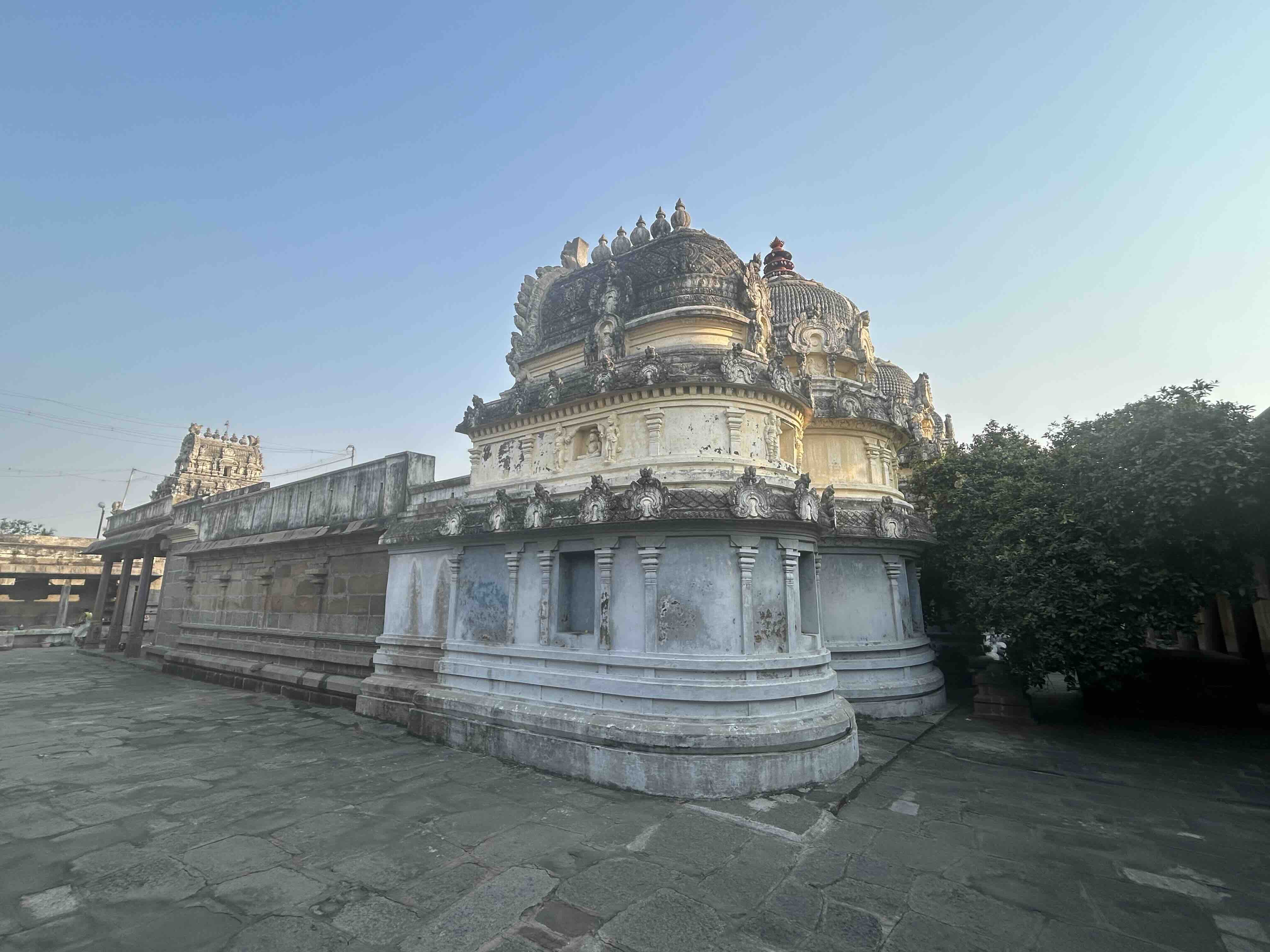
At first glance, you might easily mistake it for a typical South Indian Hindu temple. It has all the familiar architectural elements, the gopura, dhwajasthambha, balipeeta, vimanas, but this resemblance is no accident. The temple is a legacy of the Pallavas, with later contributions by the Cholas and Vijayanagar kings. Don’t forget, the Pallavas were originally Jains before they embraced Shaivism and Vaishnavism. This temple quietly preserves that vital chapter in the city’s history.

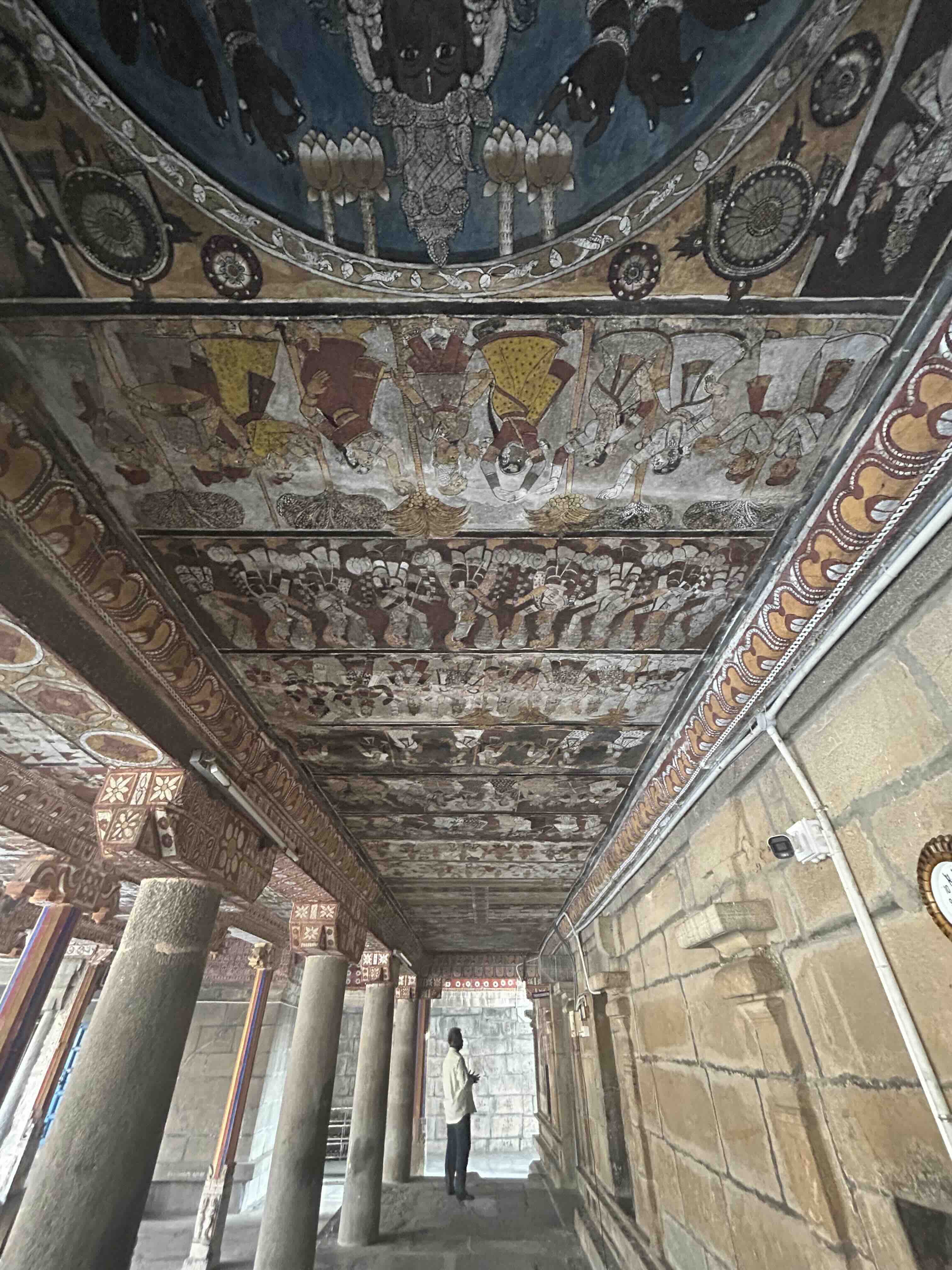
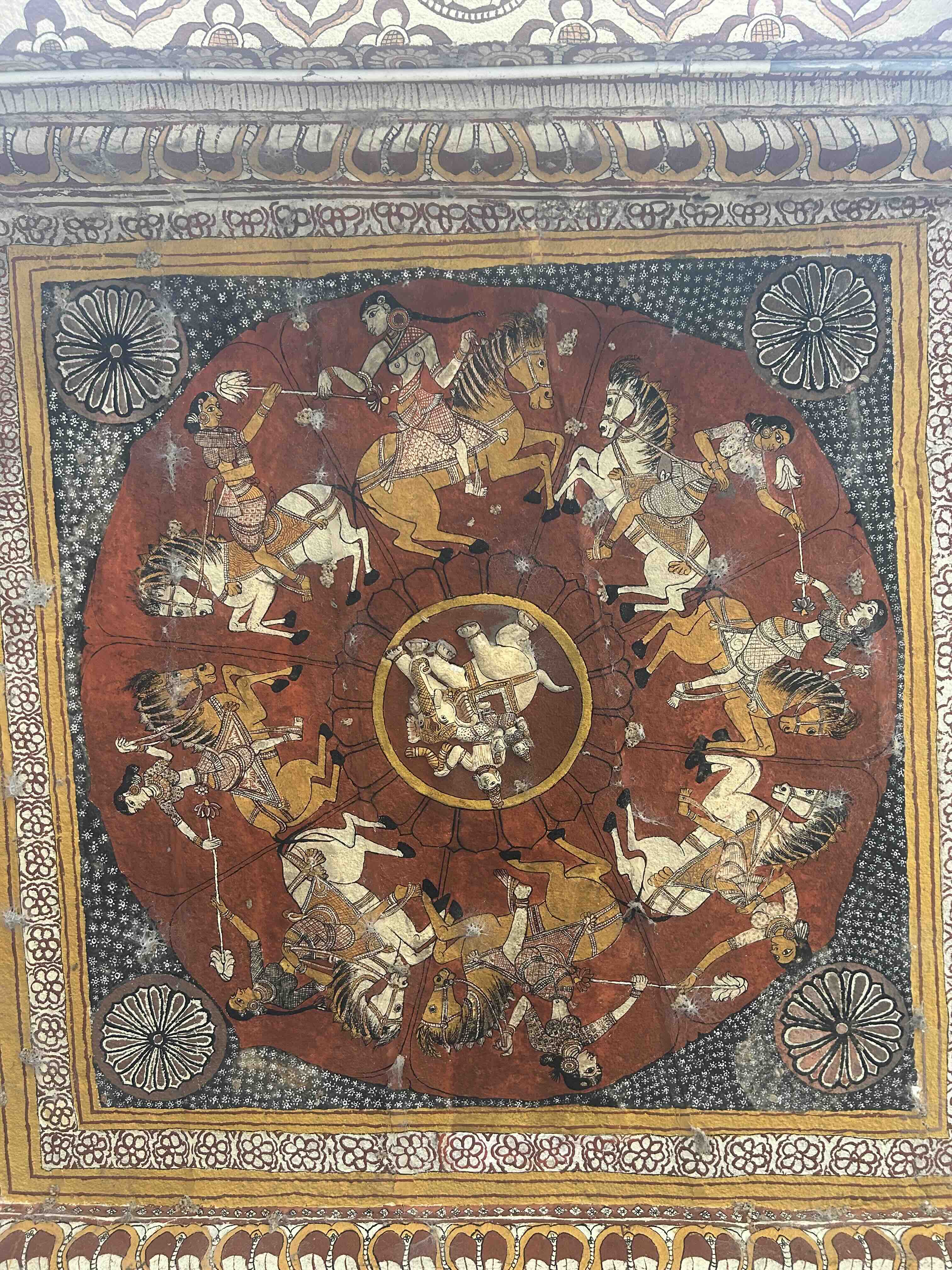
Step into the mantapa from the imposing main door, and you are instantly surrounded by vivid murals that span its length. These paintings depict the Samavasarana, the Jain emblem, episodes from Mahavira’s life, and themes from Hindu mythology. One particular painting cleverly plays with perspective, the celestial elephant, Airavatha appears differently depending on which direction you view it from!

When I visited, the priest was speaking to a group of local art college students about the temple’s artwork. Despite visibly struggling with diabetes (he limped with a swollen, bandaged foot), he patiently answered their questions. He told me that the priesthood here is hereditary, and that he and his wife live on the premises. Many curious students and artists visit to study the mantapa’s ceiling and mural work.
The temple features three main sanctums, each with its own vimana, dedicated to Mahavira, Pushpadanta, and Dharma Devi. A serene marble statue of Mahavira sits on a low platform in the central sanctum. There are also bronze idols of other tirthankaras and graceful yakshis. (Pics not allowed).
The nine Navagrahas, a familiar sight in Hindu temples, are here represented symbolically by nine tirthankaras. A cabinet sealed by the ASI (Archaeological Survey of India) haphazardly holds intricate panchaloha (five-metal) statues, and another holds attire to dress up the idols on special occasion. An adjacent room contains three other statues of the tirthankaras, namely, Parshvanatha, Padmaprabha, and Vasupujya.
A separate small shrine, dedicated to Adinatha, houses another fairly large serene marble idol of the tirthankara. Along the temple’s outer wall are several niches dedicated to individual tirthankaras. The last niche, however, is empty. The priest’s wife (far more chatty than her husband) told me that it conceals the entrance to a tunnel leading to the Kailasanathar temple! Four steps are visible, but she says more lie hidden below. This, too, has been sealed by the ASI.

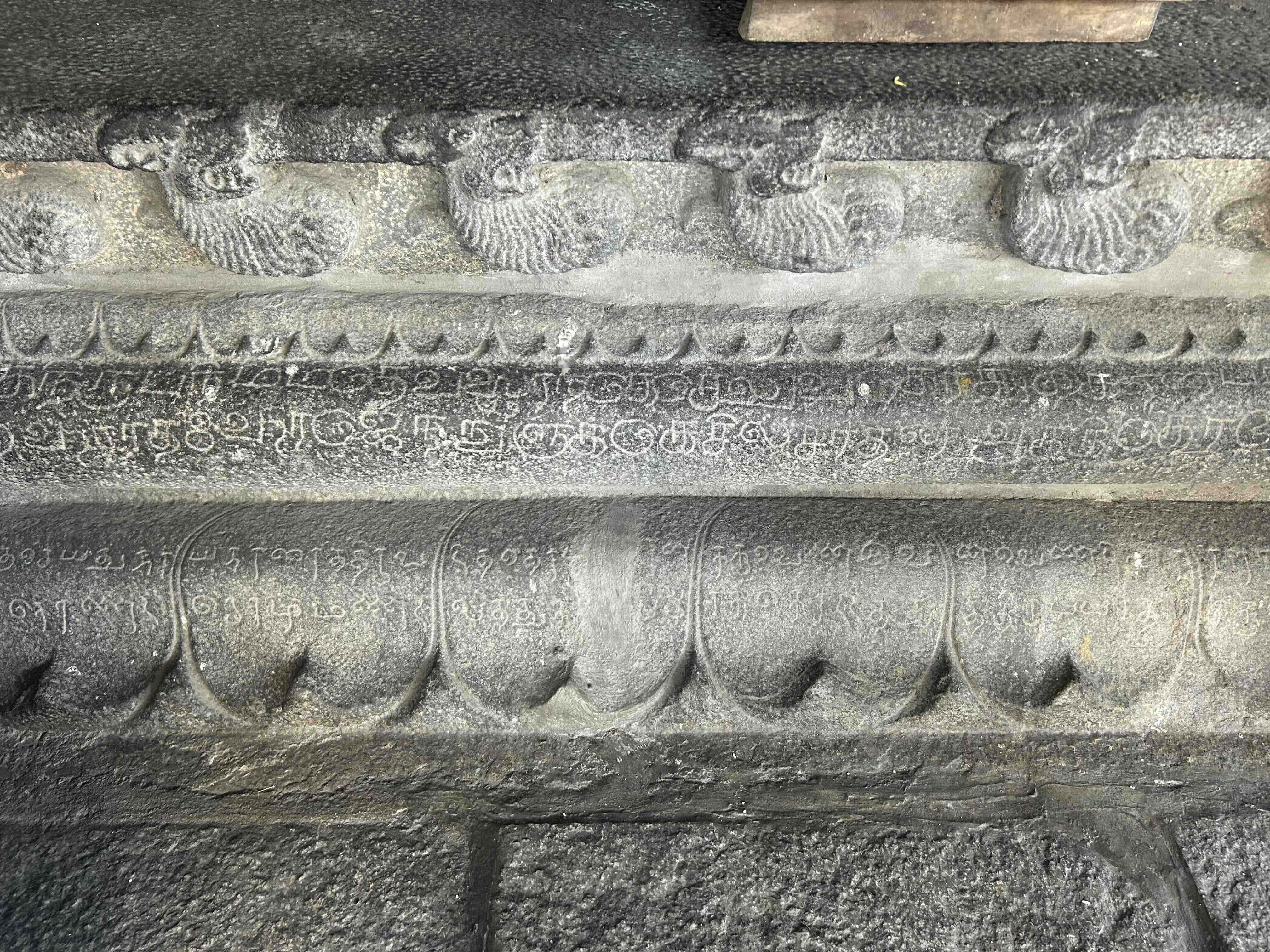
Stone inscriptions are chiselled onto the temple’s base, walls, and ceilings. One entire sandstone wall bears inscriptions which sadly, may fade with time. A stone relief of entwined snakes flanking a Tirthankara (labelled the ‘Rahu & Ketu’ stone), a freshwater well, and the revered Kura tree, rooted firmly in the courtyard complete the picture.
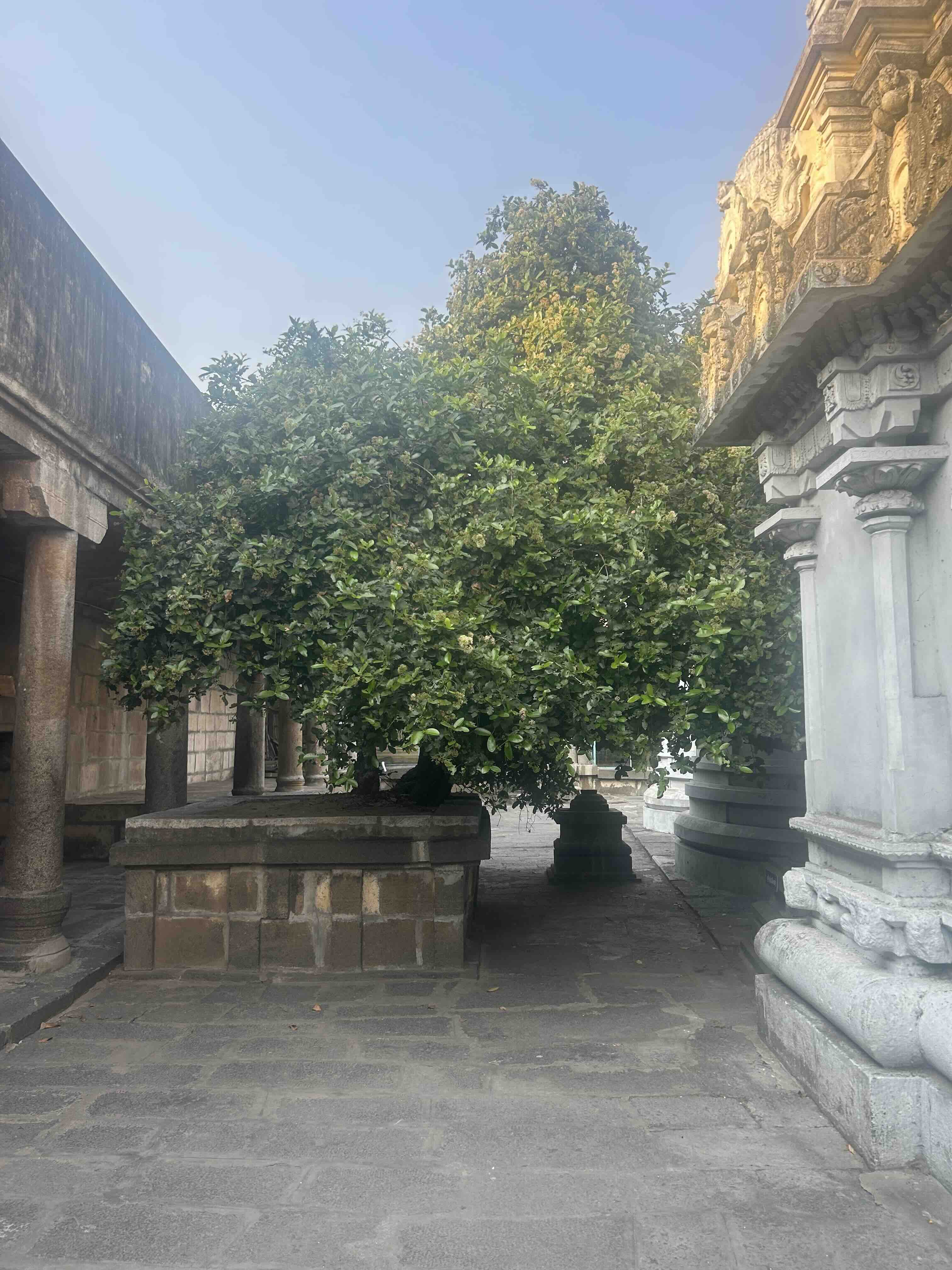
The priest’s wife also shared that they receive no salary from the government. The Jain community committee supports them. The temple hosts an annual festival, during which the main deity is carried all the way to the city centre and back. According to her, both Shwethambaras and Digambaras visit the temple, with an estimated local population of 350-400 Digambaras and about 300 Shwethambaras in Kanchipuram.

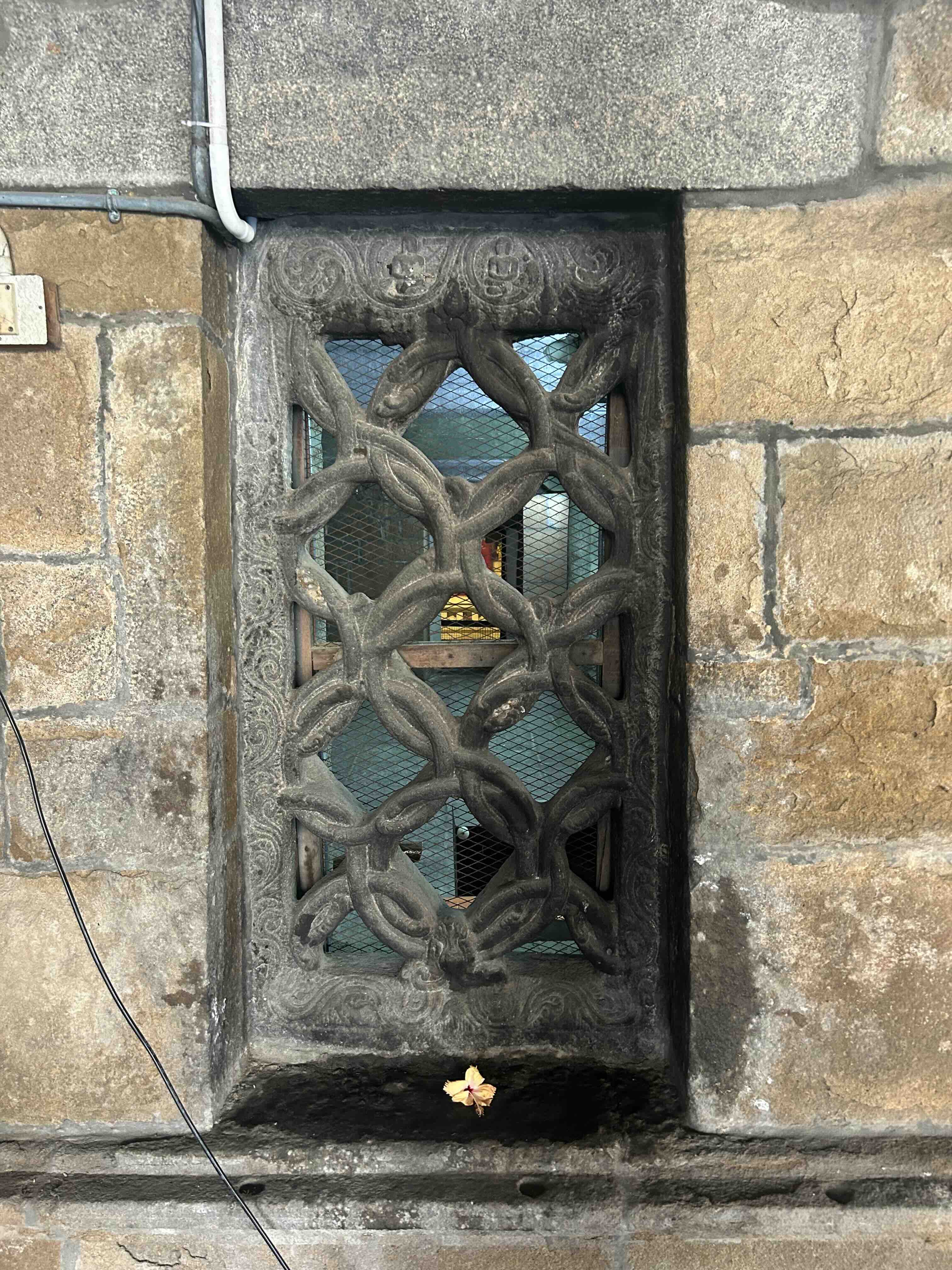
The priest and his wife believe the temple is over 2,000 years old, a claim that seems plausible given its roots in the Pallava era.
If you ever find yourself in Kanchipuram, carve out some time for this beautiful and lesser-known spiritual treasure. It’s not on the typical temple circuit, but it offers a rare glimpse into a quieter, deeply rooted Jain presence, a part of Kanchipuram’s history that most visitors miss.
 Kirana Bhat