Gingee (also spelt Senji) is an obscure little town on the highway between Bangalore and Pondicherry. On a past drive along the Gingee bypass, I caught sight of a fort crowning a hill, an image that stuck with me. And there I was on a summer’s day, finally standing at the foot of that “fort on a hill,” eager to learn its story.
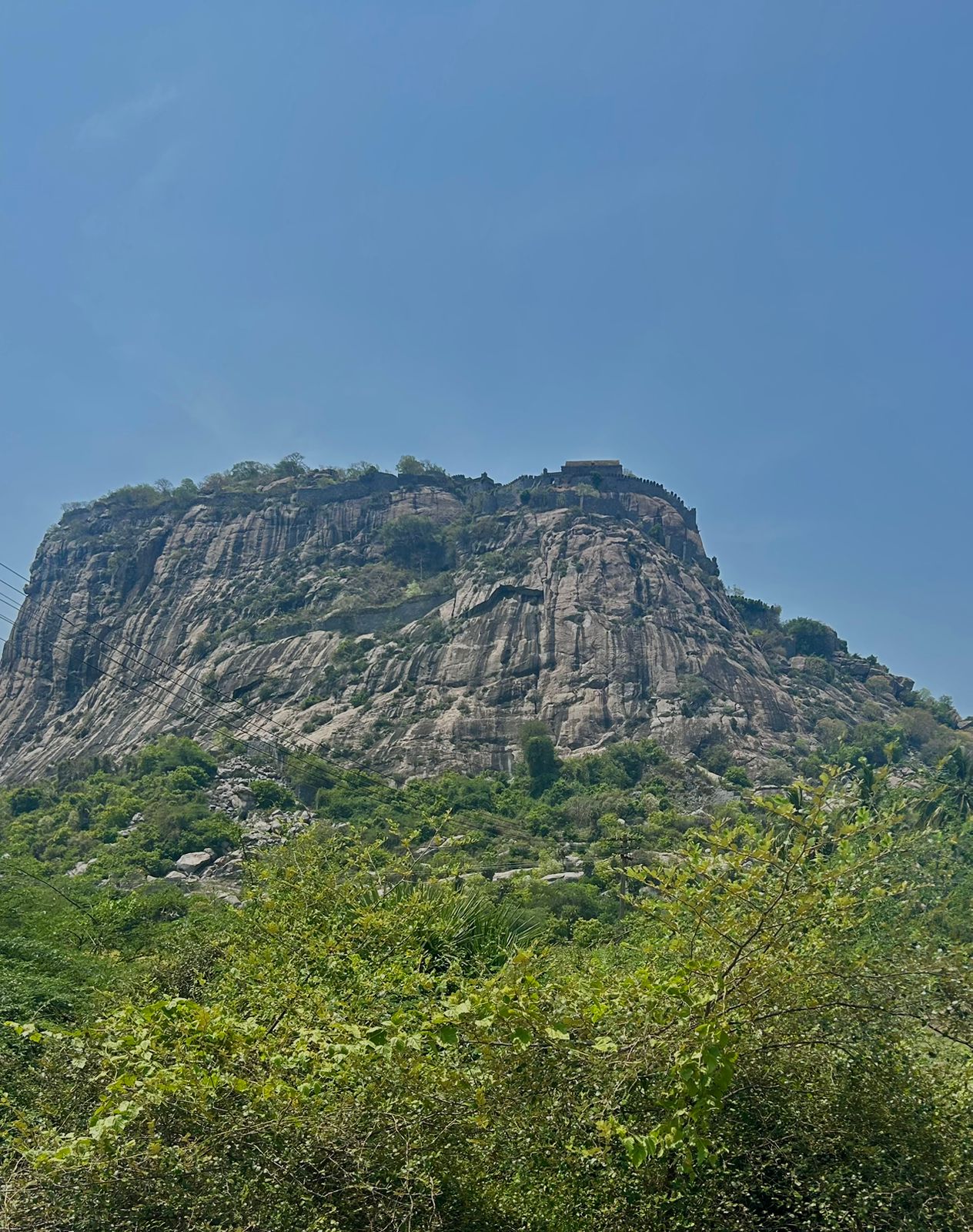
Gingee wasn’t always off the radar. In fact, it was once a strategic stronghold, founded, so legend has it, by a shepherd who decided to trade in his flock for a sword and lead a band of men. That spark ignited Gingee’s rise. Over the centuries, dynasties from the Kons, Pallavas, and Cholas to the Nayakas, Marathas, Mughals, French, and British laid claim to it, each leaving a mark.

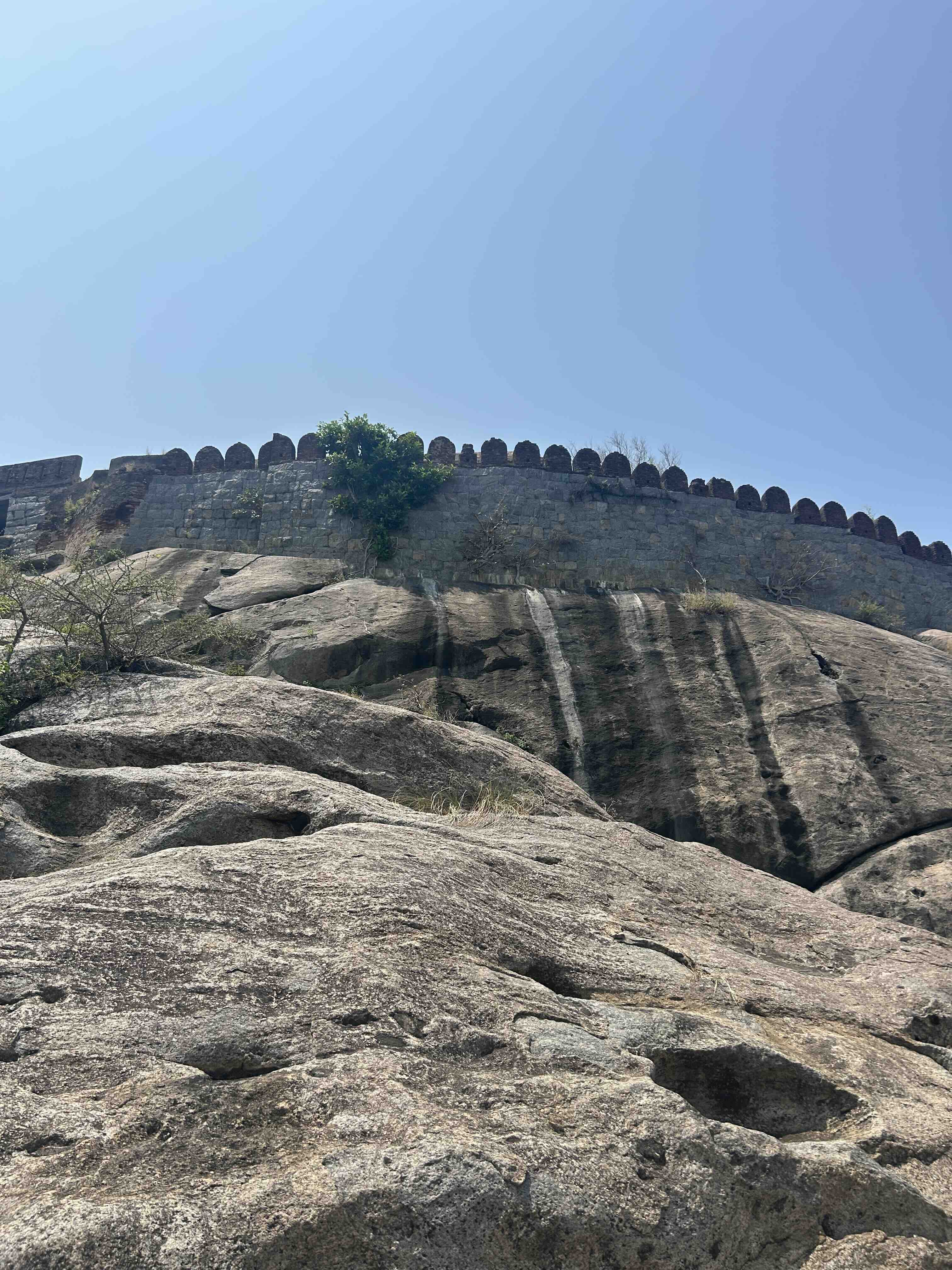
My guide Arun, youthful and enthusiastic, told me the Nayaka period was the most prosperous and peaceful; a time when Gingee flourished and expanded. Today, the town’s layered history unfolds in its sprawling 18 km double fort wall, bastions, and gates – Pondicherry Gate, Vellore Gate, and Arcot Gate.
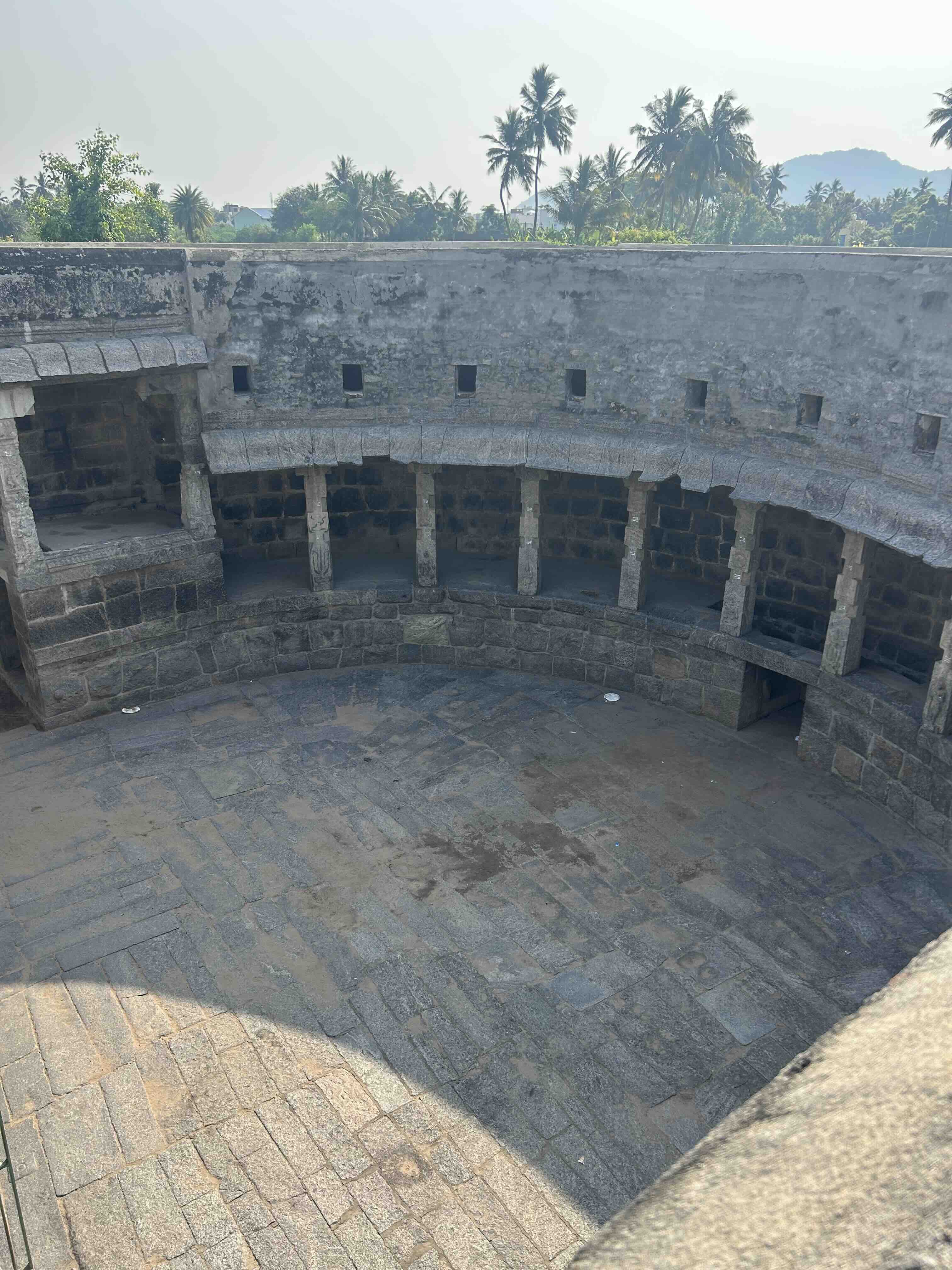
So formidable is the fort that Chhatrapati Shivaji is said to have declared it impregnable. In fact, the Mughal siege lasted seven years. The British called it ‘Troy of the East’.
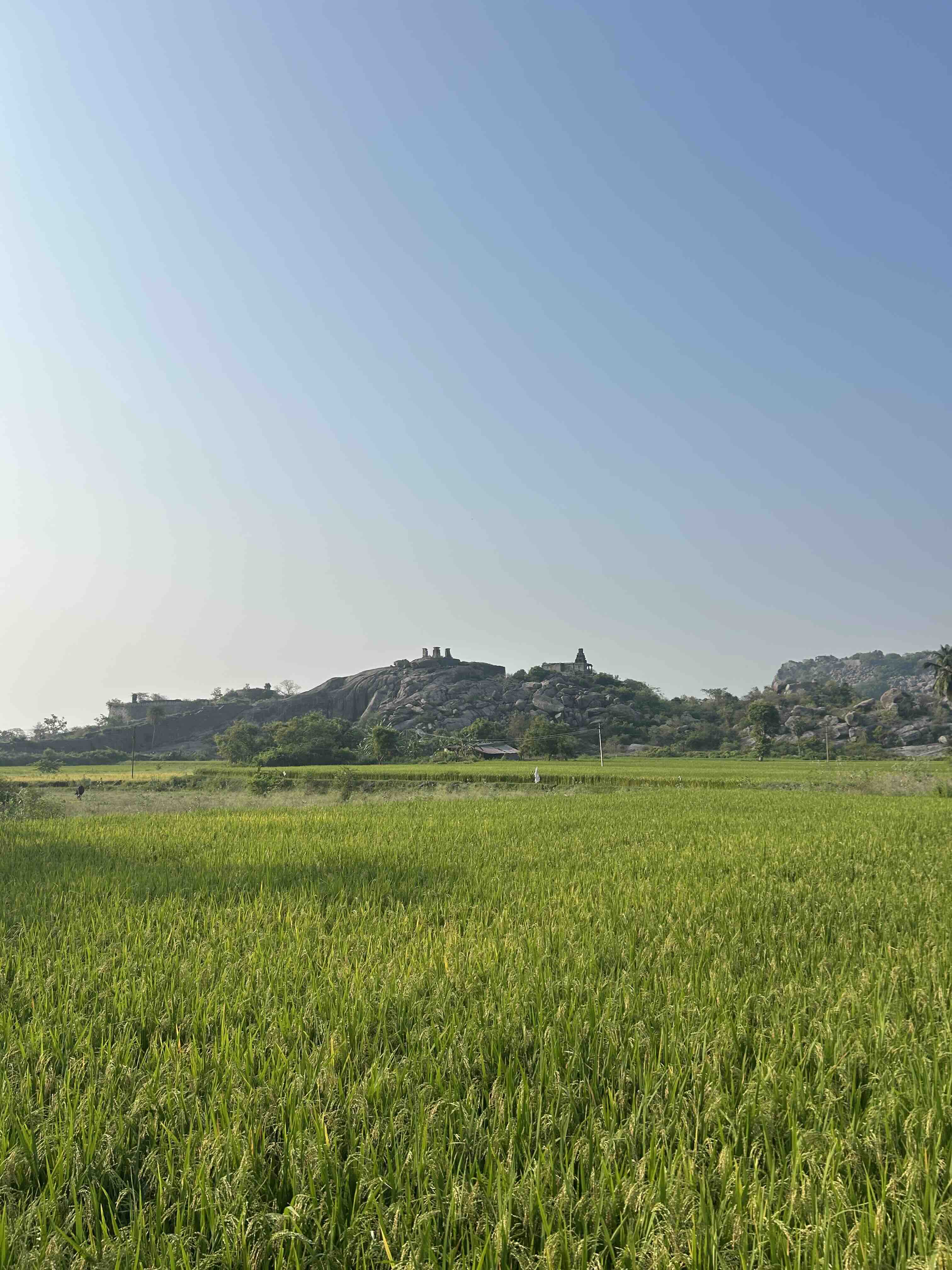
Gingee’s archaeological site comprises three distinct hills:
Rajagiri (Raja Fort) – the main attraction.
Krishnagiri (Rani Fort) – with steep steps, granaries, and temples.
Chakkilidurga Hill – now out of bounds, once housed an arms factory, perhaps even leatherwork shops.
Rajagiri is divided into three parts: the outer lower fort, the inner fort, and the citadel, each full of secrets, stories, and structures.

The Outer Lower Fort
One of the standout structures here is the Kamalakkanni Amman temple, a twin of the more ancient shrine located along the path to the citadel. Legends claim that Gingee was Draupadi’s home. During the annual 10-day festival, both temples are equally visited, and strikingly, animal sacrifices of goats and buffaloes take place. Arun speculates this began as a ritual to seek the goddess’ protection for soldiers going to war.

There’s even a secret tunnel connecting the two shrines, now sealed by the ASI (Archaeological Survey of India). Other points of interest include:
Chakkaraikulam Lake, with sweet-tasting water
Pancha Pandava Temples, reminiscent of Mahabalipuram, though smaller
Raja Desing’s funeral pyre platform.

Two structures highlight the religious diversity of Gingee:
Saadat Ullah Khan’s Mosque – locked 363 days of the year, open on the days of Eid al-Fitr and Eid al-Adha. Sidelining this simple mosque is puzzling, considering Saadat Ullah’s historical reputation of being a valiant soldier, dedicated to his profession and King.

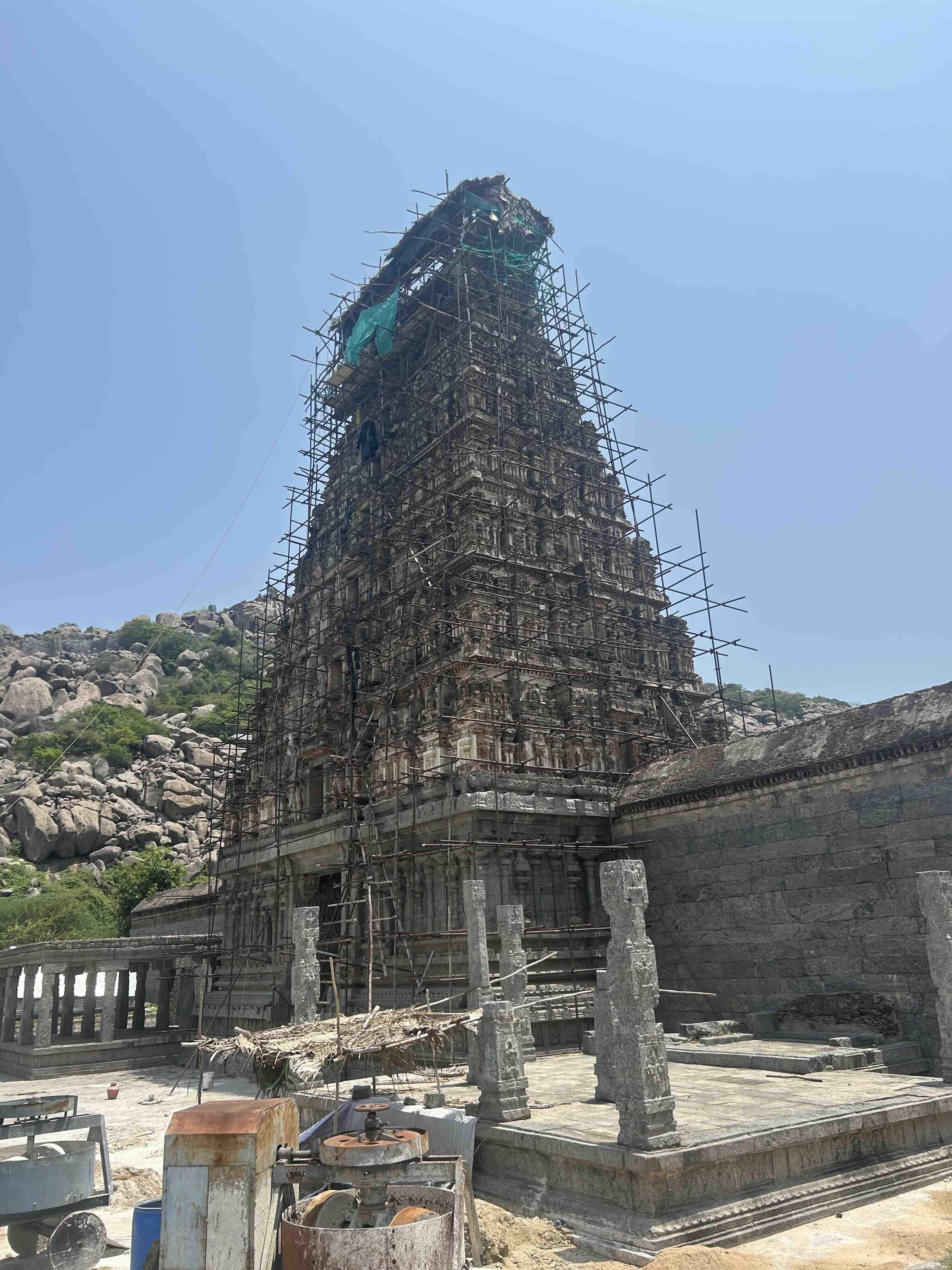
Venkatramana Temple – architecturally similar to Hampi’s Virupaksha Temple. Although it once stood without a deity, it now hosts daily worship and was being restored during my visit, likely in preparation for the sought-after UNESCO World Heritage Site tag.
Strangely, there are no traces of Jainism within the fort, even though this region of Tamil Nadu was heavily influenced by Jainism.
Inner Fort:
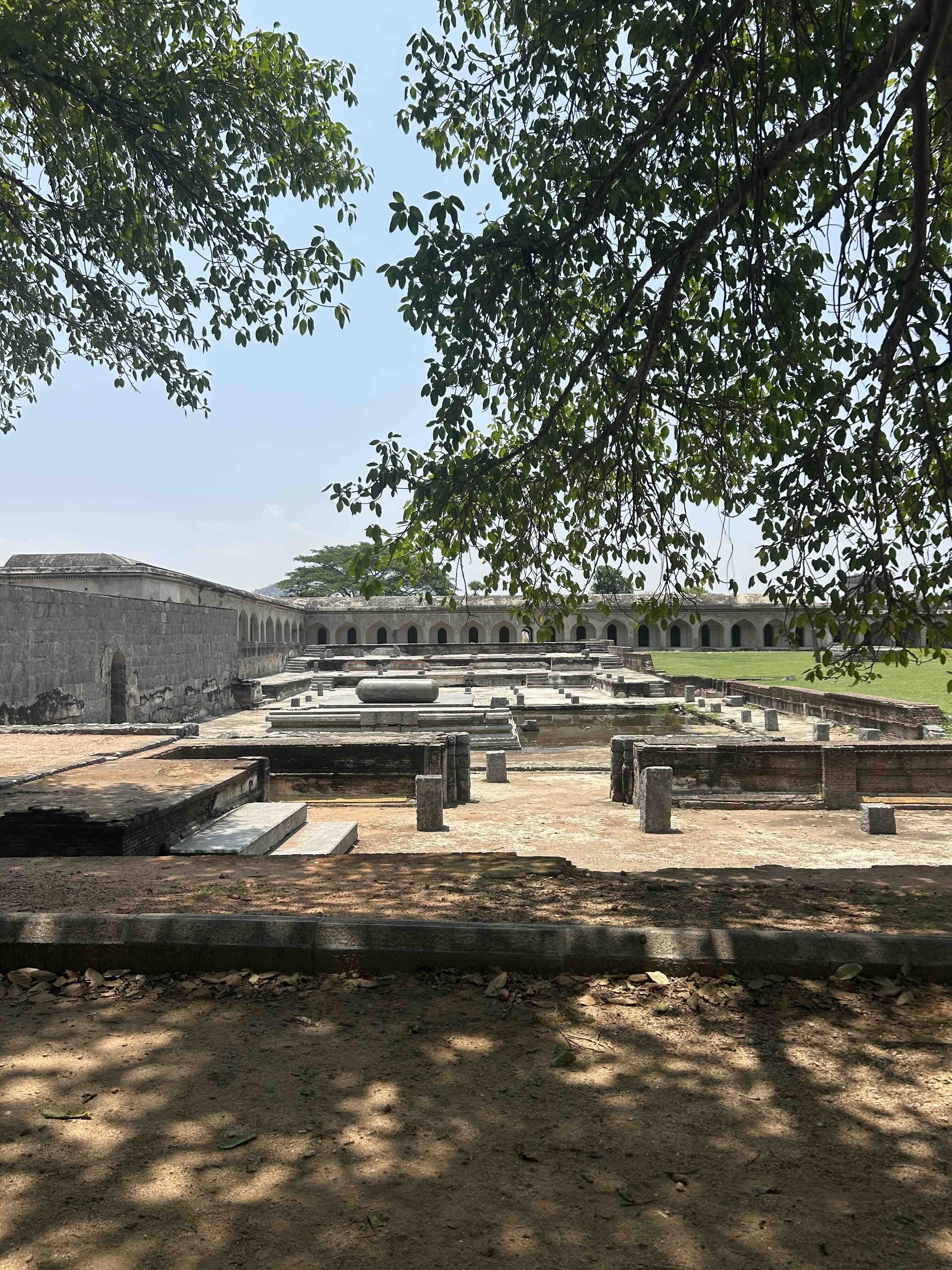
Arun explained that the inner fort lay buried under sand until its excavation in 1973. It contains:
Granaries (the largest among those in Gingee, with three chambers for different grains)
Stables for elephants and horses
A water tank
A gymnasium (where Silambam was once practised)
An armoury
A temple and ruins of a palace.
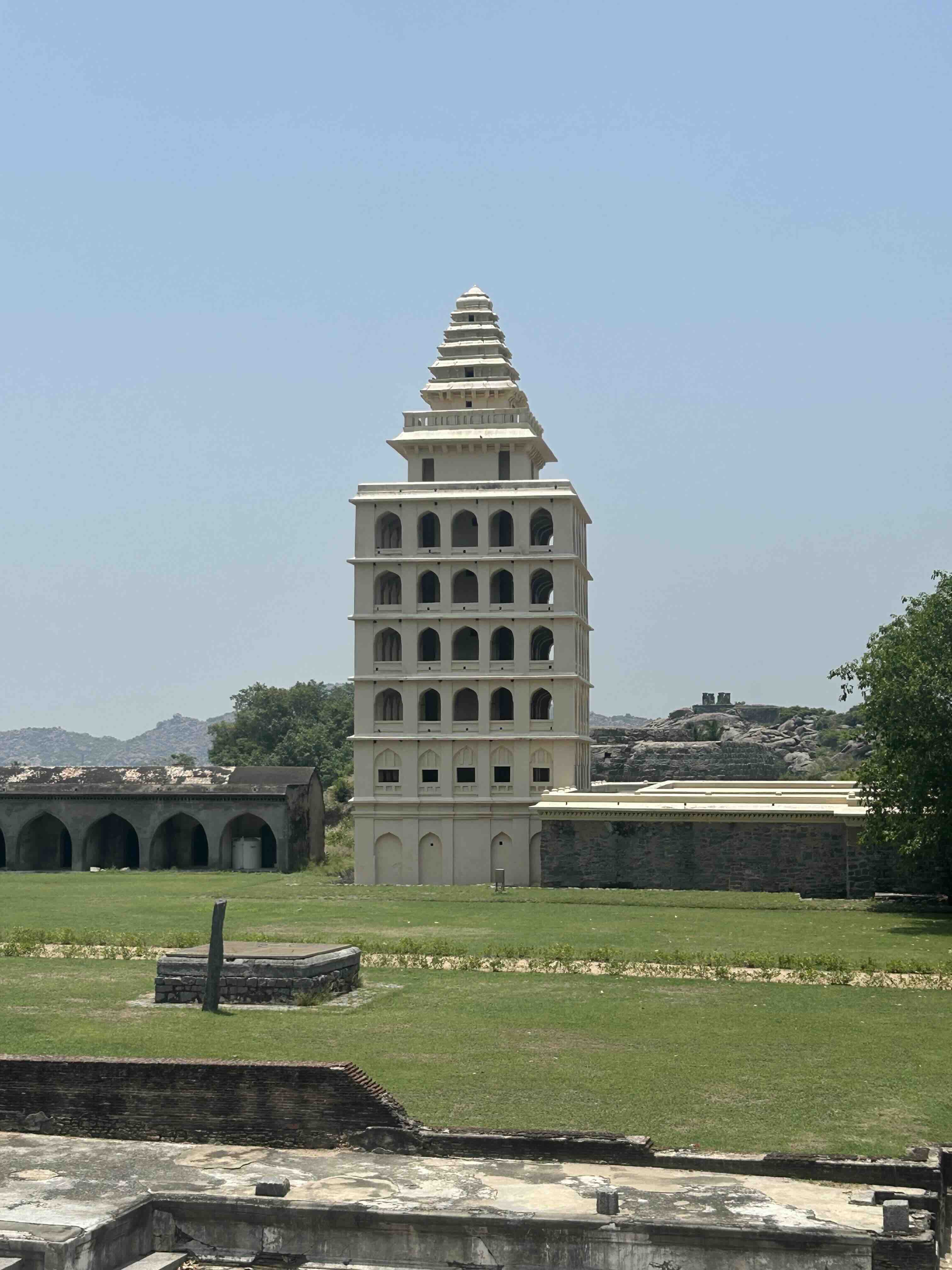
The showstopper here is the Kalyana Mahal, a striking seven-storeyed structure with earthenware water pipes running up the floors. Arun even pointed out a squat toilet with its original pipe still intact!
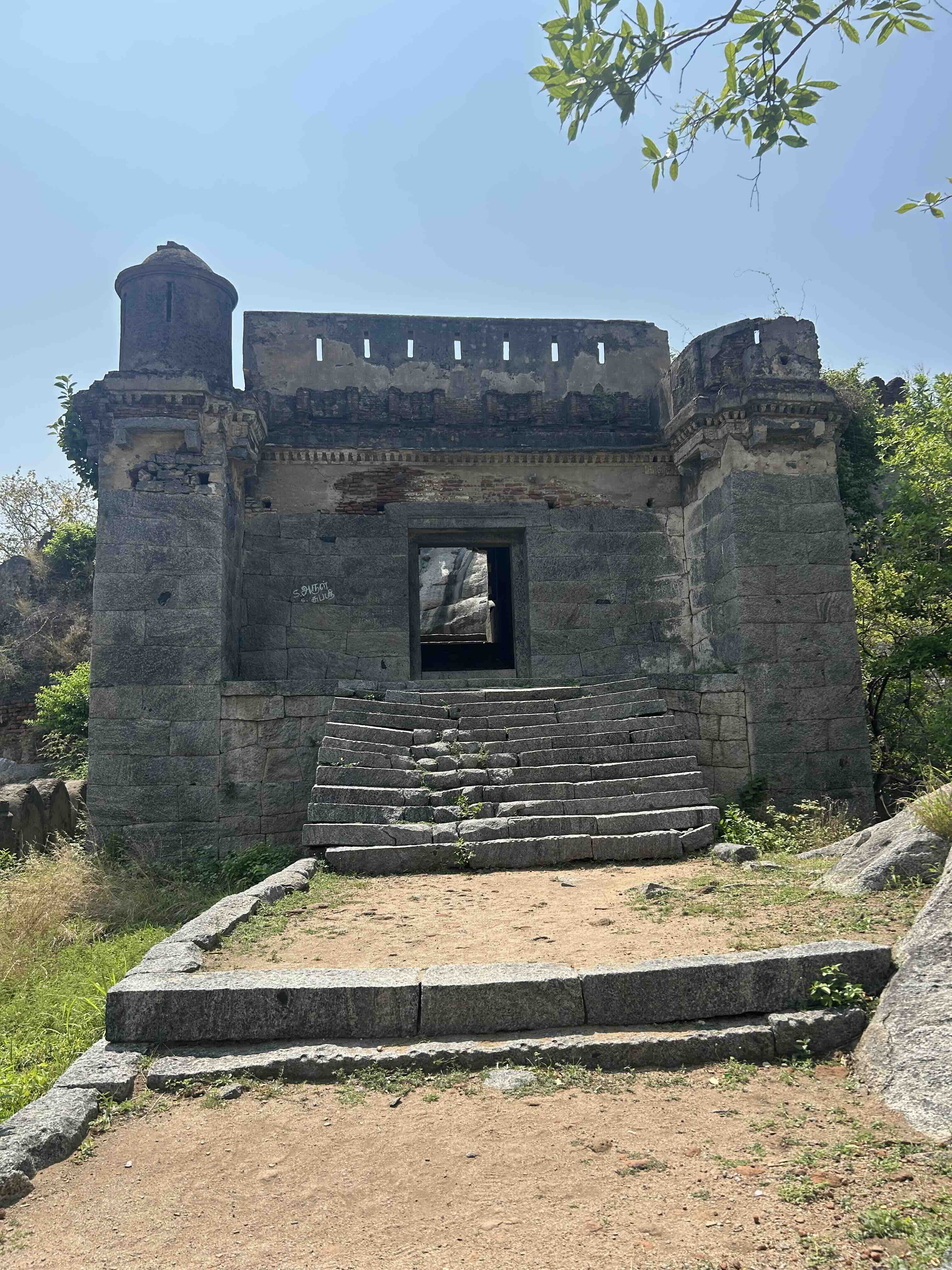
The Citadel: Climbing to the citadel is no easy feat. It involves passing eight gates and steep paths cut into the rock. Along the way, ancient board games like Aadu Puli Aatam and Ashtapada are etched into the stone, perhaps the gatekeepers’ pastime.
A small cannon is perched strategically on a rampart. A few steps away lies the Ranganatha Temple, followed by the original Kamalakkanni Amman shrine, set against a sheer cliff. Behind it, faint yet beautiful rock paintings depict Vishnu with Sridevi and Bhudevi.

A few tridents guard the balipeeta (sacrificial altar), which bears carvings of a bow, arrows, human and buffalo faces. Nearby, a canyon-like passage reveals the entrance to the secret tunnel, believed to connect this shrine to the lower fort.
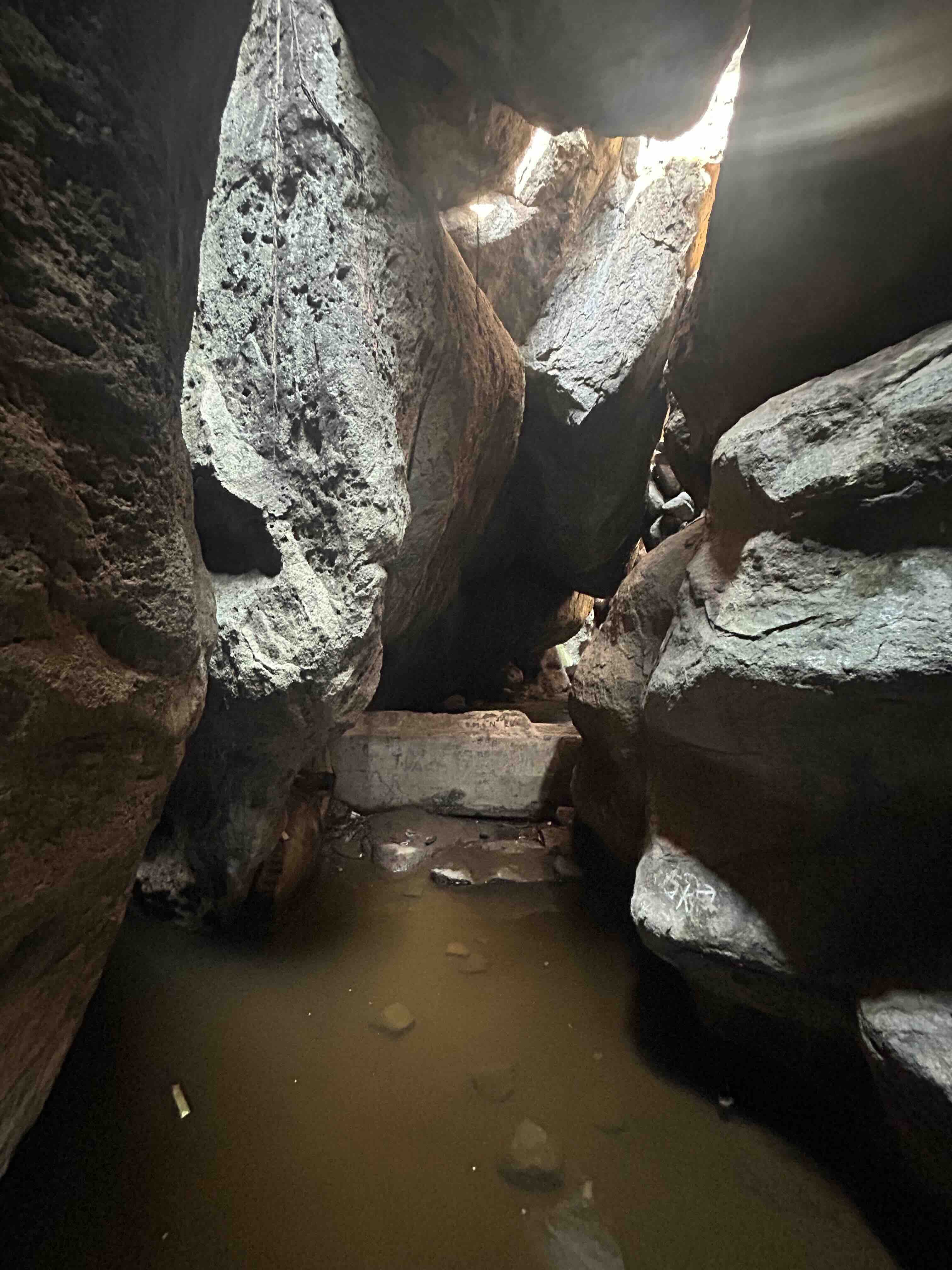
We passed a mint, several gates, rainwater pools, with the fragrant air of wild jasmine making me pause from time to time just to inhale the freshness it bore. At the top, a now-permanent bridge replaces the original drawbridge as the only access point to the citadel. With steep boulders on all other sides, if you were the enemy, you would be stranded or dead by now!
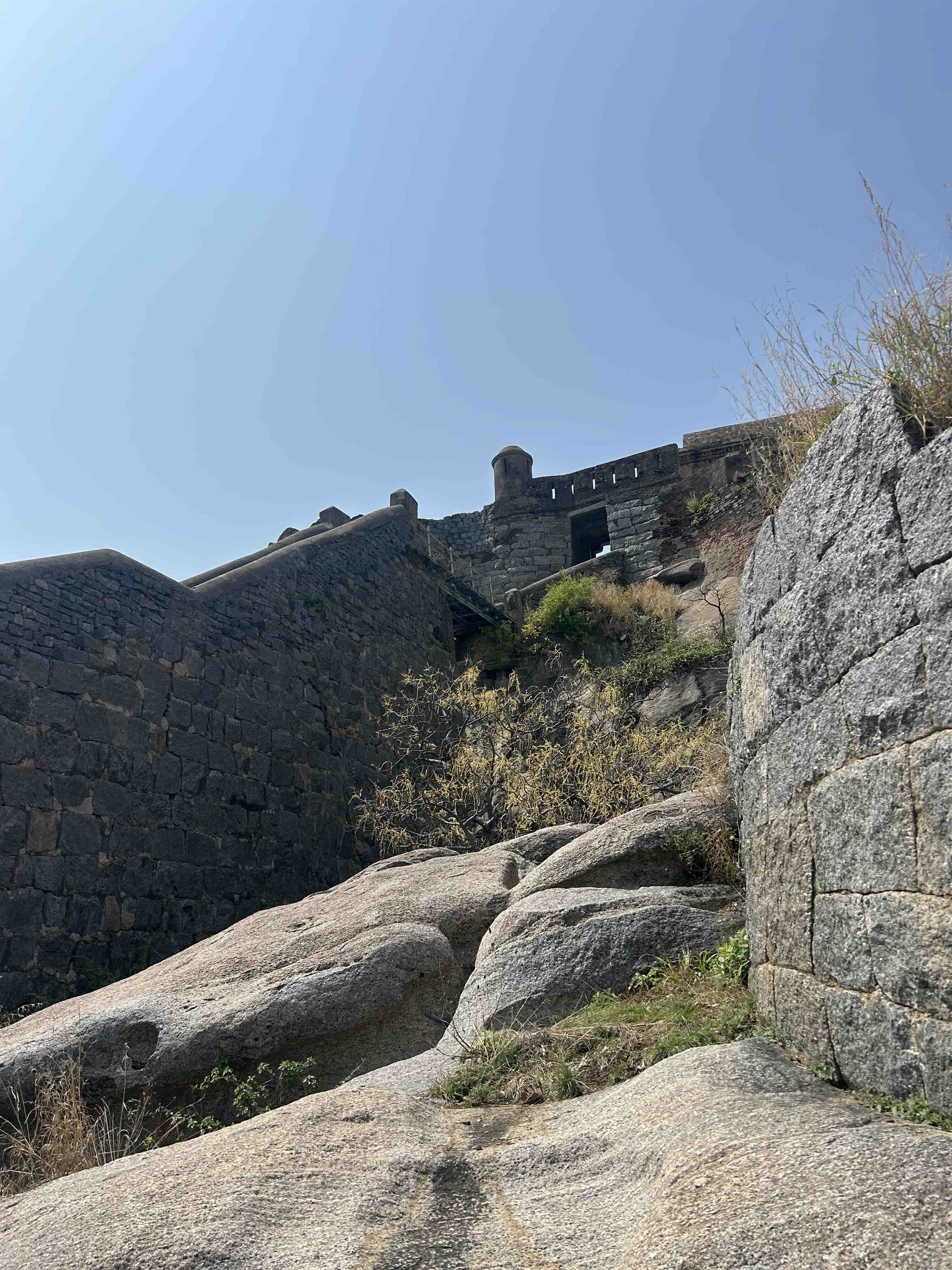
The citadel houses temples, granaries, a bell tower, a mantapa, treasury, and even a grand cannon. From here, you can see Vellore, Pondicherry, and Tiruvannamalai. The fort walls and bastions still stand, silent sentinels of the past. Chhatrapathi Shivaji was right: this fort was nearly impossible to conquer.
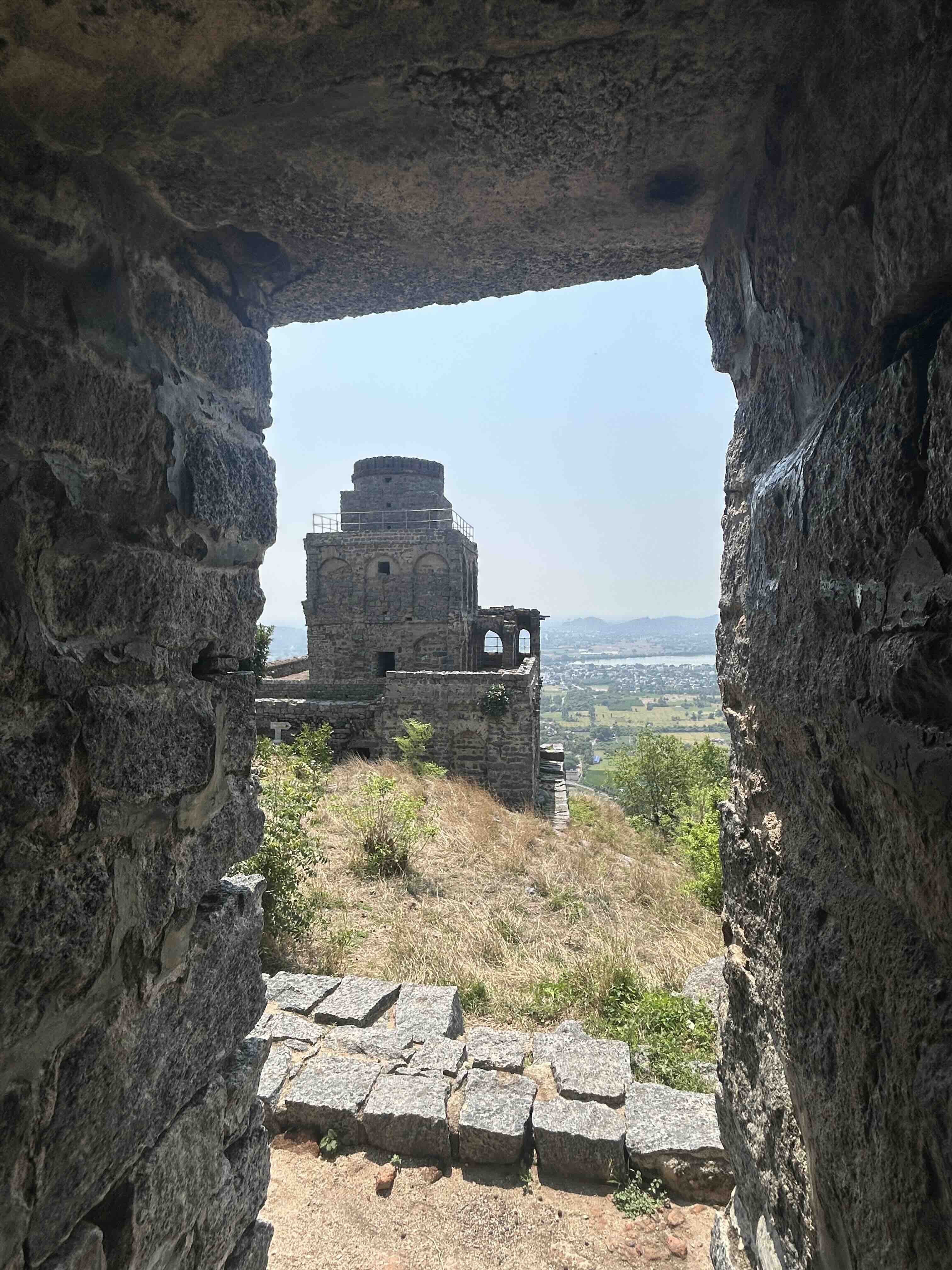
What struck me most was how Gingee evokes the atmosphere of Hampi. The ruins are not confined to a compound; they sprawl across the landscape. I spotted a mantapa and gopura in a riverbed just off the highway as well as fort walls and guard posts along the highway!

The ASI’s bid for UNESCO status is evident. There are freshly restored structures, signboards, trash bins, water points, toilets, and even a braille label (oddly placed) near the Pandava temples. And yet, I wonder why our monuments require a UNESCO tag to earn the respect they deserve!
If you ever drive past Gingee, stop. Climb. Wander. Wonder. The hills hold stories etched in stone and silence. Gingee may not be on every traveller’s radar and perhaps that’s its charm.
 Kirana Bhat
Kiki
I am amazed at how informative this post is! You ‘hear’ when the guide speaks and pass it all on to the reader with your own notes as subtext. I love that. Keep writing sis!
lots of love
LikeLiked by 1 person
I am happier that you have been able to comment 🙂 and of course, thank you thank you.
LikeLike
Nicely written post about a lesser known Gingee fort! Its bid for a UNESCO tag is legitimate and well-deserved, and I hope it comes through soon.
LikeLike
Dear ‘anon,
Thank you!
I too hope the tag comes through, for the sake of posterity!
LikeLiked by 1 person
Thank you
LikeLike
brilliant ❤️🙏
LikeLike
Thank you!
LikeLiked by 1 person
I second the earlier comment on how you take the reader on the journey of exploration with you and your guide. It is so good that I won’t be surprised if some readers decide not to visit Gingee fort because they have been there with you on through this post already.
Amazing write up! Looking forward to more explorations with you!
-Deepak DB
LikeLiked by 1 person
Thanks Deepak! I am feeling very encouraged 🙂
LikeLike