Join us for lunch, said the senior lady among the group of women who sat in a circle eating their picnic lunch. What’s for lunch? I asked. Biryani, she said, with pickles on the side. Mutton or chicken? Chicken. Smells good, thank you, but I am vegetarian, I said. They were disappointed not to be able to share their meal with me. They were from a nearby village and wanted to know where we came from. Bangalore, I said. Only three of you? she asked, pointing at my daughter and MIL. My husband has come too. Where is he, then? At work, so he didn’t make this trip out to Ashtur, I said. Who drove the car then? she asked.
These women, accompanied by a young male member of their household and a couple of tiny kids, had come to pray at the tomb of Hazrat Khalil Ullah. Except for the young man, it was a ‘women’s day out’. Just like them, we were three women out there to visit this unique-looking structure and, before that, the tombs of the Bahamanis.
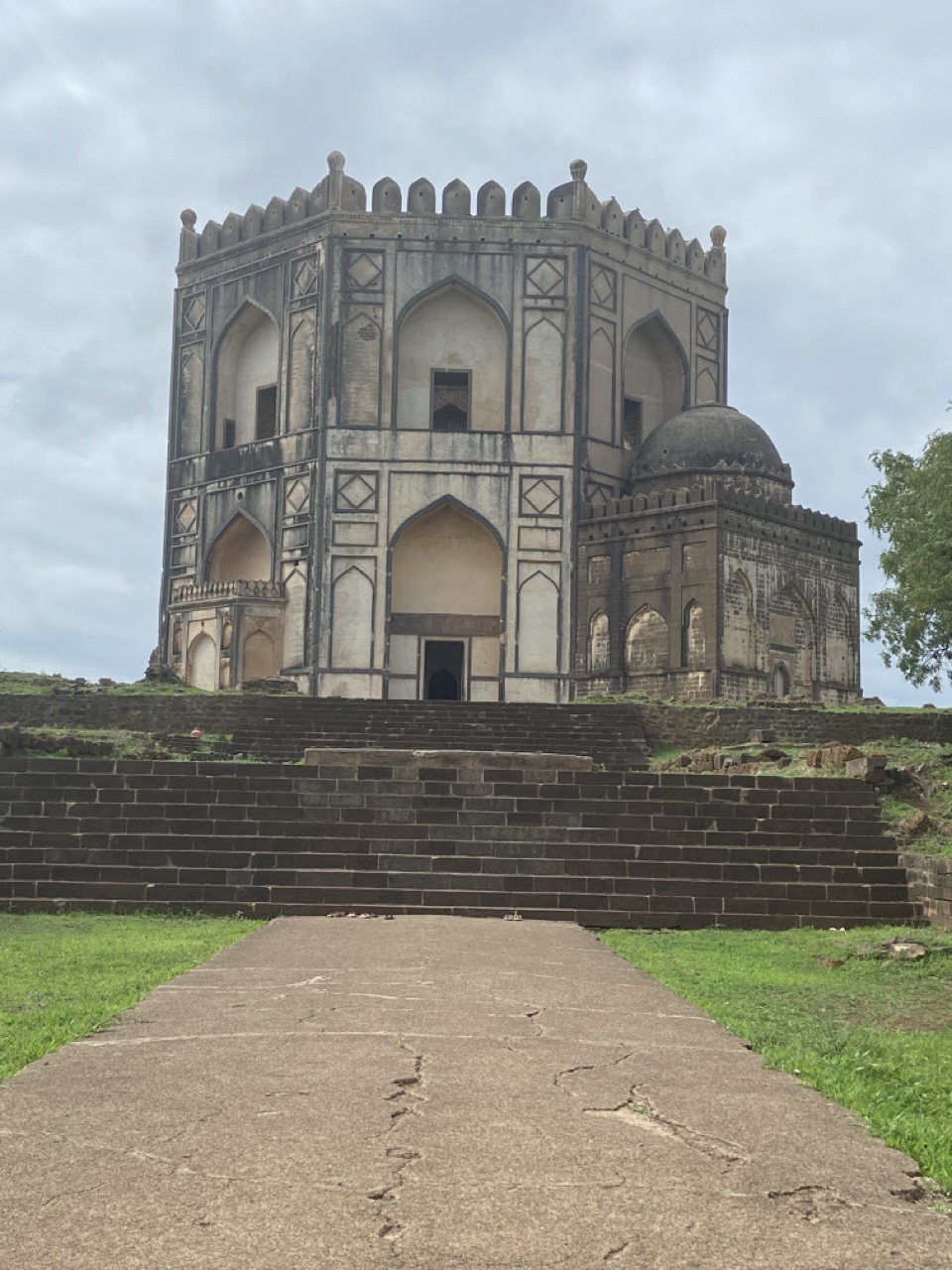
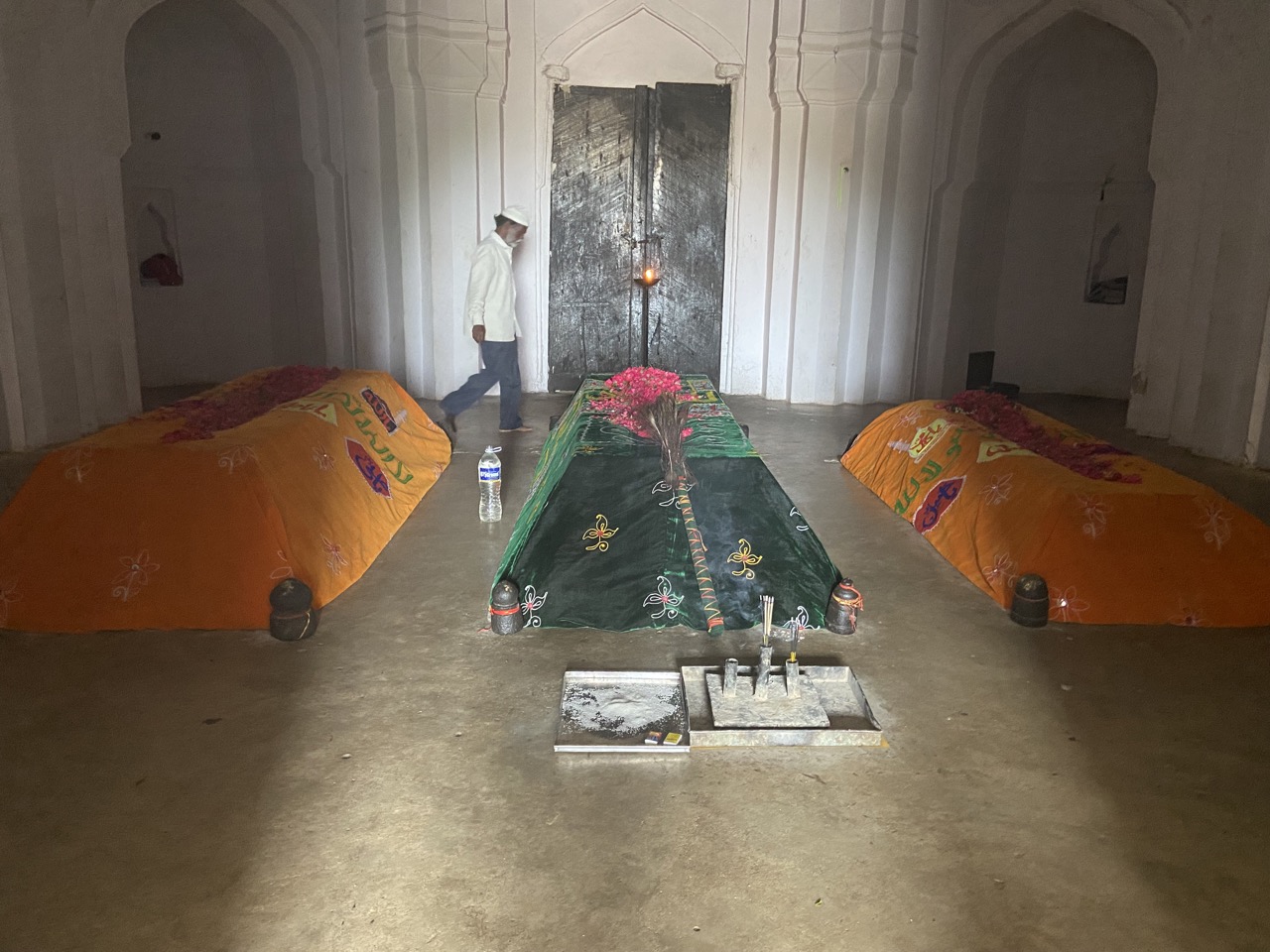
Shah Nimat Ullah was a Sufi saint whose name and fame spread far and wide, beyond Persia and into India. He was born in the town of Kerman in present-day Iran. The 9th Bahamani king Ahmad Shah Al-Wali followed his teachings and invited his teacher to move to Bidar. He did not come, but on his death, his son and successor of their sect, Hadrat Khalil Ullah, made his way to Bidar. Ahmad Shah Al-Wali had passed away, but his son Allauddin welcomed Hadrat Khalil Ullah with full honour. Two of Hadrat Khalil Ullah’s sons were married to princesses. Hadrat Khalil Ullah was held in high esteem. He and his family members are laid to rest in a mausoleum, commonly known as the Chaukhandi (4-storeyed), even though it is only 2-storey tall.
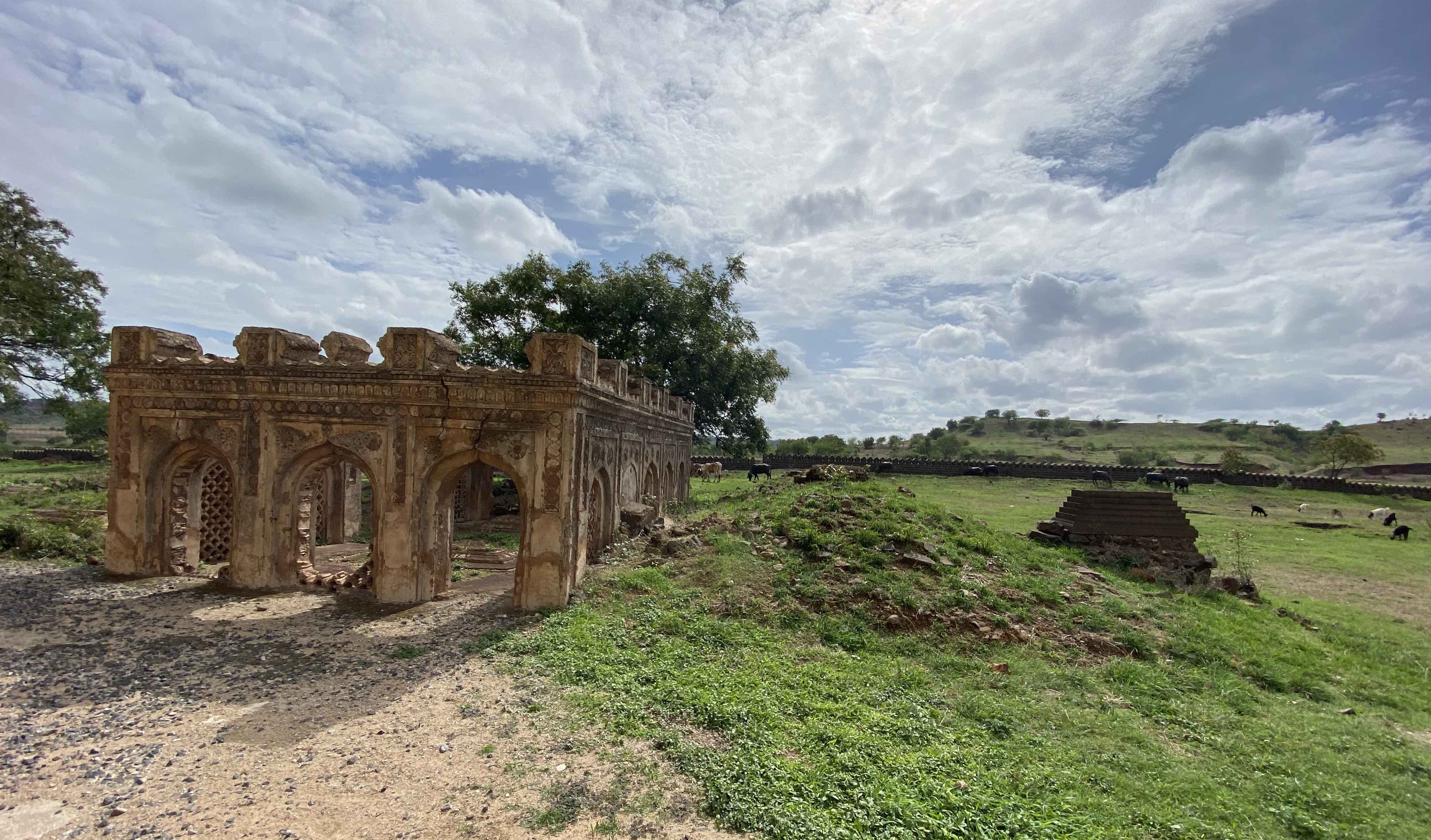
Situated in Ashtur, which is a quick drive out of Bidar, the Chaukhandi is located close to the final resting place of the Bahamani Kings. The tomb is positioned high up in the centre of a large compound whose grounds slowly slope towards the road. Cows and goats grazed on without a care in the world. Several nameless graves lie scattered about. Some with domes may have been those of far more important people than others – all in, they have certainly seen better days but lie in a state of ruin now. Some appear to be enclosures with intricate jaali work and large round floral motifs. These floral motifs appear consistently in many spots in and around the Chaukhandi.
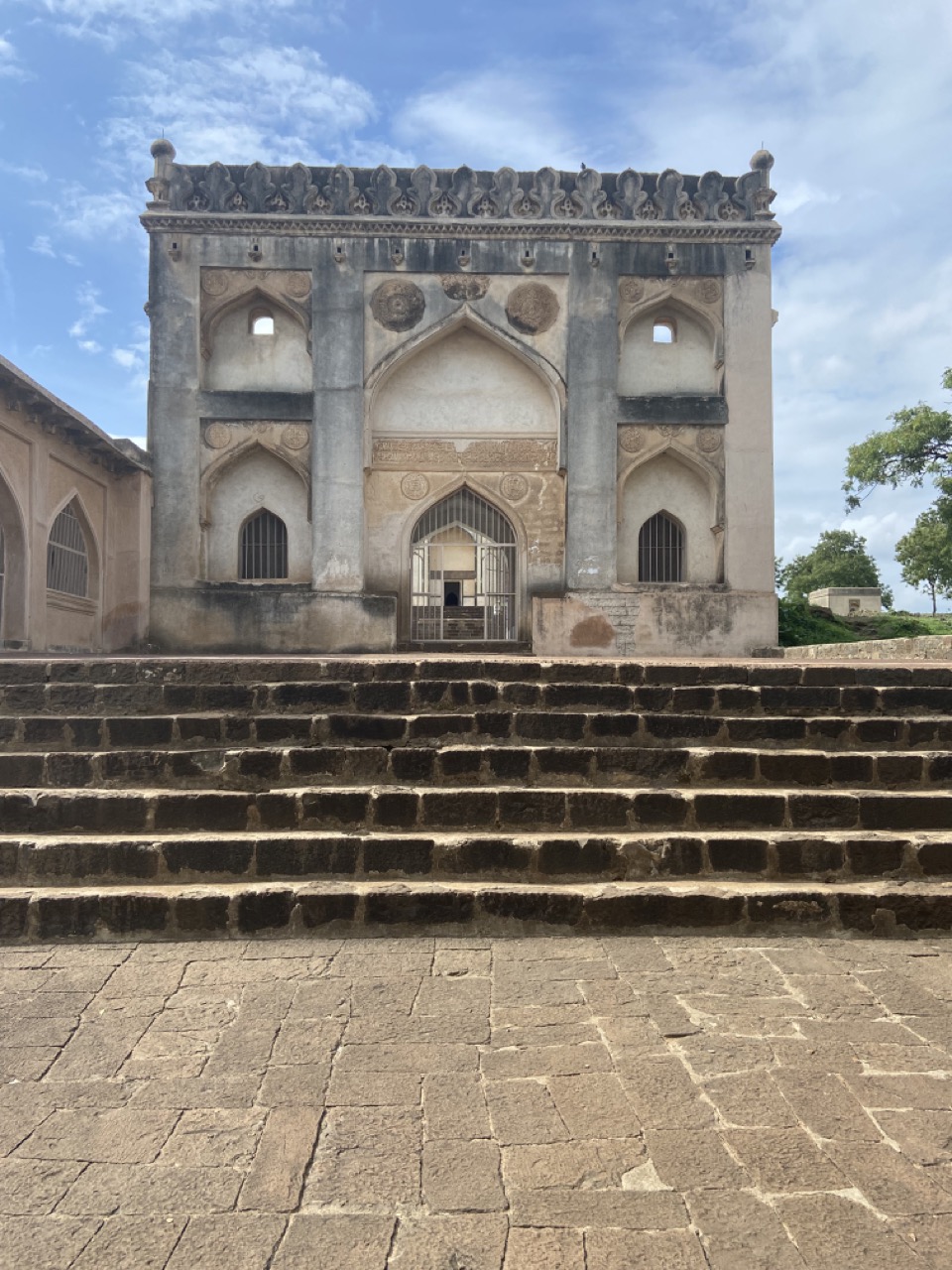
As you head up along staggered short flights of steps is a two-sided building (could have been a naqqar khana and a guest house?); the side facing the path has a very pretty façade with Persian calligraphy and stucco work. The other side appears to be rooms – for travellers coming to seek blessings from the saint.
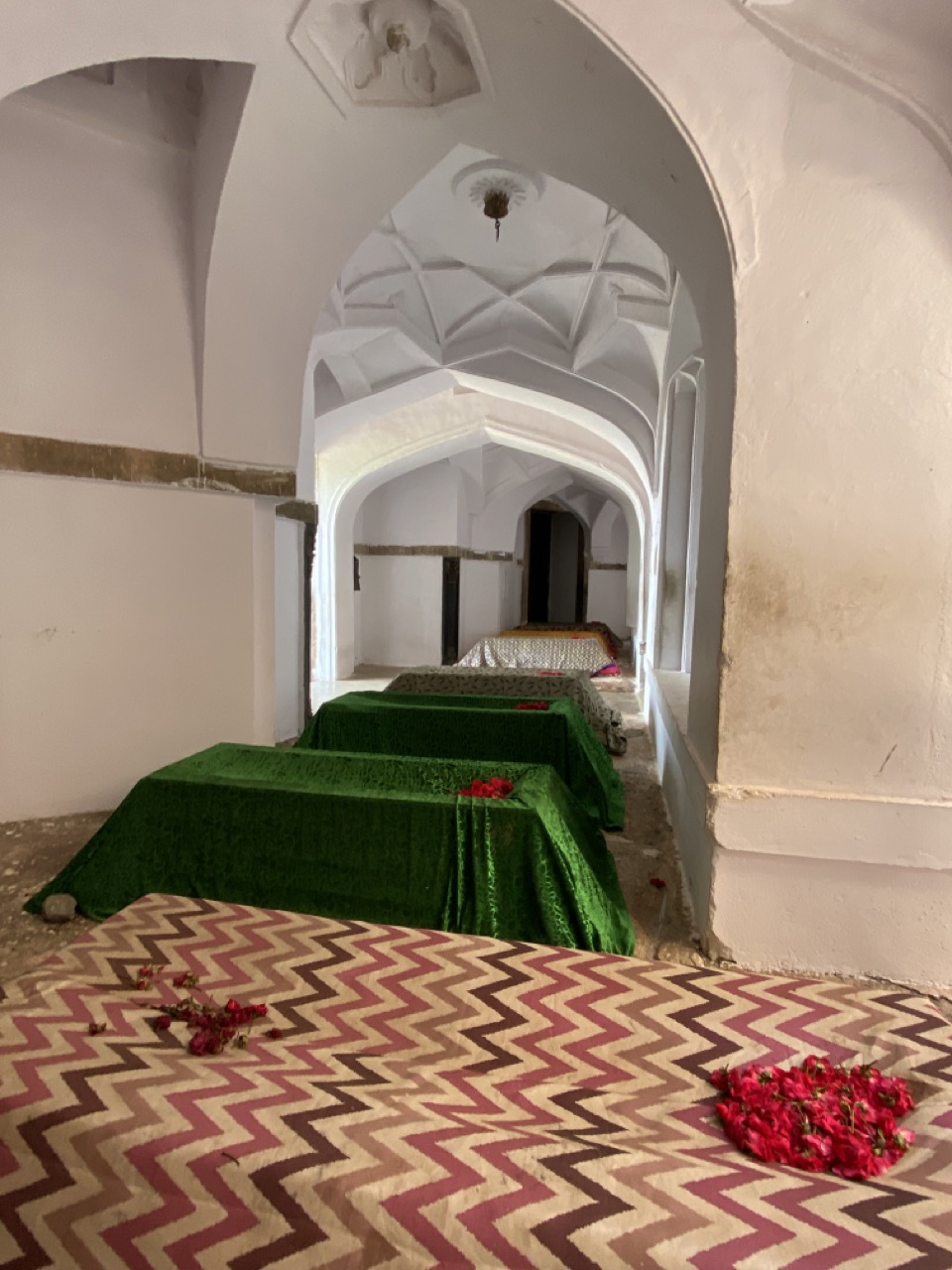
The Chaukhandi is an 8-sided white lime-stone plastered building. Black stone is used along the geometric edges of the eight sides, making it a sharp black-and-white structure. Encapsulated within this outer sheath is the saint’s tomb, and a path goes all around between the geometric frame’s inner walls and the mausoleum’s exterior walls. The front half of this passage has a simple vaulted ceiling, and the rest is open to the elements. Tombs of the saint’s disciples and Khalil Ullah’s successors line the passage’s covered section. An annexe was added to the main building to hold more graves.
The mausoleum holds three graves. Only men are allowed in here. There were more women huddled together, gently rocking back and forth as they read their prayers just outside the door leading into the mausoleum – thank yous for fulfilled wishes. It was undoubtedly a women’s day out! They tie threads to the door or leave fingerprints on the wall before they leave.
After some more chatter, we bid farewell and allowed the women we met first to finish their meal. In their simple lives, the trip to pray at the saint’s tomb was a big journey that seemed to bring them a lot of cheer and excitement. They kept watching us as we drove out because seeing is believing that there was no male driver, just three women from 3 generations on a day out being impressed by Bidar’s monuments.
 Kirana Bhat