Bidar in North Karnataka became the Bahamani kings’ new capital; they used to rule from Gulbarga (Kalburgi). 200000 people called Bidar home, including Persian artists and architects. The fort sits on a plateau on two sides, and where it slopes towards the city, you see a triple moat (yes! not just one!) which, as far as I know, is rare in India or even otherwise. The 2.5-mile circumference of the fort used to have 37 bastions and 7 gates besides the main gate from the city side.
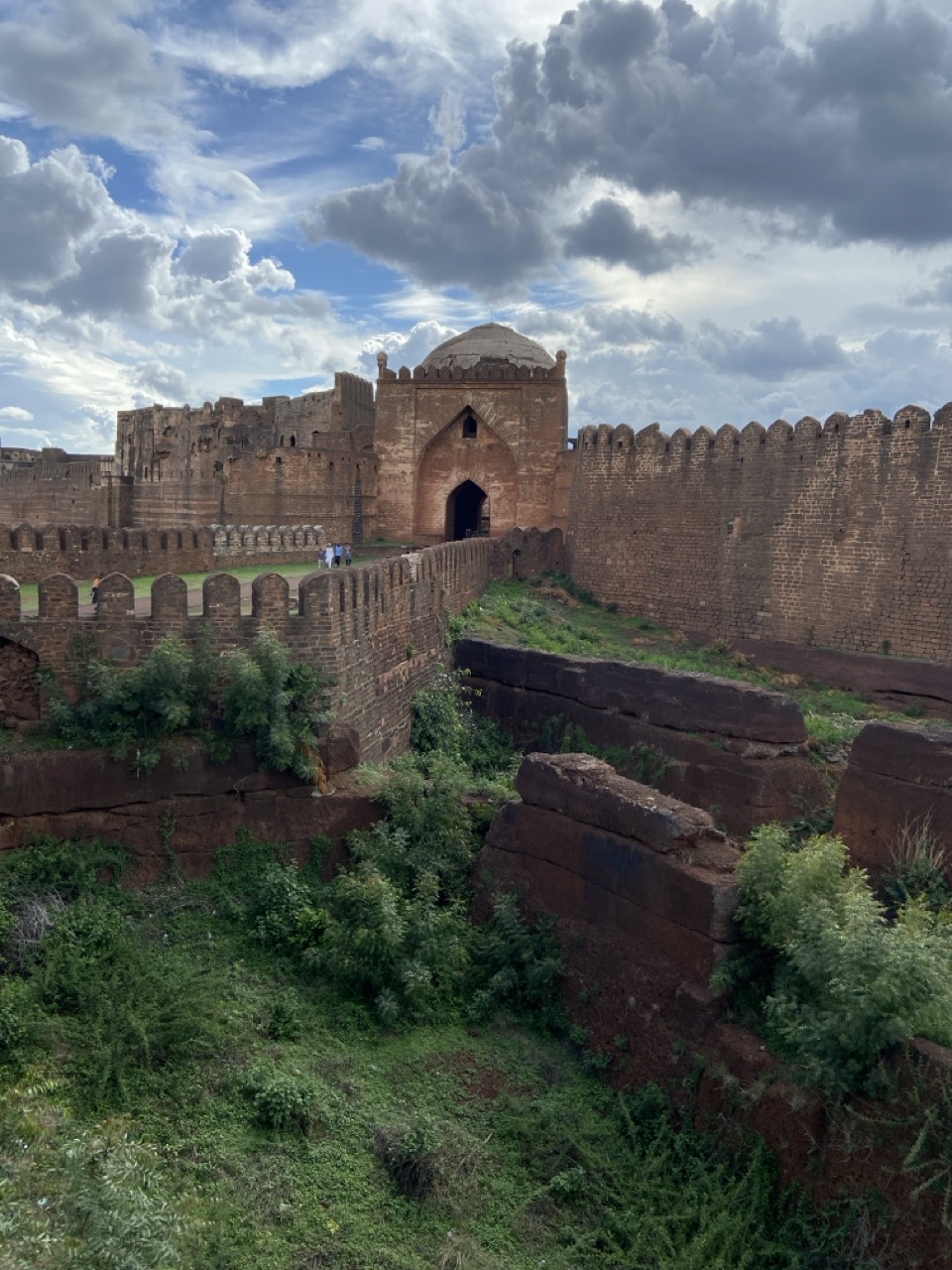
After entering the fort via the Sherza Darwaza, one can see the moats on the right. The path leads to yet another gate (Gumbad Darwaza) after which is the Rangeen Mahal to your left. The construction of the building on Gumbad darwaza and the Sherza Darwaza itself is attributed to the Bahamani king Mahmud Shah.
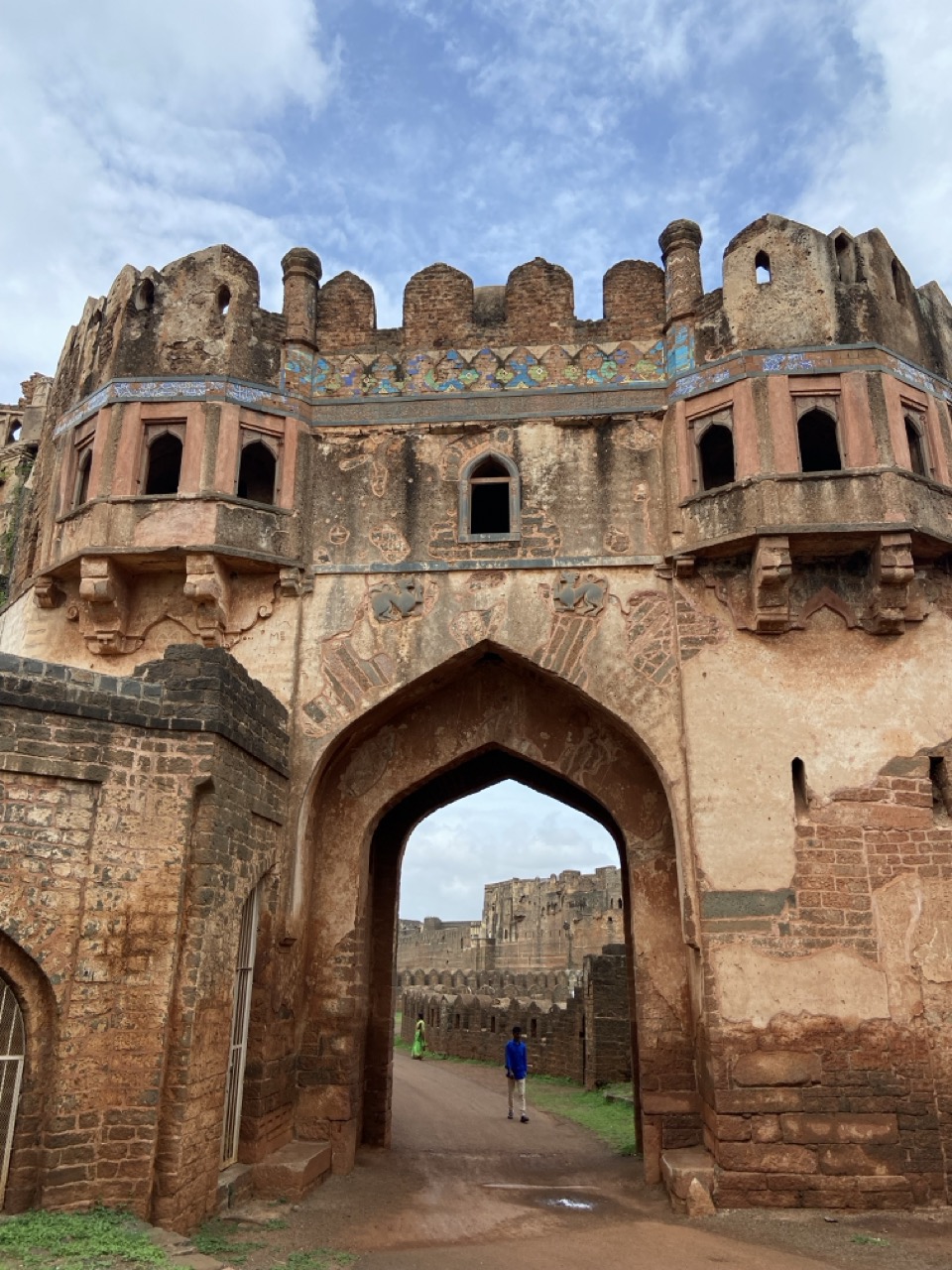
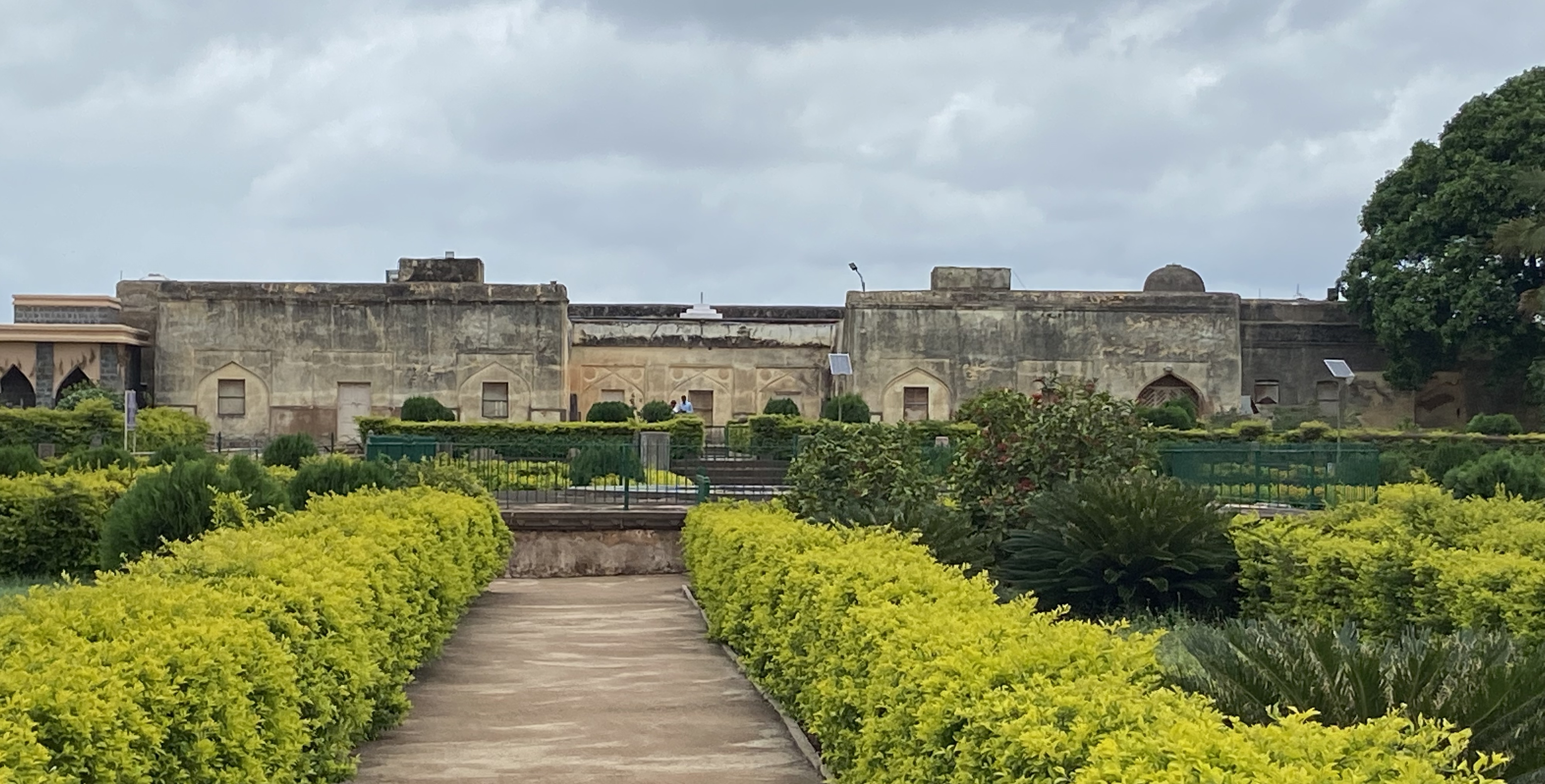
While my guide said that the Bahamani king Mahmud Shah’s wife lived in Rangeen Mahal, most sources (that I have access to, which I must admit is limited) state that Ali Barid built the Rangeen Mahal. Builder aside, it is supposedly really very rangeen (colourful) what with Mother of Pearls and other gems on the walls! Unfortunately when I visited the place was locked down to save it from looters (visitors like you and me) who tried to pry the gems off! The guide told me that they would reopen after undertaking restoration and have a means to keep visitors from the gems.
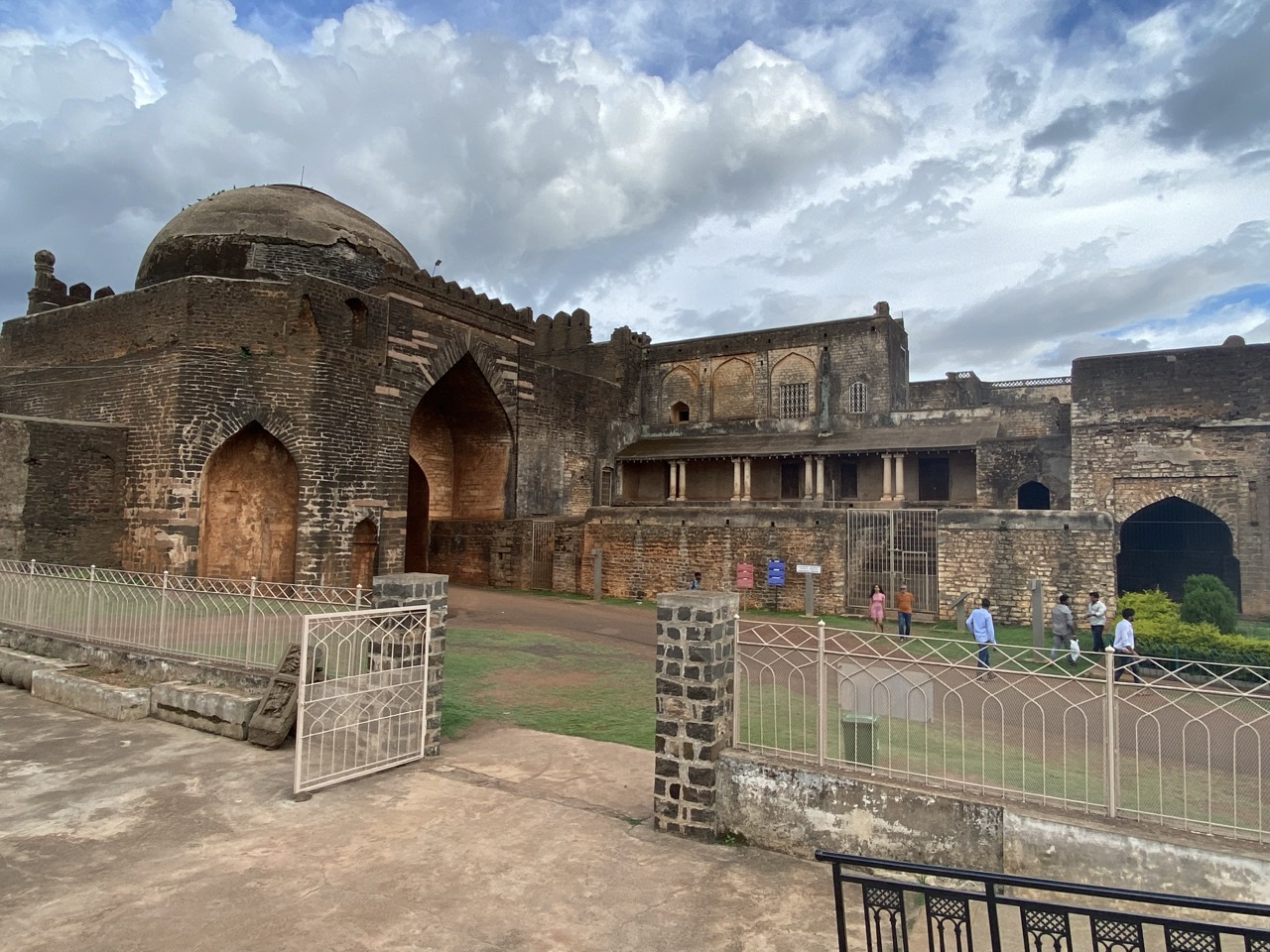
Opposite the Rangeen Mahal is the old District Collector’s Office which is the new Interpretation Centre. Small and compact (one long room) displays artefacts found around the fort and in other archaeological sites of Karnataka. Keys that were used on padlocks of the fort gates and encaustic tiles that embellished the buildings of that era are also displayed here.
Ahmad Shah Bahamani built a huge palace (Takhth Mahal) that was destroyed and no traces available to imagine what it looked like. Too much debris only, said my guide. Ahmad Shah’s Persian wife lived in Tarkash Mahal, a 7-storey tall complex with two levels underground with escape routes to what were then nearby safe locations. Not much of Tarkash Mahal is present today but it is easy to visualise the grandeur from the skeleton that remains today.
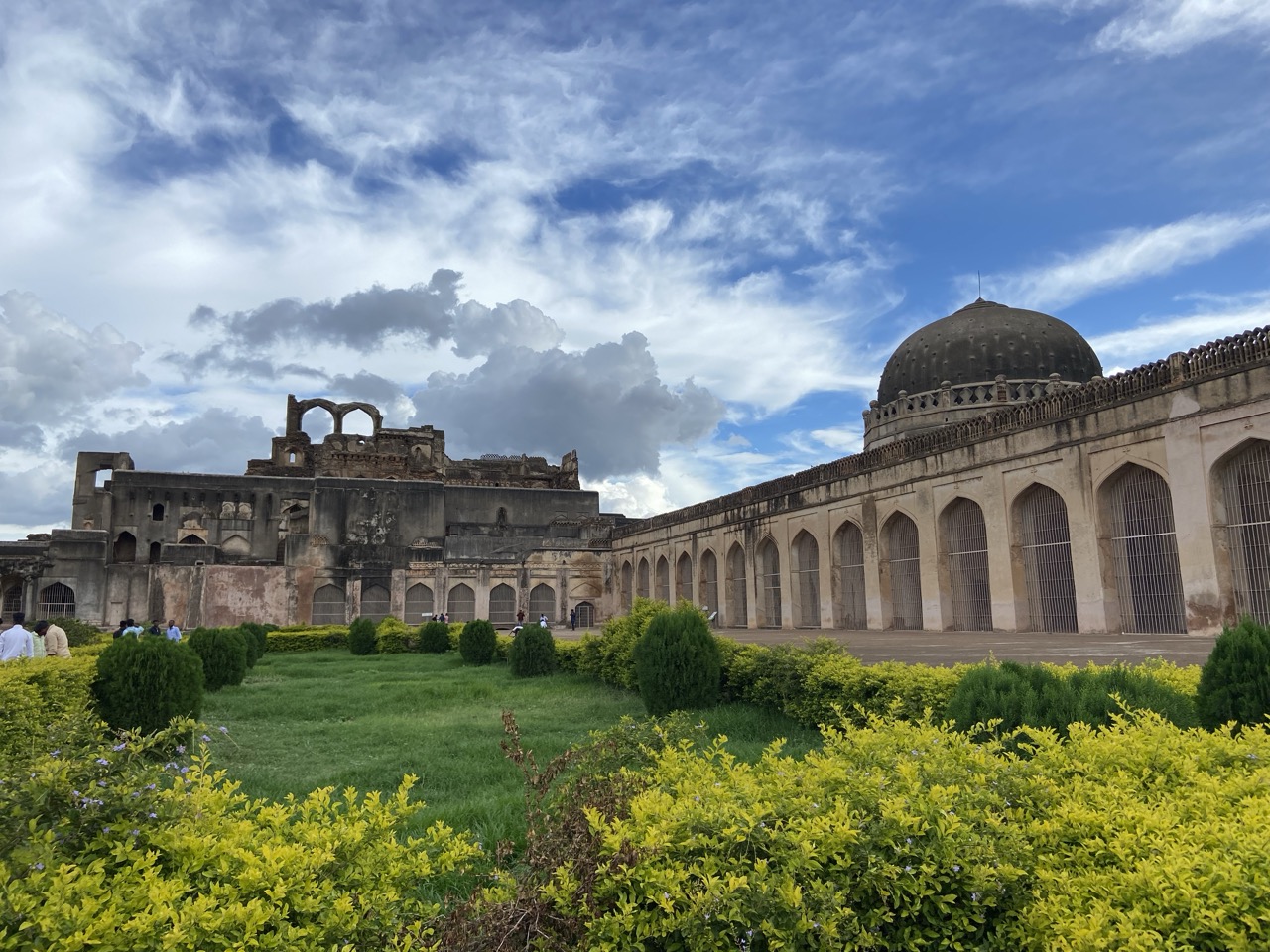
Tarkash Mahal had a lovely garden with fountains and waterworks on one side and a hammam on another side (that is the ASI office today after the museum where the hamam once housed moved to the Interpretation Centre).
The Mughal king Aurangzeb who eventually took over the Baridi areas did not fight a war but had a walkover of sorts. It is said that he simply came, offered namaz (prayers) at the Solah Khambh Mosque and went away. His soldiers demolished the mosque using cannons and left. Solah Khambh with 72 pillars (16 in a row) and a simple mihrab was built by the Bahamani king Mahmud around 1623-24 and was the principal mosque of Bidar.
Hazar Kotri (1000 rooms) is a building that did not have so many rooms but was used to loosely describe a complex with several rooms.
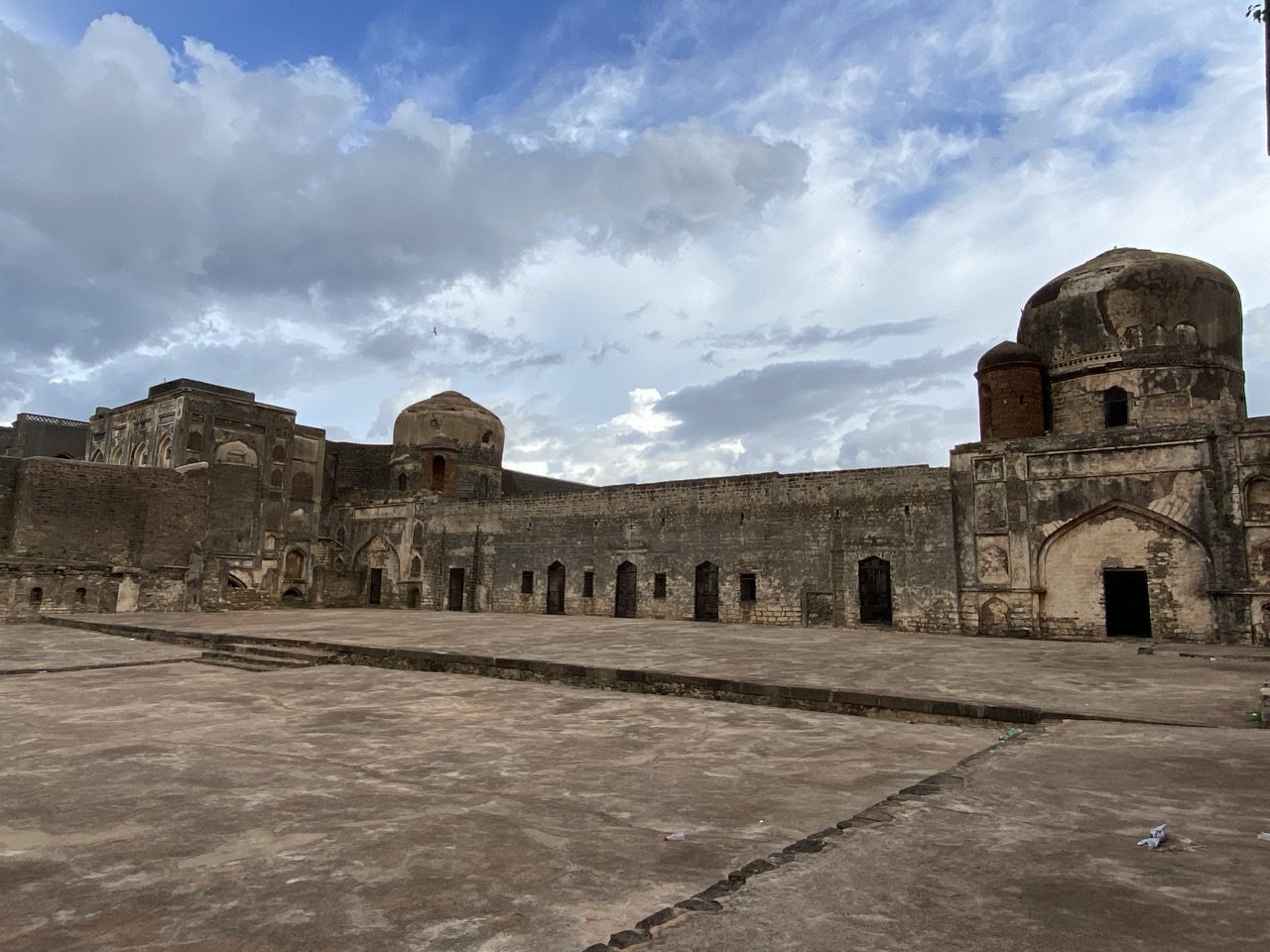
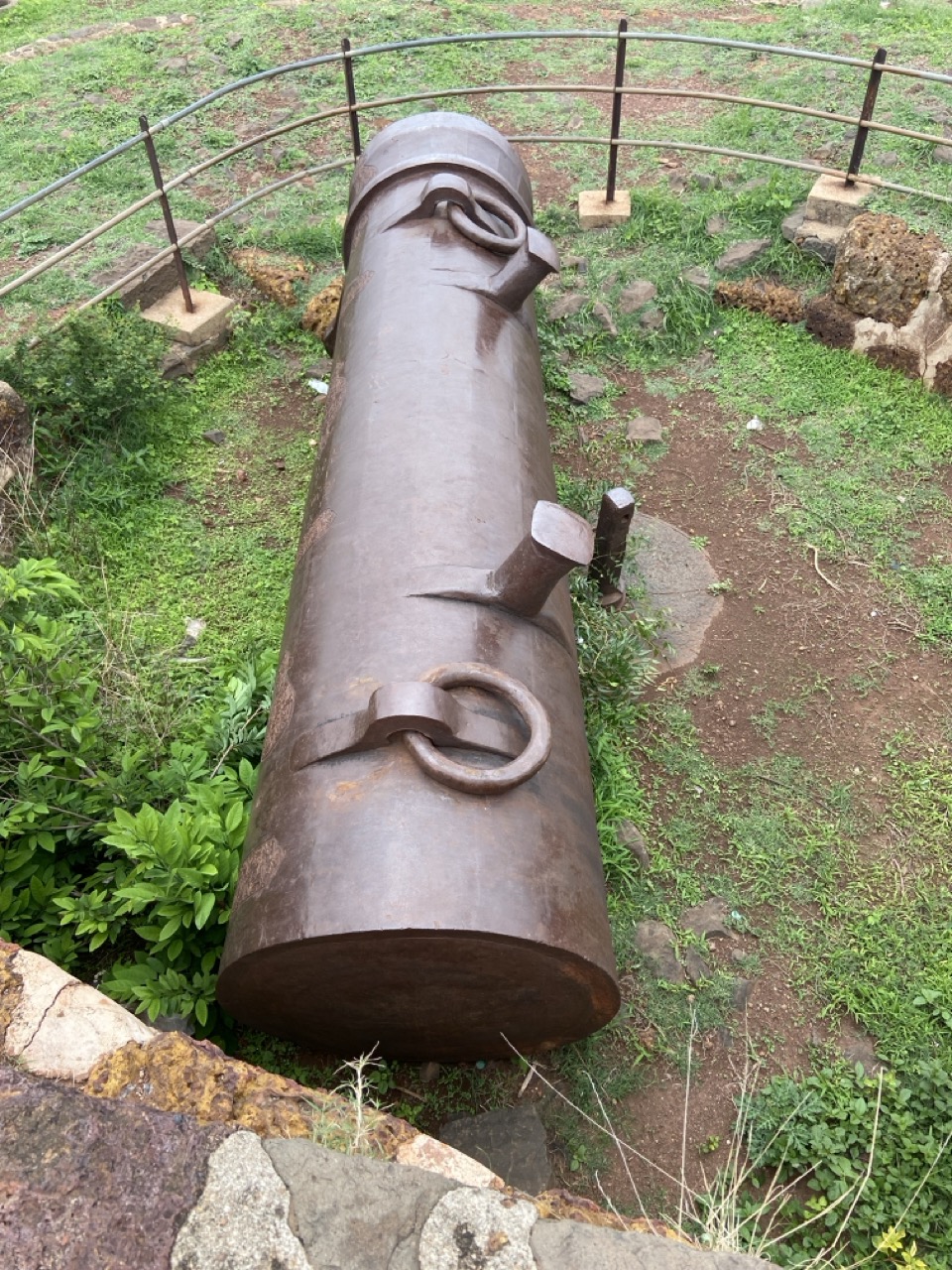
As you walk toward the higher sections of the fort on the plateau, you can see the Ammunitions Room and the Royal Kitchen. Canons and cannon balls lie strewn around everywhere! Walking along the ramparts gives one a fair idea of the contour of the fort’s location, the different layers of fortifications, water sources, canons, sentry points, etc. As I walked around I wondered is it the soil under my feet that is important for the true black shade of Bidriware for which Bidar is famous…..
All in all, it’s a must-see. Entry was free when I visited. A small temple and few houses remain inside the fort; claimants to the property, forefathers of these people worked inside the fort and continue to live there under some scheme of the government.
My guide Mansoor was not actually a registered guide, but the office of the ASI on location was kind enough to loan him to me for a quick walkabout. He has worked at the fort for almost all his adult life and is cute, animated and eager to describe the place. I am sure he would have spent more time with me if work did not keep calling him back to the office. I am grateful to him, especially for the demo he gave of how canons were operated.

