Just off the Bangalore-Mumbai highway, near Shiggaon, corn, chickpeas, cotton and other crops grow on acres of farmlands. Large lakes dot the area. Windmills stand at equal intervals through the fields as if fanning the crops because the summer heat that has come in earlier than usual.
Amidst these richly fertile lands is a small hamlet with one narrow dusty street and tiny houses with low main doors that are colourful and richly decorative in sharp contrast to the otherwise simple surroundings. A makeshift Bank of Baroda counter is probably the only bank that serves those who know to use banking services.
This village, called Sishuvinala was the birthplace of a saint who was born in 1819 to unconventional parents who, despite being Muslim, prayed to a Hindu saint when they had trouble conceiving a child. Sharifa was a bright child who grew up in a household that taught him the Hindu mythologies. His father followed the principles and teachings of a saint who desired that people look at each other beyond religion.
The bright boy that he was, Sharifa, caught the attention of an unconventional Hindu guru Govinda Bhatta, who shaped the boy further into believing that we are all one, no matter what. In later years, he was influenced by the Lingayat social reformer Basavanna.

The villagers of Shishuvinala pray at the quaint little Nandi (bull) temple called the ‘Sishuvinaladeesha temple’ where the seated Nandi is propped on a pillar. To spread his philosphy, Sharifa preached to the villagers here and sang impromptu mystic folk songs in the local dialect of Kannada. His songs called ‘tatvapada’ (moral songs) are popular even today; Karnataka’s famous singers like C. Ashwath and Raghu Dixit have sung Sharifa’s compositions in a way to appeal to the new-gen who might not have heard about this saint at all! Some 30 years ago, a movie on the Saint that was directed by Karnataka’s famed film director T. S. Nagabharana was released to much acclaim.
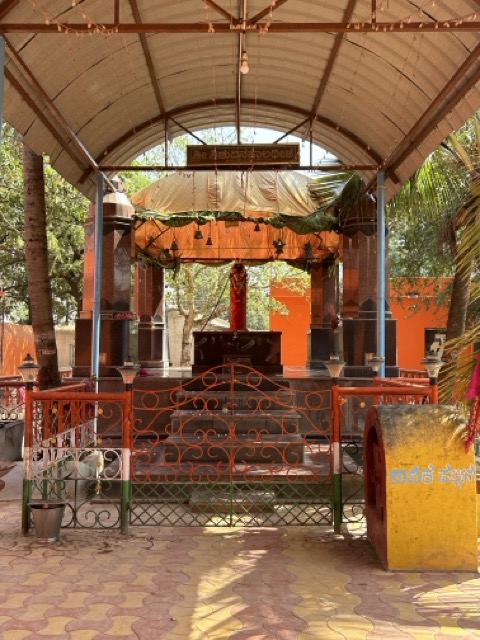
When he grew old and frail, he took Samadhi in the Lingayat tradition. His final rites were performed both in the Islamic and Hindu ways. A small place of worship that was built near his Samadhi (he was buried together with his parents) is dear to both Hindus and Muslims. In March every year, a ‘jaathre’ (festival) takes place and worshippers from both walks of life throng the place. When I visited there last month, the place was getting a facelift for the festival. Rooms for pilgrims were under construction, the kitchen was being spruced up, the last stretch of road was being levelled, and travelling salesmen who hop from one temple fair to another were setting shop.
The simple samadhi covered in a chadar under a neem tree that provides shade to the samadhi greets the visitor.
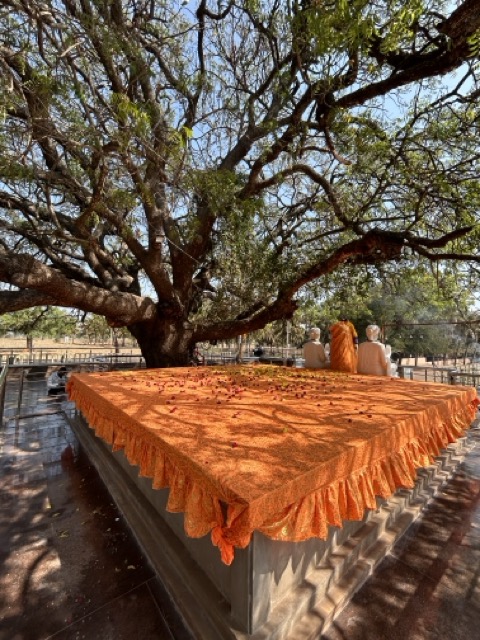
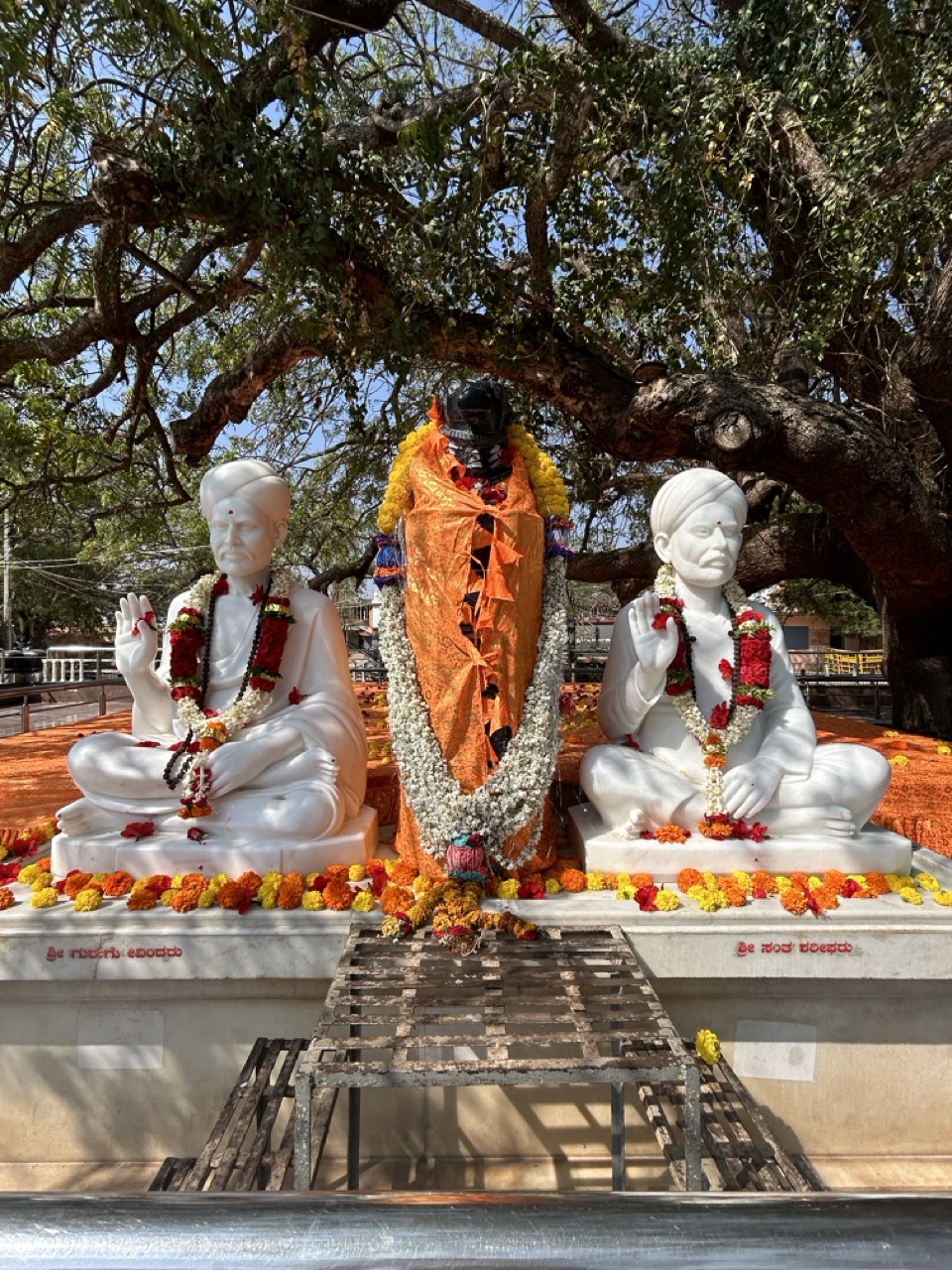
In front of the samadhi is the ‘sthambhamurthy’ of Basava flanked on either side by serene statues of Sharifa and his guru Govinda Bhatta.
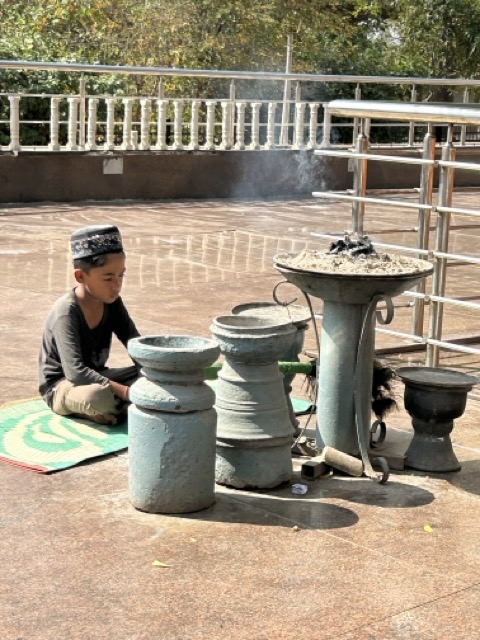
There are temple bells on one side and holy ash produced from a continuous burning fire on the other side.
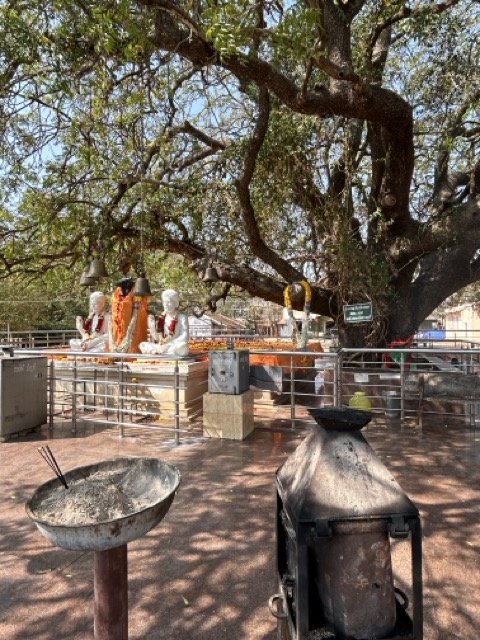
The shy buy cute little grandson of the old caretaker’s, was sitting in for the old man near the burning sacred ash and sneakily looking into the smartphone in his hand 🙂 I am sure the kiddo was bored given the low traffic of pilgrims that day 🙂
Behind the samadhi is a ‘temple’ whose main ‘diety’ once again is the triumvirate of Govinda Bhatta, Basava and Sharifa.

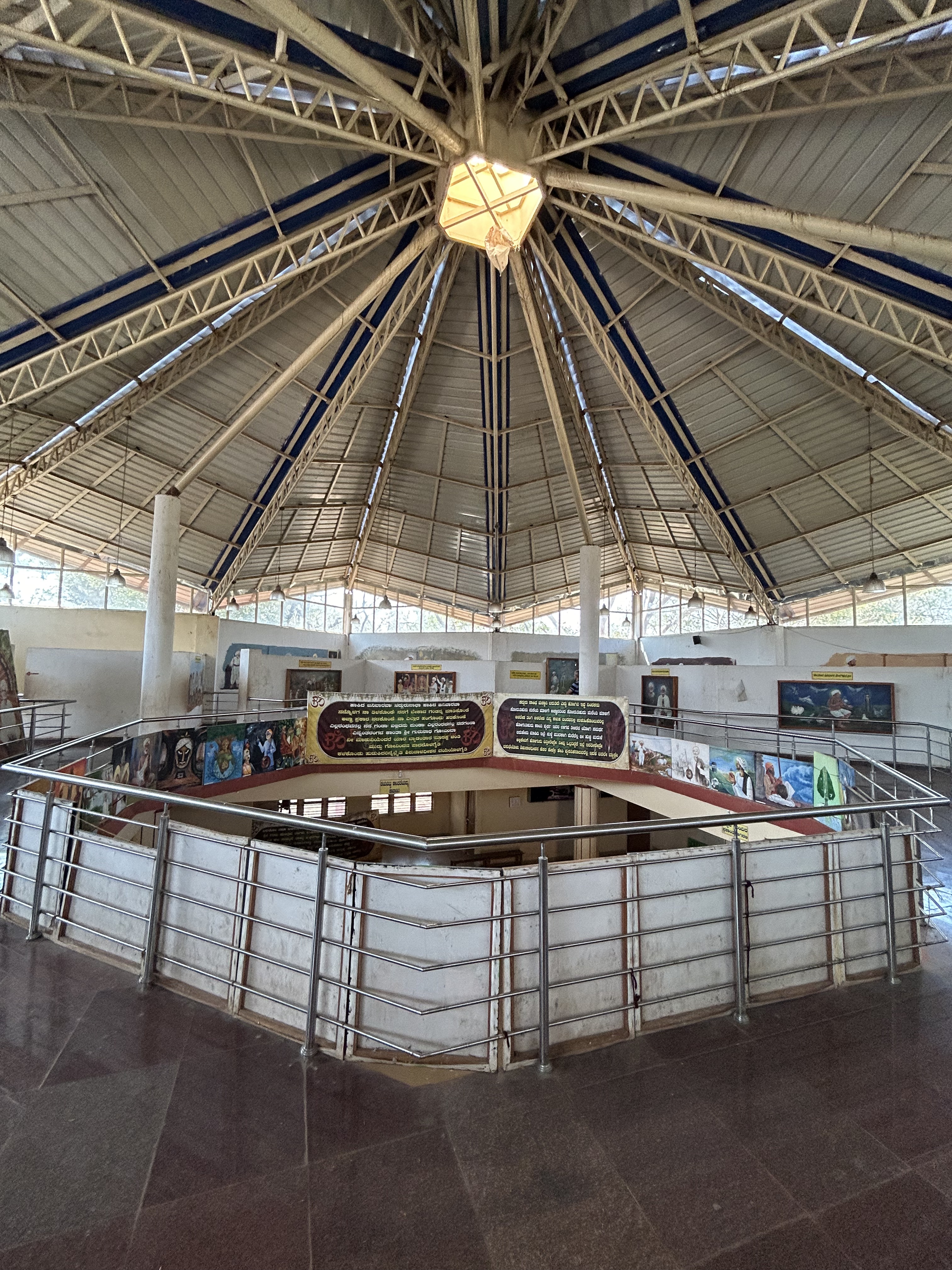
On-site is a museum dedicated to Sharifa. Built to look like a meditation mandir, one can see that the concept and desire to put something together were true but the outcome rather poor. The walls are painted with various episodes from Sharifa’s life, including some ‘miracles’ which I think are a figment of someone’s imagination.
Is visiting this offbeat place worth one’s time and trouble? I would wholeheartedly say ‘yes’. In these times where religion is used to divide us, it is only places like this that stand tall as reminders that at the end of the day, we are all one. We need to promote these places so that we can once again start believing in harmony. There are several such stories around the country. Read here about another such place that I visited some time back.
 Kirana Bhat