My fascination with history often leads to unexpected discoveries. During a casual conversation, my aunt-in-law mentioned a house she had visited years ago, describing its grandeur and the lasting impression it left on her. Intrigued, I shamelessly used her reference to go and see it and dig into the story behind the house.

To understand the origins of this house, we must journey back to the era of the Keladi Nayakas (1499–1763). These feudal lords governed vast regions in the Malnad and Coastal areas of Karnataka, initially under the Vijayanagar Kings and later as independent rulers following the decline of the Vijayanagar Empire. The forefathers of this house were connected to the Keladi Kings. Unfortunately, no one seems to know how the two were linked.
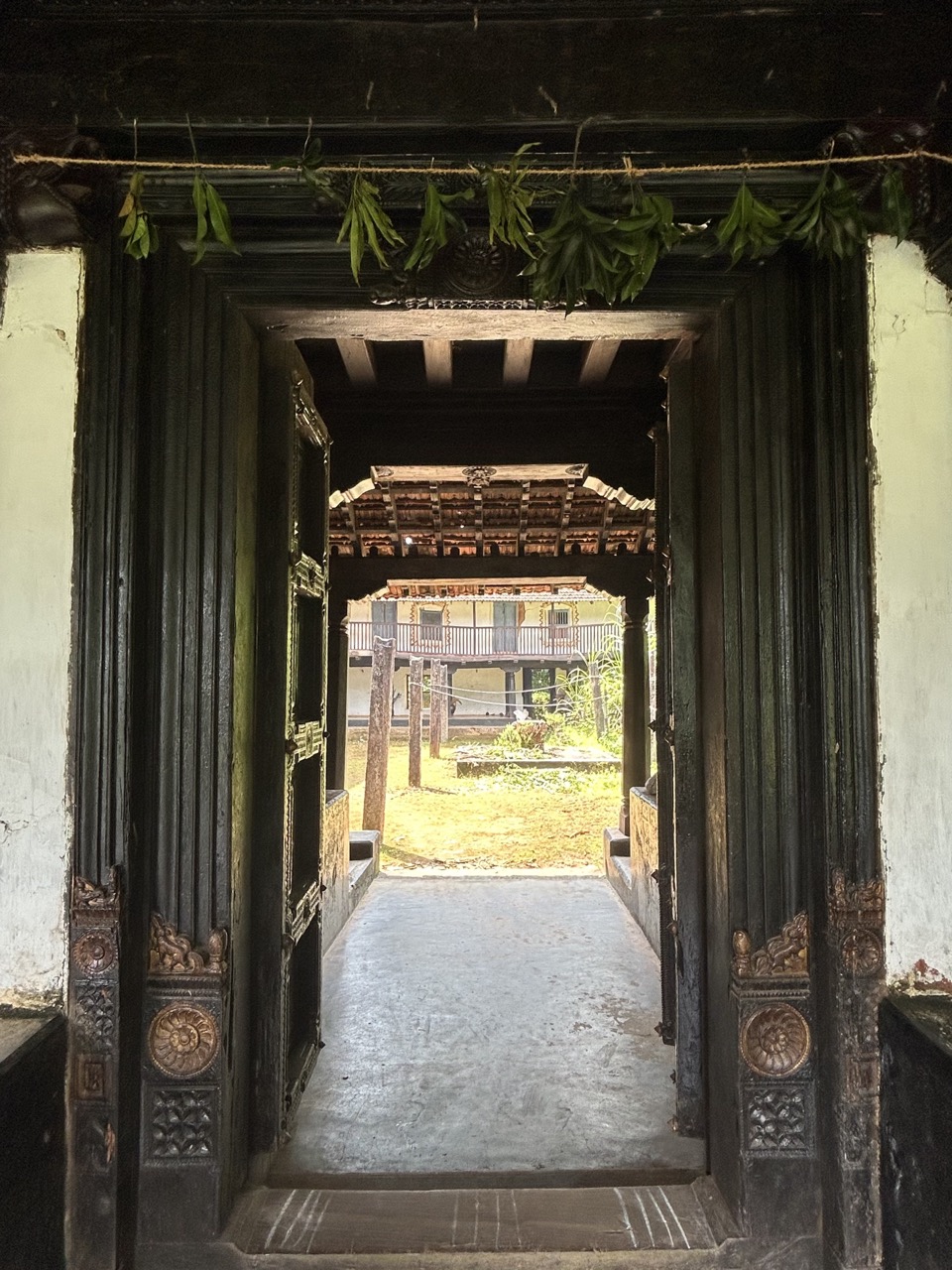
Known as Halsnadu Mane, this house has withstood the ravages of time, bearing witness to over five centuries of history. Someone needs to technically assess the age because if the ancestors of this house were associated with the Keladi Kings, the math does not add up. After all, the Keladis are known to have been around for about 200 years. And the magic number (500) has stayed intact for at least 40 years now, says Mrs. Malathi, who came here as a young bride.

Located a short 30-minute drive from Kundapura, Halsnadu Mane is nestled amidst lush greenery. The journey takes you through serene villages, dense woodlands, arecanut plantations, and meandering streams, offering a glimpse into rural Karnataka’s tranquillity.
The original residents of Halsnadu Mane were called ‘odeya’ (landlord), and rightfully so, as they owned nearly 32 gramas (villages) in the area. The enactment of the Land Ceiling Act in 1972 led to the relinquishment of vast land holdings, though the family retained several acres. Over time, the once-thriving estate saw a decline as members moved out and away in search of opportunities. Still, they are respectfully addressed as ‘odeya’ even today. The locals who used to seek shelter in the house back in the day, when the River Chakra that flows close by flooded in the rainy season, continue to have an unexplainable attachment and respect for the house. These days, it’s not the floods that bring them to ‘Odeyara mane’ (landlord’s house) but the coconuts they take at their own free will.

As the family grew bigger and people moved away for better prospects, the land got divided among the brothers , and one of them was left this house, a few acres of land where they still grow paddy and the ancestral ‘God’ who requires all the rites and rituals to be carried out just as they have been over several generations.
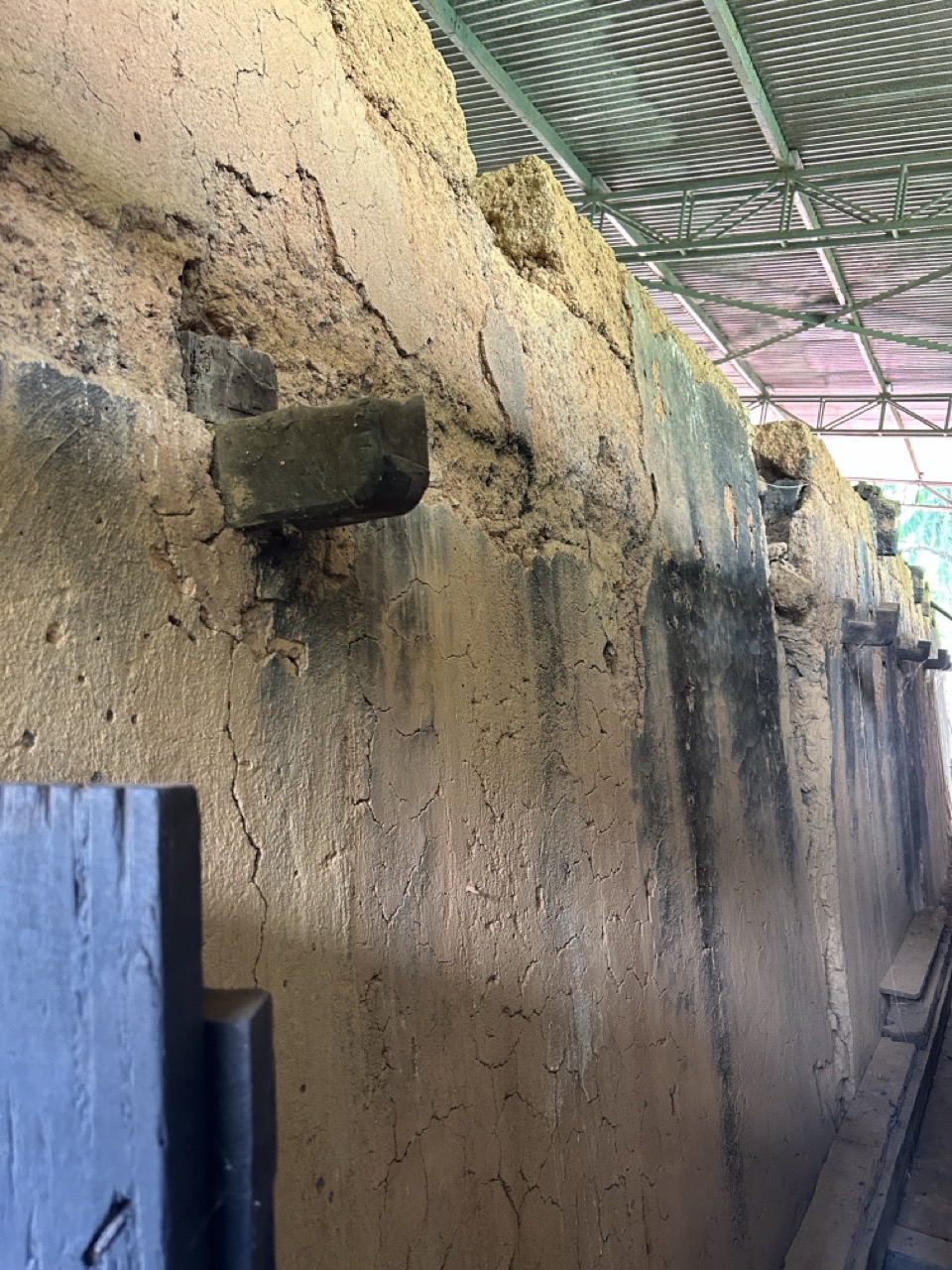
Standing three stories tall, the house’s construction is a testament to traditional craftsmanship. Built without the use of modern fasteners (Screws/nuts/bolts), its walls are held together with lime mortar, and its rafters, pillars, doors, and windows are crafted from rich Indian rosewood.

The house has sixty rooms. During its heydays, nearly 35 family members lived here. They had a host of functionaries who took care of their commercial activities and carried out businesses on their behalf. It was a long journey for relatives and business associates who visited them. Those were days before bridges when people had to cross rivers by boat (Yes! More than one river, depending on where you were coming from. Nearly 13 rivers make their way to the Arabian Sea between Mangalore and Bhatkal, a distance of about 150km). These visitors would stay the night.
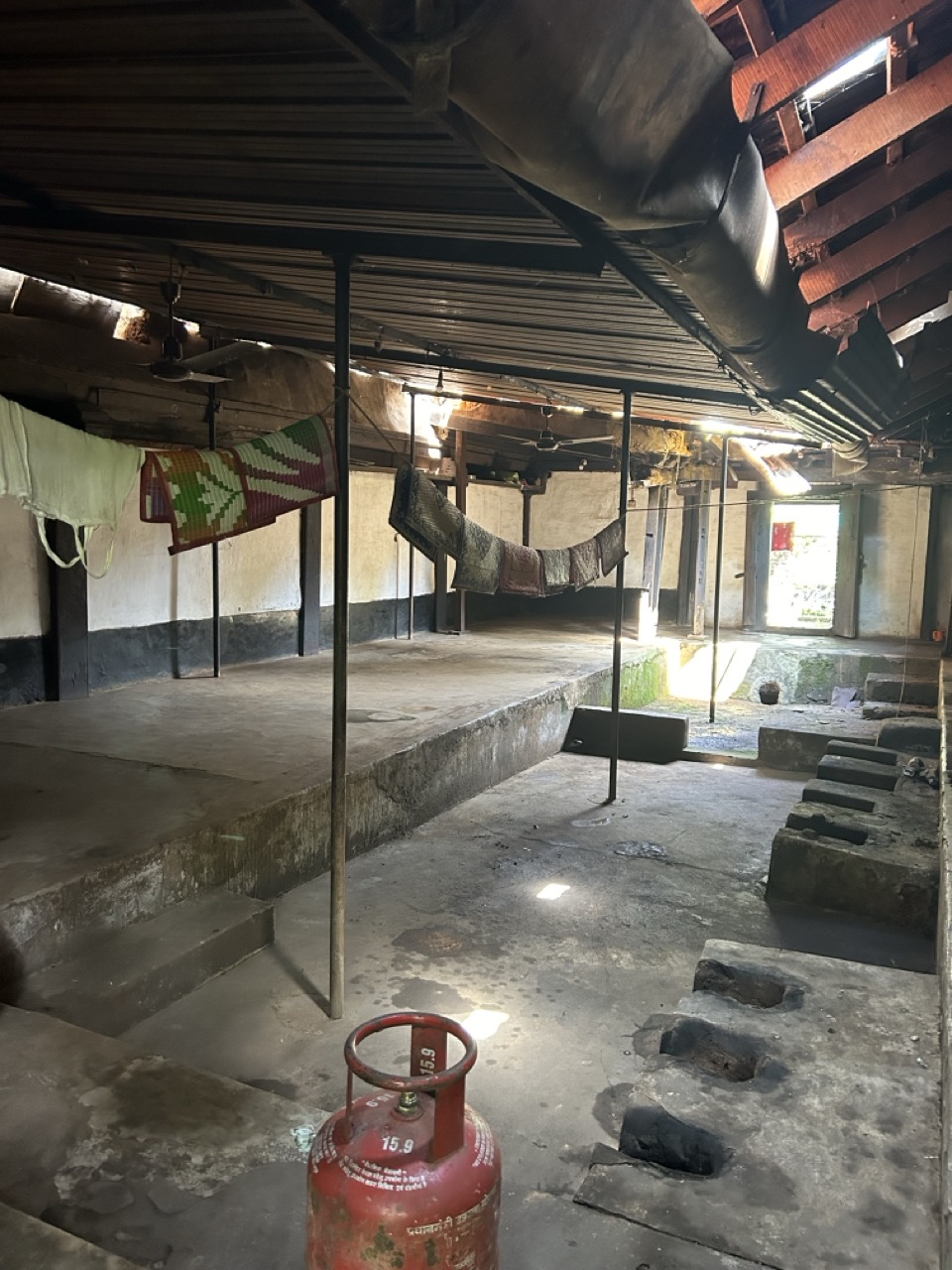
There are rooms for storing grains, paddy, vessels, bedding, a treasure room (that now holds only documents and palm leaf inscriptions!), a room where milk was boiled, and butter and ghee were made by a person in strict ‘madi’. (Madi is a type of body purity practised by Brahmins. A brahmin is ‘madi’ once s/he bathes and wears freshly washed clothes that might still be wet. Once s/he is ‘madi’, anyone who is not ‘madi’ should not touch her/him). There is the all-important God’s puja room next to the milk -boiling room. There is even a menstruation room with an attached bathroom where women were confined during ‘that time of the month’. All the rooms have valid Kannada terms. There were areas dedicated to threshing and winnowing. The house is so big that getting to the main door from any part of it takes a while. Malathi certainly gets all her step-count in a single day!
Several different staircases lead to the upper floors. There are many covered and open courtyards. The wooden pillars have exquisite carvings, and the windows have jaali work. There are two wells that have never gone dry and one fresh water tank with pure sweet water. Even now, locals come for water if they suffer a shortage. There are four shrines outdoors dedicated to the snake god (naga bana). There is a large wood fire kitchen where food used to be cooked for the residents and guests. The cow shed used to have nearly 20 cows at any given time. The traditional bathroom still has a large good old copper pot in which bath water is heated. In the compound, outside the main entrance is a Gopalakrishna temple. Malathi tells me, ‘ While God is old, the temple structure is new’.

Since the division of the property, the number of occupants has dwindled. Malathi’s husband passed away recently, and she now lives with her adult children in Bangalore. Malathi lovingly recalls that her husband lived like a king in his younger days. Till his last days, he would welcome and talk about the house with anyone and everyone ready to listen to him.

But the house needs a LOT of TLC! Imagine a house this size!! The second storey of the house is in complete ruins. The first storey is sagging so severely it is noticeable even to the untrained eye. The palm leaf documents need restoration. Old pillars and joints lie about. The paint is peeling – only to reveal the paint layers slapped on the walls by movie crews. Several award-winning movies and TV serials were shot here, including the good old and famous Shekar Suman-Rekha starrer ‘Utsav’. Nails on the walls do not belong to the original structure but are insensitive violations by the movie crews. The shoots brought in some extra money that went into the daily upkeep of the house. But honestly, the small change is insufficient. The house needs complete restoration. The old ‘maistry’ still comes around from time to time out of his love for the house, but he is too old to carry out any repair work anymore.

People come asking to buy the house, the entire property, or even pieces of the house. But Malathi and her children do not wish to sell the place. They would like to retain this piece of heritage for posterity. They envision this house as a living exhibit, a place for people to visit, learn and appreciate the craftsmanship, the life and the serene surroundings.
Can you help with refurn the house? Do let me know if you can. Please share this post to increase visibility and to help in any way to ensure that this piece of heritage can stand proud for many more centuries to come! Thank you.
 Kirana Bhat
my house in Mangalore is similar near to the port… I was surprised to see the same design.. same wooden design.. they say our house is also 200+ years old and previously called Tubakki nivas..
LikeLiked by 1 person
Hi Rajesh, thanks for reading and thanks for sharing that your home near the port is similar in design! For how long has your home been in your family? Is is in a far stronger state than the house I talk about in the blog?
LikeLike