The story of Gingee Fort is incomplete without narrating the saga of Raja Desingh and Sadatullah Khan, two men bound by destiny, duty, and an avoidable war.
Raja Desingh
Raja Swarup Singh, a Bundela Rajput, was granted the command of Gingee by Emperor Aurangzeb. His tenure was marked by strategic dealings with wealthy local merchants and the British on the borderlands, and a complex revenue system. But things soured. When terms for using his land were allegedly breached, payments ceased, and attempts to recoup his losses failed. He owed large sums to Aurangzeb and he managed to keep things barely afloat for over a decade. Swarup Singh died an infirm old man.
His son, Raja Desingh, still in Bundelkhand, made the long journey to Gingee only to find his father already gone. Grief-stricken yet proud, Desingh declared himself the new commander, ignoring advice to secure Aurangzeb’s official sanction. When an emissary from the Mughal administration in Arcot came to negotiate, Desingh refused to extend the respect due to a representative of the empire. It was a fateful mistake.
Sadatullah Khan
Sadatullah Khan, born Muhammad Sayyid, hailed from the Konkan Nawayath community along coastal Karnataka. He rose from humble beginnings, serving in the Mughal army and becoming the trusted lieutenant of Daud Khan, the then-governor of Gingee.
Following Daud Khan’s path, Sadatullah Khan succeeded him and eventually became the Nawab of Arcot. Known for his fairness, integrity, and administrative acumen, Sadatullah ruled wisely for over 25 years, earning admiration even from those he governed.

When Raja Desingh’s defiance and his father’s unpaid arrears reached Aurangzeb’s ears, Sadatullah Khan, on imperial orders, mobilized forces and marched towards Gingee. Sadatullah Khan’s vast army, commanded by Daulat Khan, approached Gingee. Their orders were clear – capture, not kill, Raja Desingh. Desingh, however, charged into battle like a warrior out of legend with a tiny army, joined by his loyal friend Mohabbat Khan, the son of a neighbouring chieftain.
But it was a hopeless fight.
Desingh’s horse was maimed, forcing him to fight on foot. When a soldier tried to apprehend him, Desingh retaliated, spearing the attacker. In response, another soldier fired. The young Rajput fell.
In a moment as poignant as it is powerful, Sadatullah Khan is said to have carried Desingh’s body in his arms, entering Gingee not as a conqueror, but with sorrow. He secured the fort, sent word to Desingh’s widow, who, despite his pleas, chose to commit sati on her husband’s funeral pyre.

Sadatullah Khan personally oversaw the last rites, held near Chettikulam Lake in the Outer Lower Fort. The platform where the rites were performed still stands today. Tombs for Mohabbat Khan and two other fallen warriors (friends of Raja Desingh and of equal standing as him) were erected. And in an extraordinary gesture of respect, Sadatullah Khan founded a new town near Arcot, naming it Ranipet after the Rajput queen who chose to die on the pyre.
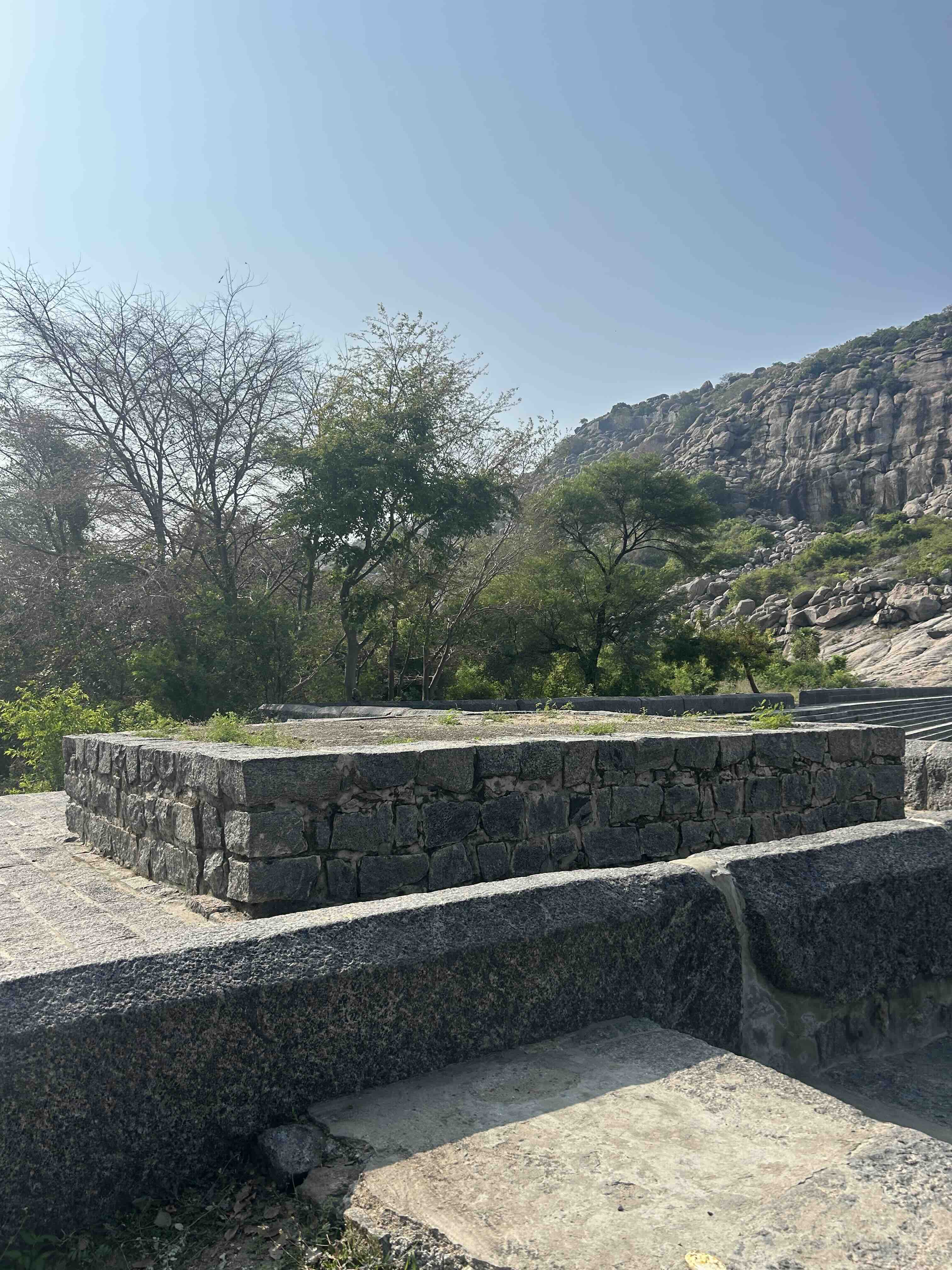
Over time, Raja Desingh became a Tamil folk hero celebrated in ballads, remembered as the brave king who defied tax payments and the Nawab of Arcot. His legend inspired the 1960 MGR filmRaja Desingu, immortalising him in popular culture.
But Sadatullah Khan, the administrator who followed duty with dignity and showed unmatched empathy in victory, seems forgotten. In the Outer Lower Fort, the Sadatullah Khan Mosque stands silent, locked 363 days of the year (opens only for Eid prayers). No signage. No interpretation.

Ironically, there’s a freshly painted dargah nearby, in active use, yet even local guides don’t know who it belongs to. Meanwhile, other monuments are being refurbished, signboards are installed, even one in braille near the Pandava temples as part of Gingee’s UNESCO World Heritage Site bid.

And yet, why are Sadatullah Khan’s contributions not acknowledged? Why is the mosque that bears his name to visitors who might wish to know more? If UNESCO recognition means celebrating all layers of our history, then surely Sadatullah Khan’s role as much as Raja Desingh’s deserves its place in the narrative.
 Kirana Bhat
Interesting post, especially about how the town of Ranipet got its name!
Also, the far-flung influences of rulers from Northern part of India who left their small marks in pockets of Southern India.
LikeLiked by 1 person
Haha yes! That’s how Ranipet came to be!
LikeLike