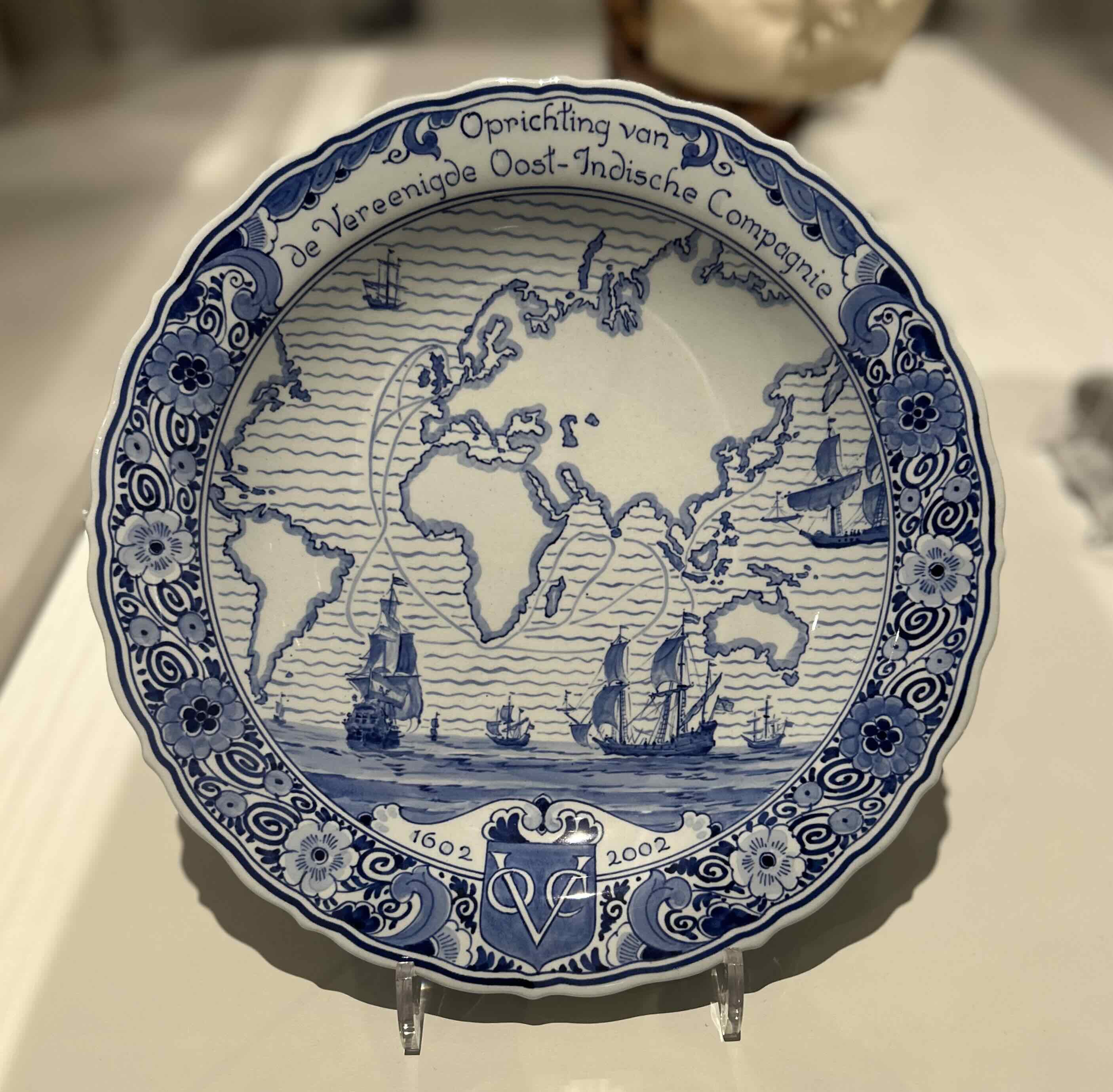
The Dutch first got a taste of Chinese blue-and-white porcelain thanks to the Portuguese sailors who ventured into the Far East long before the Dutch. The Portuguese “Carracks” didn’t just haul back exotic spices; they brought back delicate Chinese porcelain that became coveted pieces of luxury in Europe. These ceramics, known as “Kraak” porcelain, were the must-have item of the 17th century. The initial desperation was so high that rookie tradesmen on ships of the Dutch East India Company, who were yet to hone their trading skills in the East, would attack Portuguese Carracks just to loot their porcelain….and spices.
From Breweries to Blueware
Fast-forward to Delft, a bustling city of trade during the Dutch Golden Age, brimming with factories, breweries, and, of course, the birthplace of Vermeer (the painter who gave us Girl with a Pearl Earring, The Milkmaid, and other calm domestic artwork).
Then, for reasons history forgot to jot down, Delft’s breweries started drying up; quite literally. Luckily, their riverfront locations made them perfect for a new business – ceramics. The first Delft factories began by imitating the much-coveted Chinese porcelain.

Unfortunately, their early attempts were a little rough around the edges. The secret recipe for that perfect translucent finish remained tightly guarded in China, and Delft’s potters were left guessing.
The Birth (and Near Death) of De Porceleyne Fles
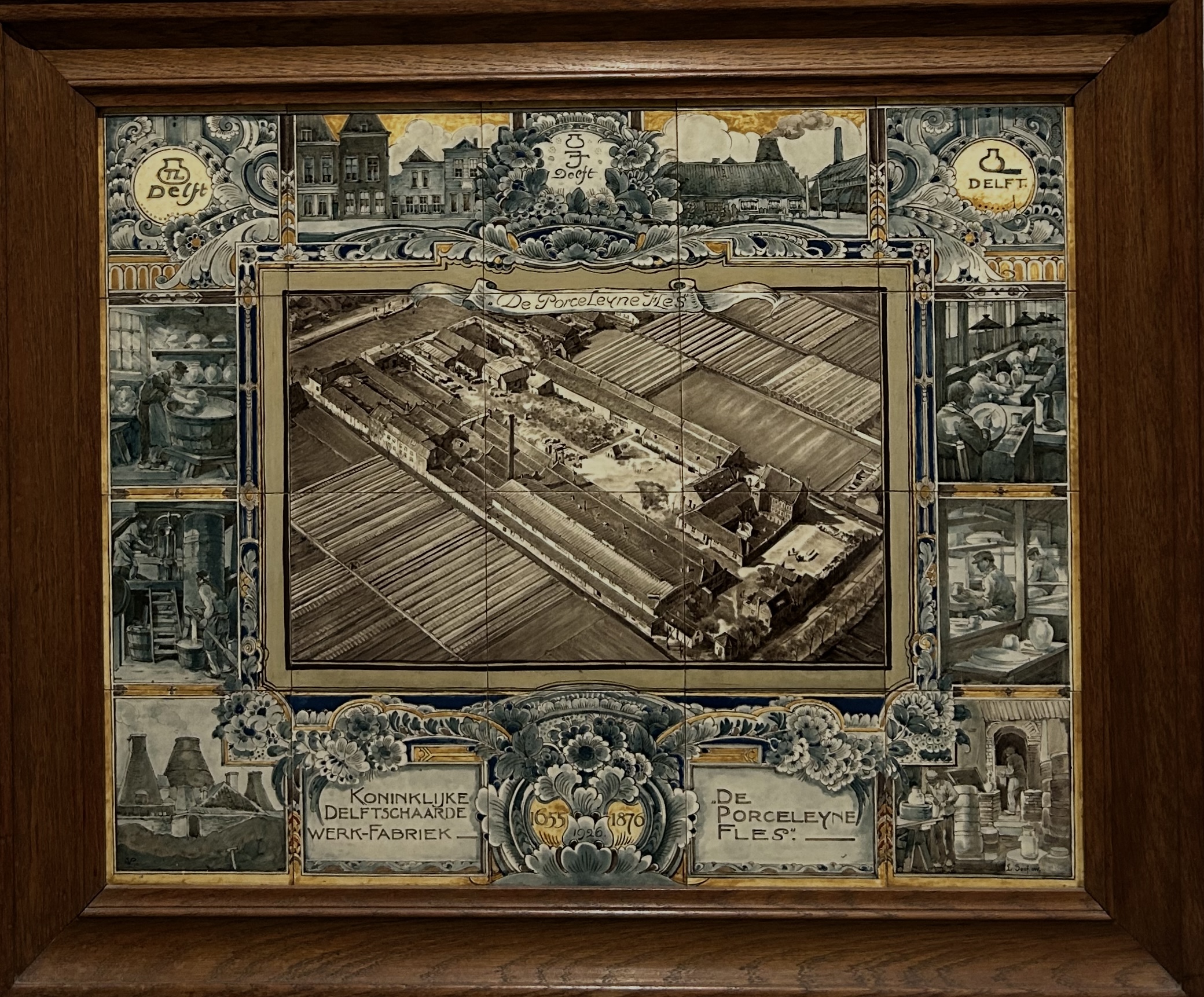
When De Porceleyne Fles opened its doors in 1653, it was just one of many hopeful ceramic factories popping up across Delft. But wars, changing tastes, and competition from cheaper English ceramics soon thinned and left the factories broke. One by one, these factories closed, all except De Porceleyne Fles, which somehow managed to keep its head above water, even when bankruptcy loomed.
The Revival: A Collector, a Businessman, and a Stroke of Genius
By the 19th century, De Porceleyne Fles needed a miracle. Enter Joost Thooft, a Delft pottery collector with passion and Abel Labouchere, a savvy businessman and art director with vision. Together, they revived the factory, blending traditional techniques with fresh designs.

Their efforts paid off handsomely, and in 1919, De Porceleyne Fles earned the prestigious “Royal” title, officially becoming Royal Delft and linking its destiny to the Dutch royal family, the House of Orange.
The Trademark
In 1697, Johannes Knotter introduced a bottle (fles is Dutch for bottle) as the brand’s first mark. Later, Joost Thooft added his own monogram “JT” and the word “Delft.”
Since 1879, every genuine Royal Delft piece proudly bears a combination of symbols:
– The iconic bottle
– Joost Thooft’s initials (JT)
– The word “Delft”
– The painter’s initials
– The year of manufacture

You can view the complete lists of painter initials and year codes here:
Royal Delft Painter Initials
Royal Delft Year Codes
Four Centuries of Craft and Creativity
Over its 400-year history, Royal Delft’s artistry has evolved from everyday tableware to grand architectural ceramics. They have experimented with “Black Delft,” recreated famous Dutch masterpieces on tiles, and produced icons like the Tulip Tower Vase (a la Chinese pagodas) and the Tear Bottle, said to hold a sailor’s family’s tears so he would never forget home.

The Proud Mary series is another standout. Named after Mary II, the wife of Stadtholder William III, who was herself a Delftware enthusiast. Unsurprisingly, Vermeer’s soft light and calm scenes can be seen on the ceramics.
Working with the studio behind the Dutch Grand Prix trophy, Royal Delft helped redesign the 1939 winner’s cup. Fans booed, calling it too plain and considering it chipped and broke, they might have had a point!
Commemorations and Celebrations
Royal Delft produces commemorative plates for royal births, weddings, and major world events. In 2003, the company celebrated its 350th anniversary. Fifteen years later, for its 365th, it created a unique tile collage painted by 365 visitors, ex-employees, and friends, a mural of memories that still hangs proudly at the factory. (And yes, I found the India tile too!)

What’s in a Name?
Delft Blue, Delftware, Royal Delft. Call it what you will, it’s all about that irresistible blue. The secret lies in cobalt oxide, which fires into the vivid hue we now simply call “Delft Blue.” (Designers, take note – the hex code is worth having in your palette!)
Where to See Delft Blue
If you are in Delft, its got to be the Royal Delft Museum; a delightful stop – intimate, informative, and wonderfully blue 😉 You can also learn more at the Museum Prinsenhof in Delft.
Can’t make it there? Don’t worry. Delftware shines in other museums too:
Rijksmuseum, Amsterdam; home to one of the most important collections of Dutch Delftware.
Kunstmuseum, The Hague; featuring over 235 pieces tracing Delft’s rich history.
 Kirana Bhat
The title got me hooked. Had to read, which, as usual is exciting! Had no idea that the Dutch experimented, rather sucessfuly what I thought was a Chinese thing till today!
LikeLiked by 1 person
Glad you liked it 🙂
The right compostion of clay, techniques of firing, getting the glaze, etc were challenges. that they had to overcome.
LikeLike