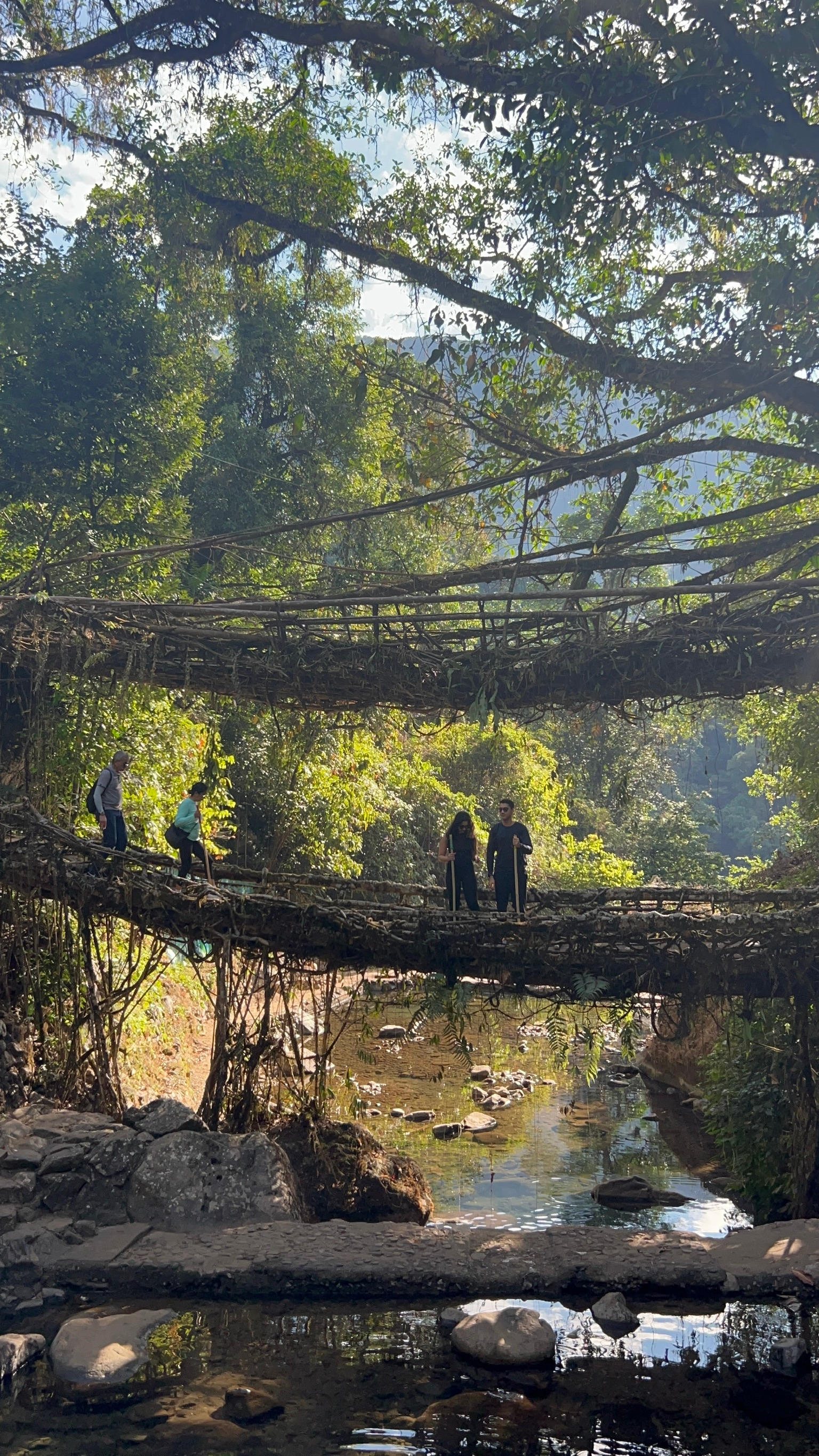
Root bridges – Jingkieng Jri in local Khasi parlance – are the Khasi and Jaintia tribes’ ingenious way of crossing rivers, long before concrete, steel, or modern engineering arrived in these hills. Made from the aerial roots of rubber fig trees indigenous to Meghalaya, these bridges are quite literally grown, not built. Young roots are patiently trained and “bonsai-ed” over decades until they are strong enough to bear human weight. It takes nearly 20–25 years for a bridge to become safe to use. Today, there are over 240 living root bridges in Meghalaya. With the rise of tourism in this northeastern state, visiting one has become a must-do. The most famous of them all is the Double Living Root Bridge on the Umshiang River in the tiny village of Nongriat, near Sohra (Cherrapunji).
The Journey Begins: Sohra to Tyrna
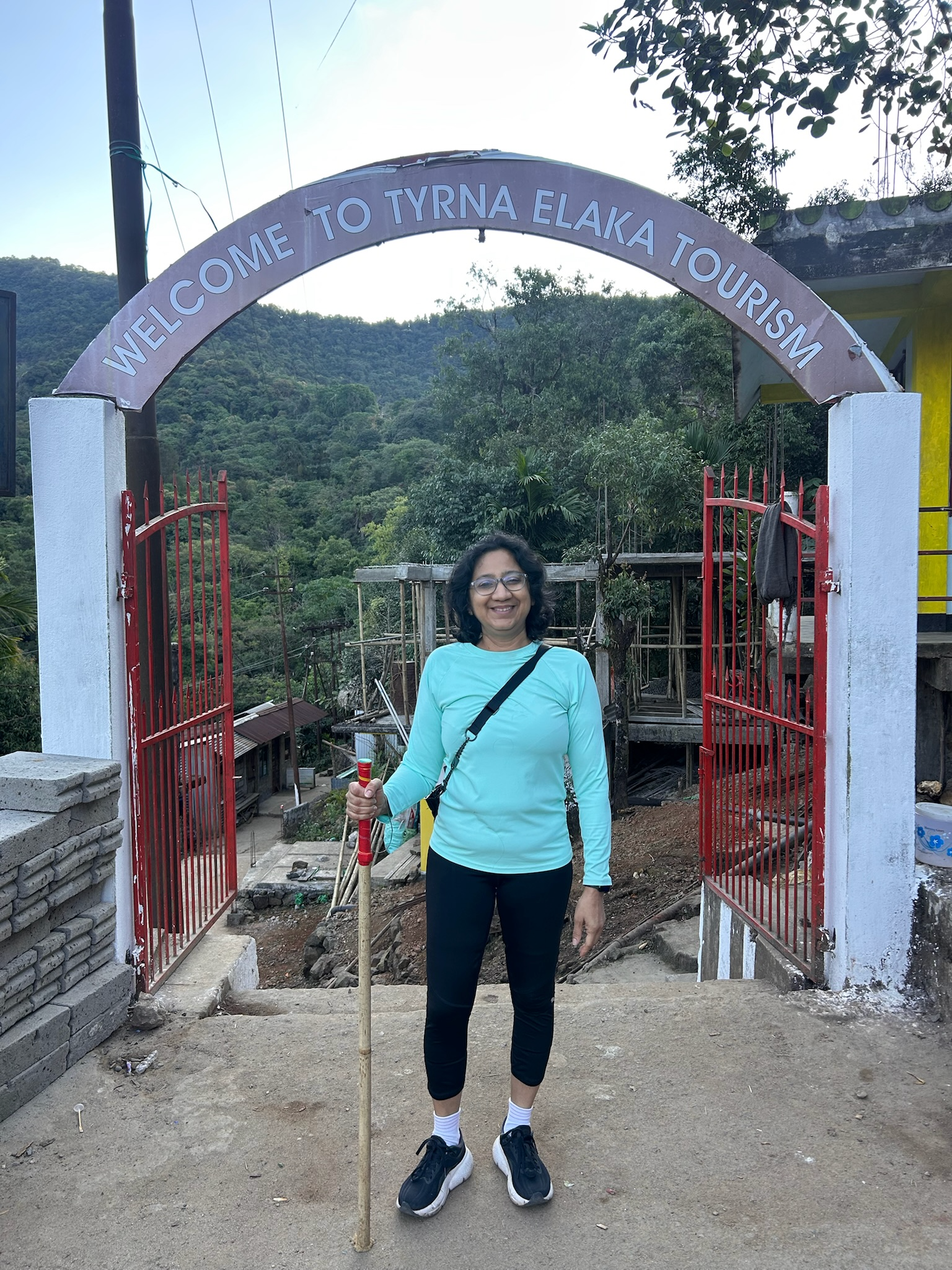
We started early from Sohra, driving along winding roads that dipped down the hill face and climbed back up to Tyrna, the starting point of the trek. At Tyrna, we hired bamboo walking sticks; trust me, they help. These must be returned at the end of the hike, but they are worth every step you take with them.
Do Not Count the Steps
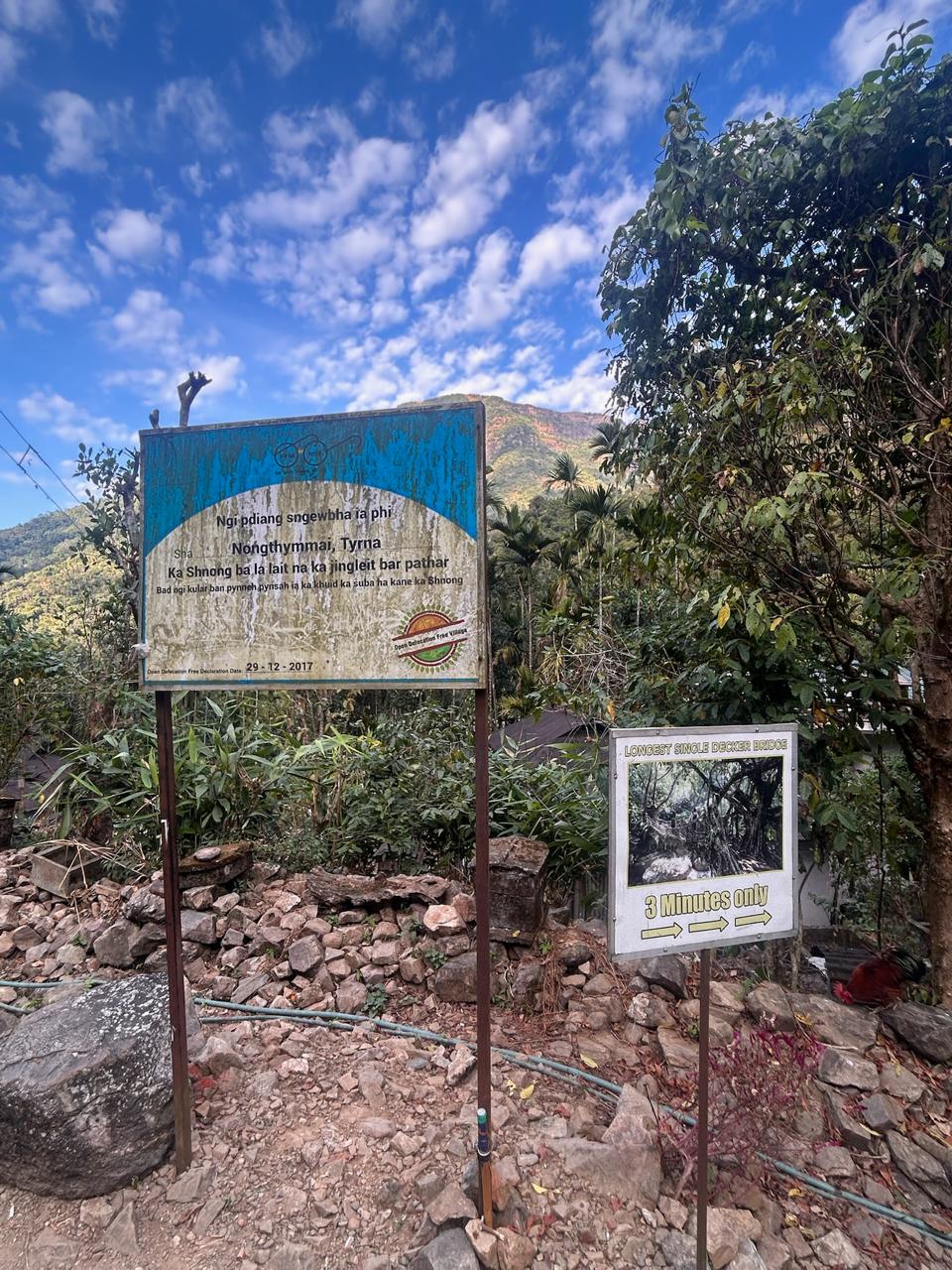
No one really knows the exact number of steps. What I can tell you is this: there are plenty of them! The descent takes about one to one and a half hours, depending on your pace, until you reach the village of Nongthymmai. This is a good spot for your first break.
From here, you can choose to stop, visit the longest single root bridge, and head back up if you wish.
The Final Descent to Nongriat
If you continue, the next 45 minutes to an hour are marginally easier. The steps are wider, fewer, and slightly less punishing.
Along the way, we passed:
A sacred grove (no entry allowed)
A short walk across the riverbed (the metal bridge here was under repair) and a rustic, slightly nerve-wracking bamboo ladder later, we reached Nongriat.
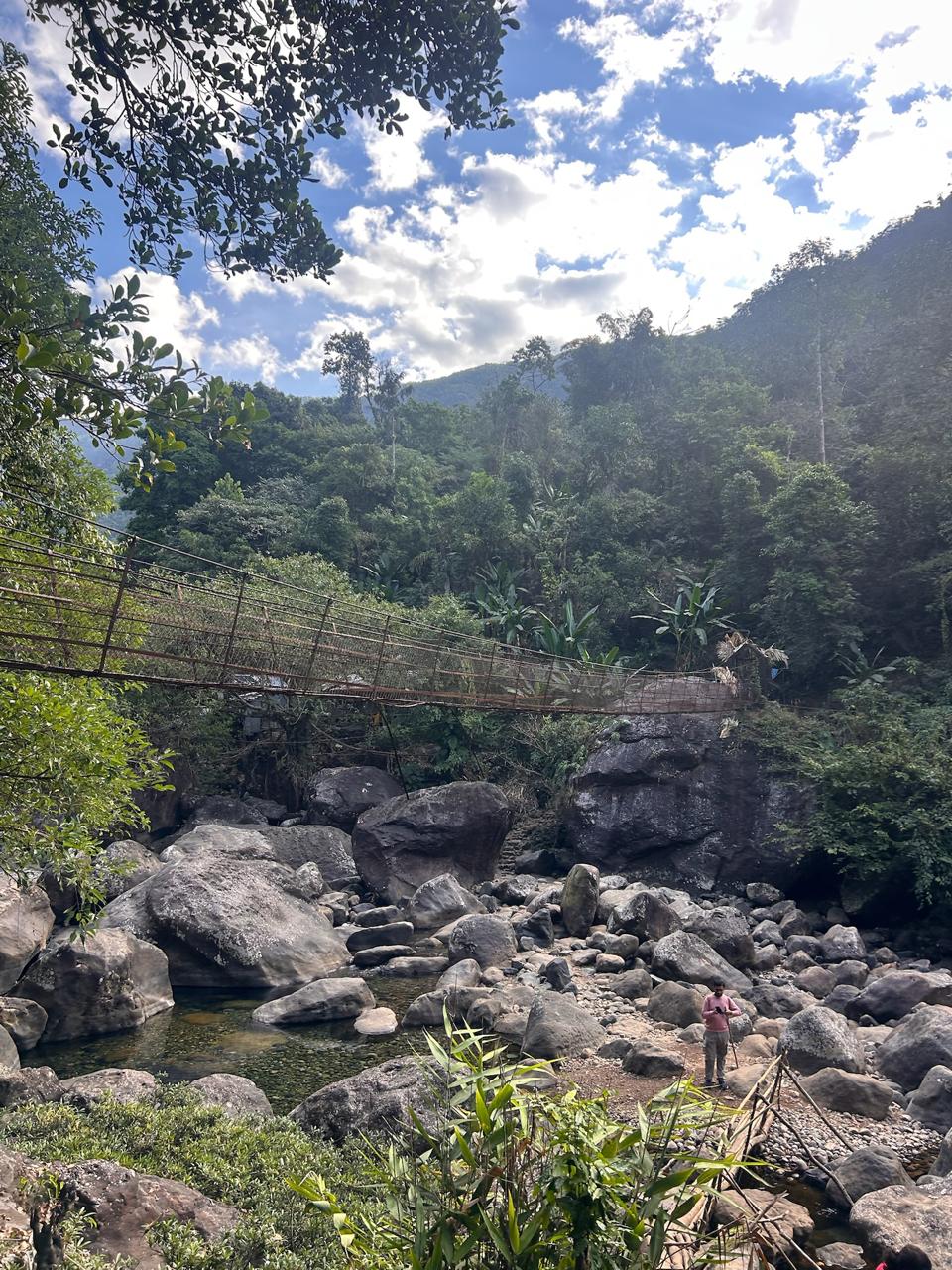
Nongriat: At the Heart of It All
Nongriat is a tiny village with just a handful of houses. Homestays are available, and some choose to stay overnight. Personally, I would advise against it unless you are prepared for extremely basic conditions. If you have the stamina, hike back up, it’s worth the comfort later.
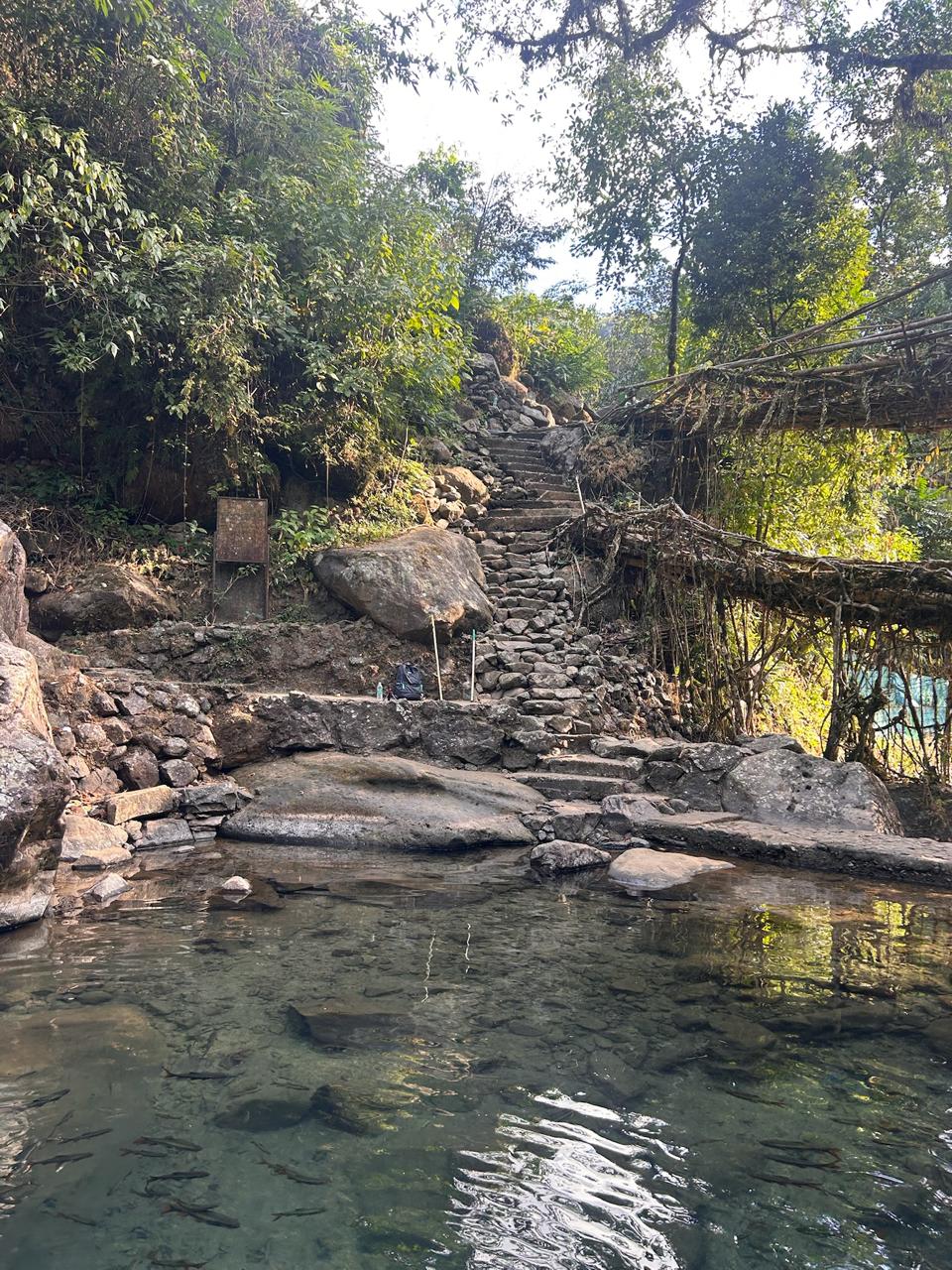
The Double Living Root Bridge
The double root bridge stands stoic and dignified, having borne the weight of hundreds of thousands of footsteps over centuries. According to our guide, the bridge is about 400 years old, and it’s easy to believe. Why two bridges? During one monsoon, the Umshiang river rose high enough to touch the lower bridge, so a second one was grown above it. We reached early and took a long break here – cooling our feet in the crystal-clear pool while tiny fish nibbled at our toes (free fish-spa day!). After tea, omelettes, and plates of Maggi, we continued onward.
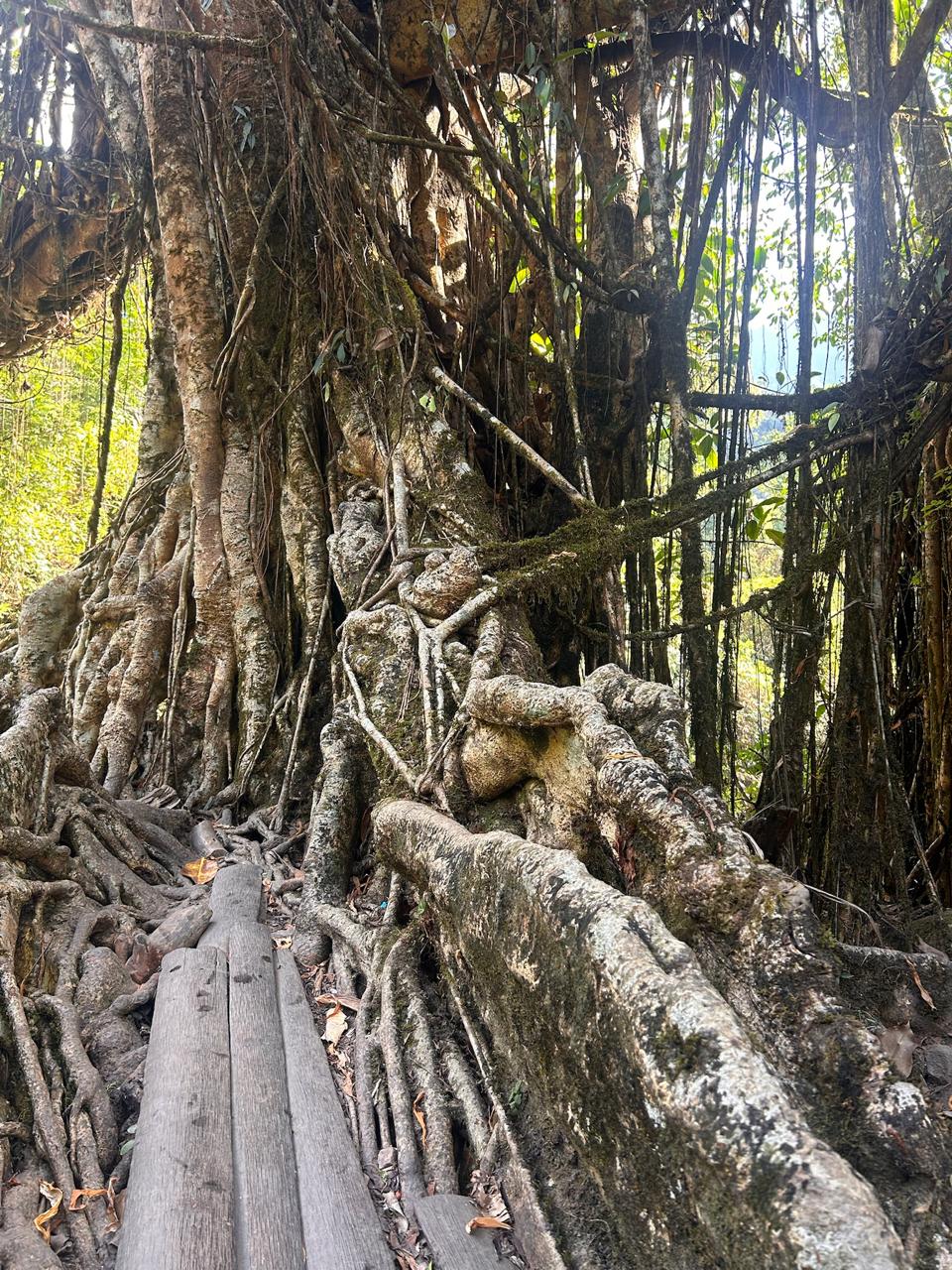
The Blue Lagoon: A Rewarding Detour
If you have made it this far, the hike to the Blue Lagoon feels almost effortless, though yes, there are still steps, loads of them! The water here is unbelievably clear and icy blue. We instantly regretted not carrying swimwear. This is where I decided to stop, while my family pushed on toward Rainbow Falls.
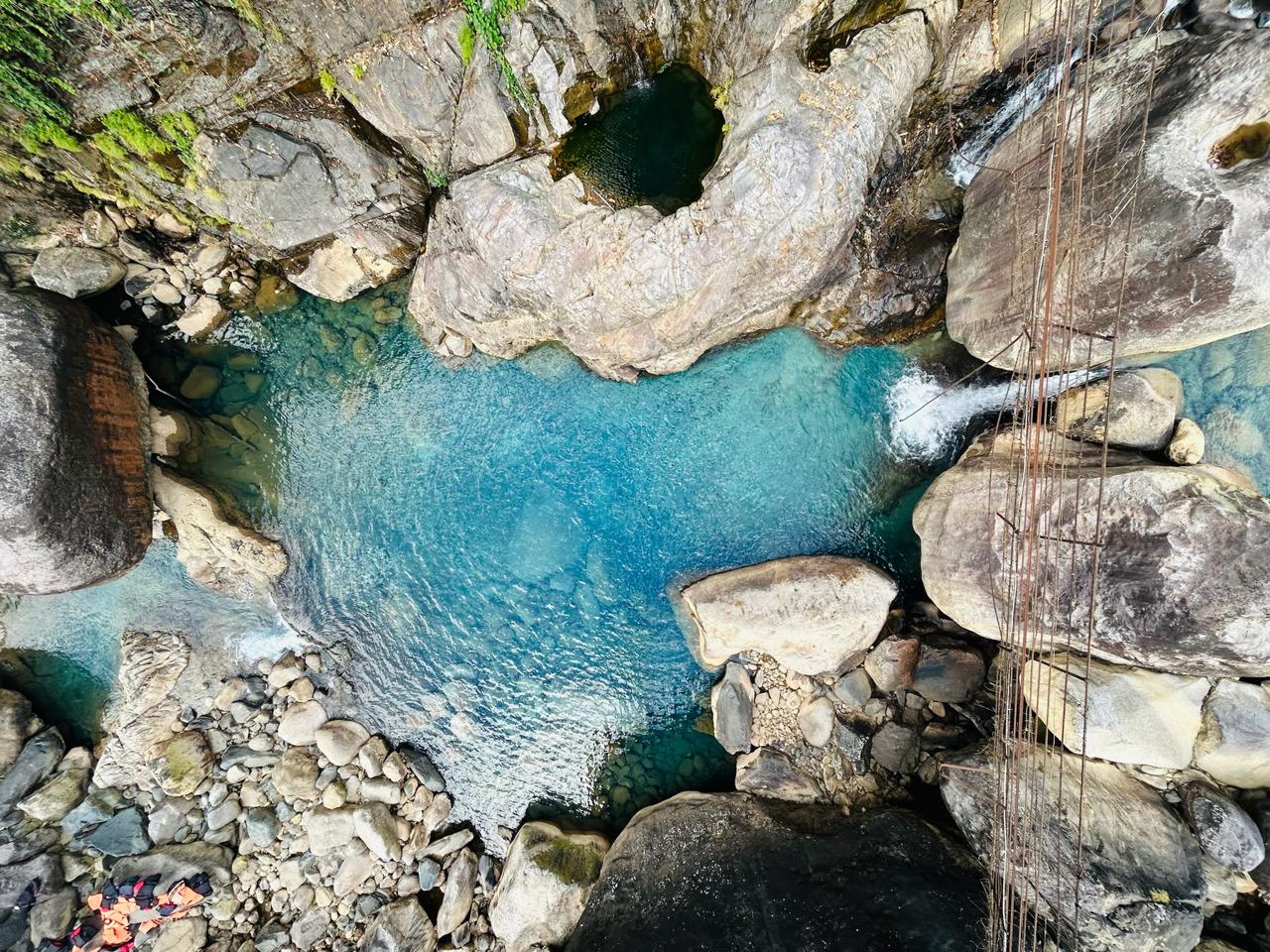
Rainbow Falls: The Final Push
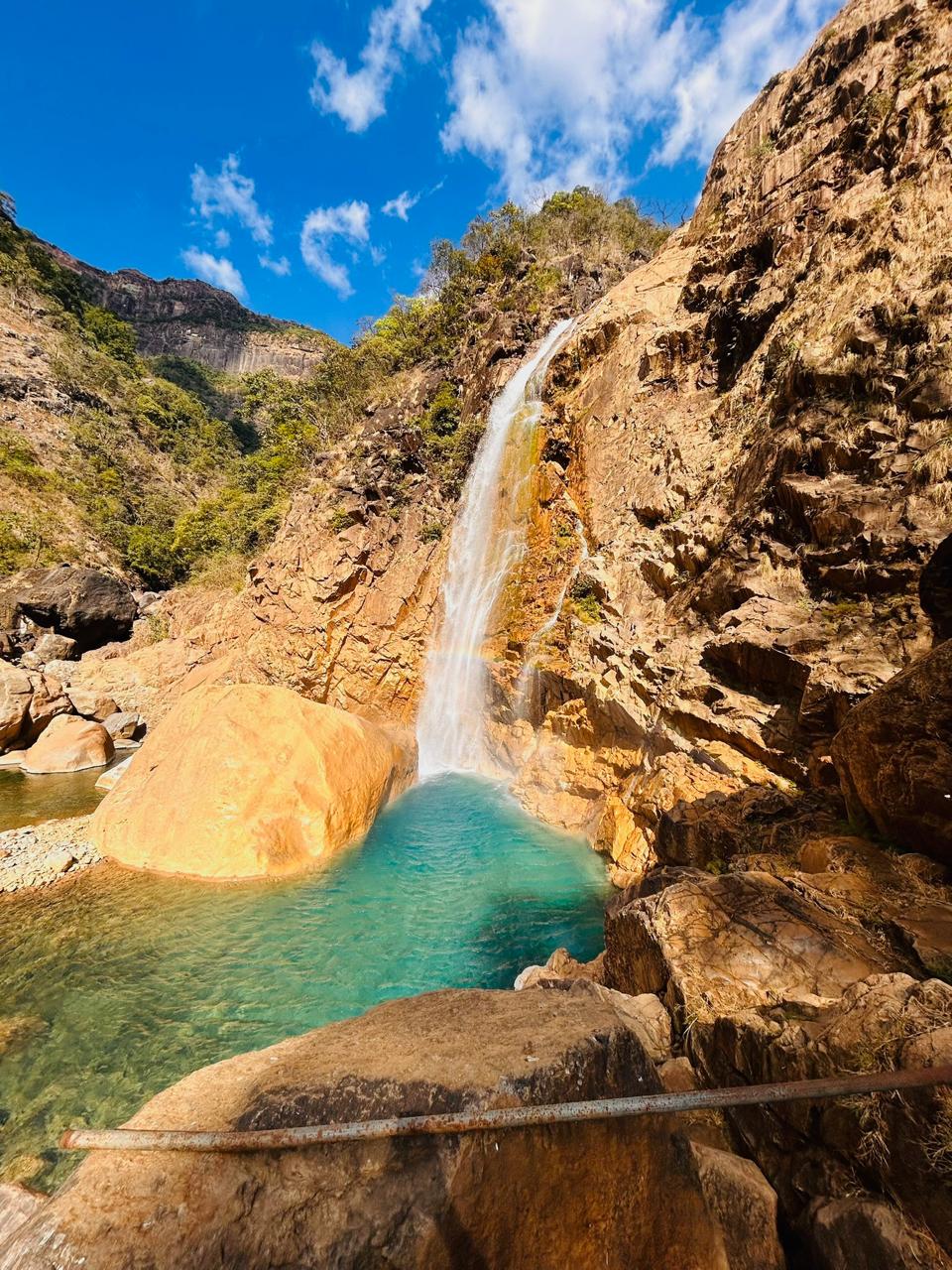
The trail to Rainbow Falls involves steep steps and sapped whatever energy remained. Exhausting? Absolutely. Worth it? Completely!
Named for the rainbows that appear when sunlight hits the cascading water, sometimes even double rainbows, the falls were magical. My family was lucky to have the place to themselves for a few precious minutes before other hikers arrived.
Seven and a Half Hours Later…
Seven and a half hours after we began, we were back in the car, heading toward Sohra. We were sore, drained, and utterly exhausted. But not for a moment did we regret doing this hike.
Why So Many Steps?
So that you and I can visit.
The local tribespeople easily scramble across hills and rocks with astonishing ease. Children from these villages walk up and down daily to attend school in Sohra, about 20–25 minutes uphill, followed by a bus ride!
Practical Tips for the Root Bridge Hike
1. Go with a Guide
A guide will point out things you might miss, help in emergencies, translate if needed, and take excellent photographs. (Ask me if you want a reference to an outstanding, extremely eco-friendly/conscious guide.)
2. Start Early
Fewer crowds, cooler temperatures, and enough daylight to finish safely. Remember – this is the Northeast, and it gets dark by 5 pm. There are no lights on the trail.
3. Base Yourself Smartly
Stay in Sohra for a shorter drive to Tyrna, or choose homestays closer to Tyrna itself.
4. Food & Water
Small shops dot the trail, selling water, tea, Maggi, pineapple, biscuits, omelettes, and boiled eggs (not all in one place).
5. Payment Modes
Cash or UPI works, but…
6. Carry Cash
Mobile connectivity is patchy to non-existent along most of the route, making UPI payments not always possible.
7. Be Responsible
Trash bins are placed along the path. Please use them.
8. Do This Hike Early in Your Trip
Your body will need recovery time. Leaving this hike for the end of your Meghalaya trip is, in my opinion, a bad idea.
9. Avoid a Day Trip from Shillong
Shillong is far. Doing this in a single day from there is extremely exhausting and leaves no energy or time for recovery.
10. Lastly, but most importantly, this hike requires a certain amount of physical fitness that is above just being able to walk because the round trip is about 14km with an elevation gain of 1000m!
If there’s one hike that defines Meghalaya, this is it. Hard, humbling, and unforgettable. Perspective helps.
The fabulous and crisp Meghalaya Tourism Website lists all the living root bridges you can visit.

