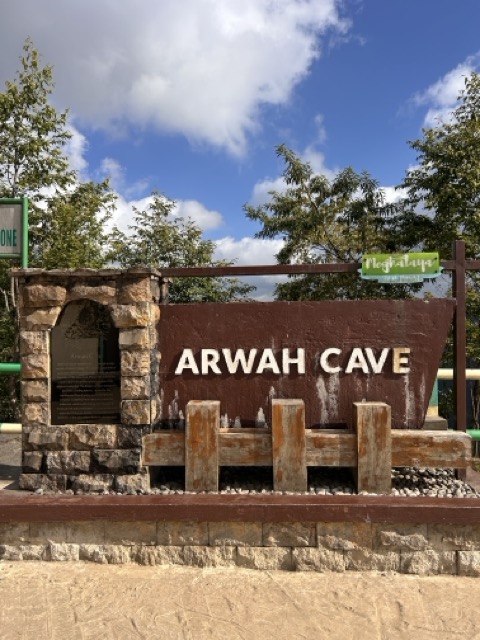
After a good night’s rest (much deserved after the tough but immensely rewarding hike to the Double Decker Root Bridge we checked out of our hotel in Sohra and set off for the Arwah Caves. Located just outside Sohra, they are a quick ten-minute drive along the highway towards Shillong.
Leaving Sohra Behind
The road meanders along the escarpment, opening up dramatic views of plateau edges dropping away into distant hills, arranged almost like alternating layers of scenery. Waterfalls cascade down canyon-like cliff faces, adding sparkle to the deep green of the Lawshynna Forest. Hidden within this forest are the Arwah Caves, locally known as Krem Lumshynna, which, when translated rather literally, becomes Cave Lumshynna, or, as we know it, the Arwah Caves.
First Impressions
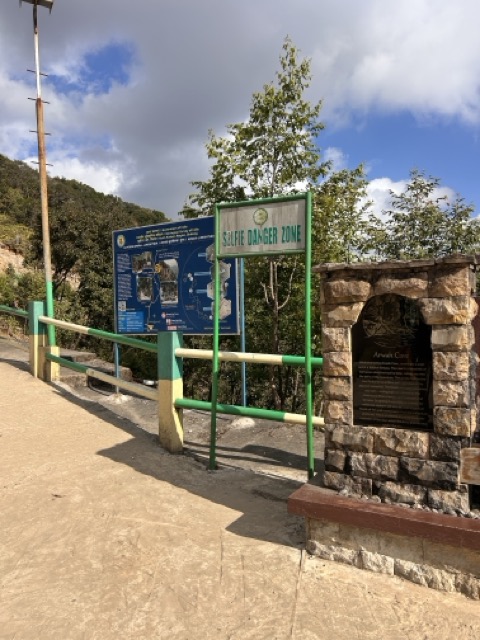
A humble gate and a short 100-metre drive along an unpaved road lead to a small parking lot with a few shops and a large board warning visitors of “Selfie Danger Zone” placed thoughtfully next to a neatly laid-out map of the caves. Buy your ticket, ask for a guide, and you are already making excellent life choices.
Meghalaya, rich in limestone, is home to numerous (200+) caves, many still undiscovered. Cave exploration in India itself is still in its infancy. The state boasts India’s longest cave, Krem Liat Pah (the Cave of the Tiger), along with several other extensive and fascinating cave systems adorned with stalactites and stalagmites. Arwah Caves are among the more recent caves to be opened to the public and are relatively short in length compared to others.
Why choose Arwah?
Despite its accessible stretch being no more than 500 metres, the cave is geologically unusual. It has a limestone roof and a sandstone floor, a rare combination since most caves are entirely limestone. Add to this a remarkable collection of fossils, and it becomes clear why Arwah stood out. Having already visited India’s second-largest cave (Belum) and encountered plenty of stalactites and stalagmites elsewhere on trips around the world (think Batu Caves, Malaysia; Petrolana Caves, Greece), we were keen to experience something different.
Walking the Cave with a Guide and a Torch
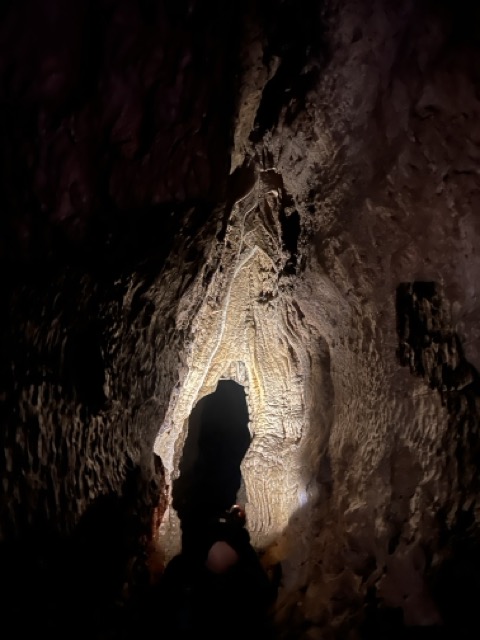
Much like Belum, Arwah has a large entrance, and that’s where the similarity ends. The lighting inside is minimal to non-existent, making a guide not just helpful but essential. (Honestly, we preferred this to the garish illumination in Belum!) You can hire a guide at the ticket counter (or ask me for a reference; ours accompanied us to Nongriat as well and was excellent). A torch is also strongly recommended; your phone flashlight will put up a brave fight, but ultimately lose. With our guide’s help, we explored deeper sections of the cave beyond barricaded areas; something I would strongly advise against attempting on your own.
Fossils, Formations and Flowing Water
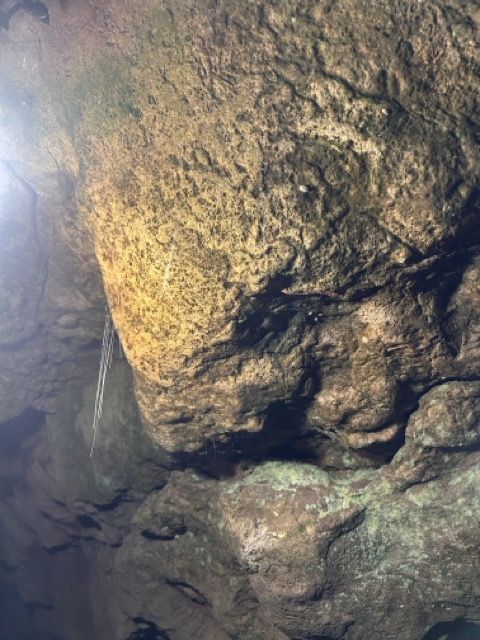
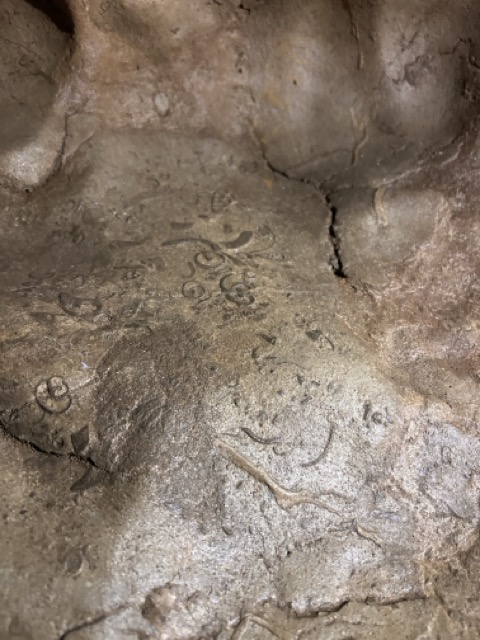
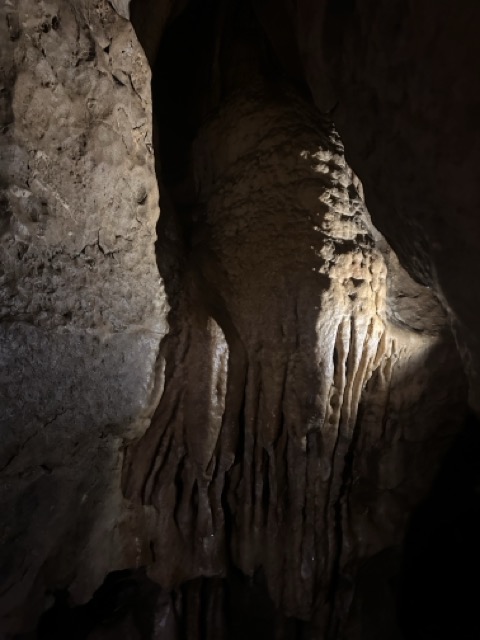
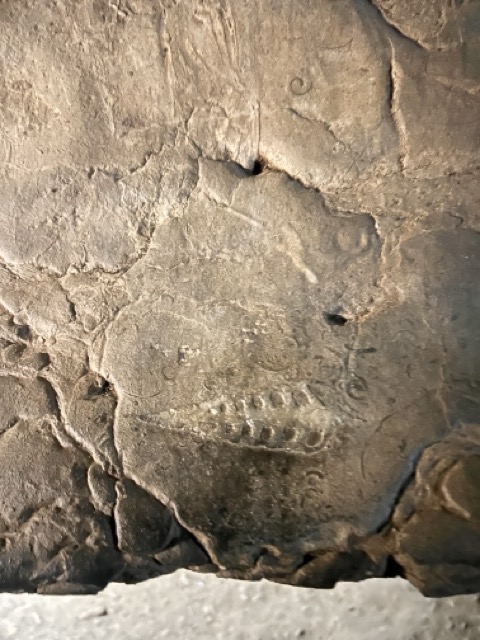
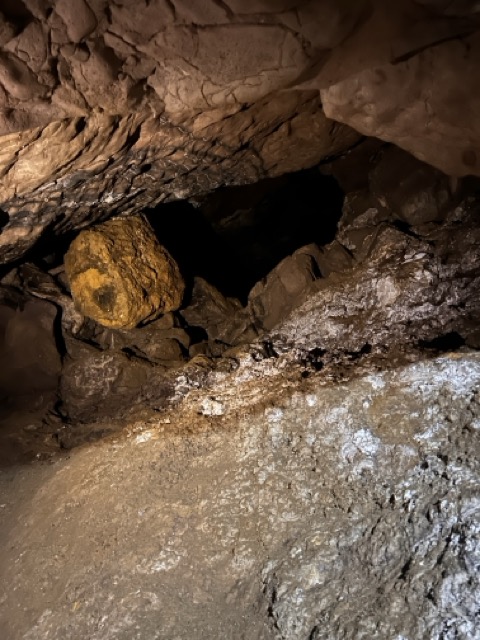
We walked deep into the belly of the cave through extremely low and narrow passages. Our guide pointed out fossils embedded in the roof and walls, mostly crustaceans and other ancient creatures, arranged in patterns some of which resembled intricate rangoli. Stalactites took on imaginative forms: one looked like an elephant’s trunk meeting Lord Shiva’s matted hair. A gurgling stream accompanied us throughout, its water appearing milky white in places due to high lime content.
Stillness Above Ground – Waterfalls, Wind, Wide Views
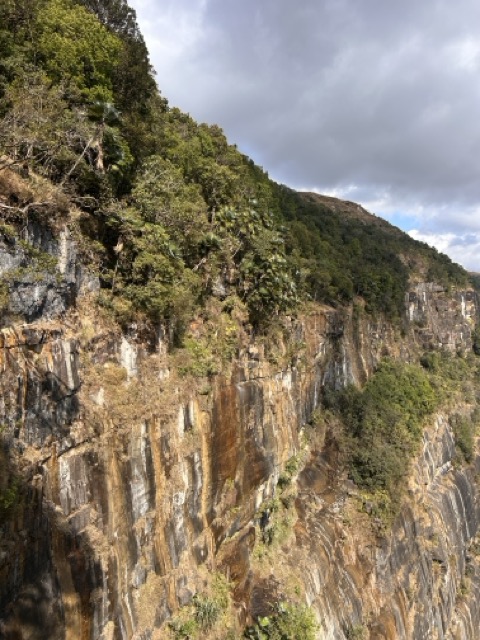
The exterior of the cave is no less dramatic. Almost straight canyon walls send waterfalls tumbling down in multiple places, their bottoms seemingly unreachable. A cool breeze and the profound quiet elevate the experience to something almost meditative. The distant hills shift through shades of green and smoky blue. We spent several minutes at the viewpoint, simply letting the landscape wrap us in its calm.
Our guide spoke about Meghalaya’s pervasive quiet and peace, sharing how, as the eldest of nine siblings, his mother insists their home remain calm and orderly; no turning it into a chaotic, noisy madhouse, despite the odds. It felt fitting. On that note, we bid him farewell and continued on to Shillong, where other adventures awaited.
Lessons from the Land – Quiet Lives and Fragile Underground Worlds
Limestone mining, however, is big business in Meghalaya and a troubling one. It harms not only the environment but also the invaluable natural heritage and information stored in subterranean spaces. In the Jaintia Hills region, we saw several rat-hole limestone mines, illegal operations supporting Bangladesh’s cement industry. Balancing development and conservation is a delicate act, and the sooner this balance is achieved, the better it will be for the land and all who depend on it.
 Kirana Bhat