Meghalaya is one of the Seven Sisters of India’s North-Eastern states, its people predominantly tribal and its nature still largely untouched and unspoiled. Clans and tribal kings ruled this land until the British arrived, eyeing (quite literally) its rich limestone deposits. Suddenly, names like Ward’s Lake and David Scott’s Trail begin to make sense. Meghalaya was carved out of Assam and attained full statehood in 1972. Its name translates to “the abode of clouds”, that dreamy place we all long to visit, driven by curiosity and its unmatched natural beauty. Meghalaya, thankfully, does not disappoint.
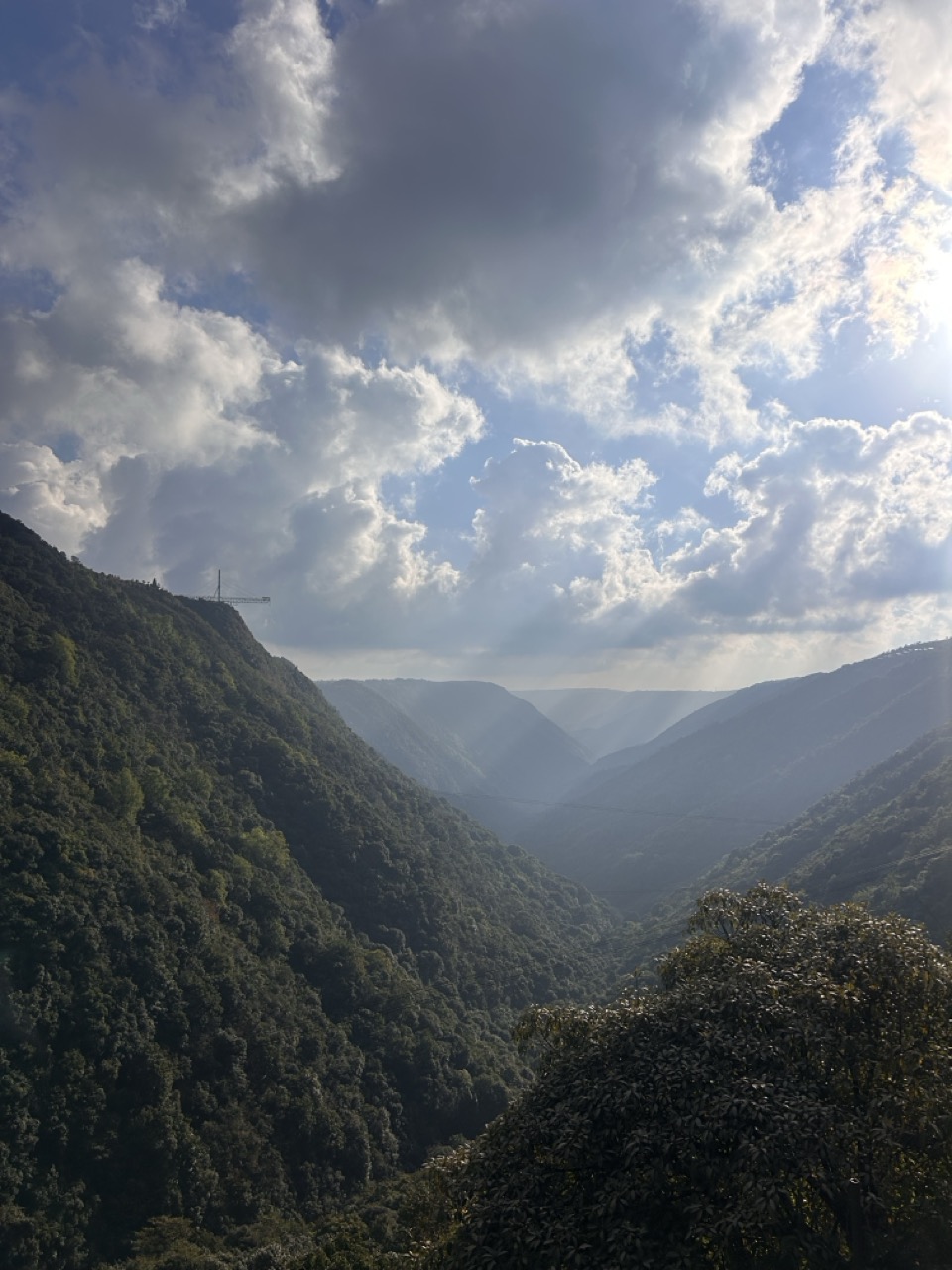
We spent a week here, and this is how we went about it.
We flew into Guwahati and drove straight to Sohra. We grew up knowing Sohra as Cherrapunji, the wettest place on earth (a title now claimed by nearby Mawsynram), but it has reclaimed its original name. Sohra is a quiet little town with spectacular sunsets, scattered monoliths, a memorial to David Scott (yes, the same one with the trail), and a viewpoint overlooking Bangladesh. An abandoned cement factory sits close to the city centre, a stark reminder of a different chapter in its history. Sohra was once the capital of the Khasi kingdom.
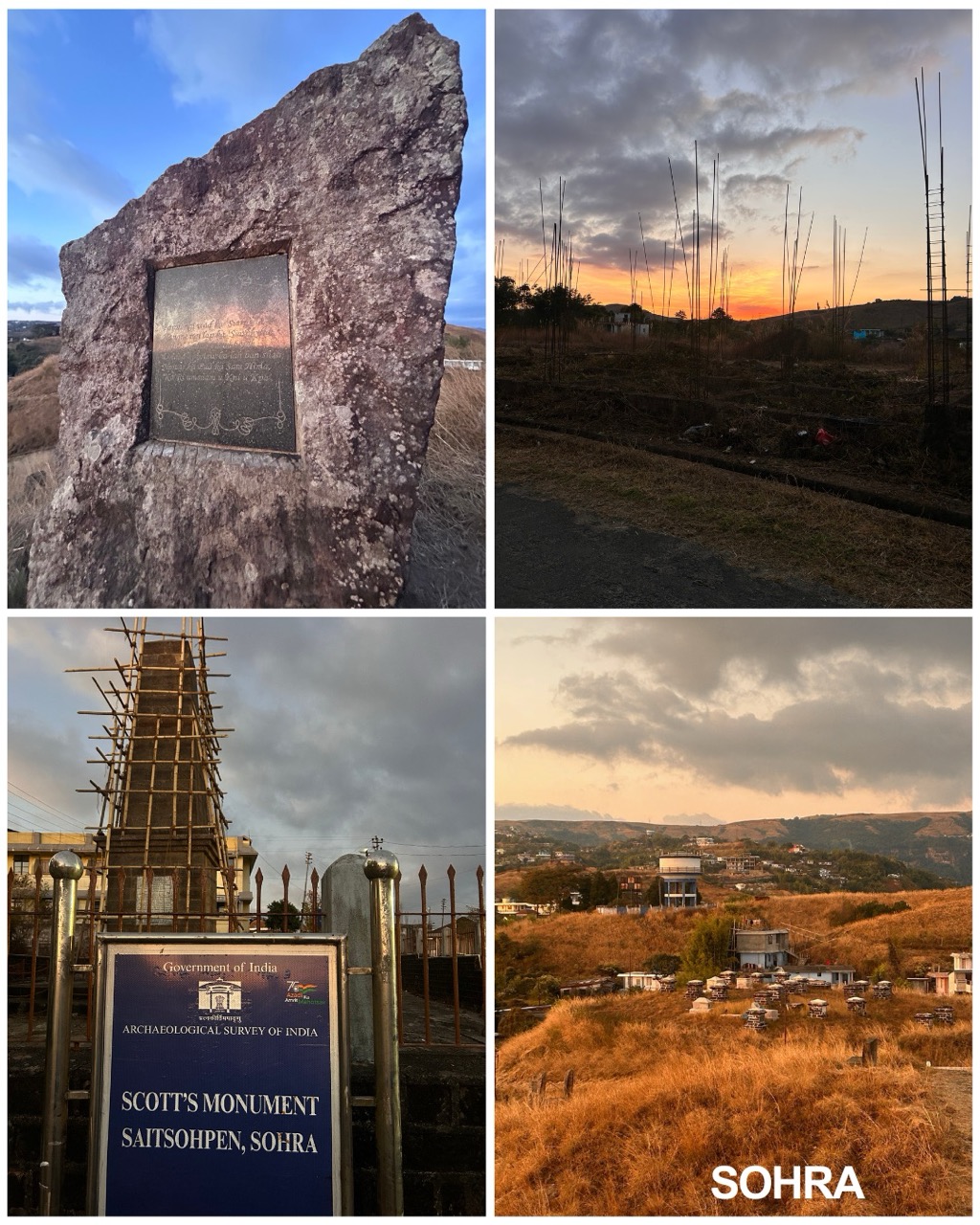
It was Christmas season, and one of the first things we experienced was rich, melodious gospel music drifting out of a church near our hotel in Sohra. If there’s a better way to be welcomed, I haven’t found it yet.
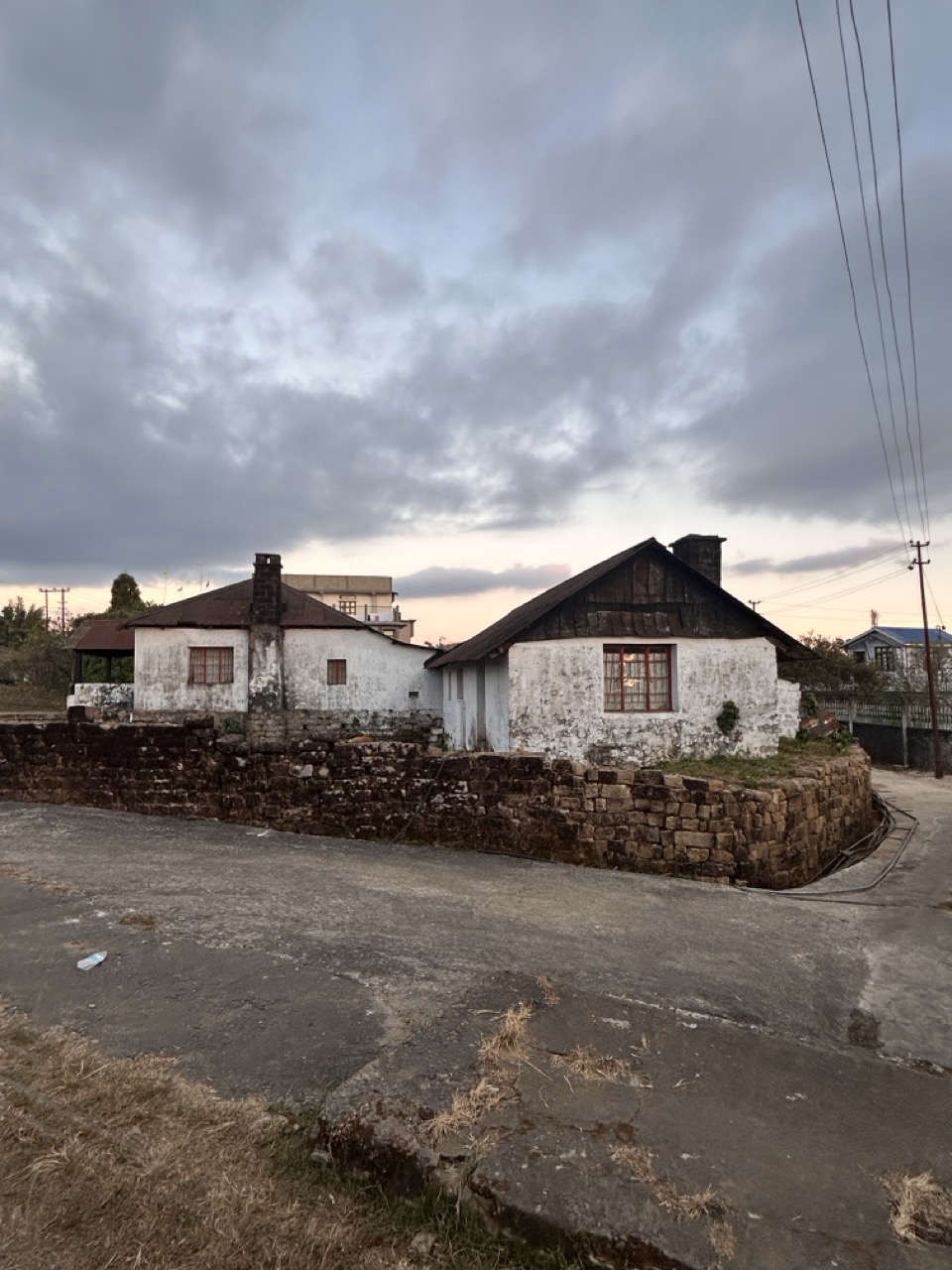
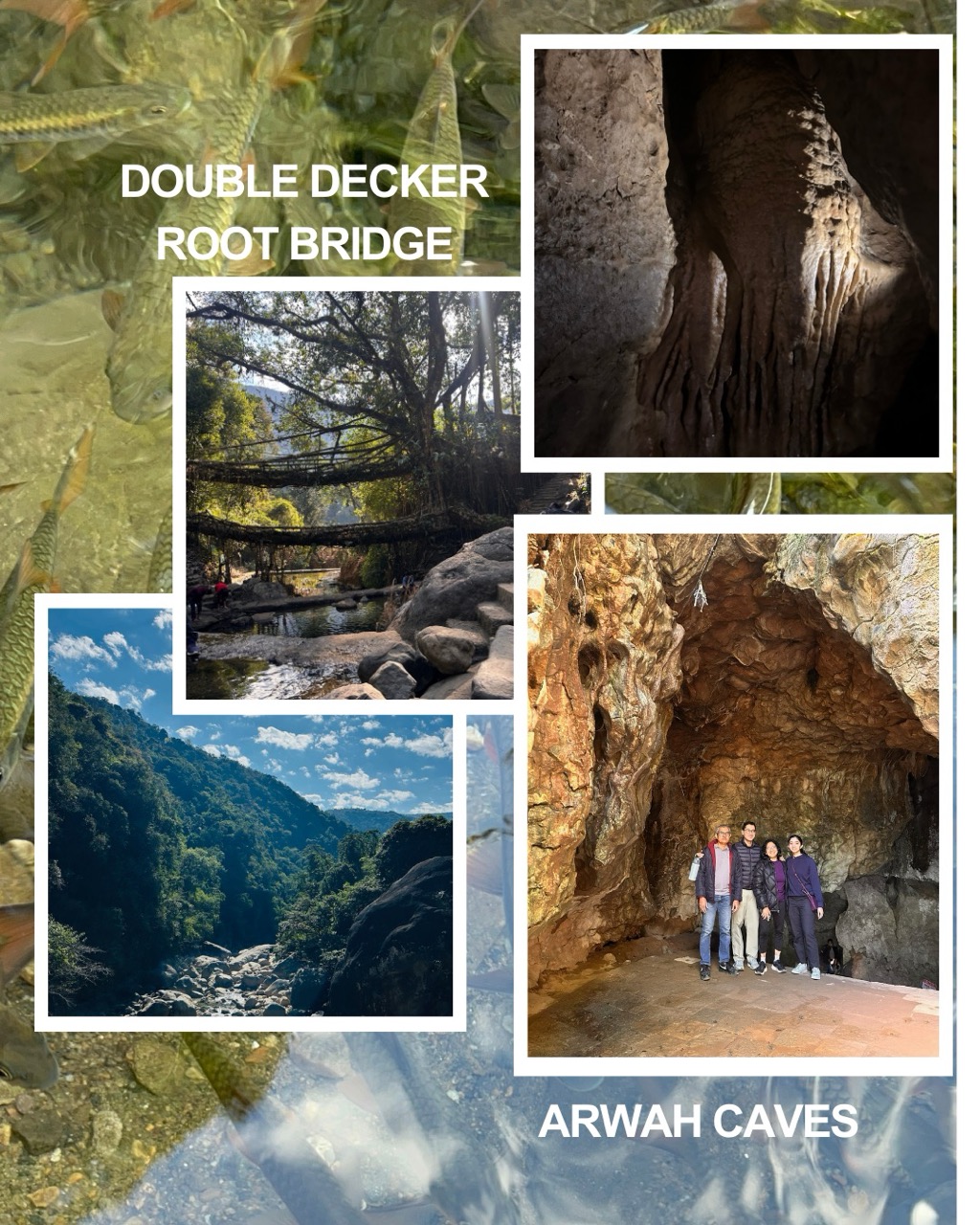
Our first outing from Sohra was to the Double Decker Root Bridge, followed the next day by a visit to the Arwah Caves. Sohra and its surroundings are home to over 200 caves (most still unexplored) and more than 240 living root bridges. It is an excellent base if you want to visit Nohkalikai Falls, Seven Sisters Falls (Nohsngithiang), Wei Sawdong Falls, Mawsmai Caves, or even the evocatively named Garden of Caves.
We next based ourselves in Shillong.
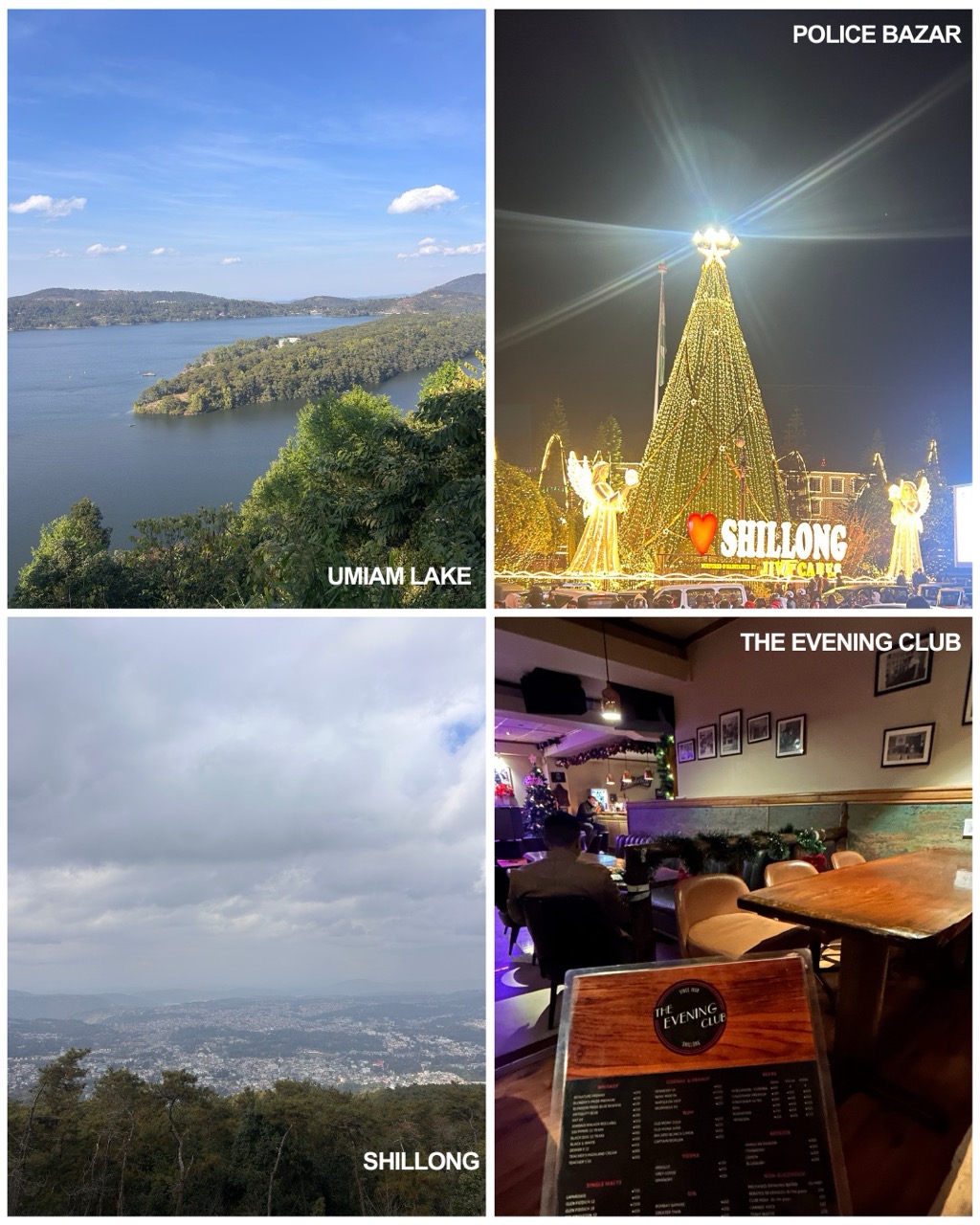
Shillong was once a Civil Station (an enclave for British civil servants) and continued to house government bodies for several North-Eastern states until fairly recently. Meghalaya, in general, and Shillong in particular, has a strong musical culture; so much so that artists like Ed Sheeran consider it a must-stop on their India tours. It was not surprising, then, to find Police Bazar lit up for Christmas, alive with live carol singing. It was a treat! That evening, we let ourselves be serenaded at the Evening Club, an institution run by its third-generation owners. With a wide range of music, it kept both us oldies and our adult children happily swaying to the music.
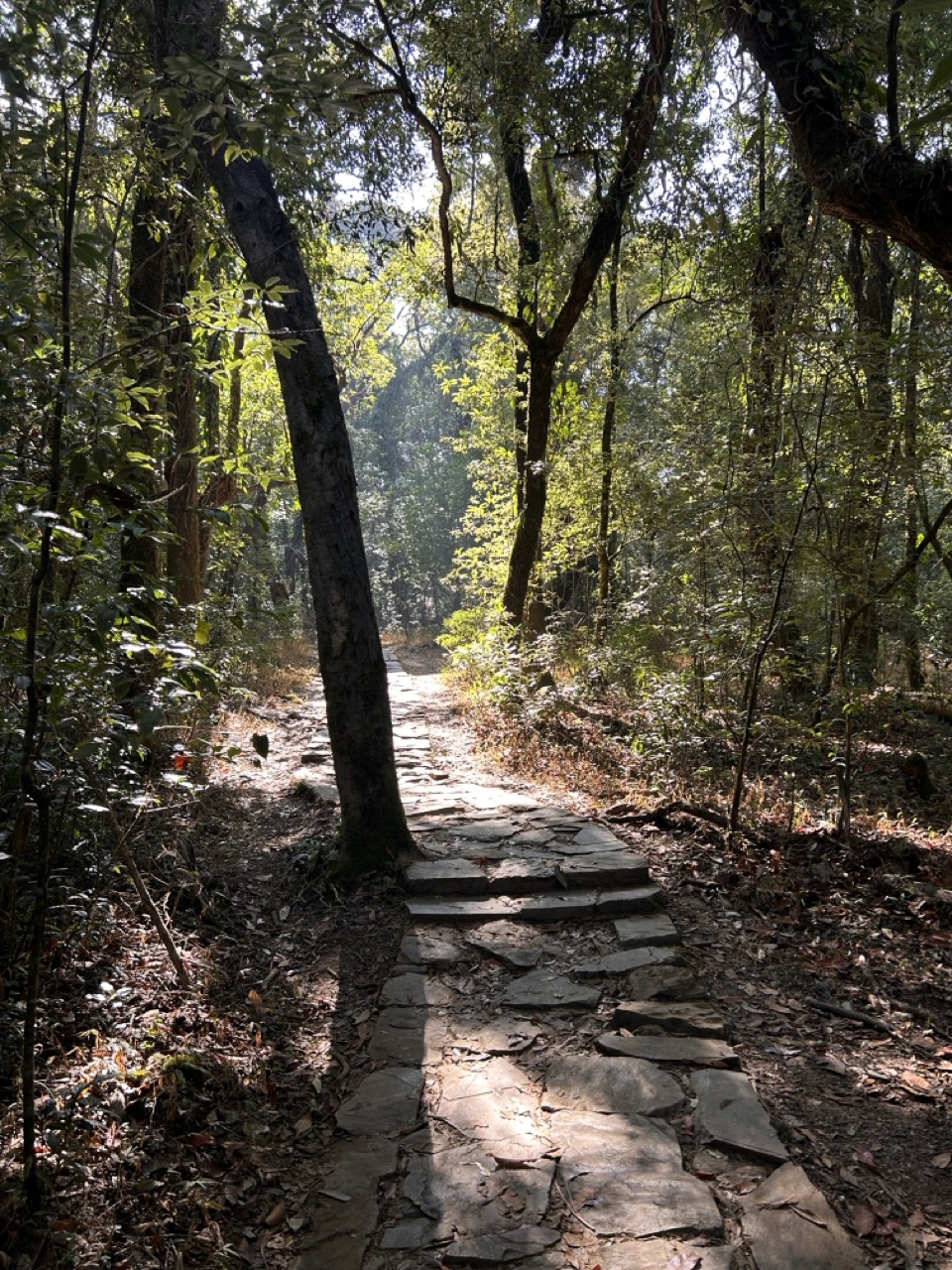
The following day, we visited the Mawphlang Sacred Forest, a fascinating lesson in indirect conservation. Myths, legends, and strict tribal laws have kept this nearly 200-acre forest intact for centuries. While the forest itself was magical, the Khasi Heritage Village across the road was, frankly, underwhelming. Traditional structures stood there with signboards, but no explanations, no context, no stories and locked up. A missed opportunity, sadly.
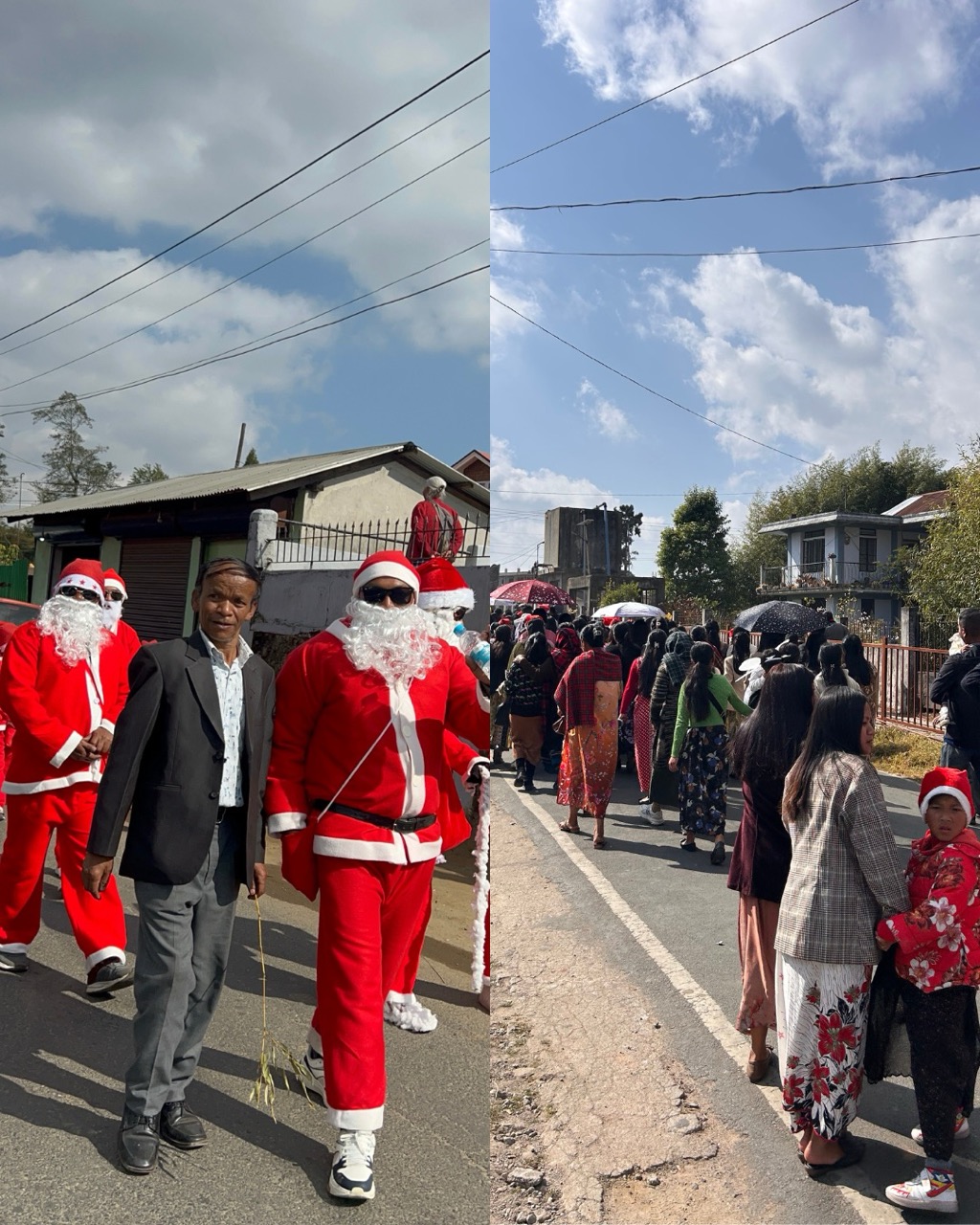
Being Christmas Eve, locals held parades through their villages. Santa Clauses, children dressed as Joseph, Mary, and Jesus, nativity cribs, and loudspeakers enthusiastically belting out carols. Festive, loud, and utterly charming.
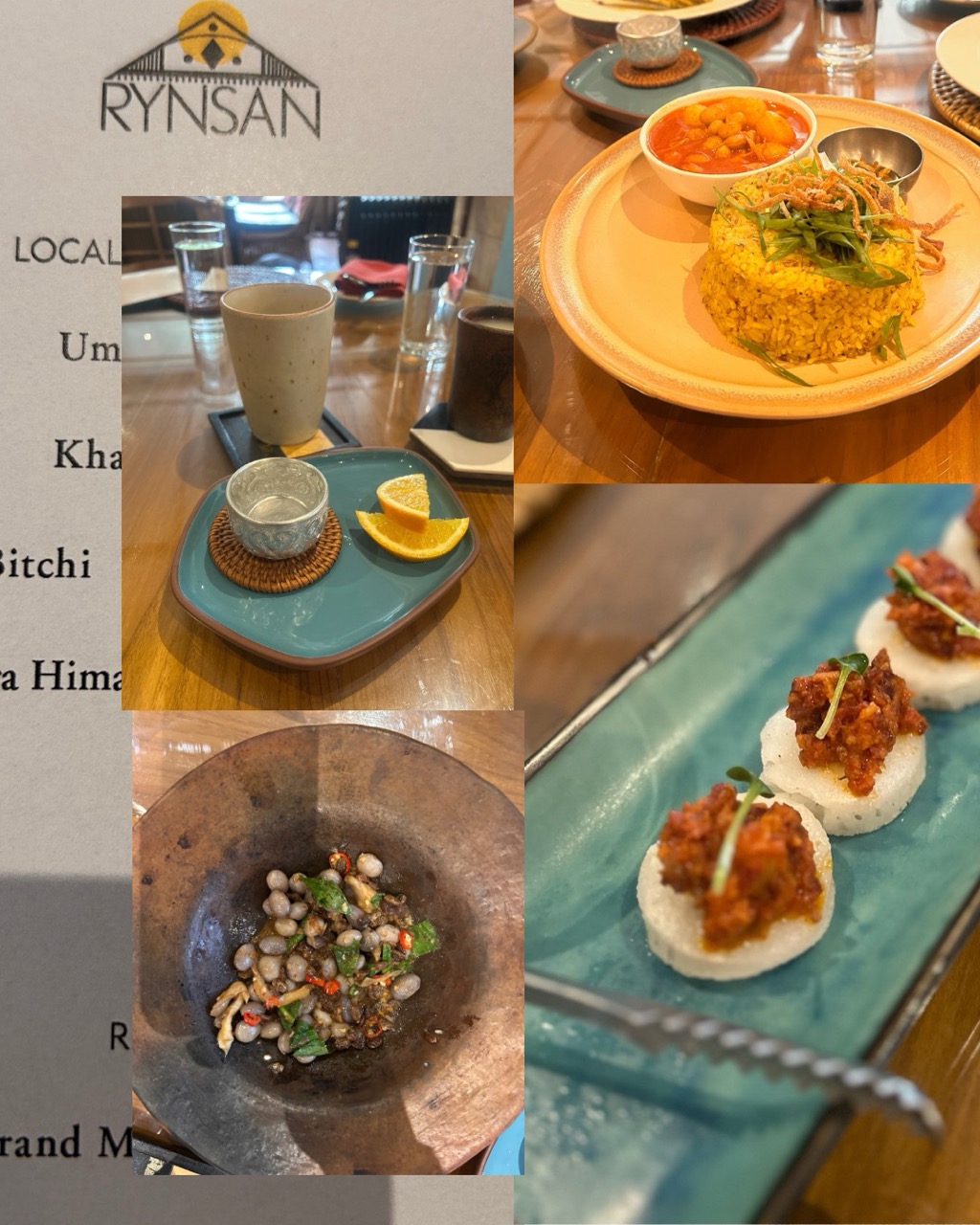
We lunched at Rynsan Restaurant. This cozy, thoughtfully curated space gives local food a gourmet twist and serves local beer and wine. Book a table, trust me, disappointment is not on the menu.
The next day began at an unearthly hour as we dragged ourselves out of bed to drive two hours to Nongjrong, a famed sunrise point. We drove in pitch darkness, with as many cars ahead of us as behind, seeing absolutely nothing except the occasional roadside Christmas revelry that clearly had not received the memo about bedtime.
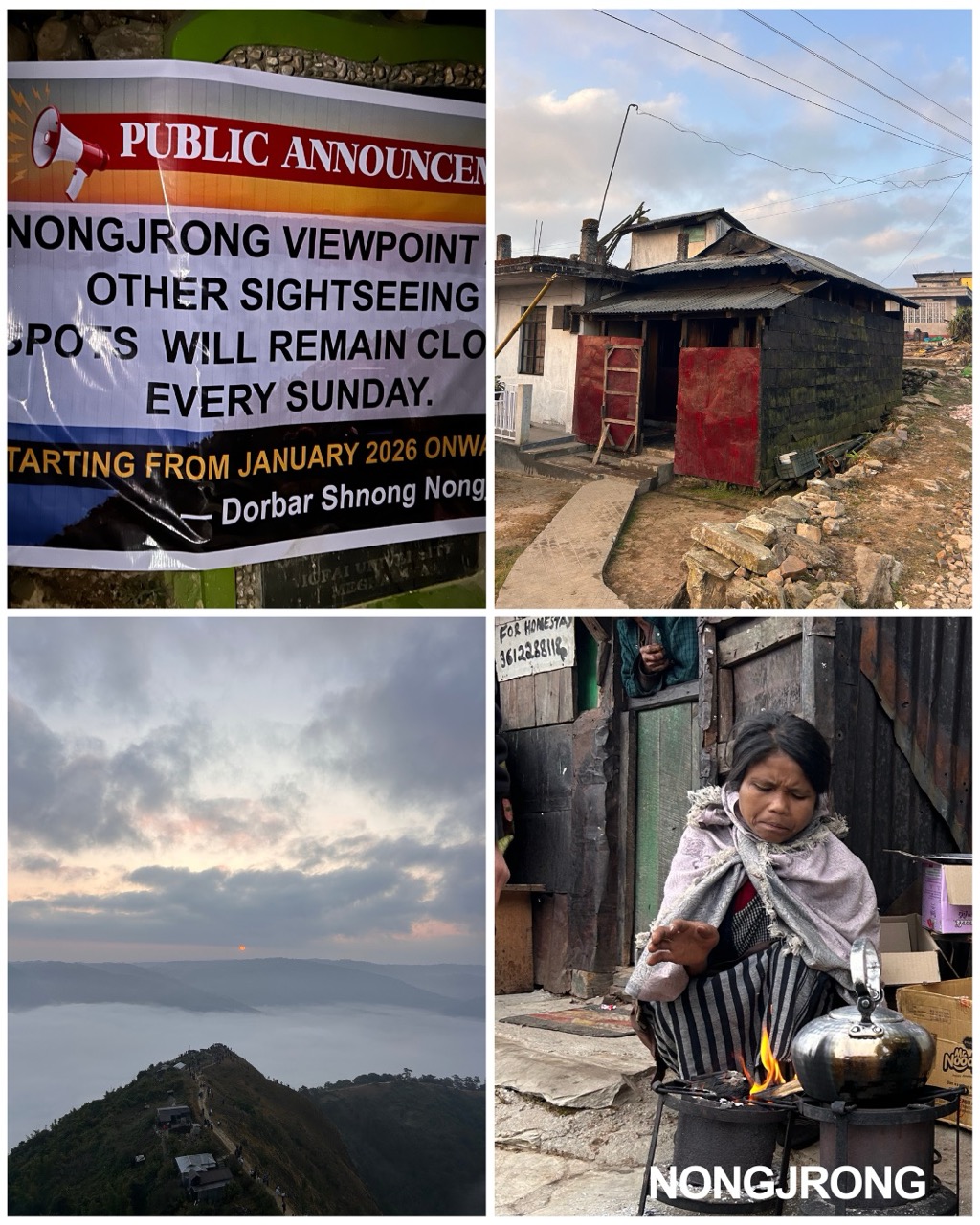
We found a good spot and waited. The sky was full of stars, something city life has almost erased from memory. Clouds gathered at the hill’s edge, the sky turned blue-grey, then grey, then streaked with orange. A tiny dot of sun appeared, like a bindi on the horizon… and then seemed to reconsider. It felt like the sun had decided to take the day off. After a welcome cup of tea, we watched the village wake up to what was still a beautiful morning. From 2026 onwards, Nongjrong will officially take Sundays off – no visitors allowed on Sundays for the sunrise view. Clearly, the sun has set a trend.
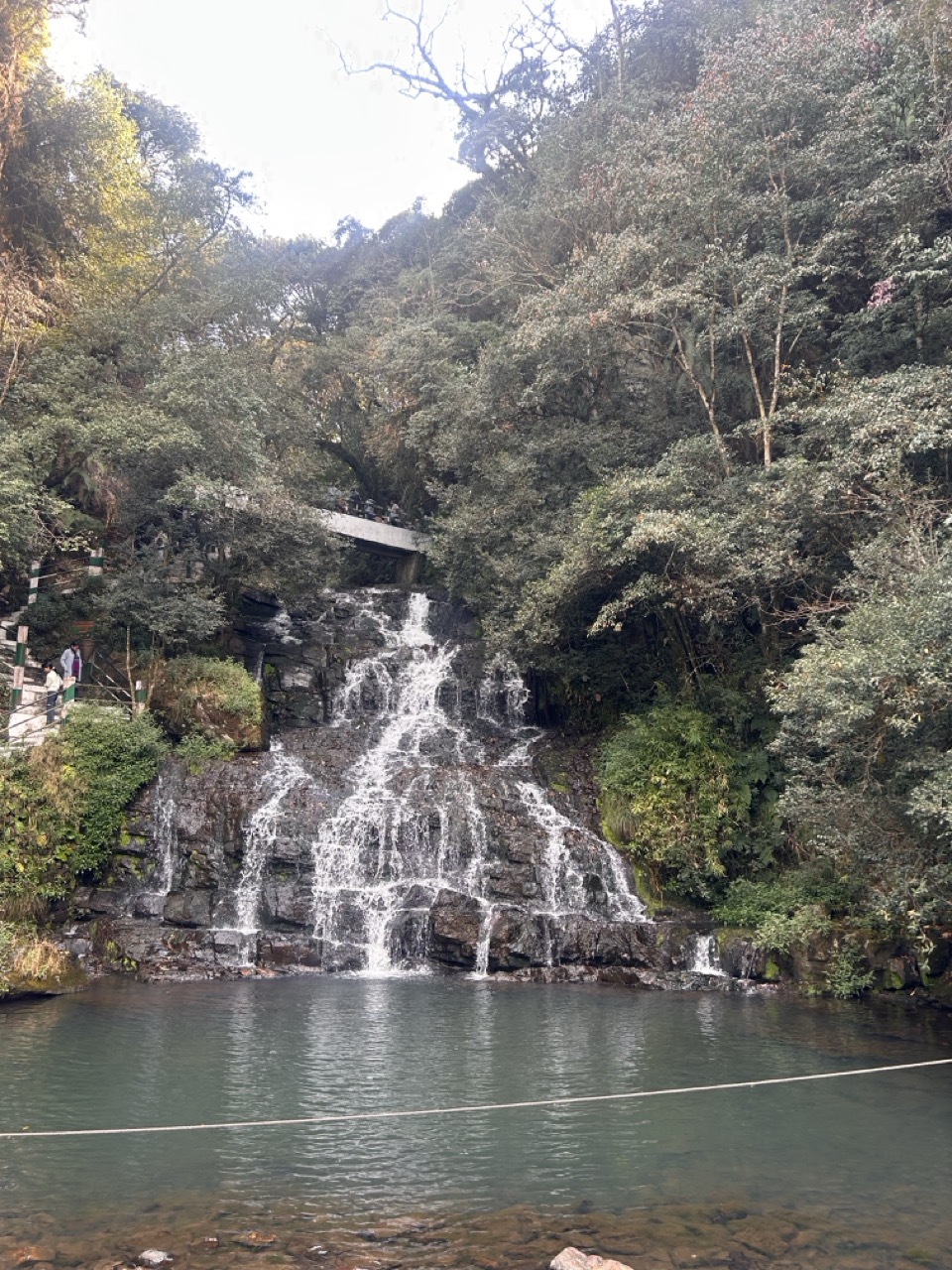
On our way back from Nongjrong, our chirpy, chatty driver, whose life mission (apart from driving us safely) was to show us the Bangladesh border, also insisted we see Elephant Falls. We gave in. Let’s just say… it’s okay to skip it.
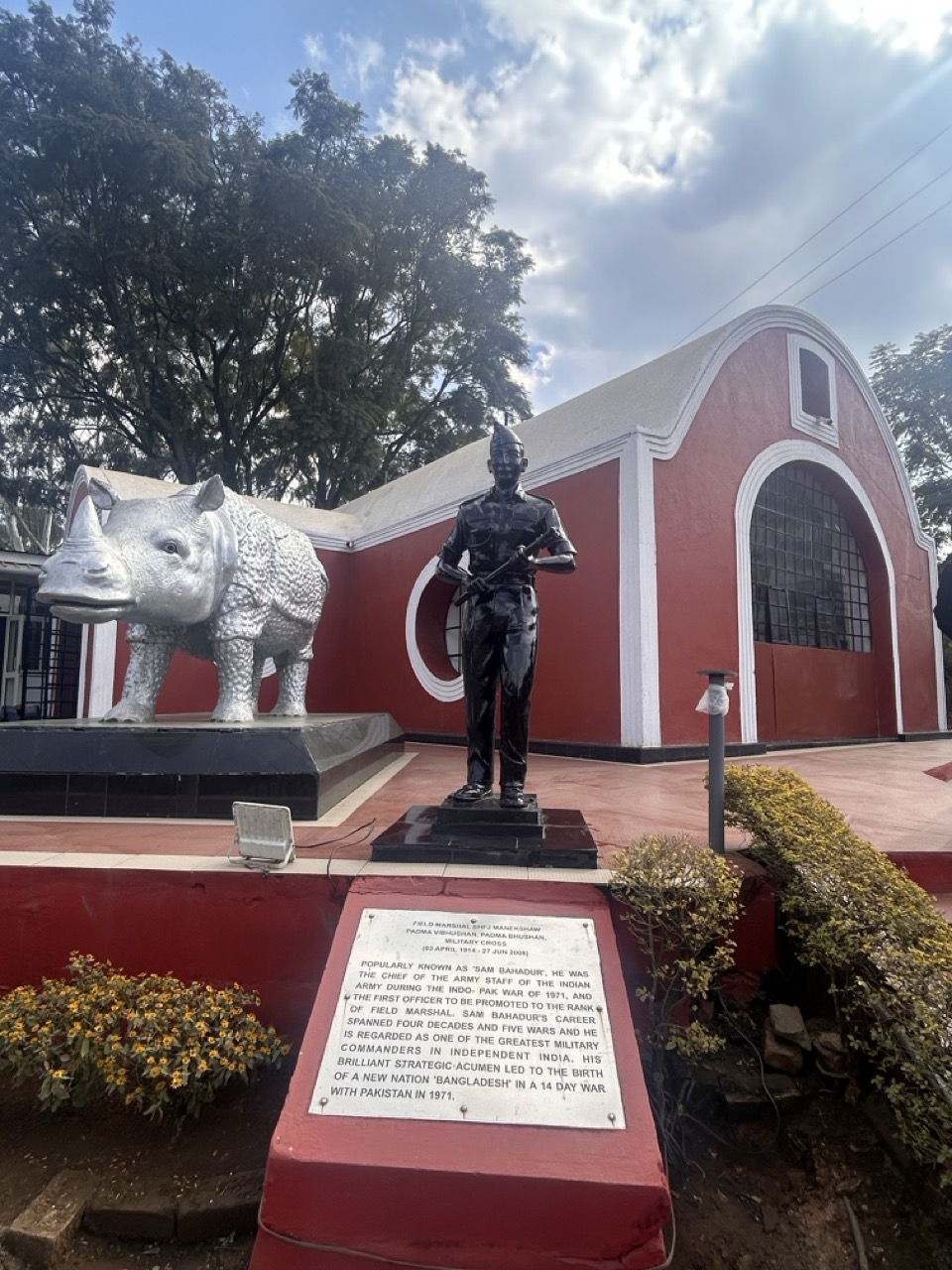
To redeem the day, I asked to visit the Rhino Museum, which we had already driven past several times. The life-size silver rhino statue had been silently beckoning. The museum, housed in a small arms store from 1926, tells the story of the 101 Area, the first Army formation to reach Dhaka during the 1971 war. If military history interests you, this is a compact, worthwhile stop.
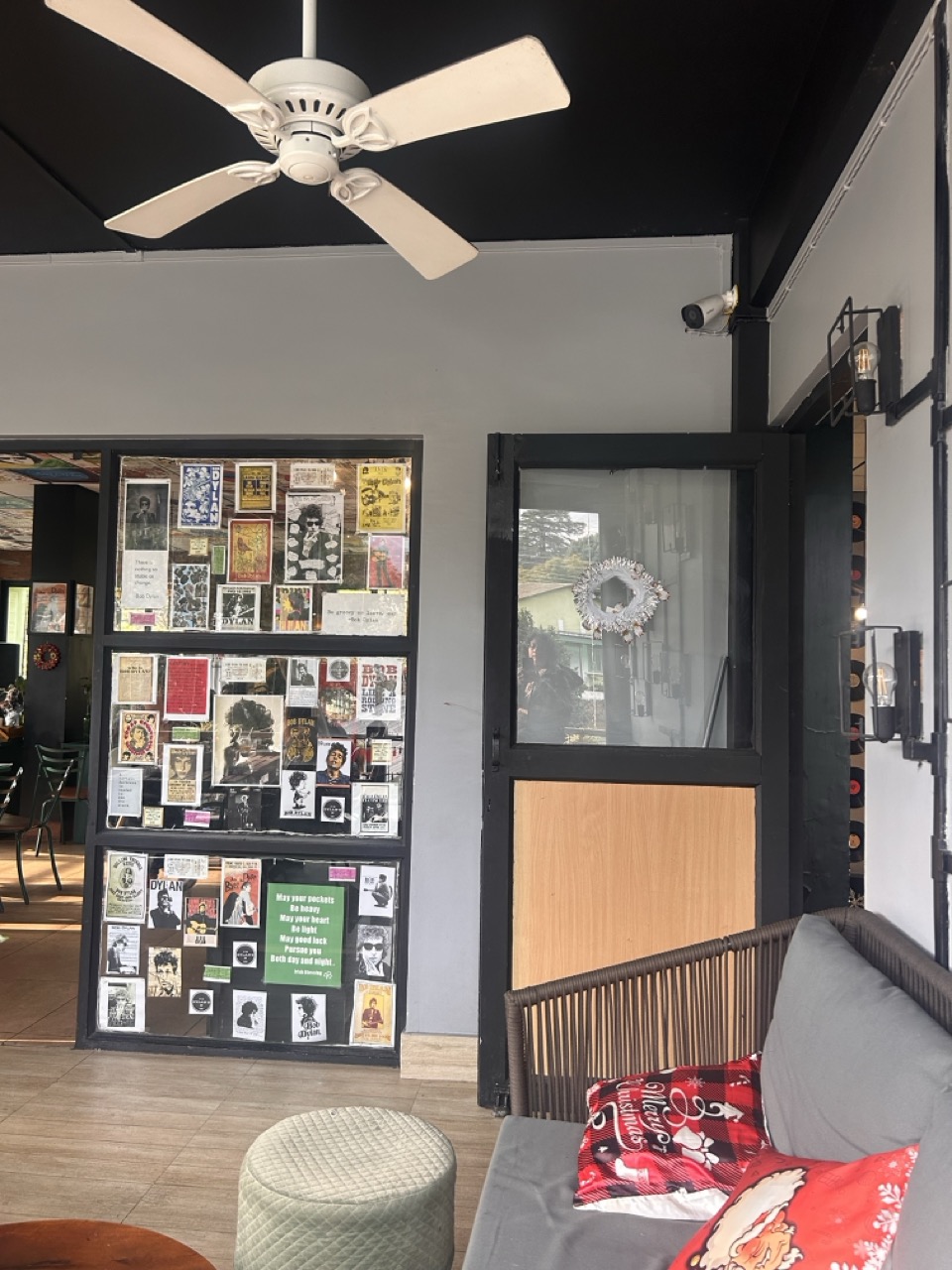
We ended the day at Dylan’s Café, a Bob Dylan–themed restaurant adorned with album covers and vintage posters. The menu mixes continental and local flavours, and it was here that we discovered, much to our surprise, that Christmas is a dry day in Meghalaya. Festive spirit – yes. Alcohol – absolutely not.
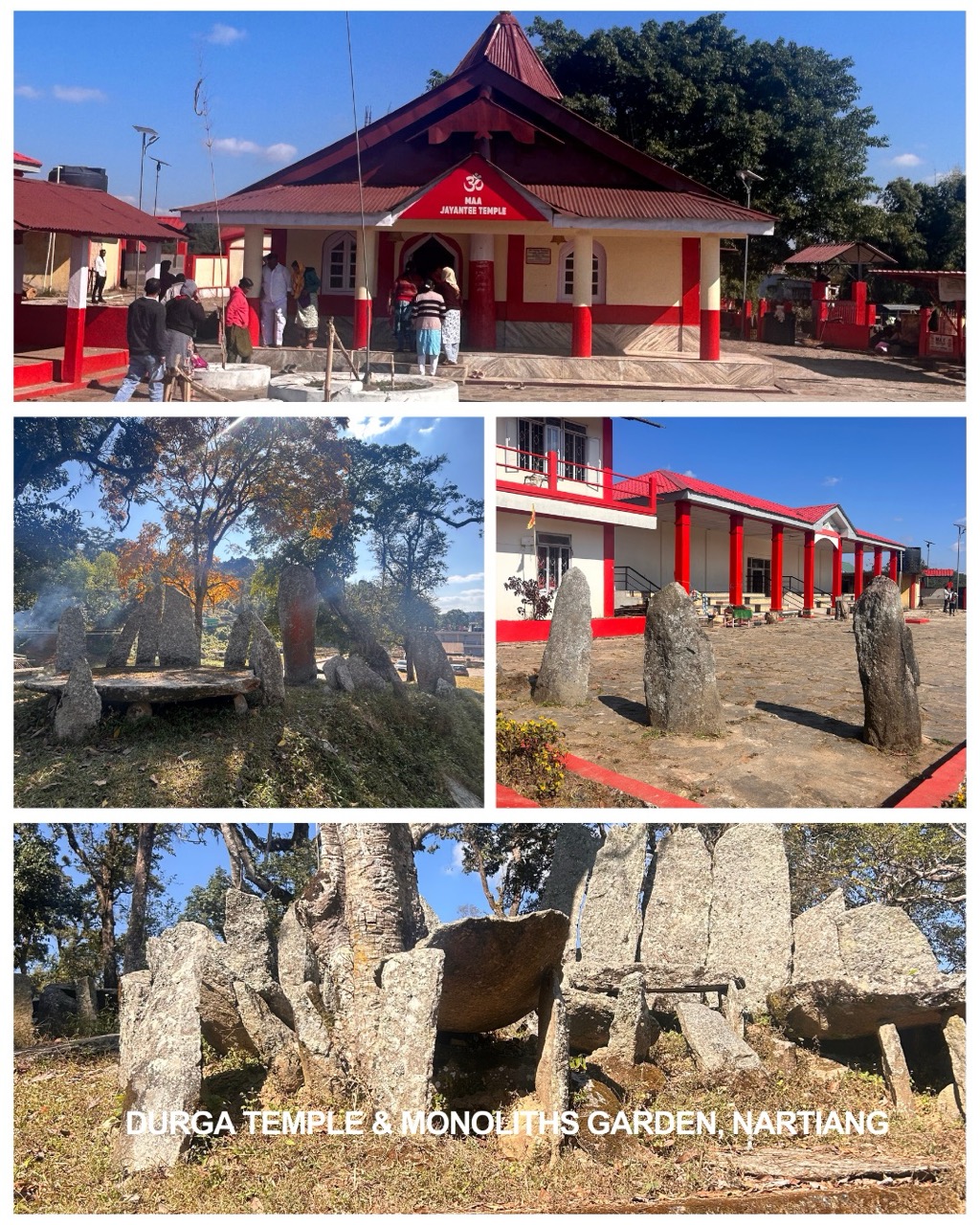
We then headed out from Shillong, this time towards the much-talked-about Dawki River, famous for its crystal-clear waters where boats appear to float. But first, we stopped at the Durga Temple and the Monoliths Garden in Nartiang, two lesser-known but deeply significant sites. Together with places like the Mawphlang Sacred Forest, they offer invaluable insight into the cultural and spiritual foundations of this society.
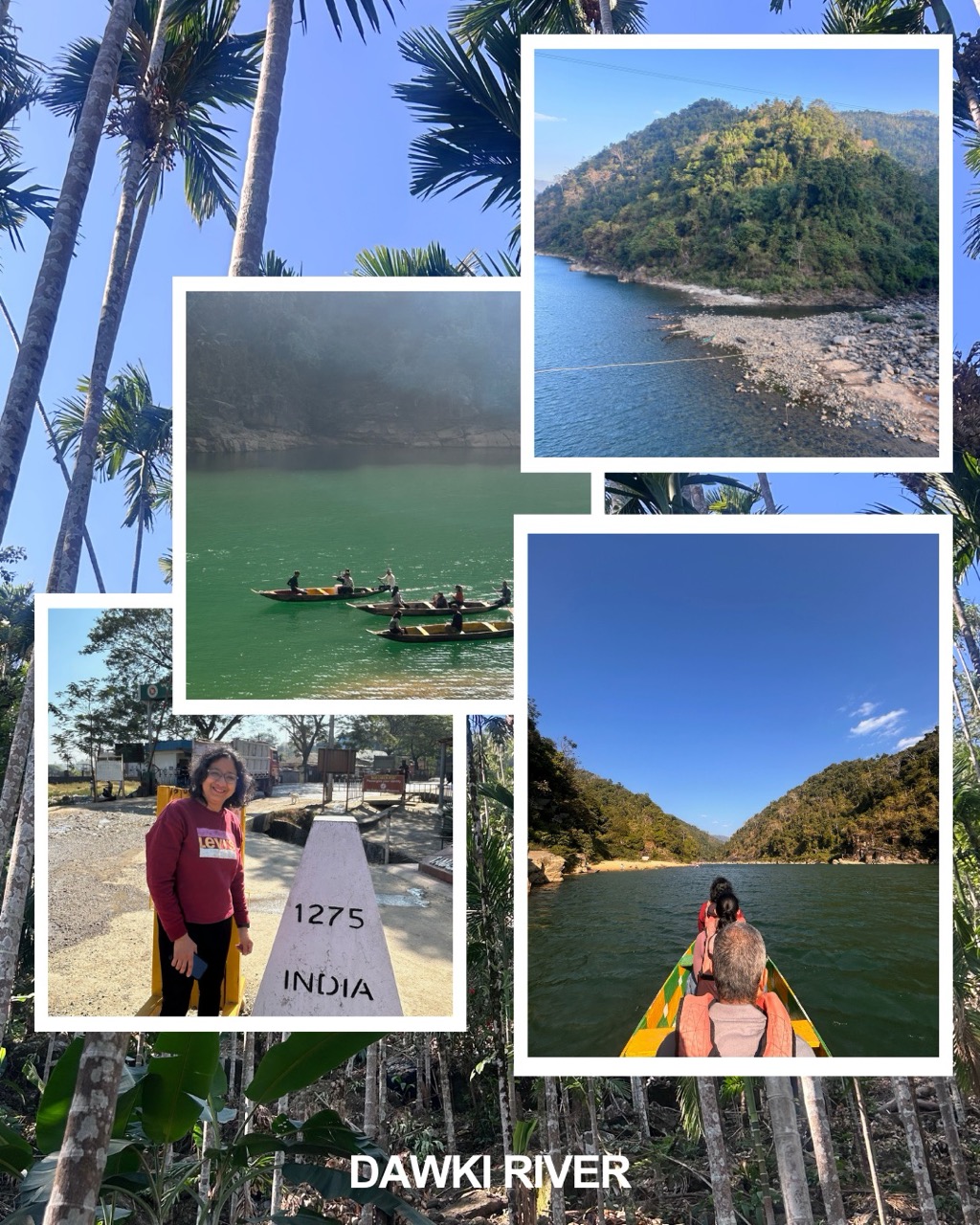
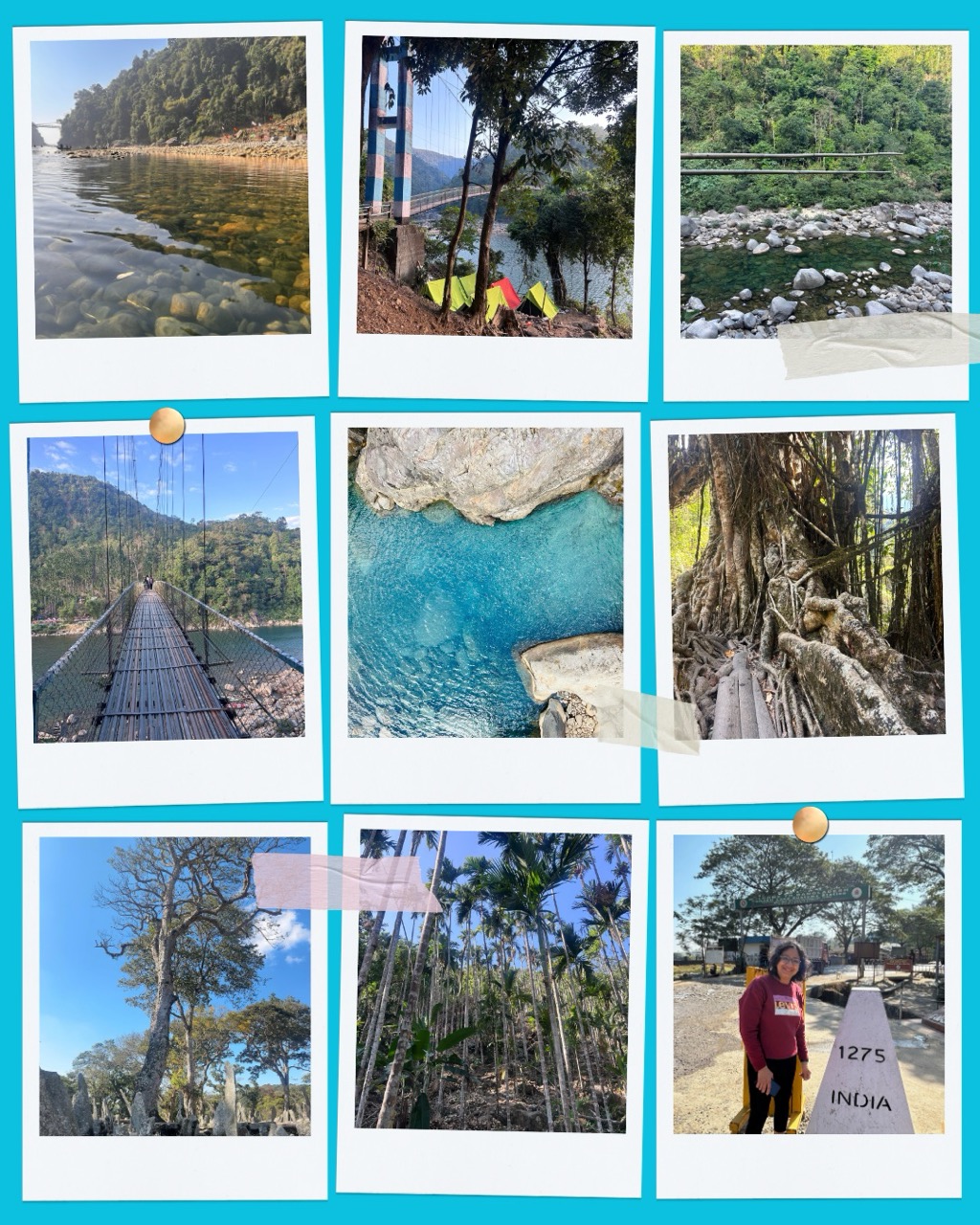
All rivers in Meghalaya are rain-fed, making the monsoon ideal for waterfalls. In winter, the Dawki (Umngot) River is calmer, more intimate. At Shnongpdeng, the river changed colour and mood through the day, each version more beautiful than the last. Dawki itself, despite being overrun with tourists, was fun too, and yes, we finally saw the famous “floating boats” and the border crossing between India and Bangladesh. This was the grand finale of our driver’s carefully curated border-adjacent agenda.
Meghalaya depends heavily on tourism, which in turn depends on infrastructure, still very much a work in progress. Mobile connectivity and digital payments are limited. Cash is king. People from nearby villages travel to larger towns for weekly shopping, returning in Tata Sumo-type vehicles packed with people and goods alike. The yellow-and-black Maruti 800-sized taxis handle short distances. All tourism-related activities are operated by locals only.
Some Trivia:
Meghalaya is home to three tribes: the Garo, Khasi, and Jaintia.
The Khasi and Jaintia languages share similarities; the Garo language belongs to a different linguistic family.
Most land is still tribally owned and governed by ancient customary laws.
It is a matriarchal society; children take their mother’s name, while kingdoms were traditionally run by men.
A few tips:
– Do not litter. Watching our guide quietly pick up plastic wrappers left by tourists was heartbreaking, especially when dustbins are everywhere.
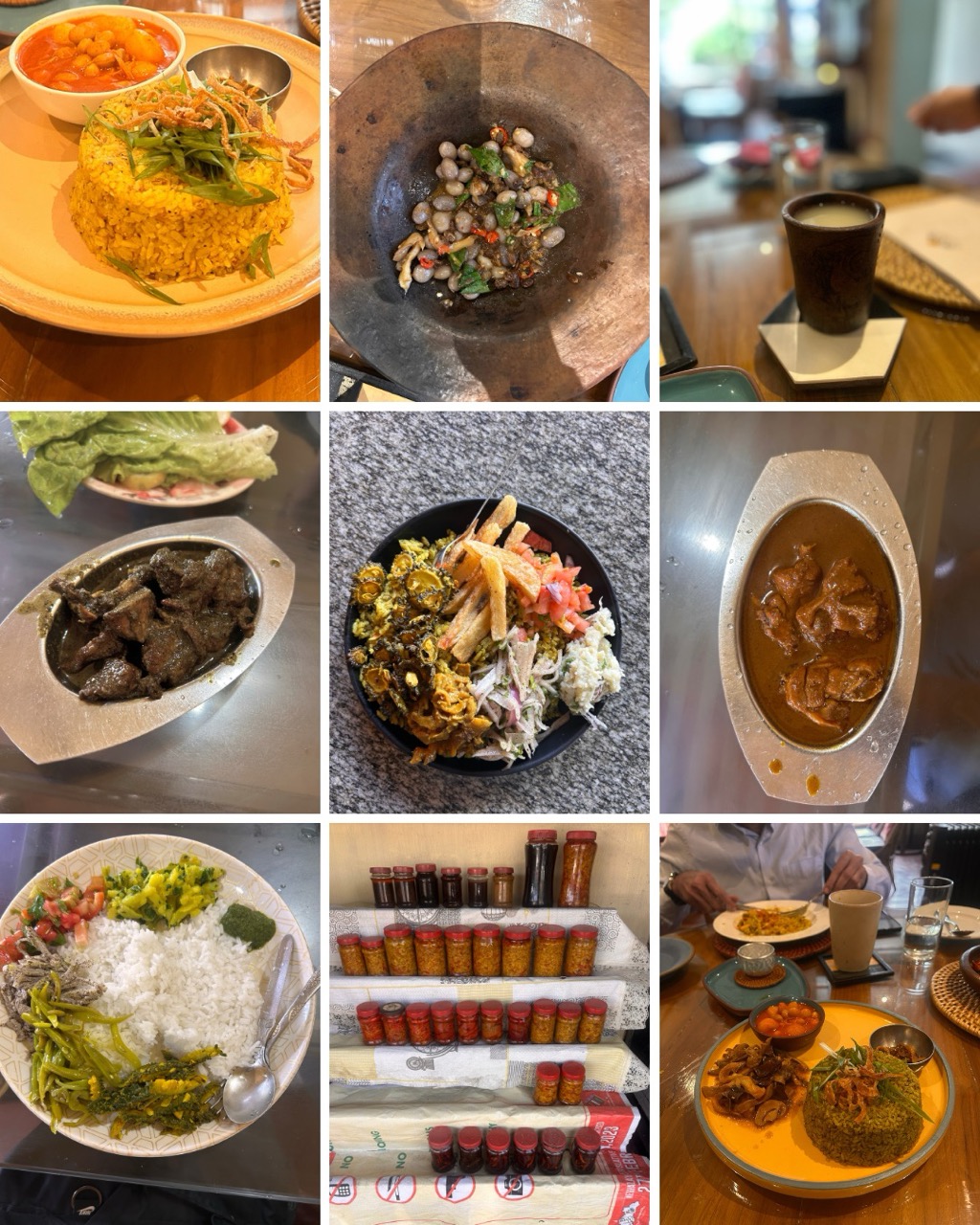
– Don’t miss local Khasi food. Mylliem is said to be the best place for it; people from Shillong drive there just to eat.
– Try the local wines and beer.
– Look out for monoliths; they are everywhere, and they are integral to local culture.
– Love those pineapples and oranges? Meghalaya is one of India’s largest pineapple producers and now grows excellent oranges too.
– Everything shuts down on Sundays.
– The Christmas season is family time. From Christmas to early January, work slows, businesses shut or run minimally, and people relax, picnic, and unapologetically do nothing.
– The best for the last – there are loos (Indian squat type that needs you to take the ‘malasana yoga pose’) everywhere, pay Rs.10 per use. Mostly clean, and I am thankful for their existence, especially for us ladies!
– Let me know if you need a tour operator/driver/guide contact.
This trip made me realise how much we have lost and how casually we take “development” for granted. Somewhere along the way, we traded balance for speed, garden cities for concrete jungles. Meghalaya, floating quietly above the clouds, gently reminds us there’s another way to live. It is my ardent wish and prayer that they get it right.
Some of my other posts on Meghalaya that you might find interesting:
The Living Root Bridges of Meghalaya
Exploring the Fossil-rich Arwah Caves of Meghalaya
Mawphlang Sacred Grove – where Faith, Fear and Forests Coexist
Walking Through Nartiang’s Sacred Landscape
Of Rivers, Roads, and Lines on a Map – Shnongpdeng & Dawki
 Kirana Bhat