France’s Forgotten Medieval Marvel
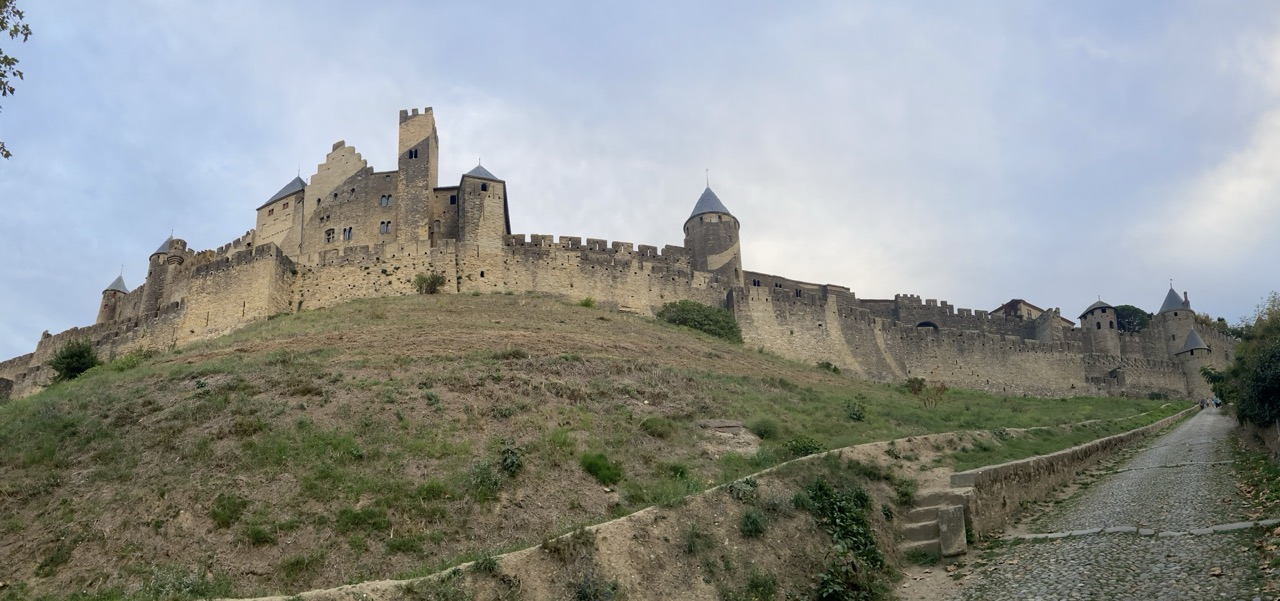
Carcassonne. It may not be the first place that comes to mind when you think of France. It doesn’t have the glamour of Paris, the lavender fields of Provence, or the châteaux of the Loire Valley. Yet it is home to one of the world’s most extraordinary fortified cities, and once you’ve walked its ramparts, you’ll wonder why it isn’t on every traveller’s itinerary.
Where is Carcassonne?
Carcassonne lies in the historic region of Languedoc-Roussillon (today part of Occitanie), one of France’s most diverse and historically rich regions. Stretching from the Rhône River to the Spanish border along the Mediterranean, it is famous for its medieval cities, Roman monuments, Cathar castles, vineyards, beaches and the Canal du Midi.

A City Built Over 2,600 Years
With a history spanning nearly 2,600 years, Carcassonne is much more than a beautiful medieval citadel. It is a city where every ruling power left its mark, creating an extraordinary architectural timeline that can still be read in its walls today. It is this remarkable layering of history, together with Eugène Viollet-le-Duc’s ambitious nineteenth-century restoration, that earned the Cité (as it is known) its UNESCO World Heritage status.

From Celtic Settlement to Roman Fortress
The story begins in the 6th century BC, when the hilltop was occupied by the Celtic Volcae Tectosages, who established a fortified settlement. When the Romans incorporated the region into their empire, they renamed it Carcaso and transformed it into an important frontier town. In the 3rd and 4th centuries AD, they built formidable stone ramparts, parts of which still stand today, making them among the oldest surviving sections of the Cité.
Visigoths, Lady Carcas and the Rise of a Medieval Stronghold
With the fall of the Roman Empire came the Visigoths, who inherited the Roman fortifications and reinforced them, recognising Carcassonne’s strategic importance. In 725 AD, forces from Al-Andalus captured the city. Their rule lasted only about 34 years, but it gave rise to one of Carcassonne’s most enduring legends, that of Lady Carcas, the clever noblewoman said to have outwitted the besieging army. While the tale is almost certainly mythical, it remains an integral part of the city’s identity.

The Trencavels and the Cathars
The Franks regained Carcassonne in 759 AD, and over the following centuries, it became the seat of local counts who governed the region on behalf of the Frankish kings. Its golden age arrived under the powerful Trencavel family in the 11th and 12th centuries. They transformed Carcassonne into a flourishing medieval city, building much of the Château Comtal, expanding the fortifications, and establishing it as one of the most important strongholds in southern France. This was also the period when Catharism spread across the Languedoc region.

The Albigensian Crusade Changes Everything
Everything changed in 1209 when the Albigensian Crusade reached Carcassonne. The crusading army led by Simon de Montfort captured the city after a short siege, bringing Trencavel rule to an end. The French Crown subsequently took control and, between the 13th and 17th centuries, transformed Carcassonne into one of the kingdom’s most formidable frontier fortresses facing the Crown of Aragon (later Spain). It was during this period that the famous double concentric walls and many of the imposing towers seen today were constructed.

A Fortress on France’s Southern Frontier
The Treaty of the Pyrenees in 1659 shifted the border between France and Spain south into the Pyrenees, and Carcassonne suddenly found itself far from the frontier. Its military importance faded almost overnight. As prosperity shifted to the newly established lower town of Bastide Saint-Louis, the medieval Cité slowly declined. By the early nineteenth century it had fallen into severe disrepair. Houses crumbled, towers deteriorated, and local residents even carried away stones from the abandoned walls to use in new buildings elsewhere.
Decline, Near Demolition and an Unlikely Rescue
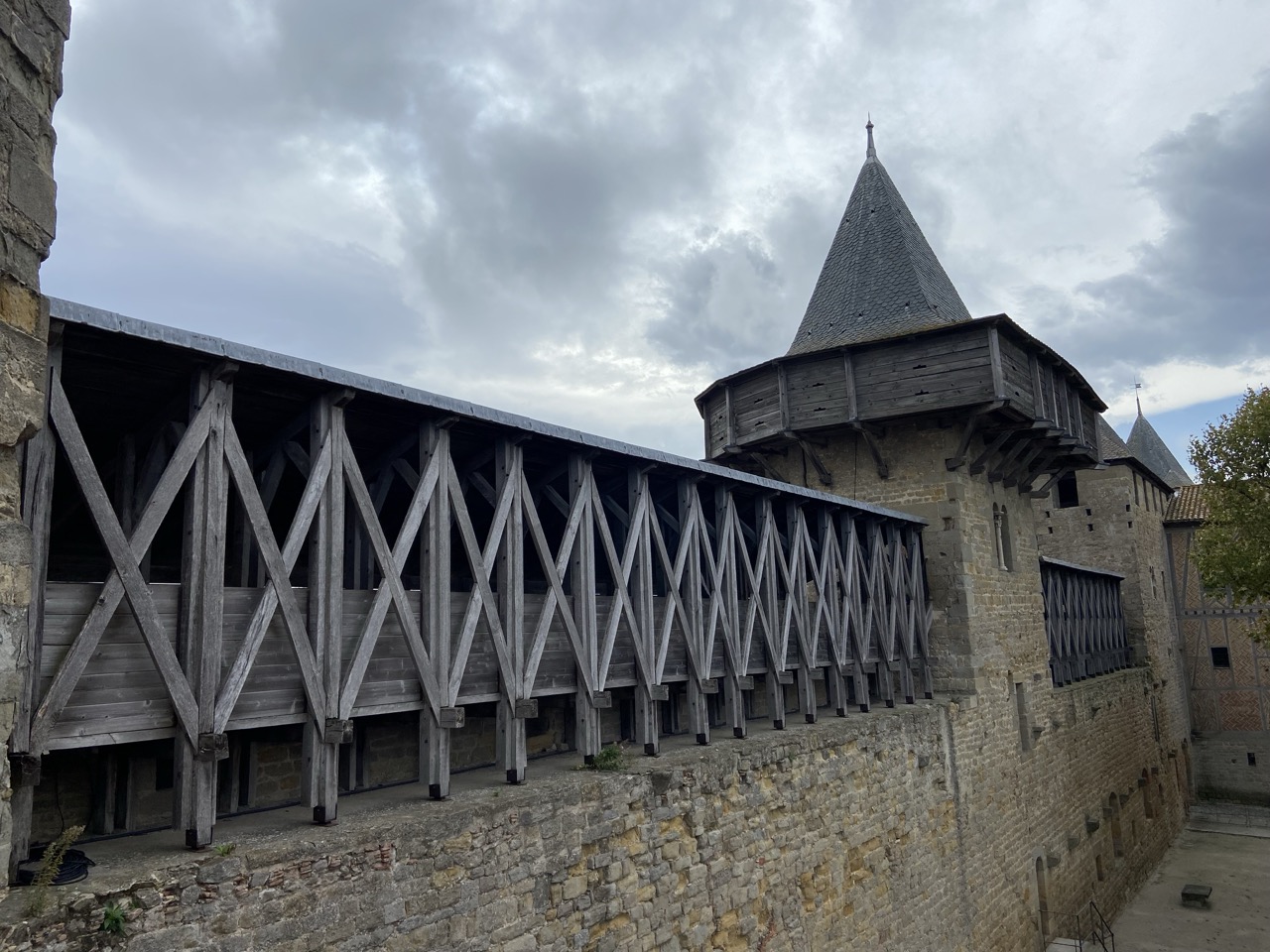
The Cité might well have disappeared altogether had it not been for the vision of Eugène Viollet-le-Duc. Between 1853 and 1879, the brilliant and often controversial architect undertook one of the most ambitious restoration projects of the nineteenth century. Bold, opinionated and immensely talented, Viollet-le-Duc believed that restoration was not merely about repairing a monument but about completing it as he thought it ought to have looked. His work saved Carcassonne from ruin and gave the world the spectacular silhouette we admire today, even if some of his choices continue to spark debate among historians. He is such a fascinating character that he deserves a post of his own and that’s exactly what I intend to write next.
Reading History in Stone
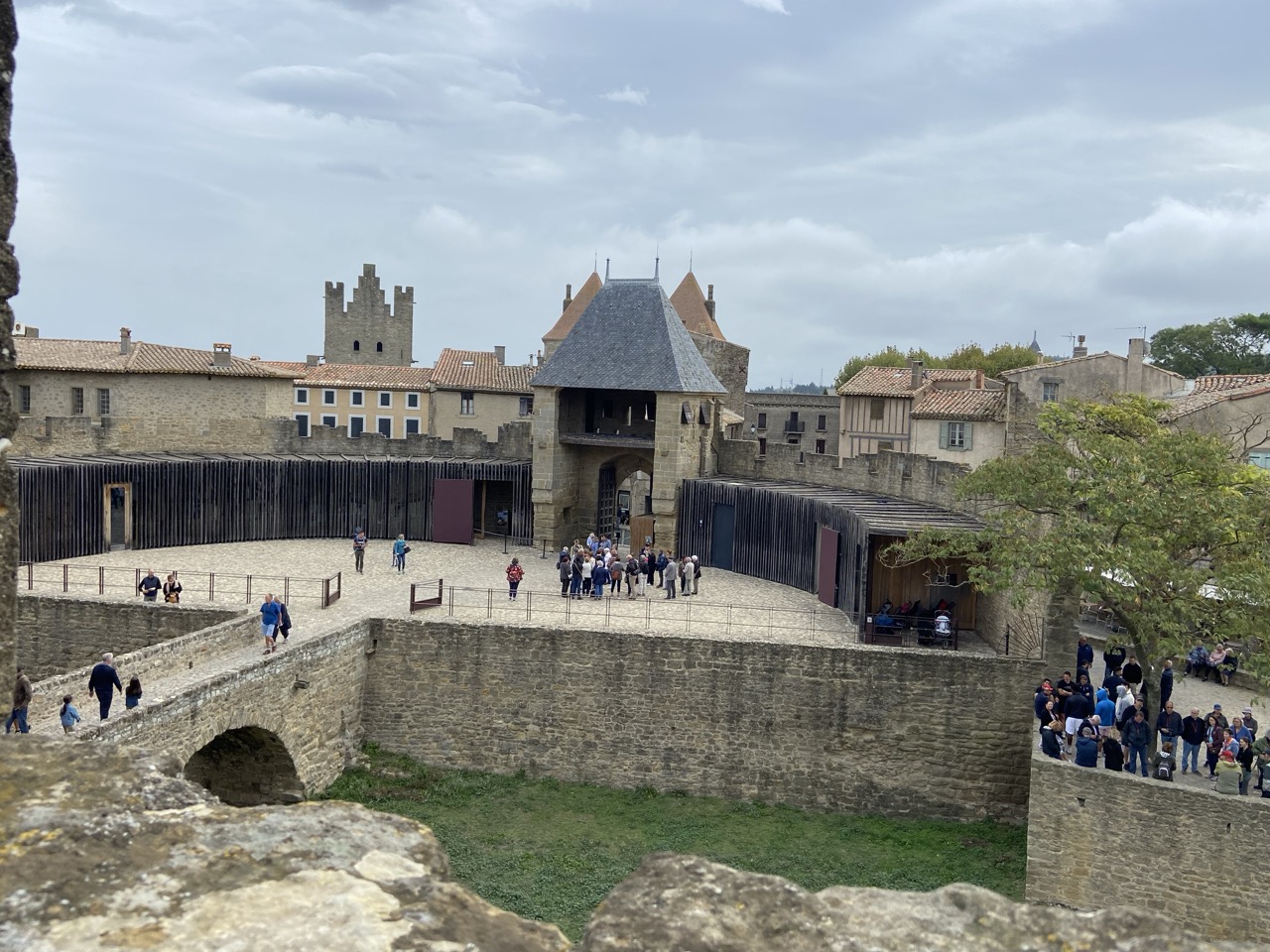
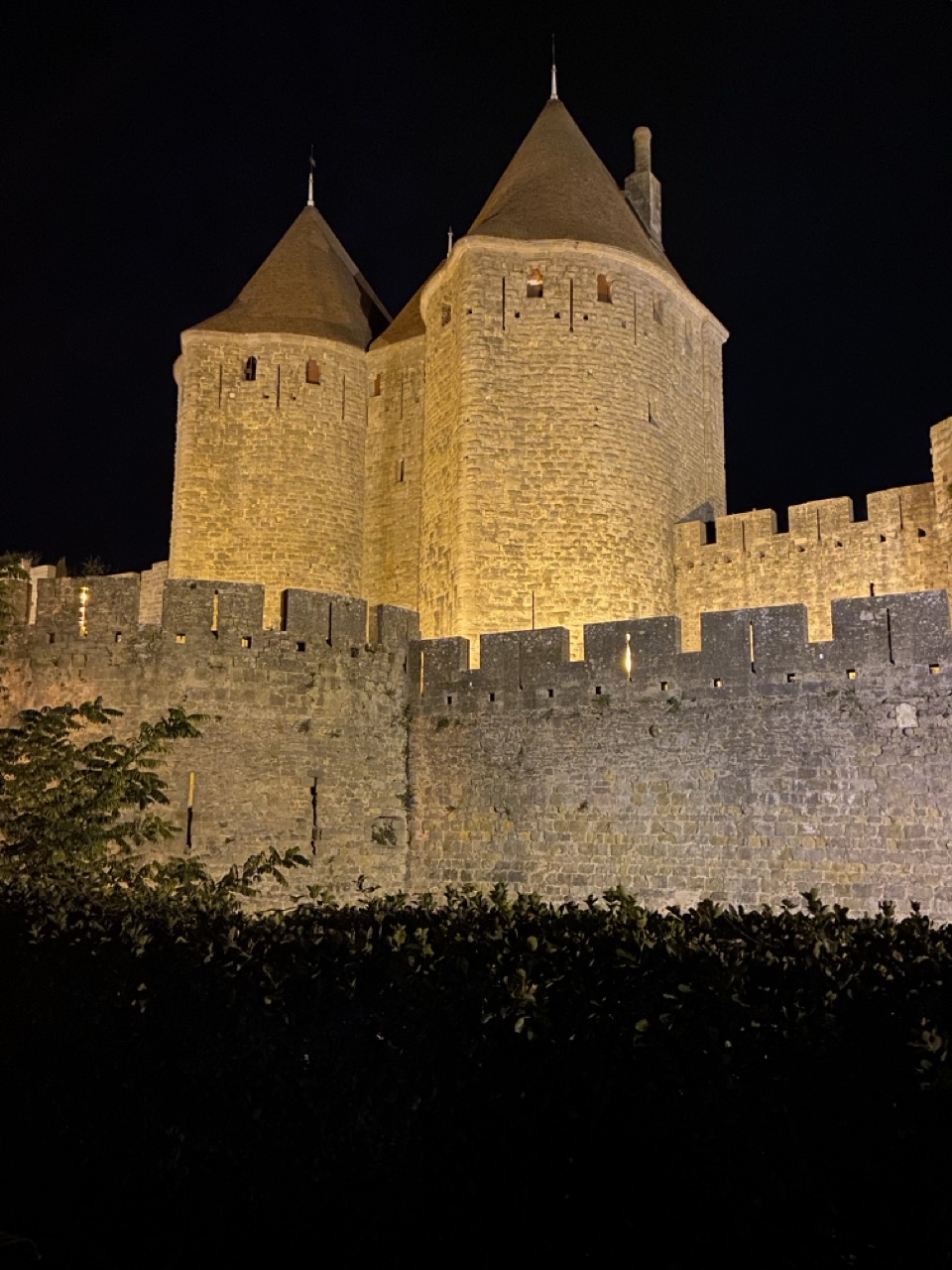
The beauty of Carcassonne is that its history isn’t confined to museums; it is built into the very stones. You walk between two concentric rings of ramparts separated by the lices, the defensive corridor where invading armies would have found themselves trapped. You pass through the imposing Narbonne Gate with its twin towers before reaching the Château Comtal, a fortress within the fortress that served as the residence of the Trencavel viscounts. Nearby stands the Basilica of Saints Nazarius and Celsus, where rounded Romanesque arches give way to soaring Gothic vaults and magnificent stained glass. Look closely at the walls and you’ll even spot alternating bands of brick and stone surviving Roman masonry that has stood here for nearly seventeen centuries. Some towers still retain traces of their Roman horseshoe-shaped design, while others reflect medieval military engineering and the nineteenth-century vision of Viollet-le-Duc, complete with their now-iconic slate roofs.
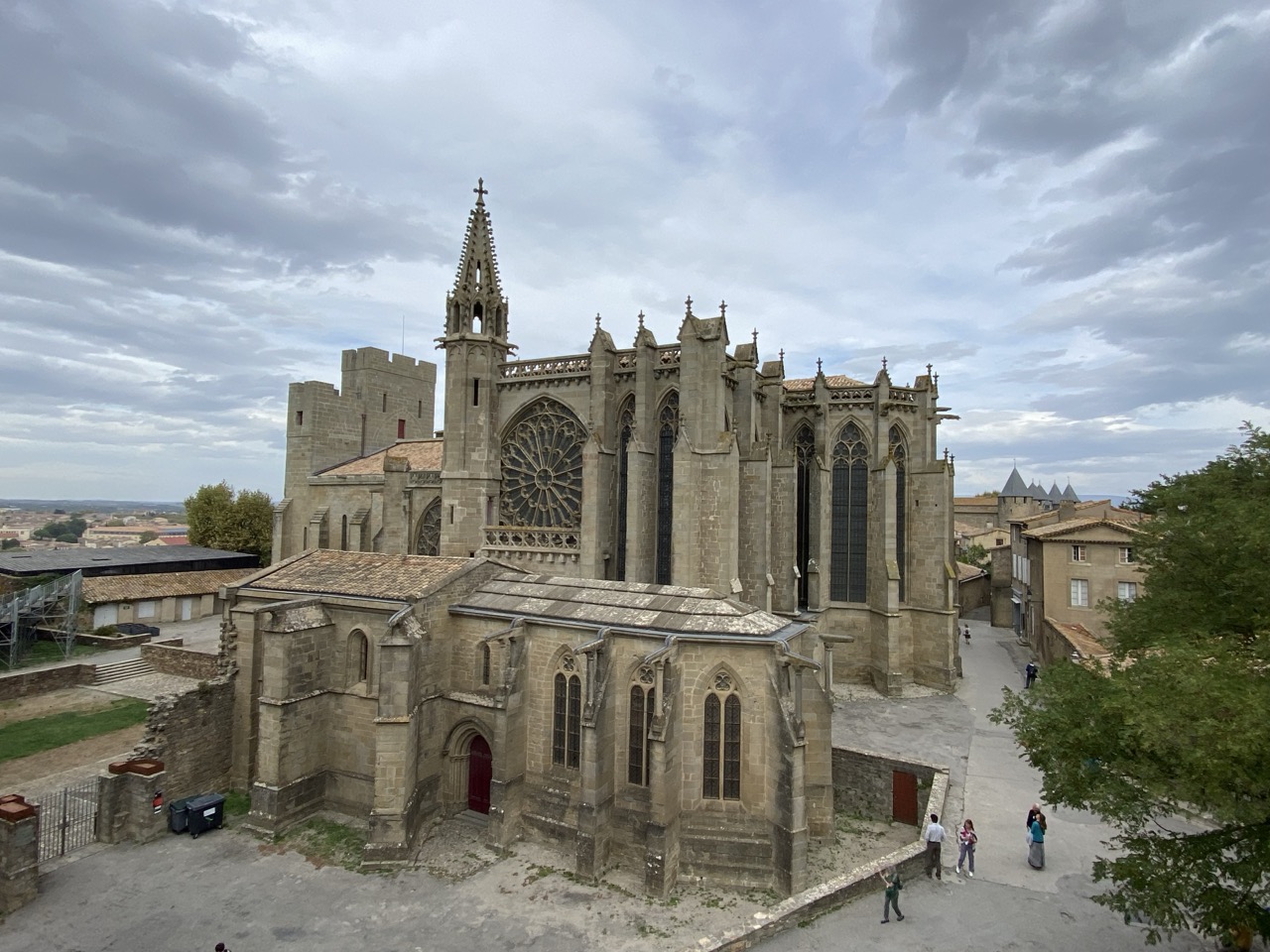
There are forts larger than Carcassonne
There are castles stronger, and citadels perched in more dramatic locations. But very few places allow you to walk through over two thousand years of history in a single afternoon. Roman walls, Visigothic repairs, medieval towers, Gothic architecture and nineteenth-century restoration all coexist here, making Carcassonne less a monument than a living timeline.
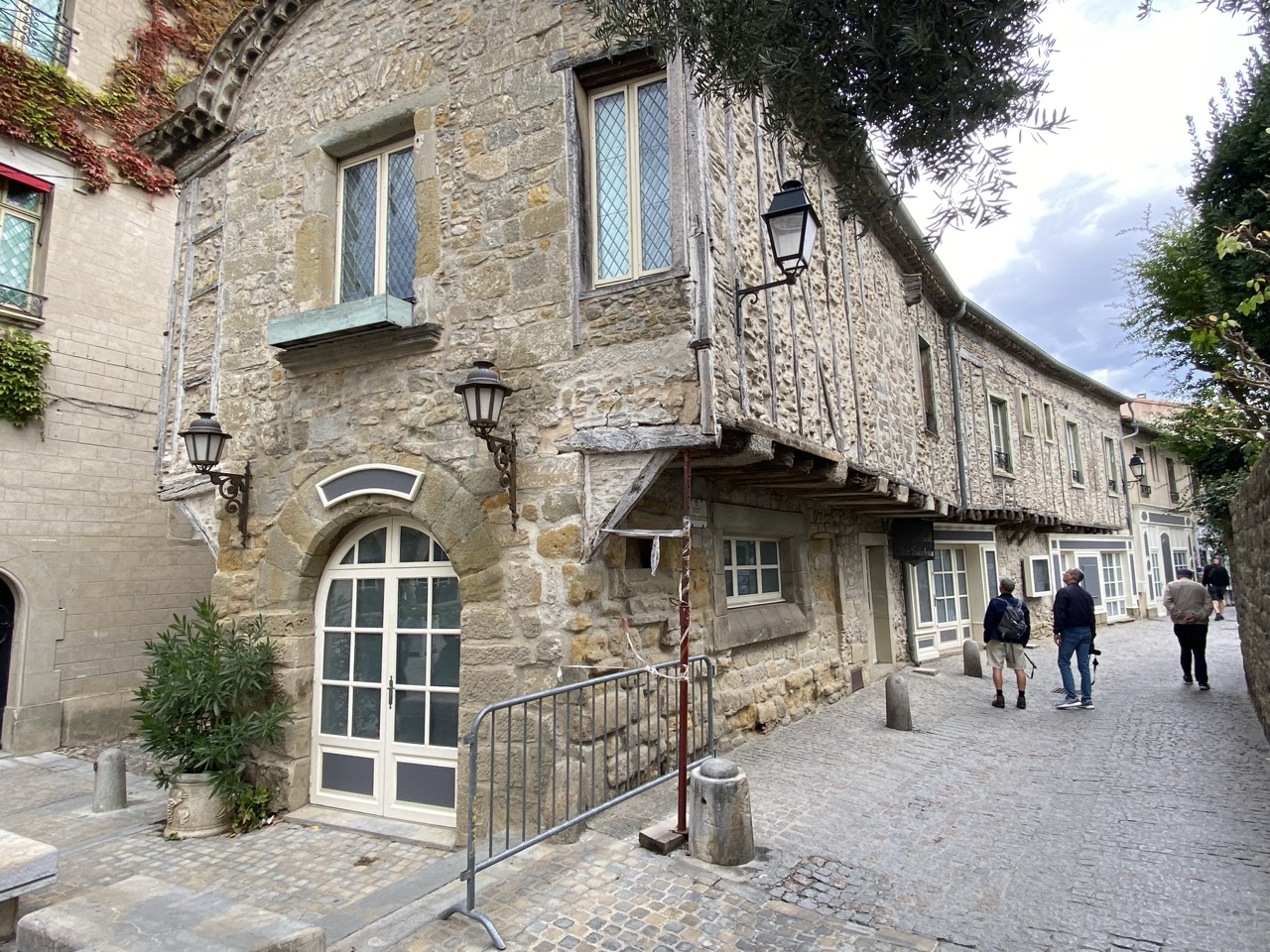
Carcassonne and Jaisalmer – Sister Cities
Perhaps that explains why, in August 2025, Carcassonne and Jaisalmer, the “Carcassonne of the Desert” became official sister cities. Although separated by continents, both are rare examples of living fortified cities whose walls continue to shape everyday life centuries after they were built.

Five Fun Facts about Carcassonne
1) The illuminated skyline of Carcassonne at dusk is one of the most iconic views in France.
2) The city inspired the award-winning board game Carcassonne, a popular strategy game.
3) The local speciality is cassoulet, a hearty slow-cooked casserole of white beans, duck confit and sausages.
4) During summer, the open-air theatre inside the Cité hosts concerts and performances against the backdrop of medieval walls.
5) Five hilltop medieval fortresses in the region, known collectively as the “Five Sons of Carcassonne”, are almost as impressive as Carcassonne itself and reward visitors with spectacular panoramic views.

Final Thoughts
Carcassonne isn’t just another medieval castle to tick off a list. It is a city that tells its own story, one written by Celts, Romans, Visigoths, crusaders, kings and restorers over more than two millennia. Walk through its gates and you’re not simply visiting a monument; you’re stepping into one of Europe’s greatest history books, written in stone.
 Kirana Bhat