When walls become storytellers:
Across cultures, people have painted their homes, religious buildings, and public spaces to tell stories, express beliefs, celebrate local identity, or simply beautify their surroundings. The designs range from floral motifs and geometric patterns to biblical scenes and family crests. While many traditional paintings appear indoors, plenty also appear on exterior walls. And no, I am not talking about contemporary street art, but longstanding traditions of painting the exteriors of buildings.
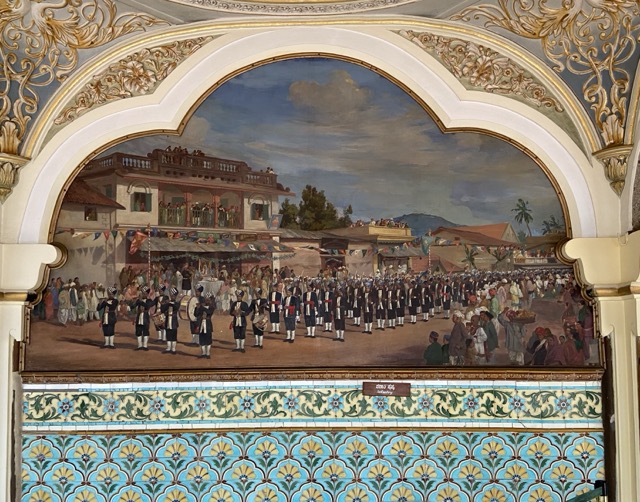
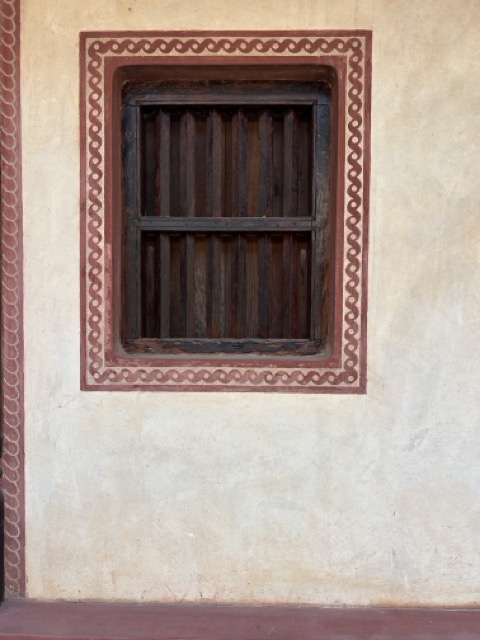
In my home state of Karnataka, Chittara and Kaavi Kale are two traditional art forms that come to mind when I think of painted surfaces. They are quite different from the Bavarian tradition I encountered recently, but they remind me that walls can be much more than boundaries.
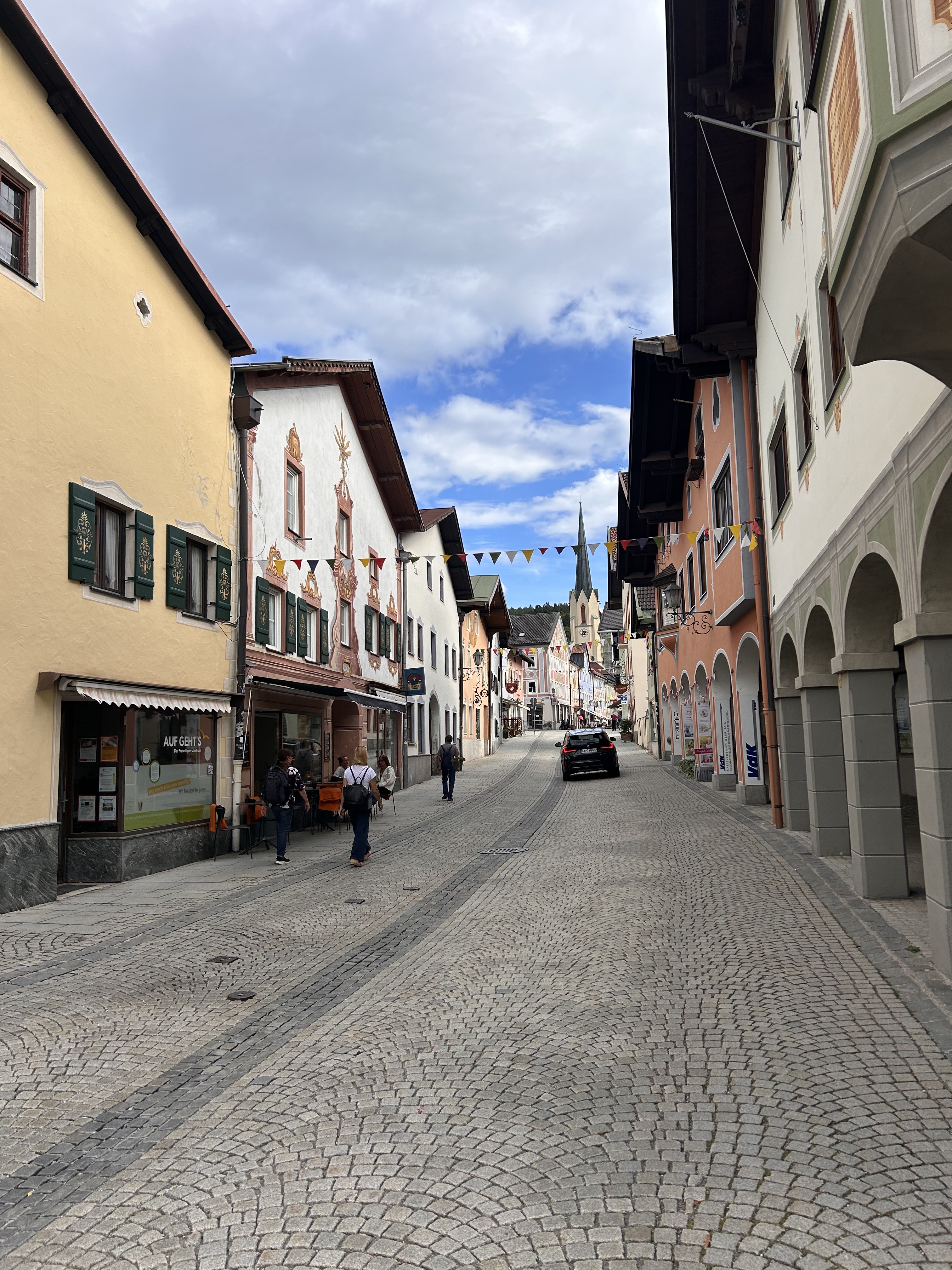
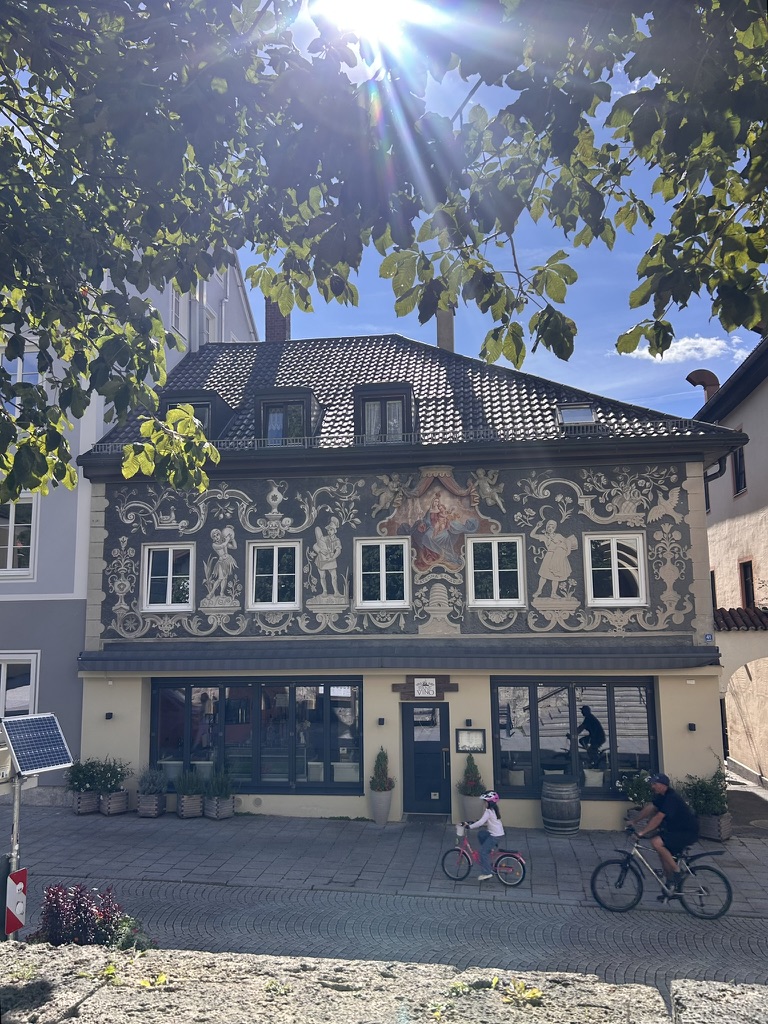
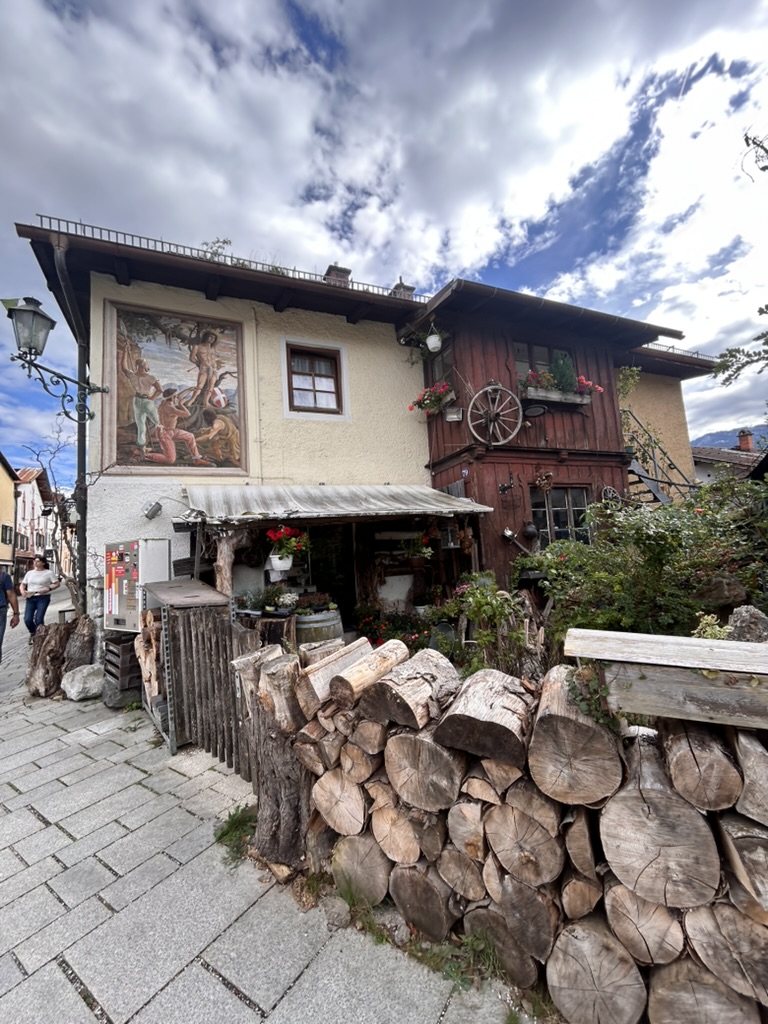
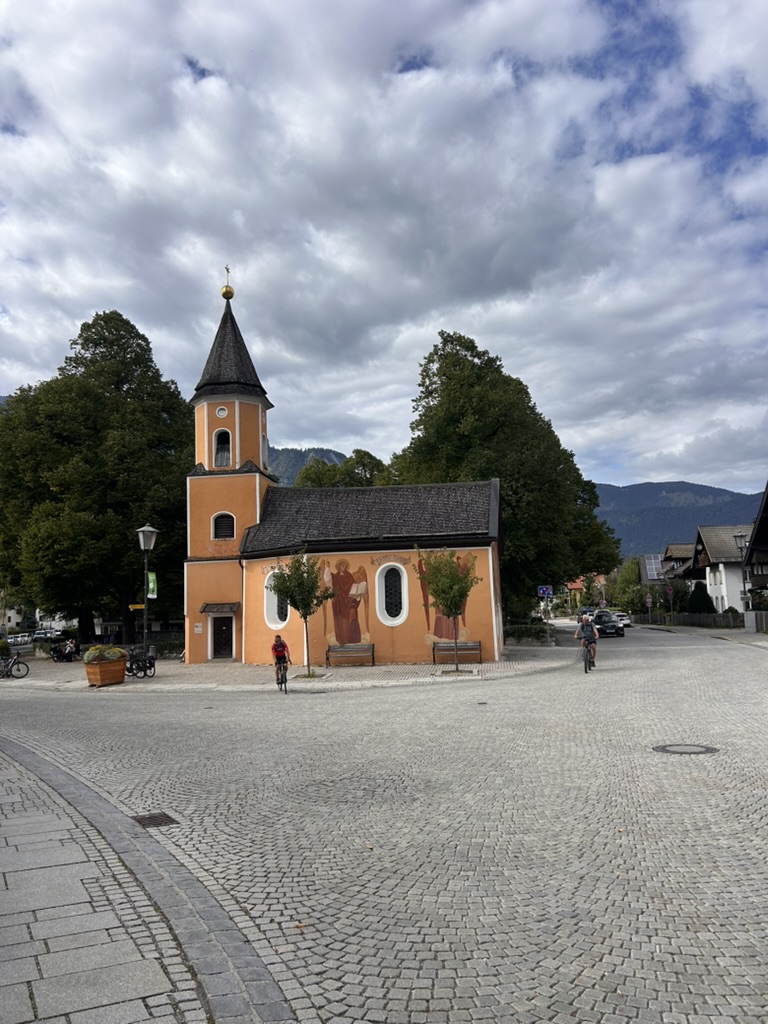
I was in Munich recently and, on a day trip to Garmisch-Partenkirchen, I added a walk down Ludwigstrasse to my itinerary. Ludwigstrasse is an open-air museum of sorts, where almost every exterior wall has something interesting to tell you. And if you know how to interpret what you see, it adds another element of excitement to a simple walk down the street.
The paintings aren’t limited to this street, or even to Garmisch-Partenkirchen. So, here’s a bit of trivia about this traditional art form.
What is Lüftlmalerei?
The exterior paintings that adorn buildings across Upper Bavaria in Germany and parts of Tyrol in Austria are known as Lüftlmalerei. The word is generally translated as air painting or open-air painting. In Bavarian German, Lüftl is a diminutive form of Luft, meaning air. However, the precise origin of the term is debated, and there are several theories about how it came to be associated with this art form.
In his extensively researched website on Lüftlmalerei, Justin Velasquez explores the history of these paintings, their symbolism and the artists who created them. His research also offers a fascinating look at the much longer history of decorating walls.
Wall painting is hardly a new concept. The ancient Egyptians and Mesopotamians decorated buildings with murals, while the Greeks and Romans developed their own traditions of painted architectural surfaces. Over centuries, techniques, styles and motifs evolved, influenced by changing religious beliefs, cultural exchanges, patronage and the fortunes of the people who commissioned the art.
Wars and epidemics, too, shaped the course of artistic traditions. Think of it this way: one day, everyone wants a painter or sculptor; the next, those same people are soldiers fighting battles, and many never return home. Somewhere through all these ups and downs, decorative painting found its way onto the homes of wealthy Europeans.
In the Alpine region, Lüftlmalerei became particularly prominent from the 18th century onwards, adorning houses and other buildings with colourful scenes and elaborate architectural details.
Why is it called Lüftlmalerei?
The origins of the name are almost as interesting as the paintings themselves. One theory links the term to the painter Franz Seraph Zwinck, who worked in the region around the 18th century. Perhaps the name referred to his work at lofty heights on scaffolding. Another theory suggests that it may have originated from the name of the house where he lived, known locally as Lüftl. There are other explanations too, but none should be treated as definitively established. As Velasquez discusses on his website, the term appears to have become widely used for this style of exterior painting only much later.
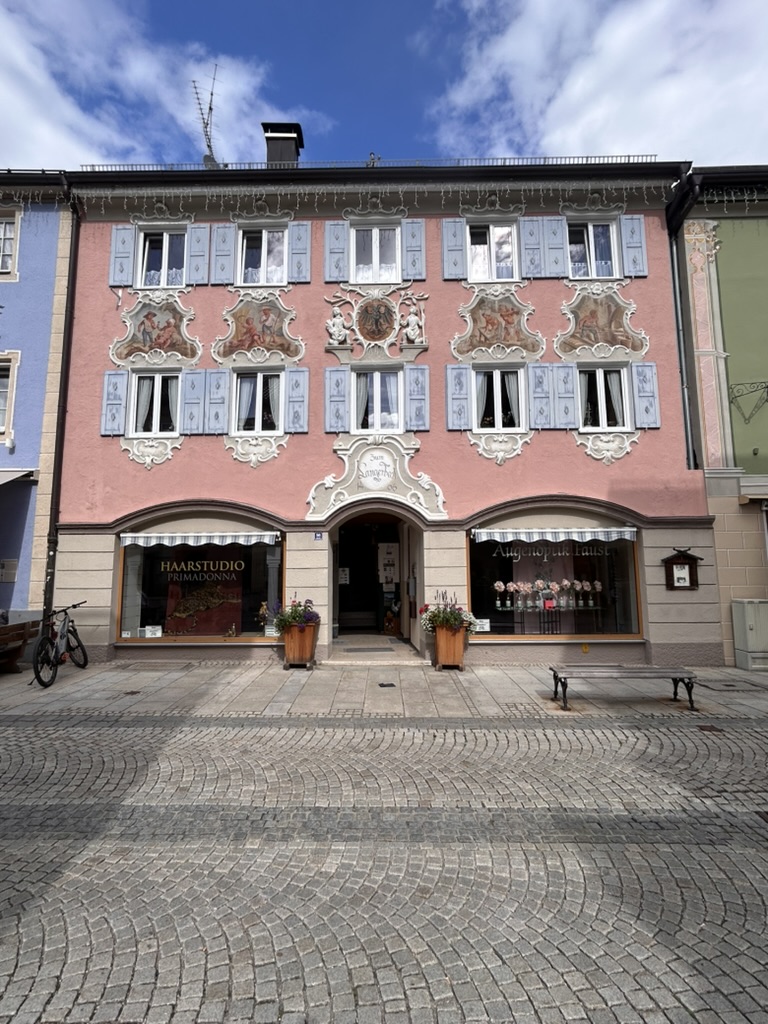
So, while air painting makes for a neat translation, the story behind the name is rather less straightforward.
What do the paintings tell us?
Lüftlmalerei is more than decorative artwork. The paintings often offer clues about the people who lived in a house, their livelihoods, their beliefs and the history of the building itself.
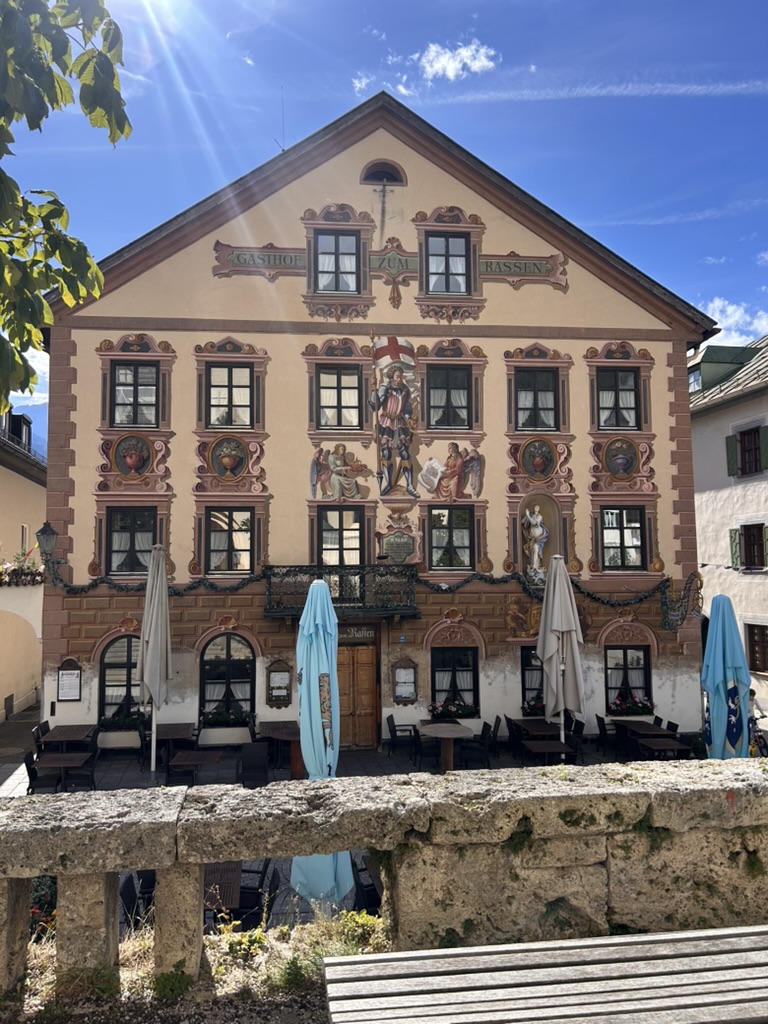
Some common themes include:
Saints and the Virgin Mary: These reflect the household’s Catholic faith and the desire for spiritual protection.
Biblical scenes: Familiar religious stories communicate the beliefs and values of the period.
Hunting, farming and forestry: These offer glimpses into the residents’ livelihoods, interests and connections with rural life.
Painted columns, balconies and elaborate architectural details: These create the illusion of grandeur, making a relatively simple façade appear more elaborate and expensive.
House names, family emblems and inscriptions: These may reveal family identity, ancestry or a motto that the residents valued.
Local legends and village history: These celebrate regional culture and storytelling traditions
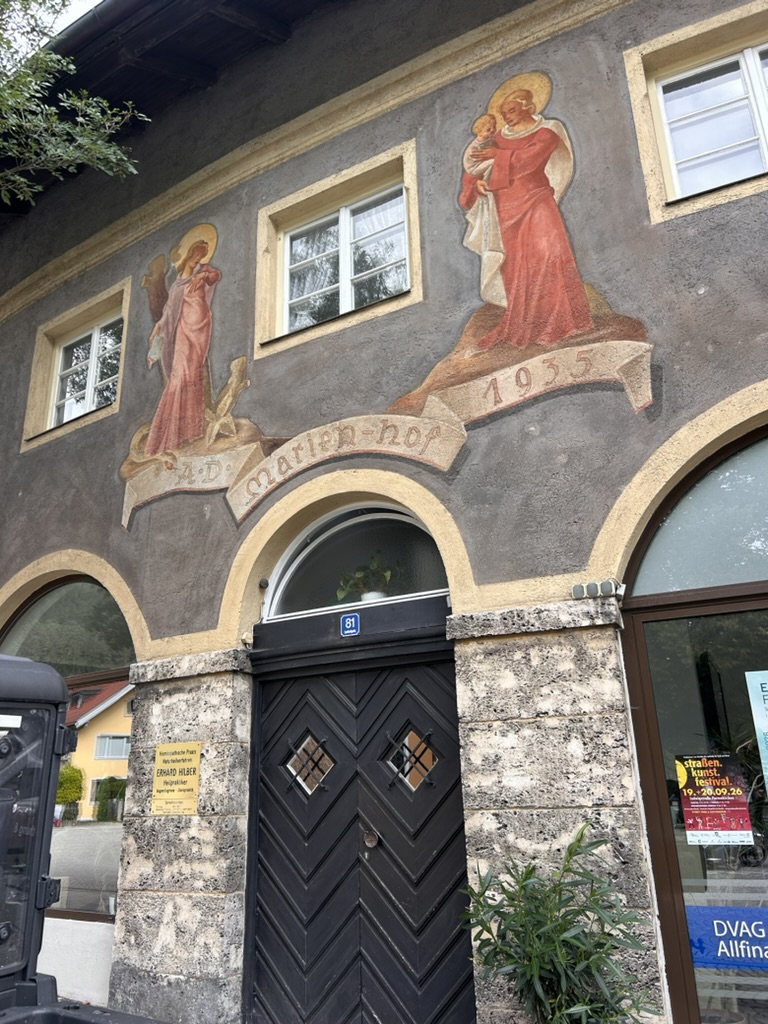
Sometimes, a building’s original purpose may have changed, but the paintings on its façade preserve a reminder of what it once was.
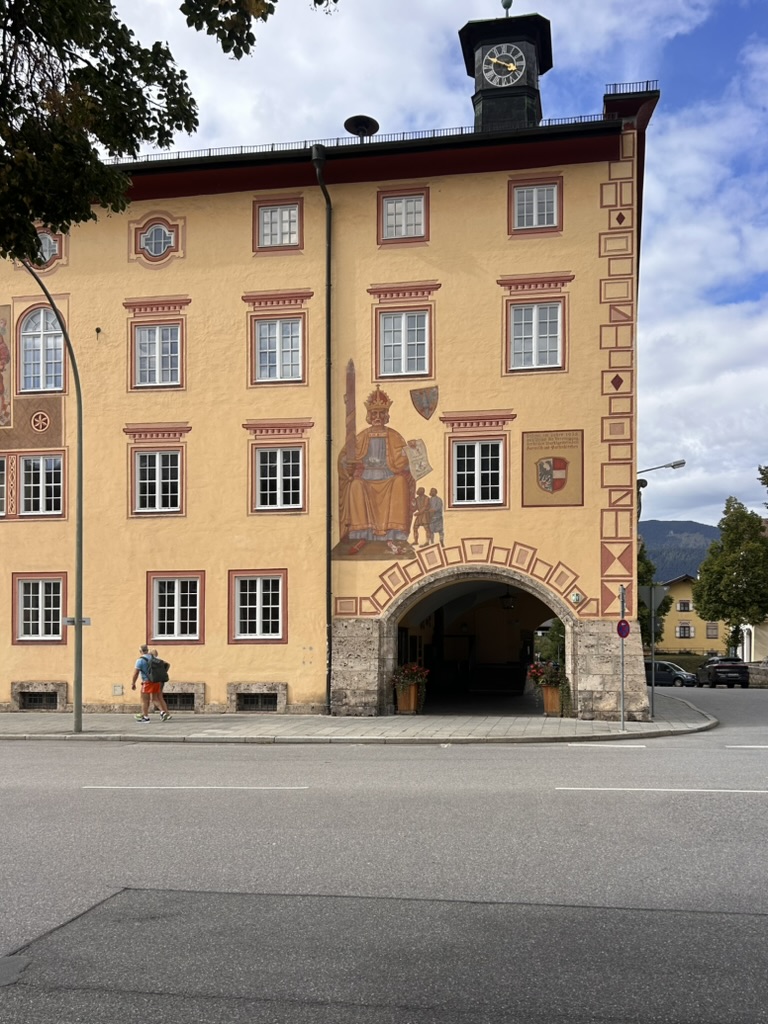
The Rathaus, or town hall, is decorated too, demonstrating that this art form isn’t restricted to private homes.
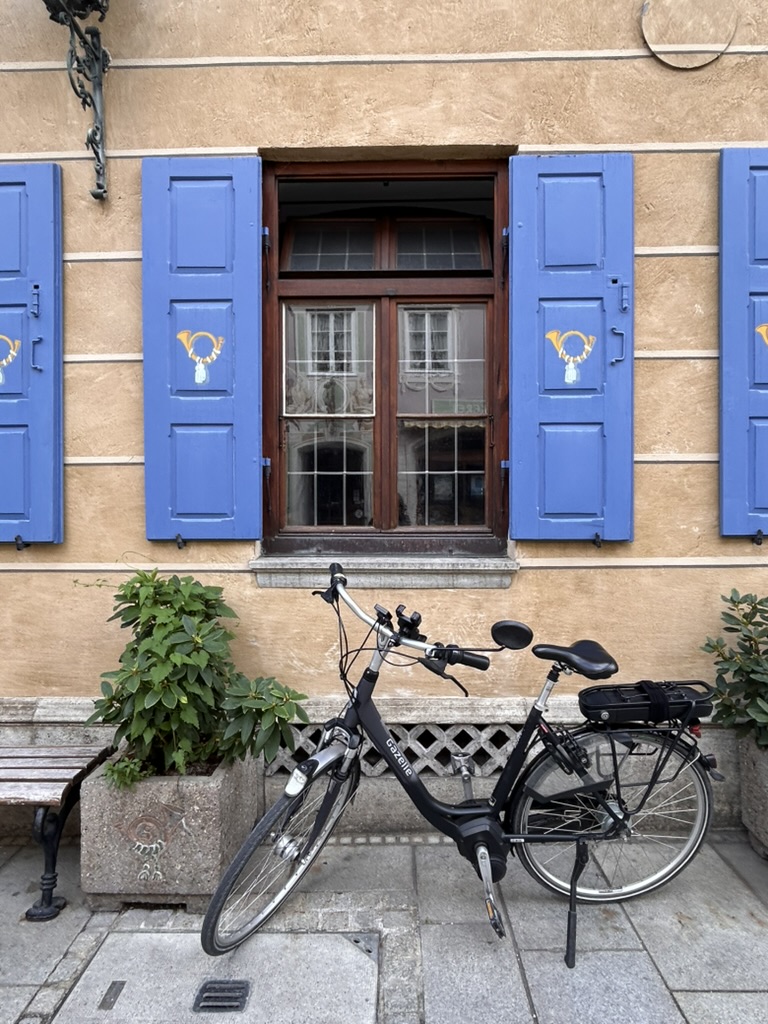
Saint Christopher, the patron saint of travellers, appears on buildings in the region, while sundials recall a time when they were a practical feature of everyday life. False windows create the illusion of architectural symmetry; the painted frames, shutters and delicate decorative details make the ‘windows’ a delight to look at.
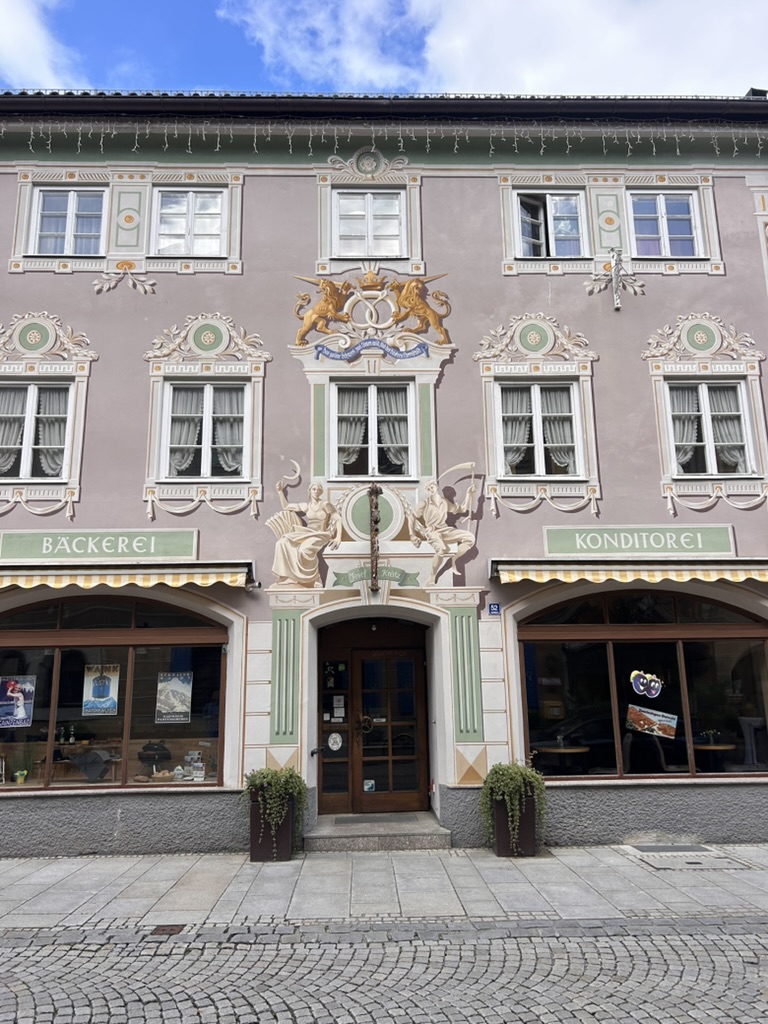
Short poems and inscriptions add another layer of interest. And sometimes, a motif tells you something about the trade practiced by the resident – grapes, for instance, might indicate a vintner, sheaves of wheat a baker, scales of justice, a lawyer.
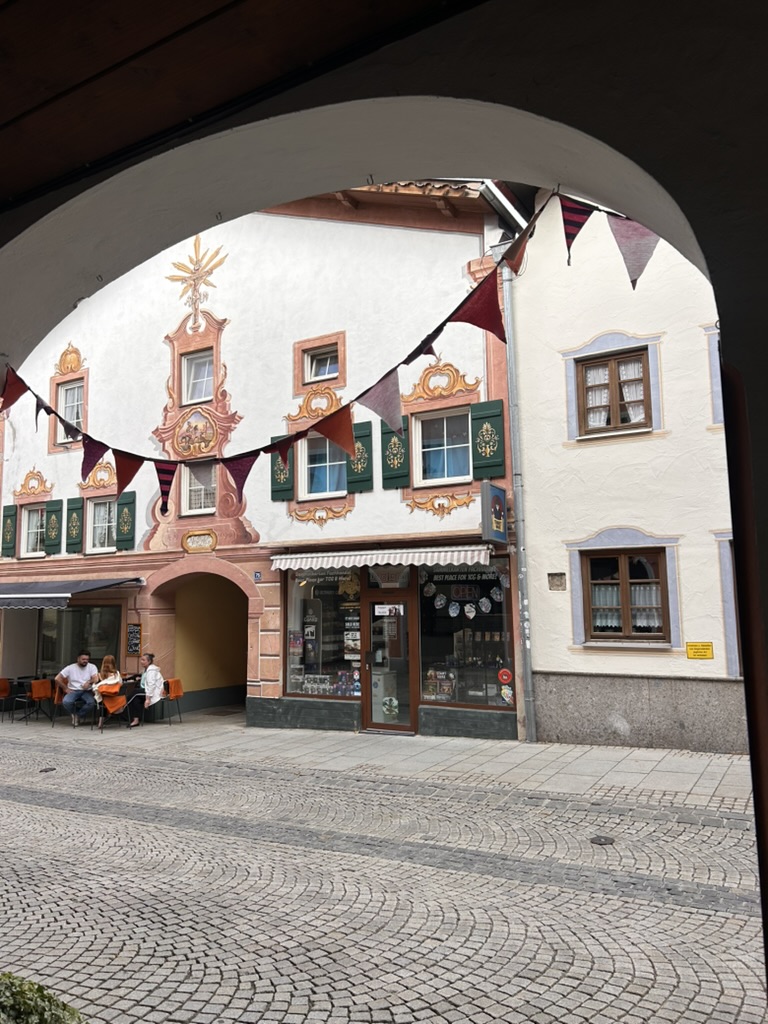
Once you start looking for these details, a walk down the street becomes a little like solving a series of visual puzzles.
Ludwigstrasse, A street with a history:
Ludwigstrasse follows a historic route through Partenkirchen, which was once an important stop along Alpine trade routes connecting Italy with commercial centres in southern Germany, including Augsburg. Merchants, travellers and their goods moved through the region, bringing not only trade but also cultural and religious influences.
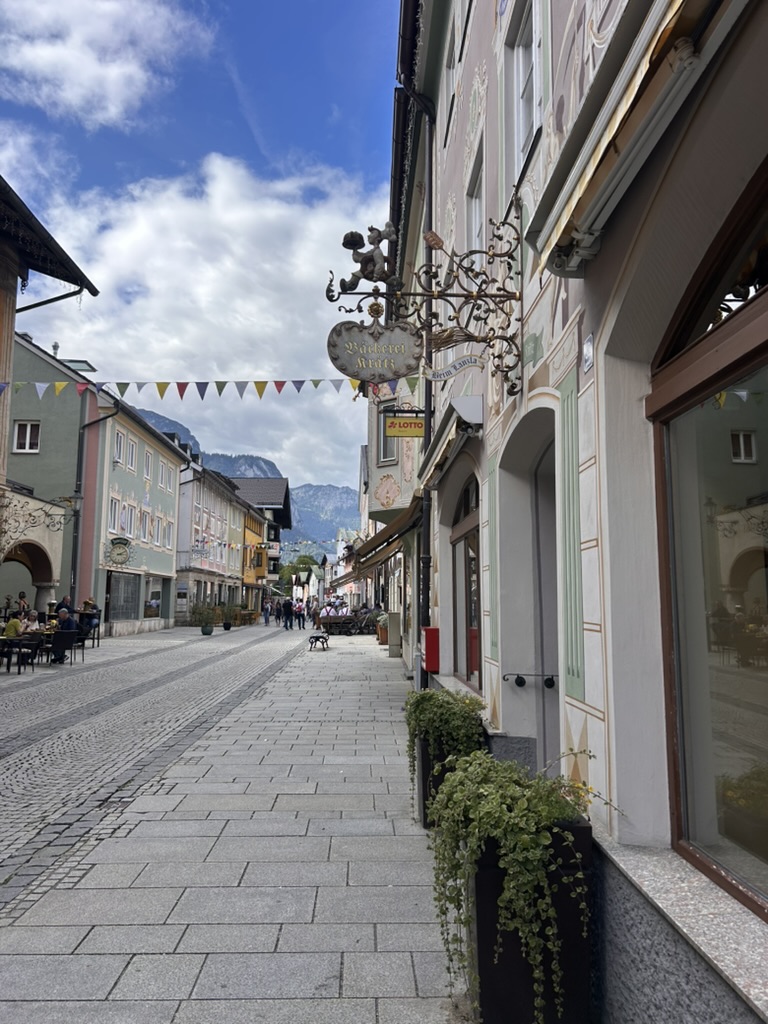
The street’s painted façades are therefore part of a larger story about the movement of people, ideas and artistic traditions across the Alps.
However, there is an important historical detail to keep in mind. Partenkirchen was devastated by major fires in 1811 and again in 1865, destroying much of its older building stock. As a result, many of the Lüftlmalerei paintings seen in Garmisch-Partenkirchen today are later reproductions or newer works inspired by older traditions, rather than surviving originals.
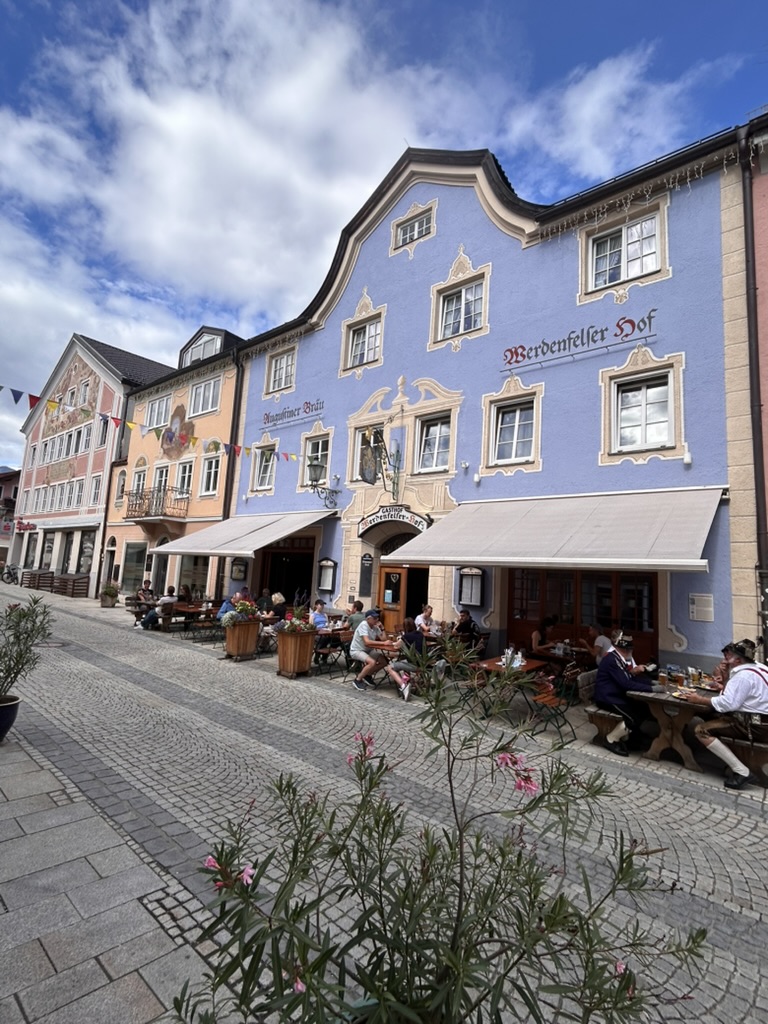
This is one reason the neighbouring towns of Mittenwald and Oberammergau are particularly interesting for those who want to see older examples of the art form. Oberammergau, in particular, is associated with the work of Franz Zwinck, whose paintings remain an important part of the region’s artistic heritage.
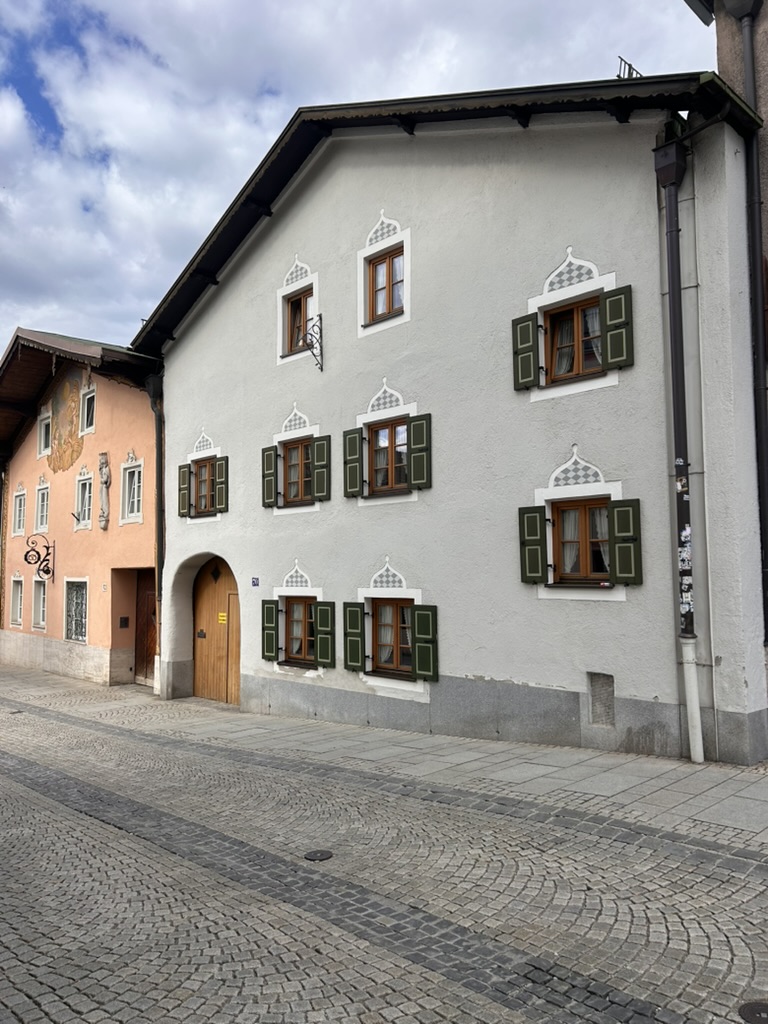
Velasquez’s website is a useful resource for anyone interested in exploring the artists and their work beyond Ludwigstrasse. He has documented individual paintings and the artists responsible for them across the wider region, making it possible to look beyond the most familiar streets and façades.
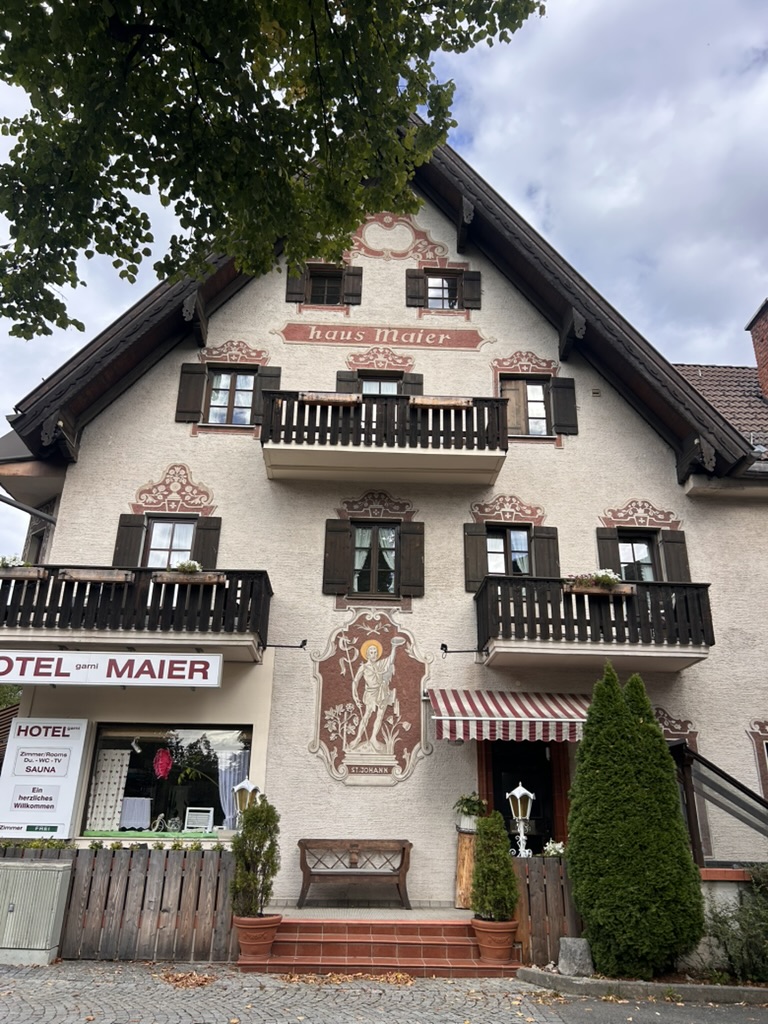
A revival, but is the tradition thriving?
Lüftlmalerei received a renewed boost after the Second World War. During the building boom of the 1950s, 1960s and 1970s, interest in regional history, local traditions and a romanticised past helped bring the art form back into prominence. The growth of tourism also played a part.
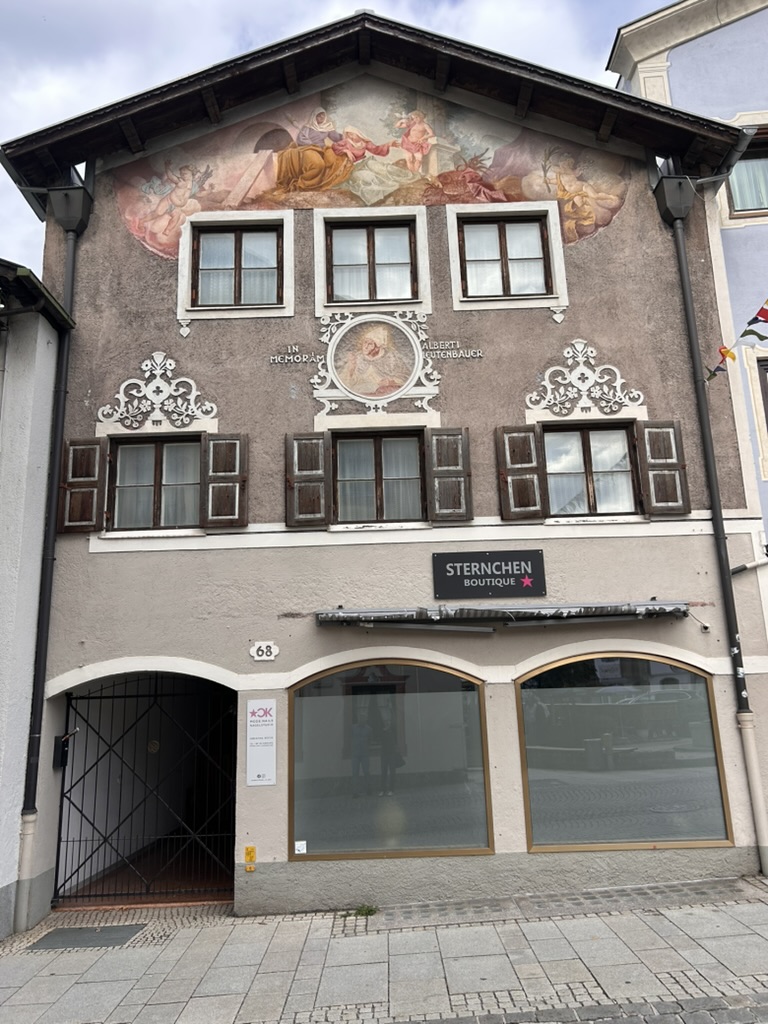
Today, the paintings continue to adorn ordinary houses, farmhouses, inns and commercial buildings. And that, to me, is what makes Lüftlmalerei particularly interesting. It isn’t confined to historic churches, palaces, protected monuments or museums. You encounter it as part of everyday life, without the weight of a monumental structure or a formal gallery setting.
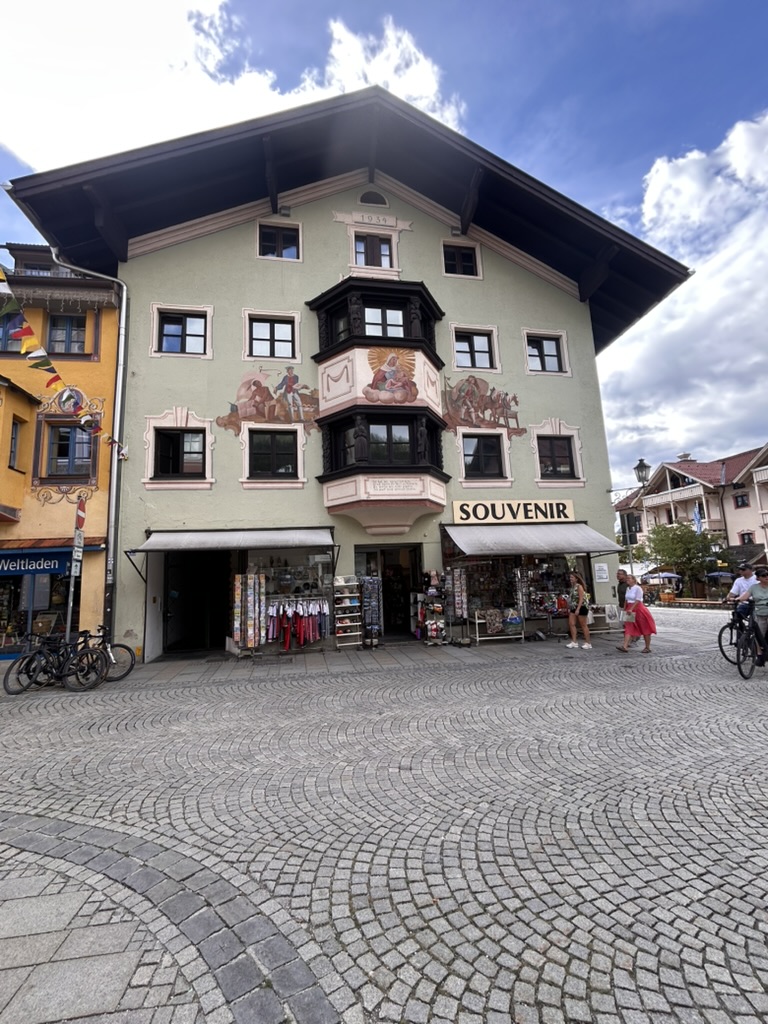
The tradition has also evolved. Modern buildings may feature familiar motifs, even when the techniques used to create them differ from those employed by earlier painters.
But does that mean Lüftlmalerei is thriving?
Not necessarily. The art form continues to be practiced, but preserving traditional techniques and passing specialist skills on to a new generation remain important challenges. It would be too sweeping to declare the entire tradition endangered without more comprehensive evidence, but its continued presence on buildings does not automatically mean that every aspect of the craft is secure.
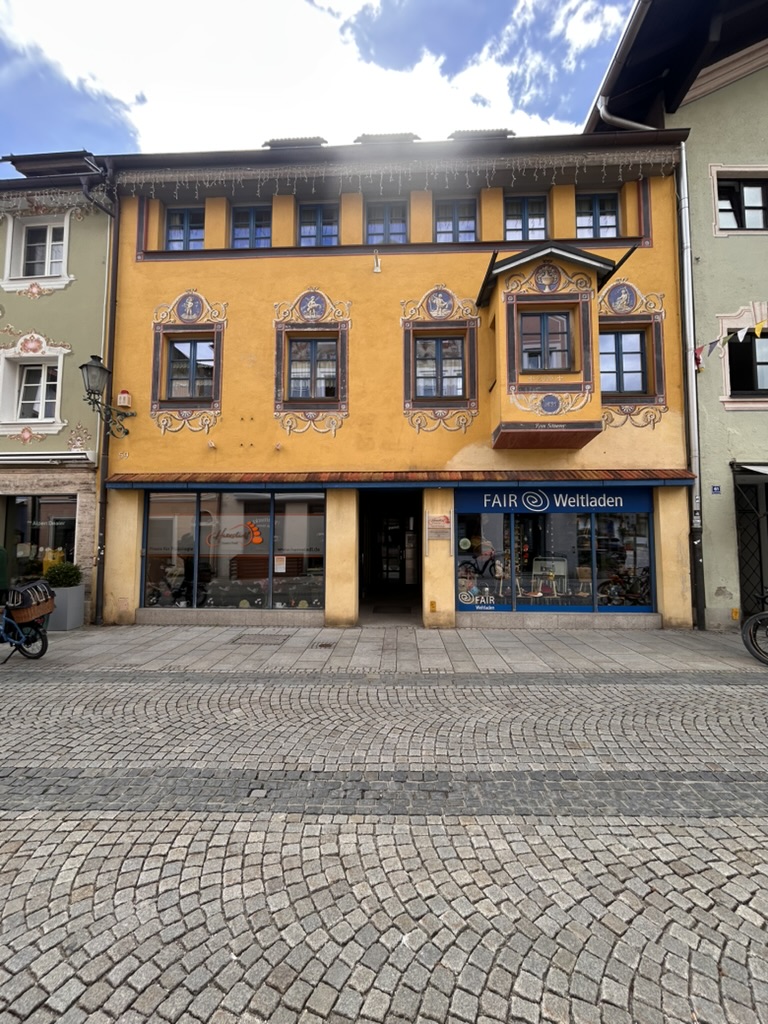
Conclusion: Look up, and look closer. If you find yourself in Garmisch-Partenkirchen, Mittenwald or Oberammergau in Germany, or travelling through Tyrol in Austria, take some time to admire the Lüftlmalerei. Look beyond the colours and pretty façades. Look for the saints, the sundials, the painted windows, the family emblems and the little details that reveal something about the people who lived there. Because these walls do more than make buildings beautiful. They preserve fragments of local history, beliefs, occupations and identities. Stories that might otherwise be lost.
And the best part? You don’t need a museum ticket to discover them. Just remember to look up.

