There might be prettier places in the world than Garmisch-Partenkirchen (GaPa), but for me, it is one of the prettiest I have been to, and, dare I say, one of the prettiest in all of Germany.
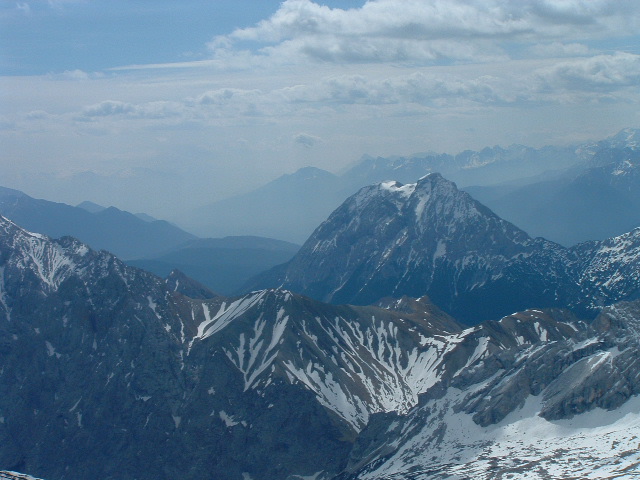
GaPa is home to Zugspitze, Germany’s highest peak in the Alps. On our first visit decades ago, we took the rack railway and then the cable car to get to the summit. We felt very accomplished and were kinda trendsetters – no one back home knew anything about Zugspitze or, for that matter, travelling to Germany was hardly on anyone’s radar!
I remember being floored by GaPa’s charming cuteness. The flowers, the quaint houses, the antique shops and the unhurried atmosphere beckoned me back.
So, when I was looking for something to do in the area on a day trip from Munich, the Partnach Gorge literally popped up in my face. I promptly added it to the calendar.
Partnach Gorge: From timber transport to a tourist attraction
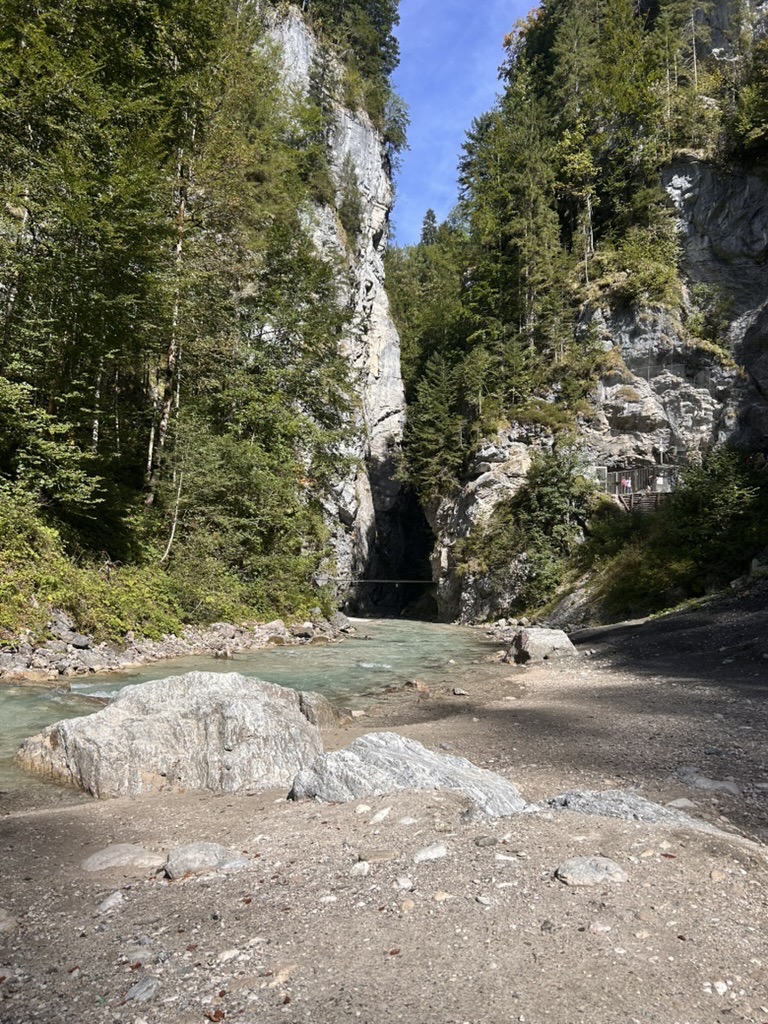
The Partnach River, which has lent its name to the gorge, rises in the Reintal Valley and is fed by the melting waters of the Schneeferner Glacier in the Alps. Over its 18km journey, small tributaries feed it, forming a network that looks almost like a neural network before it joins the Loisach River in the middle of GaPa town. About 700 metres of its 18 km journey passes through a gorge.
But this spectacular natural formation was not always a tourist attraction.
In the late 1800s when the region was under the control of the Bishops of Freising, they granted rights to locals to timber in the alpine forests to meet the shortage of wood for heating and building. Logging was easy, but transporting it to the lower areas was challenging.
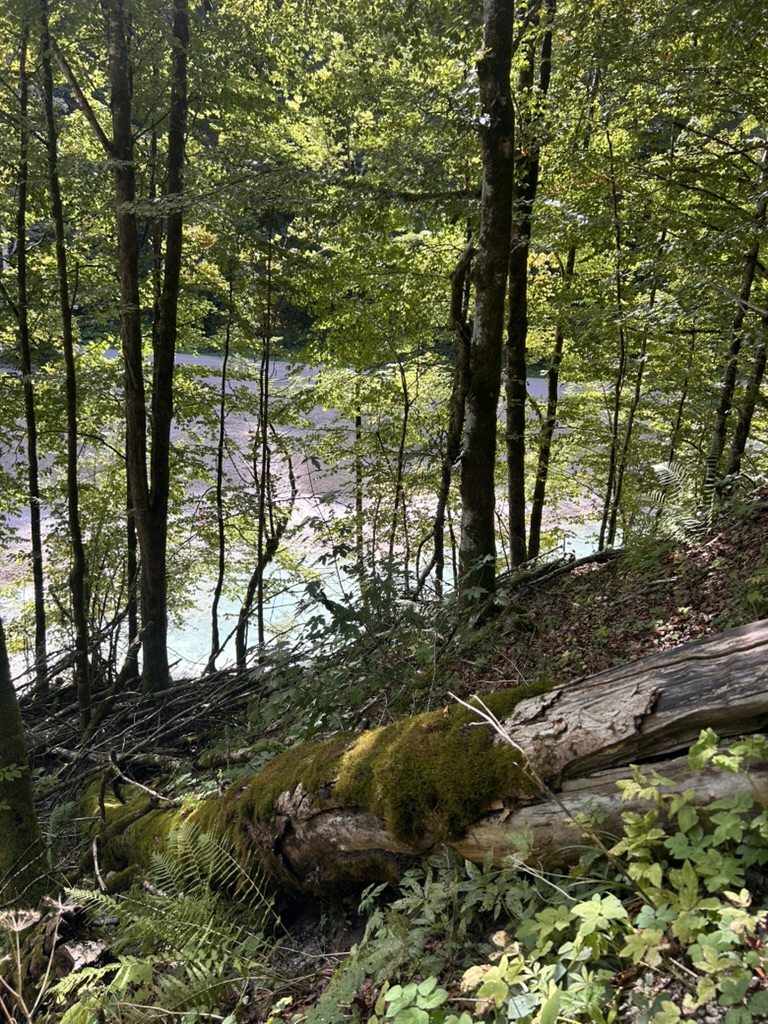
The solution? Let water do the heavy lifting.
In spring, when melting snow swelled the streams, they floated logs downstream. This method of transporting timber using water was known as Holztrift. The Partnach Gorge was one of the routes for “water drifting”.
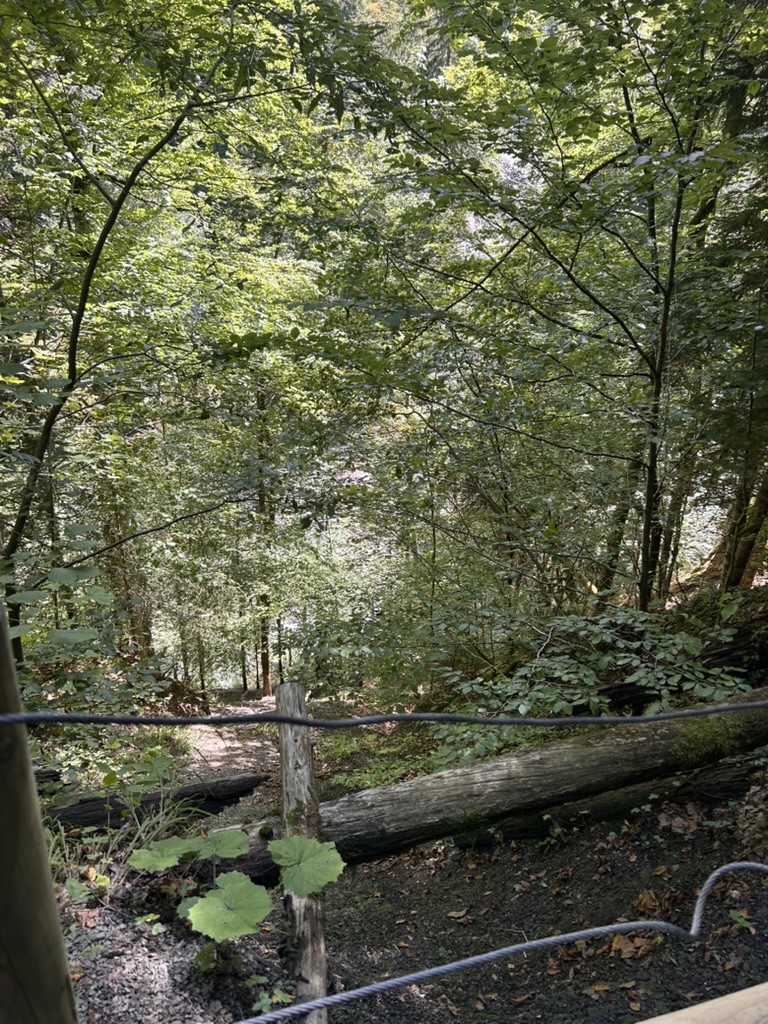
The solution was hazardous
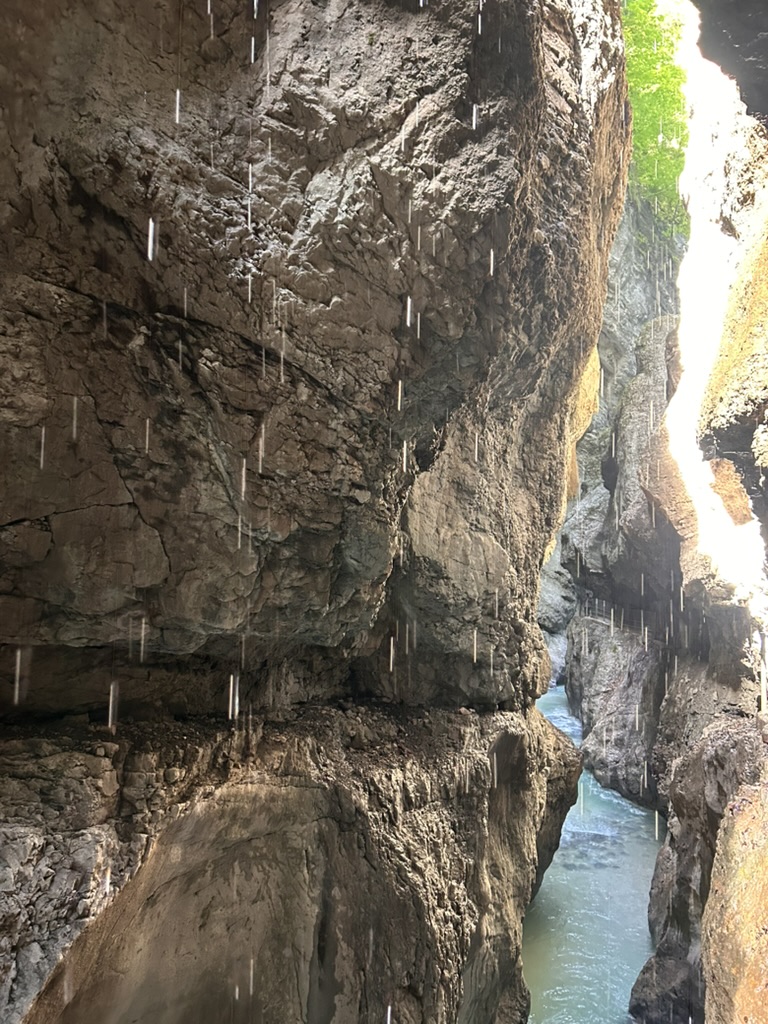
Logs would get wedged against rocks or jam together in the narrow gorge. To dislodge them, timber workers were lowered from above in rope-suspended chairs, sometimes with small roofs to protect them from falling rocks. It was dangerous work, and accidents and fatalities were real risks.
In 1886, a makeshift passage was constructed along the steep rock face using iron girders covered with wooden planks. This allowed workers to stand on the ledge and manoeuvre the logs through the gorge using long poles and hooks.
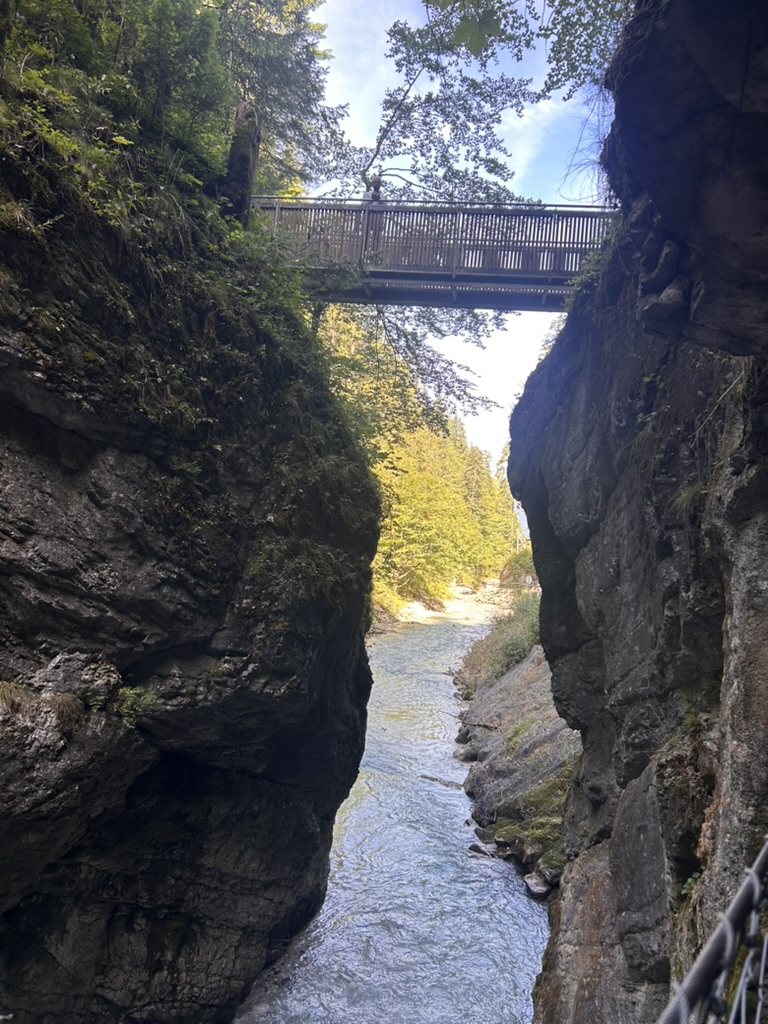
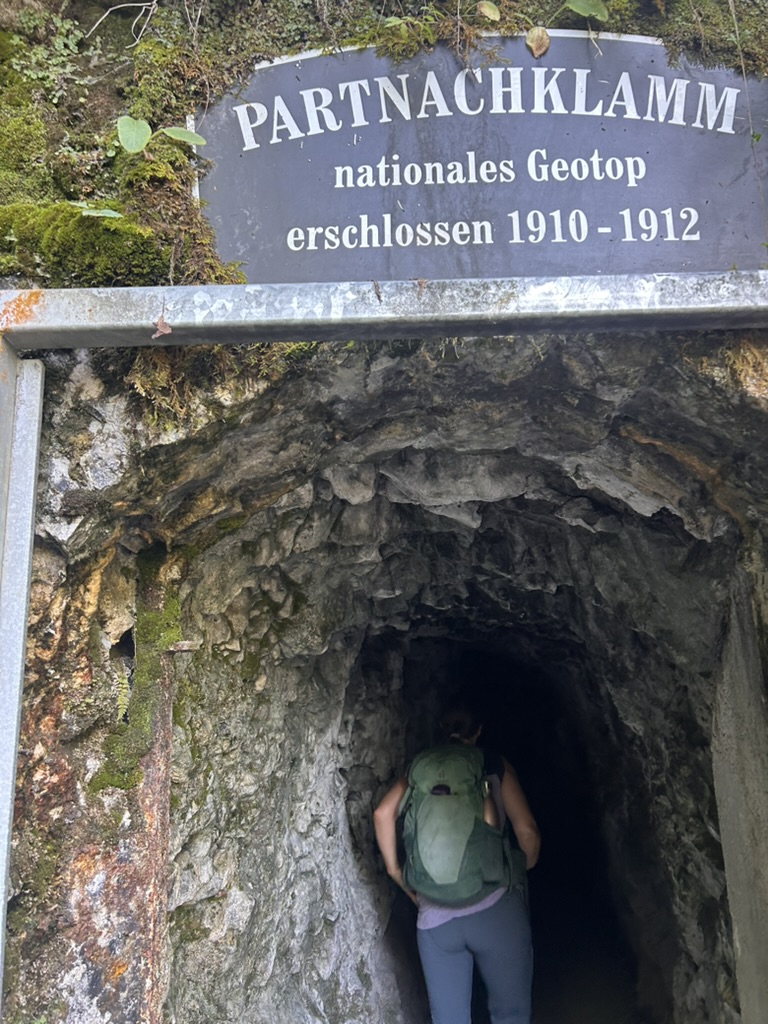
The route, originally intended for timber workers, gradually attracted hunters and forestry workers. Adventurous visitors began visiting. Between 1910 and 1912 it was opened to tourists and its popularity has risen ever since and of course timber drifting has long stopped.
Getting to Partnach Gorge from Munich
We set out not very early in the morning. I would, however, recommend leaving early if you want to beat the crowds on the train and at the gorge. The regional train from Munich Hauptbahnhof to Garmisch-Partenkirchen took around 1.5 hours. It was fairly full, and the journey was slow and steady. As you get closer to your destination, the Alps begin to loom in the distance, gradually growing larger. Every now and then, you catch glimpses of lakes nestled amid vast stretches of greenery.

At the GaPa Railway Station we quickly grabbed a bite and stepped out onto Bahnhofstrasse.
The easiest way to reach the Olympic Ski Stadium (Skistadion), the starting point for the walk to the gorge, is to take local bus line 1 or 2 towards Skistadion. The bus stop is directly outside the station building, and the journey takes about 10 minutes.
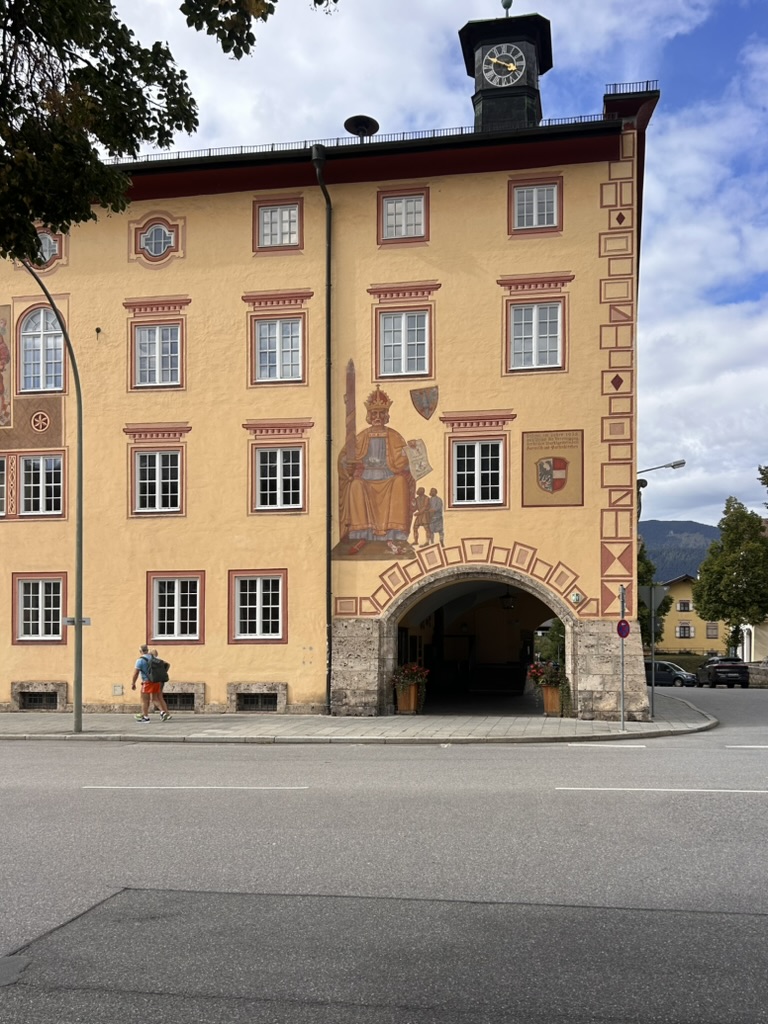
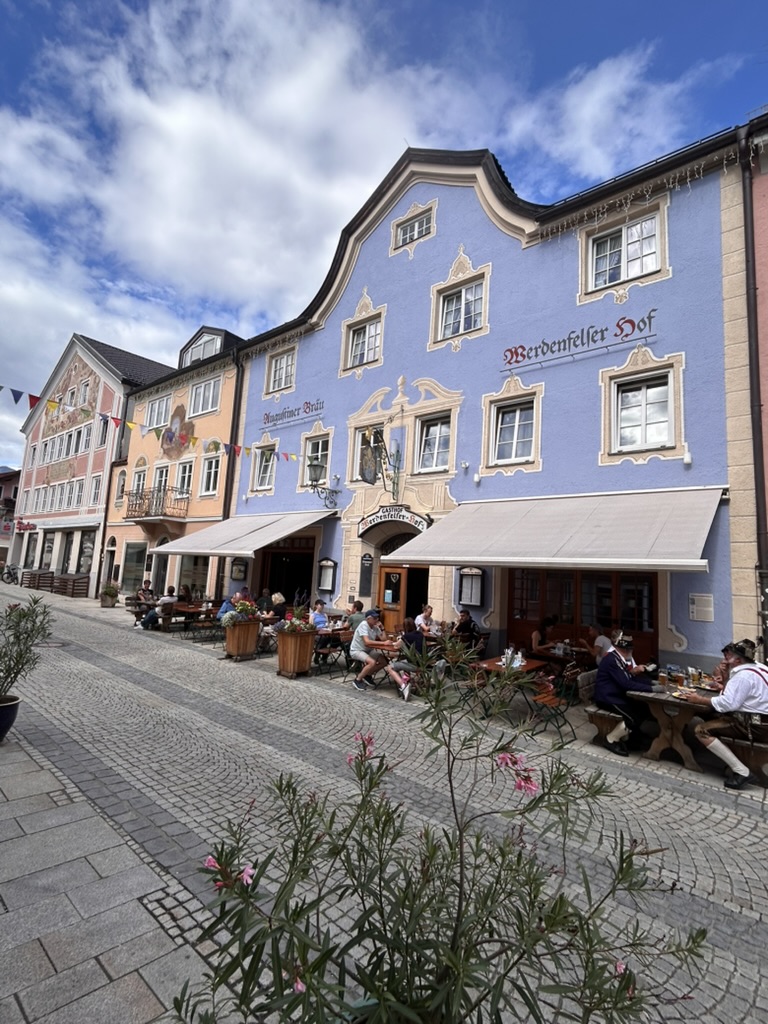
Our bus was packed like a can of sardines. If you can manage to look out through the crush of fellow passengers, keep an eye out for Lüftlmalerei – traditional decorative paintings on the façades of buildings – a Upper Bavarian specialty. I would recommend making time to admire them at leisure along Ludwigstrasse when you return to town from the gorge.
Finding your way to the gorge
At skistadion stop, the bus empties out and if you are not sure where to go, follow the herd and you can’t go wrong.
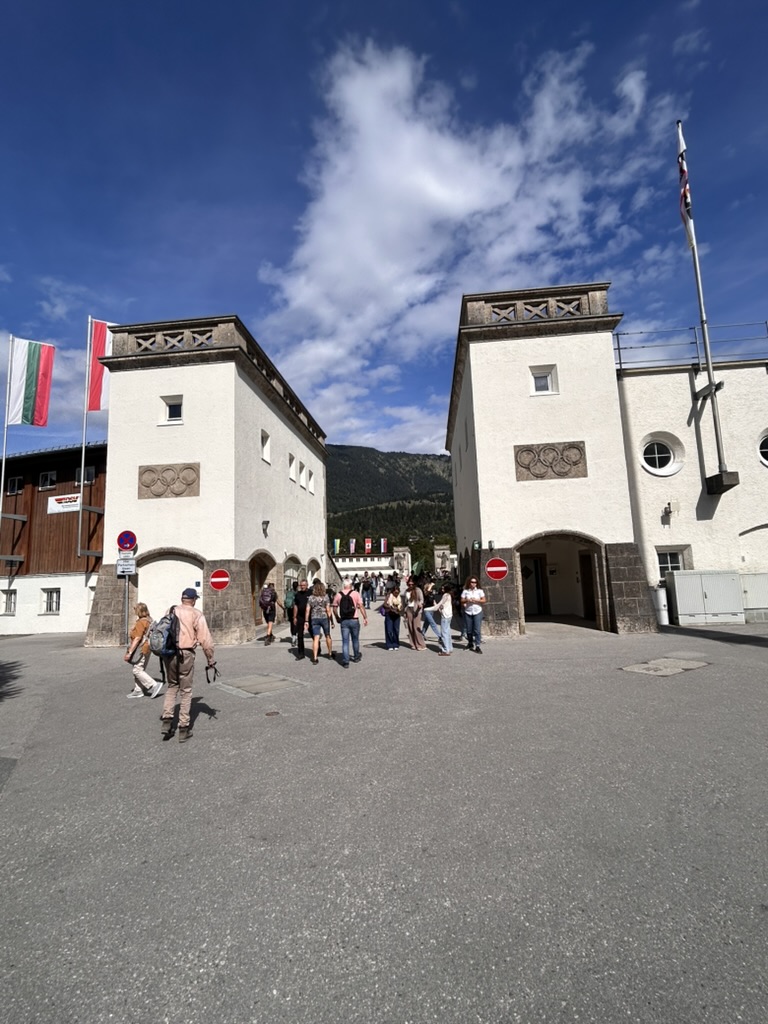
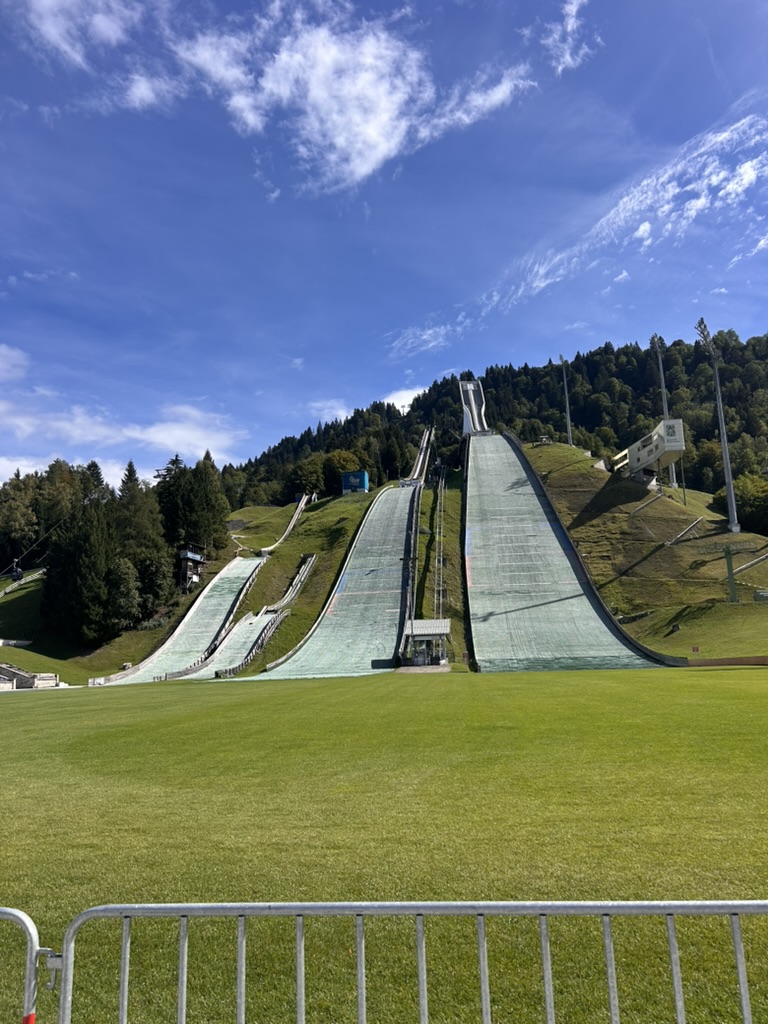
Cross the road (there is paid parking if you are driving), enter the stadium area between two rather colossal, Greek-looking statues, and walk towards the other end. If the sun isn’t making you squint, take a moment to admire the ski-jumping stadium before exiting onto Wildenauer Strasse.
Turn left and start walking. The Partnach river will be cheerfully gurgling along on your right.
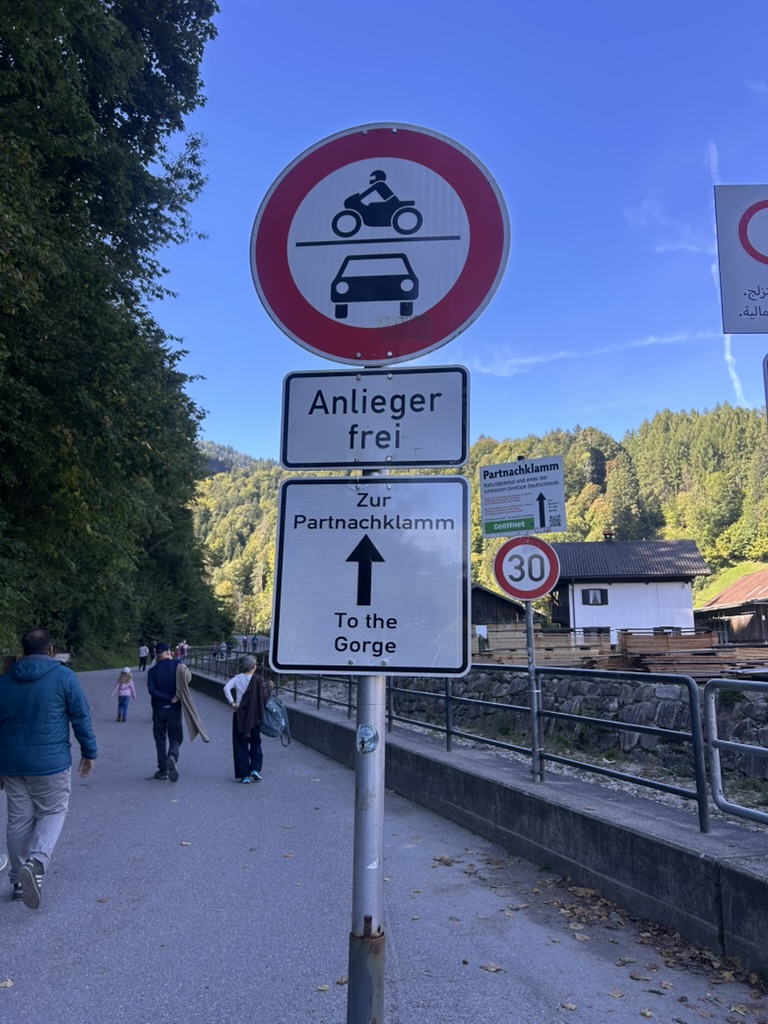
About 100 metres down the road, near a century-old sawmill, you will see a sign confirming that you are on the right path. Another 100 metres or so later, the road splits in two. Keep left and carry on. The river will now be on your left.
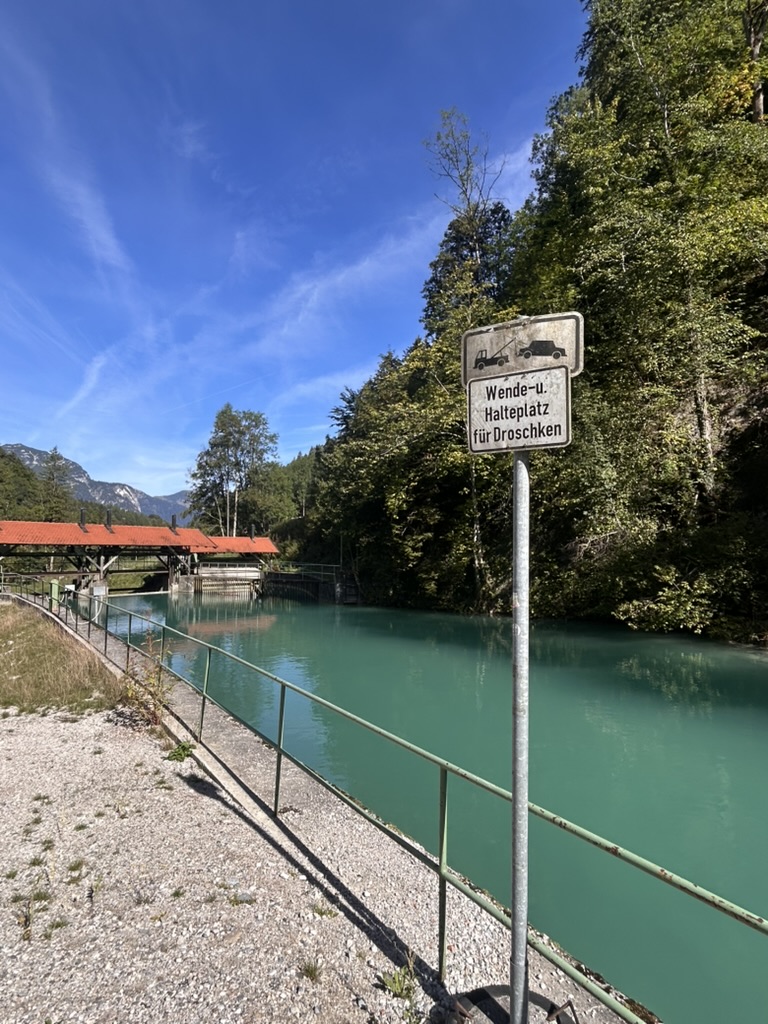
Along this stretch, you will see the river dammed to regulate its flow and also to divert the river water for the sawmills that existed.
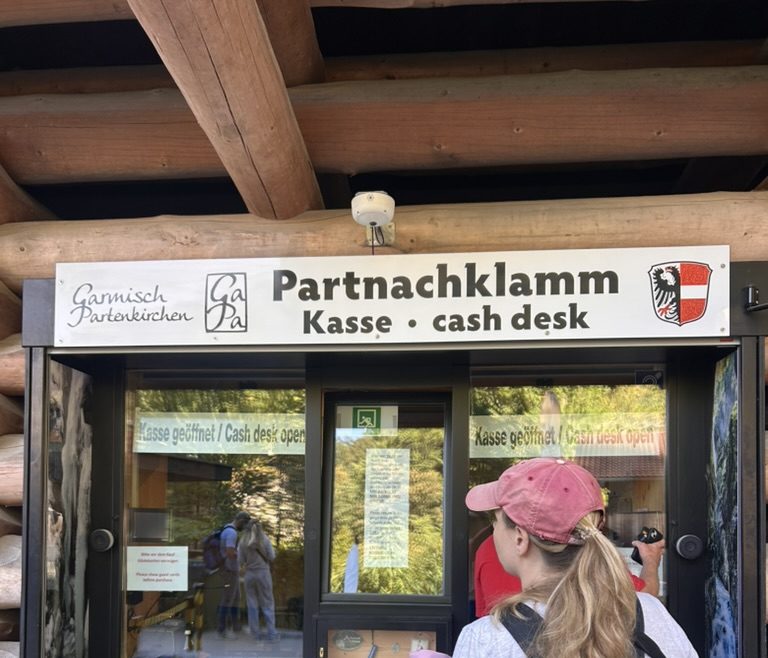
And if you are wondering why you haven’t paid an entry fee yet, or whether you have somehow walked into the gorge without realising it, no, you haven’t! The ticket counter is still ahead (200m). At the ticket counter, you can choose to turn left towards Graseck or buy your gorge-entry ticket (pay by cash or card) and continue along the path.
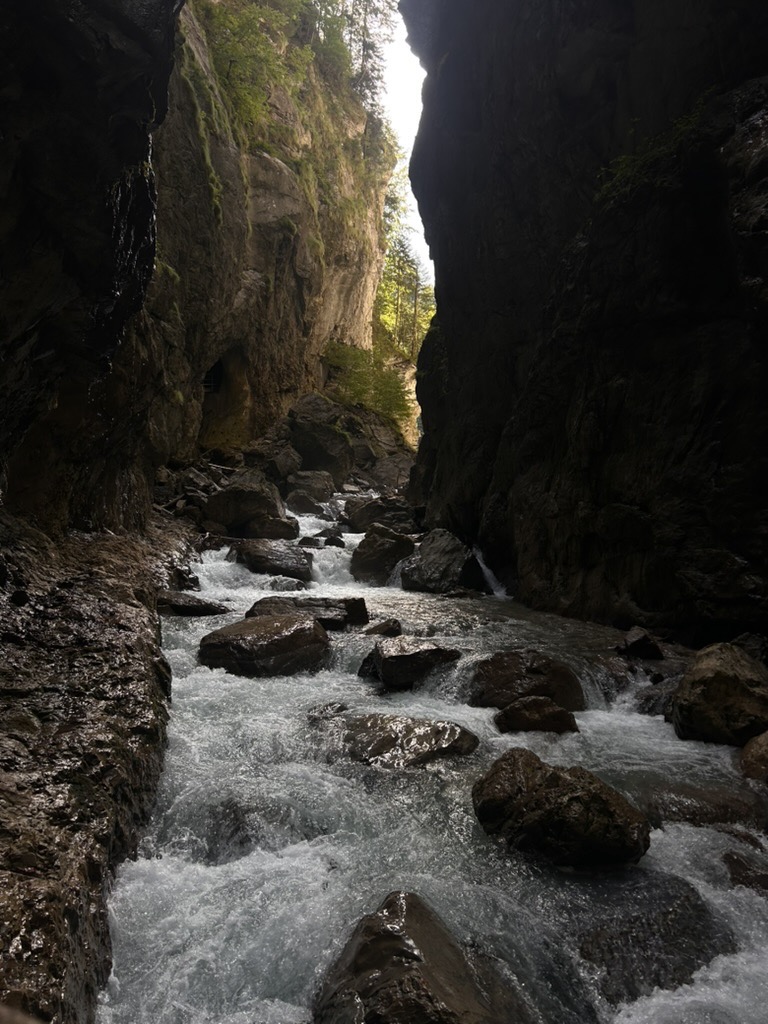
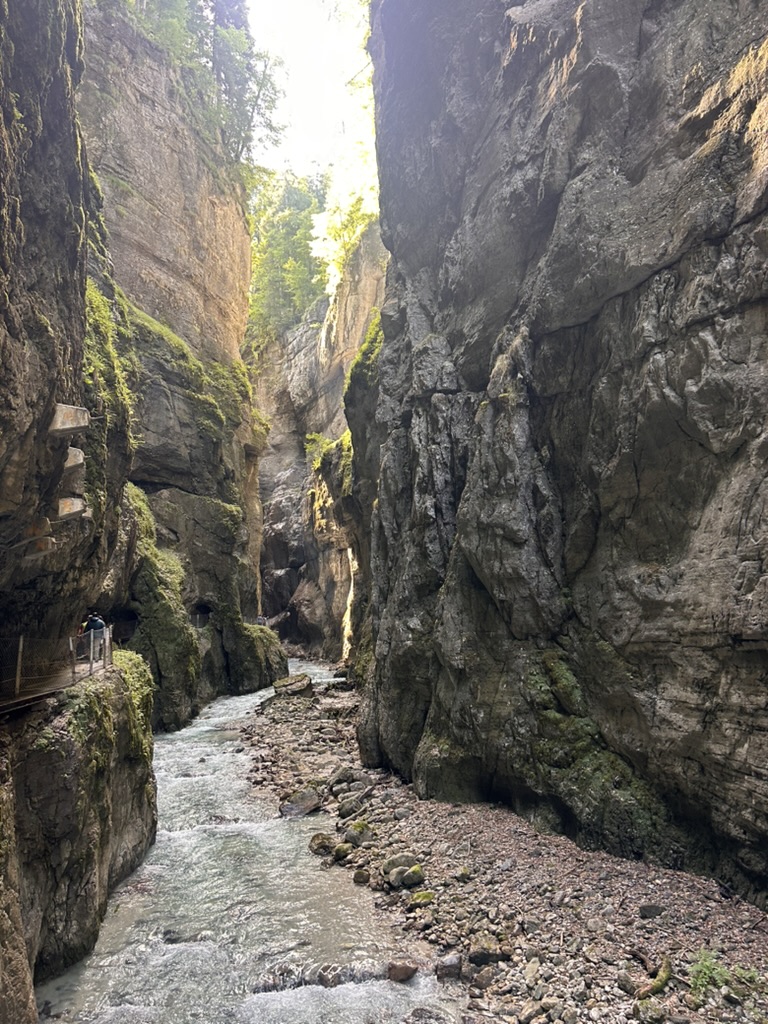
The walk to and through the gorge takes you along a man-made path carved into the rock face. The gorge itself is about 700 metres long with the river rushing below and towering rock walls rising around you.
The approach is dotted with a few small shops selling souvenirs, bric-a-brac and snacks, along with a couple of places to eat. Do admire the sturdy timber construction of the Pitznerhütte kiosk and beer garden which has been in existence since 1895, making it the oldest kiosk around. (Check locally for its current opening status before planning a stop).
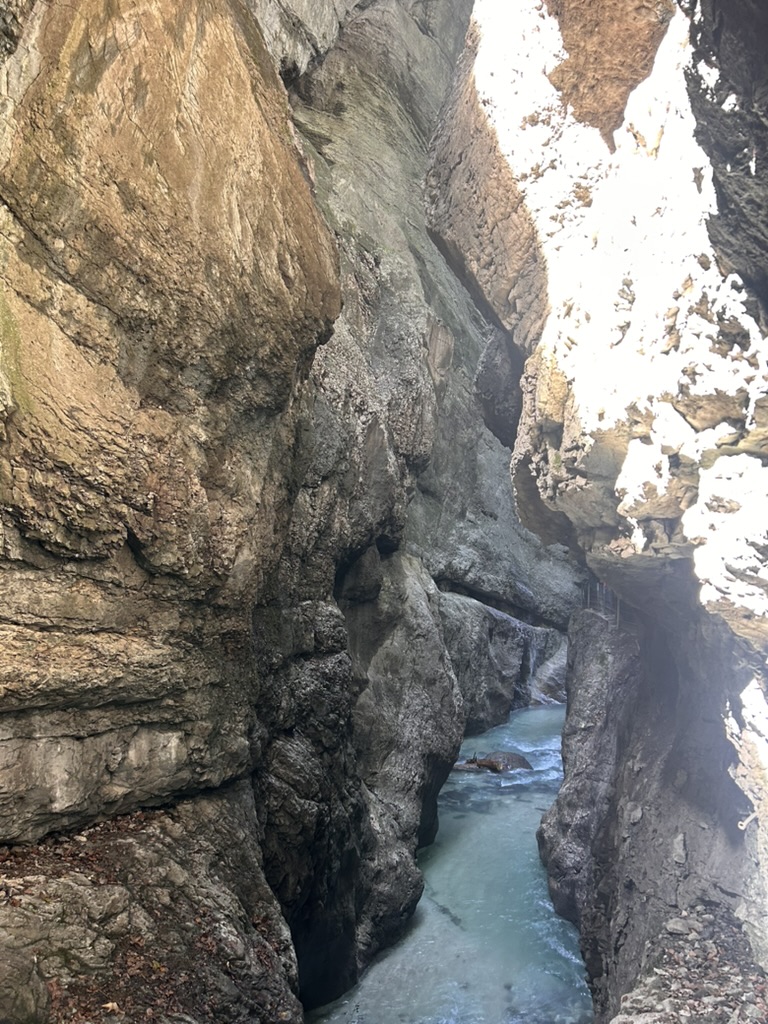
At the end of the gorge passage, you will reach a turnstile. You can turn back here or continue on the surrounding hiking trails.
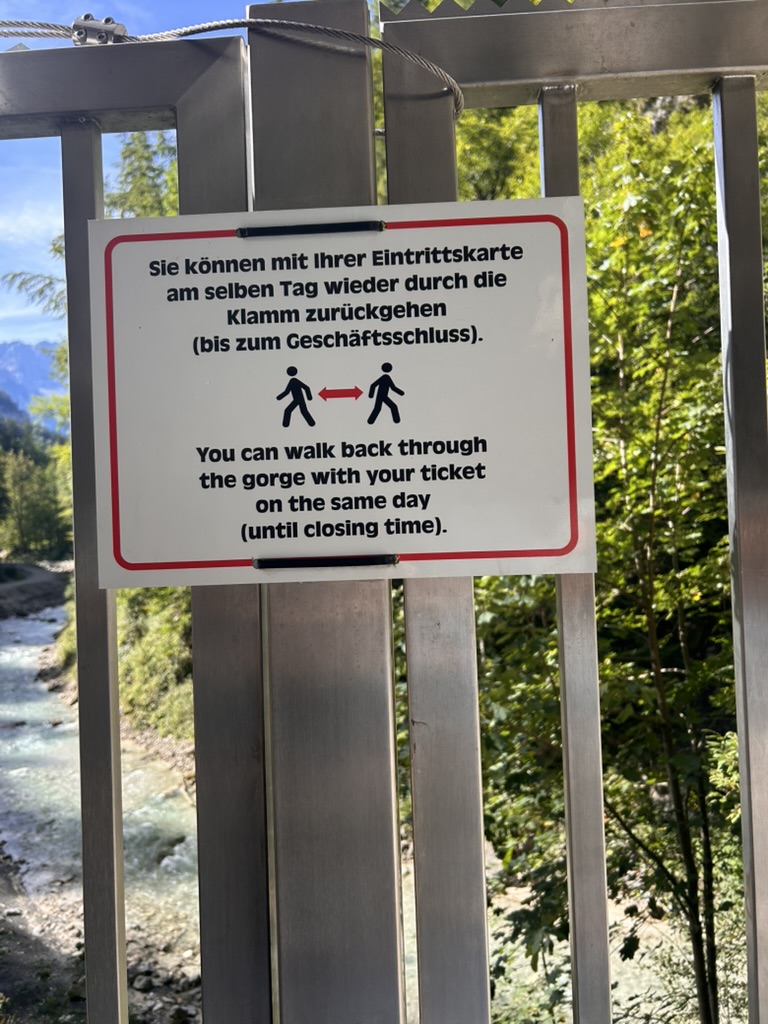
The hike we hadn’t planned
This is where our day took an unexpected turn.
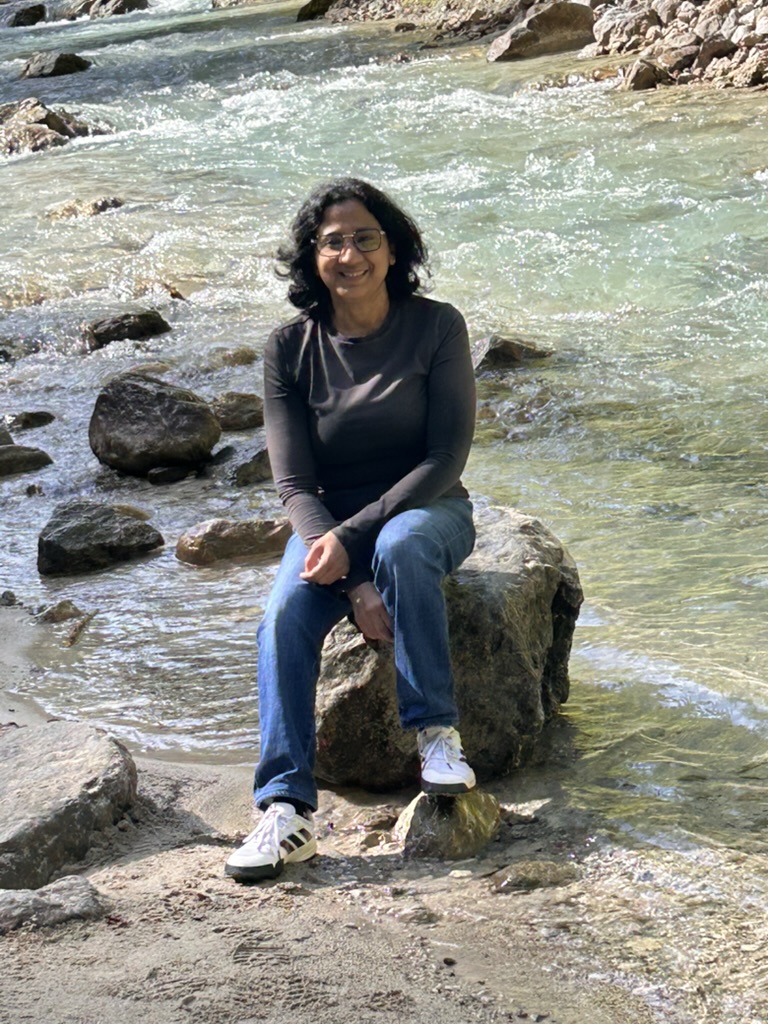
We decided to go on further and explore the possibilities. Just as we passed the turnstile we saw a display showing the different rock types that make up the gorge and its surroundings. The riverbank was easily accessible, so we climbed down, took a short break and decided to walk a little further. We were at crossroads, quite literally, and it was time for some decision-making.
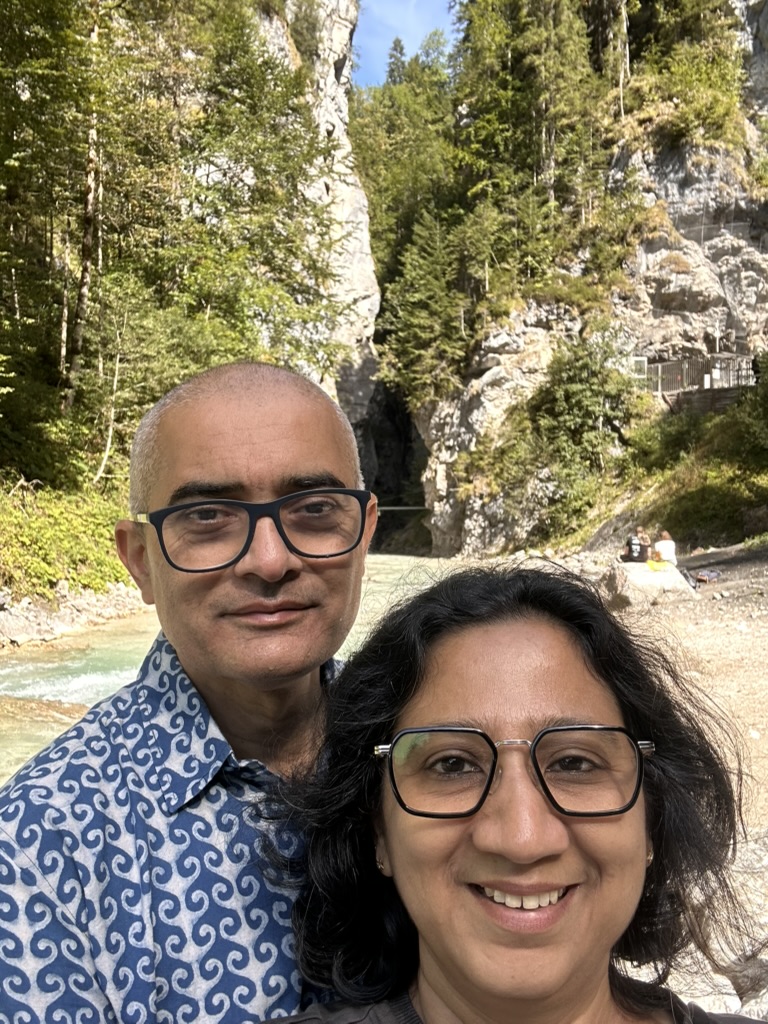
Turn back or hike some more?
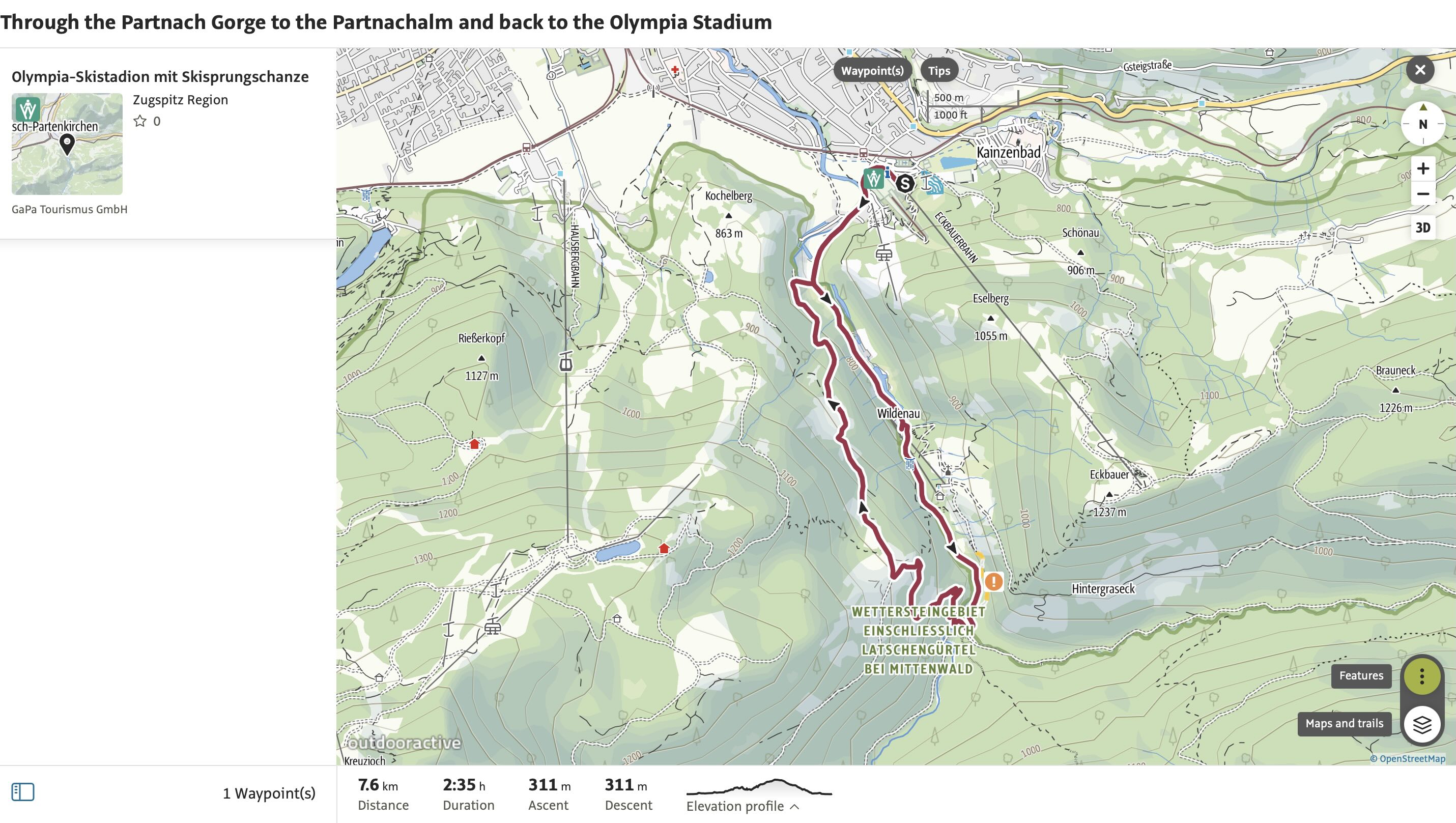
A sign pointed towards Partnachklamm. So we decided to take an alternative route back and make a loop of it. That was when we discovered that signboards, apparently, are not always to be trusted. The distances and timings indicated on the boards did not quite match ground reality.
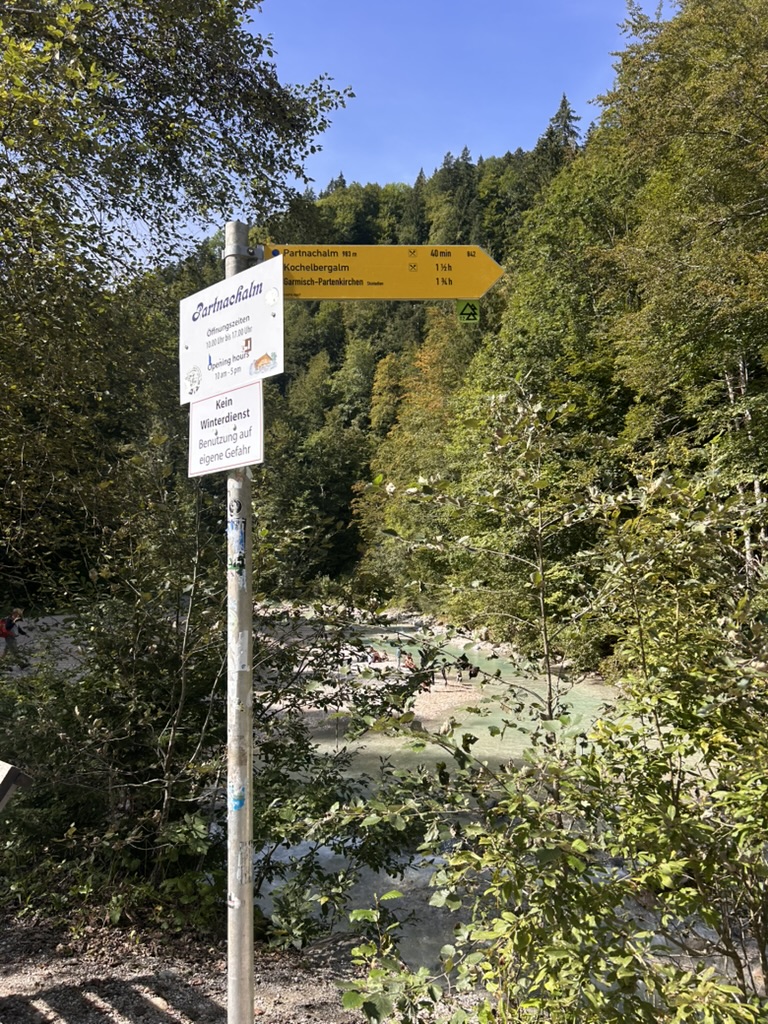
We ended up climbing a fairly steep trail through lush green Alpine forest. Along the way, we overtook a few others who, like us, seemed to have been lured into taking this route by the signboards. We learnt later that this was categorised by AllTrails as a moderate hiking route, quite unlike the relatively straightforward walk to the gorge and through it up to the turnstile!
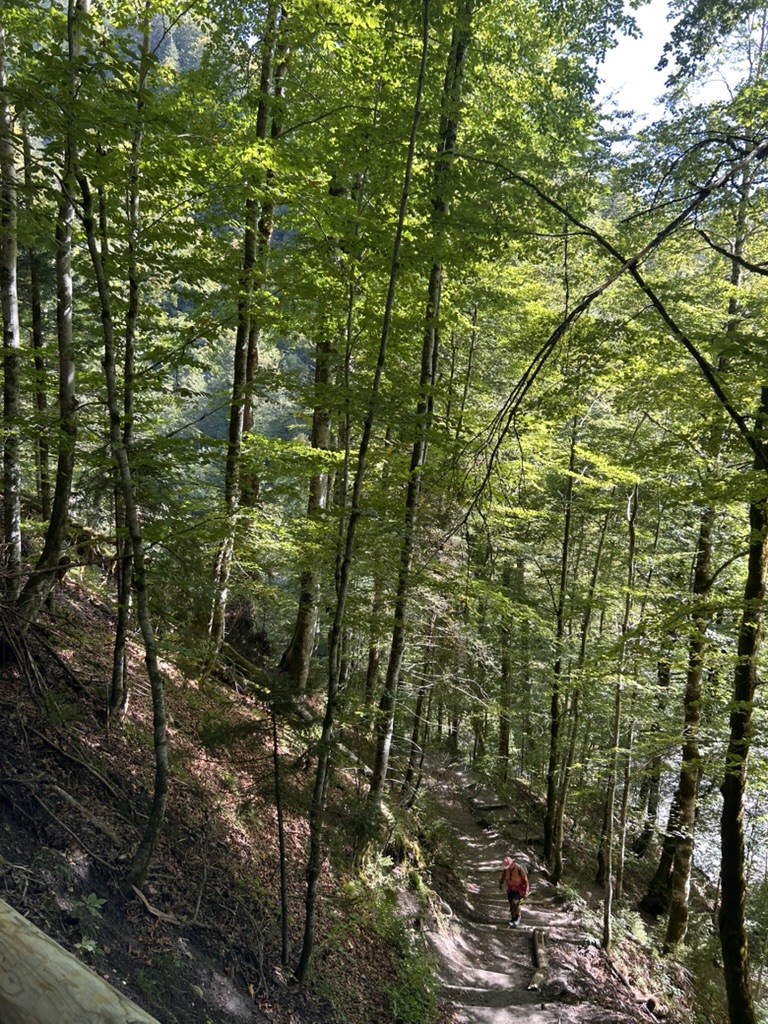
The views, however, made up for the unexpected exertion.
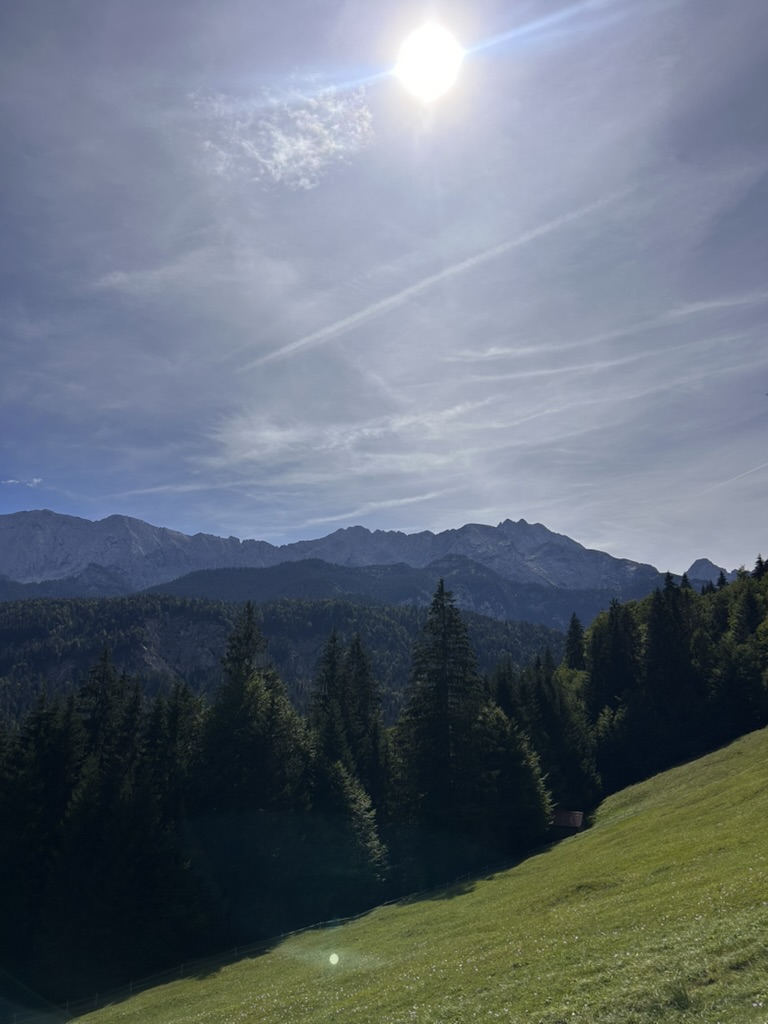
We walked through undulating green valleys, with mountain ranges rising around us. The sun shone brightly, and we found ourselves squinting at the mountains as we took in the views.
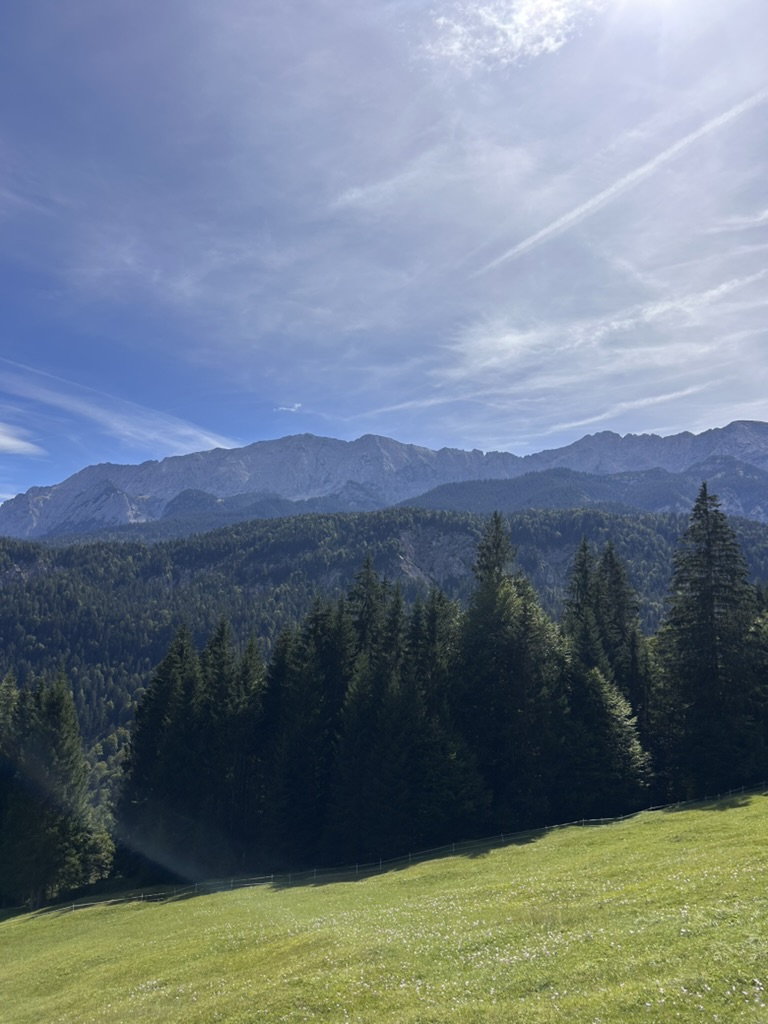
Eventually, we reached Partnachalm, a restaurant. It was so packed that we decided to give it a miss and grab a bite once we were back in town. After Partnachalm, it was time to descend a very steep road, Streichla, until we reached Wildenauer Strasse at the same T-junction where we had initially turned left towards the gorge. At this junction, you will also find “Die Passion, Die Gedenktafel”, a small memorial plaque commemorating those who lost their lives while transporting timber through the gorge.
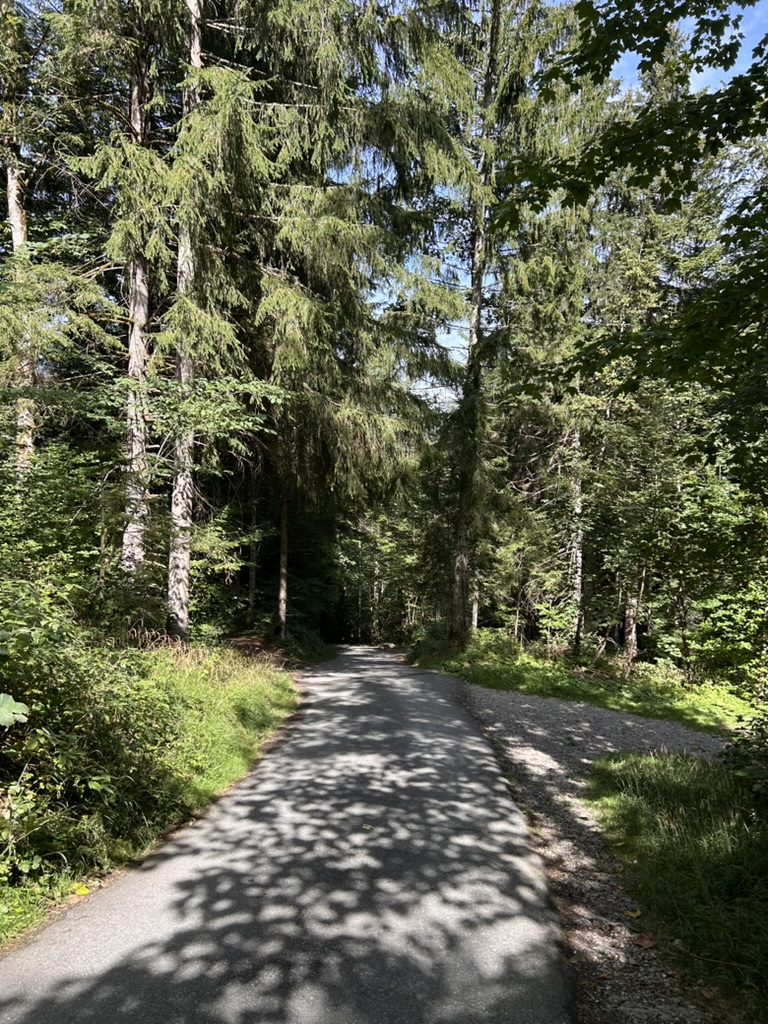
We walked into Partnach Lodge Café for a leisurely lunch and some much-needed rest. Our legs certainly hadn’t expected us to hike as much as we eventually did!
A slow walk along Ludwigstrasse
After lunch, we took a bus back towards town and got off at a stop close to the Parish Church of Maria Himmelfahrt. From there, we walked along Ludwigstrasse, taking our time to admire the Lüftlmalerei on the buildings. It was a lovely way to round off the day before walking back to the railway station and catching the train to Munich.
What made this day special?
It was the spontaneity of it all. We could leave Munich on a whim, travel to a beautiful corner of Bavaria and spend a few hours walking through a gorge, enjoying the landscape and discovering a hiking trail we hadn’t planned to take. Once again, GaPa lived up to my expectations.
And the Partnach Gorge?
It was well worth the trip.The gorge is particularly famous for its winter scenery, when ice formations transform its rock walls into something almost fairytale-like. This gorge stands out because it is perhaps the only one that is open all through the year although closures can occur because of weather, ice, rockfalls or maintenance.
Planning your visit to Partnach Gorge
Check before you go and make sure the gorge is open.
The official Partnach Gorge website is great as a first point for information about the gorge, current opening hours, ticket prices, closures, trail information, restaurants, etc.
A few practical details to help you plan your visit:
- Getting there from Munich: Regional trains from Munich Hauptbahnhof take approximately 1.5 hours to Garmisch-Partenkirchen.
- Getting to the gorge: Take local bus line 1 or 2 towards Skistadion. The journey takes around 10 minutes.
- Walking distance: Allow roughly 2.5 km from the Skistadion area to the turnstile end of the gorge.
- Opening hours: The published schedule is 8 am to 8 pm from June to September and 8 am to 6 pm from October to May. Last admission is 30 minutes before closing. Temporary closures may occur.
- Entry fee: The published standard adult ticket price is €10. Check the official website for current prices and concessions.
- Facilities: Toilets are available near the ticket counter. There are places to eat around the approach and in the surrounding area
- Food stop: We ate at Partnach Lodge Café, which gave us a welcome opportunity to rest after our unplanned hike.
- What to wear: Comfortable walking shoes are essential. If you plan to explore trails beyond the gorge, check the difficulty and elevation gain beforehand.
If you are visiting GaPa for the first time, do consider making time for the gorge. And if you have been there before, perhaps it is time to return. I certainly didn’t need much convincing.

